
BuddhistCatholicContemplativeEvangelicalGeneral ChristianHinduJewishLatter-day SaintMuslimNew VisionsProgressive Christian
Beliefs
- Buddhist
- Catholic
- Contemplative
- Evangelical
- General Christian
- Hindu
- Jewish
- Latter-day Saint
- More Voices
- Muslim
- New Visions
- Pagan
- Progressive Christian
Topics
- Religion News
- Food and Religion
- Sports and Religion
- Religious Art
- Religious Music and Entertainment
- Religious Events
- History and Religion
- Style and Religion
- Politics and Religion
- Women in Religion
- Recreation Outdoors and Religion
- Business Finance and Religion
- Careers Workplace and Religion
- Education and Religion
- Family Parenting and Religion
- Health Fitness and Religion
- Home and Religion
- Relationships and Religion
- Technology and Religion
- Travel and Religion
Columnists
- Buddhist Columnists
- Business Finance and Religion Columnists
- Careers Workplace and Religion Columnists
- Catholic Columnists
- Contemplative Columnists
- Education and Religion Columnists
- Evangelists Columnists
- Family Parenting and Religion Columnists
- General Christian Columnists
- Health Fitness and Religion Columnists
- Hindu Columnists
- History and Religion Columnists
- Home and Religion Columnists
- Jewish Columnists
- More Voices Columnists
- Latter Day Columnists
- Muslim Columnists
- New Visions Columnists
- Nonreligious Columnists
- Pagan Columnists
- Politics and Religion Columnists
- Progressive Columnists
- Recreation Outdoors and Religion Columnists
- Relationships and Religion Columnists
- Religion News Columnists
- Religious Art Columnists
- Religious Events Columnists
- Religious Music and Entertainment Columnists
- Sports and Religion Columnists
- Style and Religion Columnists
- Technology and Religion Columnists
- Travel and Religion Columnists
- Women in Religion Columnists
Resource Library
- 2026 Calendar
- Library of World Religions
- The 100 Most Holy Places on Earth
- Patheos Answers
- Podcasts
- Videos
- Faith Leaders Database
- Anglican Episcopalian
- Bahai
- Baptist
- Buddhism
- Christianity
- Confucianism
- Eastern Orthodoxy
- Hinduism
- Holiness and Pentecostal
- ISKCON
- Islam
- Judaism
- Lutheran
- Methodist
- The Church of Jesus Christ of Latter-day Saints
- New Age
- Paganism
- Presbytarian and Reformed
- Protestantism
- Religion Behind the Scenes
- Roman Catholic
- Scientology
- Shia Islam
- Sikhism
- Sufism
- Sunni Islam
- Taoism
- Zen
- See all religions
Research Tools
 Ad-Free & Subscriber Log-In Subscription Support
Follow Patheos 

- Trending:
- Advent
- |
- Forgiveness
- |
- Thanksgiving
- |
- Election
- |
- Seasonal Holidays
- |
- Marriage
 Epiphenom
- Home
- Nonreligious
- People reminded of religion become intolerant of ambiguity
People reminded of religion become intolerant of ambiguity
Last updated on: November 11, 2014 at 9:15 pm by Epiphenom
People reminded of religion become intolerant of ambiguity 2014-11-11T21:15:08+01:00 Epiphenom
Patheos Explore the world's faith through different perspectives on religion and spirituality! Patheos has the views of the prevalent religions and spiritualities of the world.
Around the world, religion is often linked to conservative attitudes. In fact, religion is famous for being socially ossified – the last bastion of the social and sexual mores of the generation-before-last. And if there’s one thing that conservatives also hate, it’s ambiguity
Generally speaking, conservatives see the world in terms of black and white, with clear demarcations between good and evil. They like to be certain in their judgements. Similar, in fact, to many religious world views.
New research from Christina Sagioglou of the University of Innsbruck and Matthias Forstmann of the University of Cologne suggests that this isn’t simply a case of guilt by association. In fact, giving people reminders of religion actually seems to decrease their tolerance of ambiguity, and increase their desire for certainty and clarity.
They tested this in four separate studies. These showed that priming with religious words increased polarisation of opinions, the liking for ambiguous images and certainty of judgement. And they also showed that simply being near a church makes people intolerant of ambiguity.
In the first three studies, they used a word game to prime their subjects with the idea of religion. They were told they were taking a word comprehension test, in which they had to complete four-word sentences from a jumble of five words. For example, they were given the words “seven to Tim church went”, from which they could make the sentence “Tim went to church”. In the ‘religion’ group, they have five religious and five non-religious sets to unscramble. In the “control” group, all the sets were non-religious.
In the first study, they found that their subjects (64 people recruited using the Mechanical Turk) were more likely to agree with statements like “There is a right way and a wrong way to do almost everything” if first primed with religion.
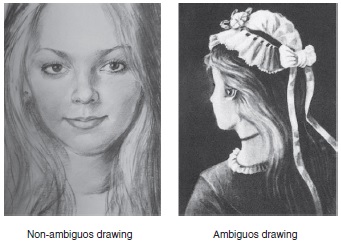
Take a look at the non-ambiguous and ambiguous drawings in the image above. The ambiguous drawing is one of those that can been seen in two ways – either a young woman facing away, or an old woman facing towards the viewer. The 49 subjects in the second study liked the non-ambiguous drawing the same regardless of priming. But those primed with religion were significantly less appreciative of the ambiguous drawing.
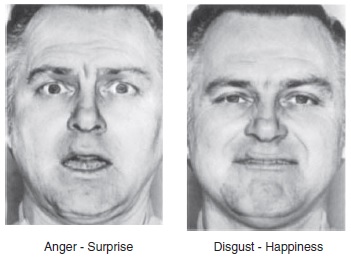
The third study looked at facial expressions. The images you see in the picture are computer generated mixtures of different facial expressions – anger and surprise in the first, disgust and happiness in the second. The 46 subjects were asked what emotions the images were displayed and, critically, how confident they were in their judgement.
You guessed it. The ones who had been primed with religion were more confident in their judgement of what was, in fact, a 50:50 exercise with no right or wrong.
In the last study, they stopped their participants either in a square by a Cathedral in Innsbruck, Austria, or in a civic square in the same city. They then gave them a survey designed to measure their intolerance of ambiguity by assessing their agreement with statements like “I avoid problems that may have more than one solution.”, “I like ambiguous situations.”, and “Nothing gets accomplished in this world unless you stick to some basic rules.”
The religiosity of the participants was the same in both locations. Even so, those questioned in the Cathedral square were significantly less tolerant of ambiguity.
That reminds me of earlier research showing that people interviewed outside a church were significantly more hostile to foreigners. And other research has shown that locating polling booths in a Church can significantly affect voting choices.
Now, the researchers point out that this study was done on Western Christians (in the USA and Germany). So you might not see the same effects with other faiths in other places.
But this study does hint rather strongly that that the link between conservative attitudes and religion is not a one way street.

Sagioglou, C., & Forstmann, M. (2013). Activating Christian religious concepts increases intolerance of ambiguity and judgment certainty Journal of Experimental Social Psychology DOI: 10.1016/j.jesp.2013.05.003
 This article by Tom Rees was first published on Epiphenom. It is licensed under Creative Commons.
Next Post

June 23, 2013 Extreme rituals promote prosociality
Browse Our Archives
Select a Category Causes of religion - evolution Causes of religion - psychological Causes of religion - social Demographics Digest Effects of religion - health Effects of religion - psychological Effects of religion - social Notifications Politics Uncategorized
Select a Month March 2016 February 2016 January 2016 December 2015 November 2015 October 2015 September 2015 August 2015 July 2015 June 2015 May 2015 April 2015 March 2015 February 2015 January 2015 December 2014 November 2014 October 2014 September 2014 August 2014 July 2014 June 2014 May 2014 April 2014 March 2014 February 2014 January 2014 December 2013 November 2013 October 2013 September 2013 August 2013 July 2013 June 2013 May 2013 April 2013 March 2013 February 2013 January 2013 December 2012 November 2012 October 2012 September 2012 August 2012 July 2012 June 2012 May 2012 April 2012 March 2012 February 2012 January 2012 December 2011 November 2011 October 2011 September 2011 August 2011 July 2011 June 2011 May 2011 April 2011 March 2011 February 2011 January 2011 December 2010 November 2010 October 2010 September 2010 August 2010 July 2010 June 2010 May 2010 April 2010 March 2010 February 2010 January 2010 December 2009 November 2009 October 2009 September 2009 August 2009 July 2009 June 2009 May 2009 April 2009 March 2009 February 2009 January 2009 December 2008 November 2008 October 2008 September 2008 August 2008 July 2008 June 2008 May 2008 April 2008 March 2008 February 2008 January 2008 December 2007 November 2007 October 2007
Follow Us!
TAKE THE
Religious Wisdom Quiz
How many chapters are in the book of Romans?
Select your answer to see how you score.
21 16 18 12
Related posts from Epiphenom
Do social crises lead to religious revivals? Nah!

What kind of woman would pray for health...
Can you use religion to change attitudes towards...
Dogmatic atheism and fundamentalist Christianity: creating certainty in...
TRENDING AT PATHEOS Nonreligious

Dethroning Jesus and Enthroning Yourself
Jesus Never Asked to Be Worshipped. He Asked to Be Understood. Christianity...

Why Most Christians are Really Paulians and Jobians
I Don't Care, But It Matters Let's get this out of the...

Essential Tips to Successfully Navigate the Selling Process
Selling a house can feel overwhelming, but it doesn’t have to be....

To Make Remote Work Effective, Think About Others
The COVID-19 pandemic forced many companies to rapidly transition to remote work....

Flexibility Is Key to Solving Problems of Tomorrow
The world of work is undergoing a dramatic transformation. The COVID-19 pandemic...
view all Nonreligious blogs
Ad-Free & Subscriber Log-In Subscription Support
- About Us
- 2026 Calendar
- Videos
- Podcasts
- Library of World Religions
- Faith In Media Tracker
- Advertise With Us
- Write for Us
- Privacy Policy
- Terms of Service
- Do Not Sell My Data
- Contact Us
- Radiant Digital
- Manage Newsletter Subscriptions
- Unsubscribe From Notifications
- Sitemap
Copyright 2008-2026, Patheos, part of the Radiant Digital network of media brands. All rights reserved.
Subscription Support Ad-Free & Subscriber Log-In
Follow Patheos