
BuddhistCatholicContemplativeEvangelicalGeneral ChristianHinduJewishLatter-day SaintMuslimNew VisionsProgressive Christian
Beliefs
- Buddhist
- Catholic
- Contemplative
- Evangelical
- General Christian
- Hindu
- Jewish
- Latter-day Saint
- More Voices
- Muslim
- New Visions
- Pagan
- Progressive Christian
Topics
- Religion News
- Food and Religion
- Sports and Religion
- Religious Art
- Religious Music and Entertainment
- Religious Events
- History and Religion
- Style and Religion
- Politics and Religion
- Women in Religion
- Recreation Outdoors and Religion
- Business Finance and Religion
- Careers Workplace and Religion
- Education and Religion
- Family Parenting and Religion
- Health Fitness and Religion
- Home and Religion
- Relationships and Religion
- Technology and Religion
- Travel and Religion
Columnists
- Buddhist Columnists
- Business Finance and Religion Columnists
- Careers Workplace and Religion Columnists
- Catholic Columnists
- Contemplative Columnists
- Education and Religion Columnists
- Evangelists Columnists
- Family Parenting and Religion Columnists
- General Christian Columnists
- Health Fitness and Religion Columnists
- Hindu Columnists
- History and Religion Columnists
- Home and Religion Columnists
- Jewish Columnists
- More Voices Columnists
- Latter Day Columnists
- Muslim Columnists
- New Visions Columnists
- Nonreligious Columnists
- Pagan Columnists
- Politics and Religion Columnists
- Progressive Columnists
- Recreation Outdoors and Religion Columnists
- Relationships and Religion Columnists
- Religion News Columnists
- Religious Art Columnists
- Religious Events Columnists
- Religious Music and Entertainment Columnists
- Sports and Religion Columnists
- Style and Religion Columnists
- Technology and Religion Columnists
- Travel and Religion Columnists
- Women in Religion Columnists
Resource Library
- 2026 Calendar
- Library of World Religions
- The 100 Most Holy Places on Earth
- Patheos Answers
- Podcasts
- Videos
- Faith Leaders Database
- Anglican Episcopalian
- Bahai
- Baptist
- Buddhism
- Christianity
- Confucianism
- Eastern Orthodoxy
- Hinduism
- Holiness and Pentecostal
- ISKCON
- Islam
- Judaism
- Lutheran
- Methodist
- The Church of Jesus Christ of Latter-day Saints
- New Age
- Paganism
- Presbytarian and Reformed
- Protestantism
- Religion Behind the Scenes
- Roman Catholic
- Scientology
- Shia Islam
- Sikhism
- Sufism
- Sunni Islam
- Taoism
- Zen
- See all religions
Research Tools
 Ad-Free & Subscriber Log-In Subscription Support
Ad-Free & Subscriber Log-In Subscription Support
Follow Patheos 

- Trending:
- Forgiveness
- |
- Marriage
- |
- Consciousness
- |
- Death Penalty
- |
- Election
- |
- Halloween
 Epiphenom
- Home
- Nonreligious
- Is education the main reason why some countries are less religious?
Is education the main reason why some countries are less religious?
Last updated on: March 29, 2015 at 9:55 pm by Epiphenom
Is education the main reason why some countries are less religious? 2015-03-29T21:55:26+01:00 Epiphenom
Patheos Explore the world's faith through different perspectives on religion and spirituality! Patheos has the views of the prevalent religions and spiritualities of the world.

There’s no shortage of hypotheses for why some countries are religious and others are not. Sometimes it seems like everyone has a different idea – coming up with hypotheses is easy. It’s testing them that’s the tricky bit!
Part of the problem is that you need a lot of data for a rigorous test, but many of the data we have are not very good. You can, if you look hard enough, pull out huge numbers of different datasets with information that might possibly be relevant, but how do you figure out which ones to choose. Whatever you do is going to be arbitrary.
Claude Braun, a psychologist at Université du Québec à Montréal has approached this problem basically by pulling together a vast mound of information, and then engaging in a kind of statistical fishing expedition to see what bites.
He begins by listing out 16 different explanations that have been put forward to explain variations in religiosity – things like material wealth and security, cultural factors such as freedom and permissiveness, birth rate, gender equality and education.
For each of these, he put together a selection of potentially relevant measures, and then tested to see which, if any, correlated with religion.
He found that almost all the different variables, and hence all the different explanations, correlated in the expected way with national variations in religious fervour. The exceptions were ‘prophylaxis’ (the idea that religion impedes risky health behaviours) and ‘the value of human life’ (taking in factors like suicide rates, capital punishment, abortion and murders).
But of course correlations can occur for all sorts of reasons. The question is, which of them really matter? Braun tackled this question in two ways.
Firstly, he used a technique called factor analysis. This picks out variables that tend to vary in unison, and lumps them together in one or more “factors”.
Doing this, he found the most important factor, which explained around half the variation of religion around the world, was made up of Global Mortality, Child Mortality, Education, and Purchasing Power. He called this factor “material/intellectual wealth”.
The second factor was made up of variables like Religious freedom, Empowerment, Workers rights and Political prisoners. But this factor, which he called “liberty/justice”, explained only 15% of religious variations.
The third factor was relatively unimportant (7% of the variation), and was made up of a mixed bag of variables (Inequality of purchasing power 2012, Ratio of men to women, Armed conflict, Religious freedom and Purchasing power). Pretty hard to interpret what that means – probably nothing, in my opinion.
The other technique Braun used was multiple regression. Basically you start with the strongest single correlation, and then keep adding in other variables to see if you can make the correlation stronger (and then check to see if you can take any of the earlier variables out.
Doing this, he found that 70% of the international variation in religion can be explained using just three variables. In order of importance they are: Education, Fertility and Worker rights.
What to make of this?
Well, for a start, this is easily the most comprehensive analysis of possible explanations for global differences in religion that has ever been published. And it shows that education is clearly the single strongest correlate.
This certainly supports the idea that, although things like wealth, security and freedom are relevant, education and intellectual development is the most important factor. That’s interesting, because that’s a hypothesis that has fallen out of favour in recent years.
I do have some niggles with this analysis. The idea that fertility “causes” religion in the same way that education “causes” non-belief is a bit silly. So including it in the analysis could be obscuring things a little. A few of the other explanations Braun includes suffer from the same confusion.
Then too this is, at the end of the day, a fishing exercise. You will always find one variable that is more strongly correlated than others with the topic of interest, but you can never really be sure why that is (perhaps it’s just that education is a better measure of material security than things like average wealth, or social spending).
But on the whole this is a really strong analysis, simply by virtue of the fact that it is so comprehensive and methodical.
So the observation that education is such a potent predictor of international differences in religion has surely got to give even the most opinionated internet pundit pause for thought!

Claude M.J. Braun (2012). Explaining Global Secularity: Existential Security or Education? Secularism & Nonreligion, 1 (14)
 This article by Tom Rees was first published on Epiphenom. It is licensed under Creative Commons.

Browse Our Archives
Select a Category Causes of religion - evolution Causes of religion - psychological Causes of religion - social Demographics Digest Effects of religion - health Effects of religion - psychological Effects of religion - social Notifications Politics Uncategorized
Select a Month March 2016 February 2016 January 2016 December 2015 November 2015 October 2015 September 2015 August 2015 July 2015 June 2015 May 2015 April 2015 March 2015 February 2015 January 2015 December 2014 November 2014 October 2014 September 2014 August 2014 July 2014 June 2014 May 2014 April 2014 March 2014 February 2014 January 2014 December 2013 November 2013 October 2013 September 2013 August 2013 July 2013 June 2013 May 2013 April 2013 March 2013 February 2013 January 2013 December 2012 November 2012 October 2012 September 2012 August 2012 July 2012 June 2012 May 2012 April 2012 March 2012 February 2012 January 2012 December 2011 November 2011 October 2011 September 2011 August 2011 July 2011 June 2011 May 2011 April 2011 March 2011 February 2011 January 2011 December 2010 November 2010 October 2010 September 2010 August 2010 July 2010 June 2010 May 2010 April 2010 March 2010 February 2010 January 2010 December 2009 November 2009 October 2009 September 2009 August 2009 July 2009 June 2009 May 2009 April 2009 March 2009 February 2009 January 2009 December 2008 November 2008 October 2008 September 2008 August 2008 July 2008 June 2008 May 2008 April 2008 March 2008 February 2008 January 2008 December 2007 November 2007 October 2007
Follow Us!
TAKE THE
Religious Wisdom Quiz
What did Jesus say the sacrament bread symbolizes?
Select your answer to see how you score.
Noah's Ark The Ark of the Covenant His Body The Fish that Swallowed Jonah
Related posts from Epiphenom

Do social crises lead to religious revivals? Nah!

America is finally losing its religion - and...
Does more education mean more, or less, religion?...
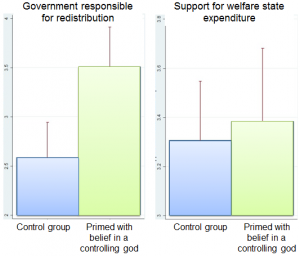
Surprisingly, belief that God is in control increases...
TRENDING AT PATHEOS Nonreligious

Dethroning Jesus and Enthroning Yourself
Jesus Never Asked to Be Worshipped. He Asked to Be Understood. Christianity...

Why Most Christians are Really Paulians and Jobians
I Don't Care, But It Matters Let's get this out of the...

Essential Tips to Successfully Navigate the Selling Process
Selling a house can feel overwhelming, but it doesn’t have to be....

To Make Remote Work Effective, Think About Others
The COVID-19 pandemic forced many companies to rapidly transition to remote work....

Flexibility Is Key to Solving Problems of Tomorrow
The world of work is undergoing a dramatic transformation. The COVID-19 pandemic...
view all Nonreligious blogs
Ad-Free & Subscriber Log-In Subscription Support
- About Us
- 2026 Calendar
- Videos
- Podcasts
- Library of World Religions
- Faith In Media Tracker
- Advertise With Us
- Write for Us
- Privacy Policy
- Terms of Service
- Do Not Sell My Data
- Contact Us
- Radiant Digital
- Manage Newsletter Subscriptions
- Unsubscribe From Notifications
- Sitemap
Copyright 2008-2026, Patheos. All rights reserved.
Subscription Support Ad-Free & Subscriber Log-In
Follow Patheos