
BuddhistCatholicContemplativeEvangelicalGeneral ChristianHinduJewishLatter-day SaintMuslimNew VisionsProgressive Christian
Beliefs
- Buddhist
- Catholic
- Contemplative
- Evangelical
- General Christian
- Hindu
- Jewish
- Latter-day Saint
- More Voices
- Muslim
- New Visions
- Pagan
- Progressive Christian
Topics
- Religion News
- Food and Religion
- Sports and Religion
- Religious Art
- Religious Music and Entertainment
- Religious Events
- History and Religion
- Style and Religion
- Politics and Religion
- Women in Religion
- Recreation Outdoors and Religion
- Business Finance and Religion
- Careers Workplace and Religion
- Education and Religion
- Family Parenting and Religion
- Health Fitness and Religion
- Home and Religion
- Relationships and Religion
- Technology and Religion
- Travel and Religion
Columnists
- Buddhist Columnists
- Business Finance and Religion Columnists
- Careers Workplace and Religion Columnists
- Catholic Columnists
- Contemplative Columnists
- Education and Religion Columnists
- Evangelists Columnists
- Family Parenting and Religion Columnists
- General Christian Columnists
- Health Fitness and Religion Columnists
- Hindu Columnists
- History and Religion Columnists
- Home and Religion Columnists
- Jewish Columnists
- More Voices Columnists
- Latter Day Columnists
- Muslim Columnists
- New Visions Columnists
- Nonreligious Columnists
- Pagan Columnists
- Politics and Religion Columnists
- Progressive Columnists
- Recreation Outdoors and Religion Columnists
- Relationships and Religion Columnists
- Religion News Columnists
- Religious Art Columnists
- Religious Events Columnists
- Religious Music and Entertainment Columnists
- Sports and Religion Columnists
- Style and Religion Columnists
- Technology and Religion Columnists
- Travel and Religion Columnists
- Women in Religion Columnists
Resource Library
- 2026 Calendar
- Library of World Religions
- The 100 Most Holy Places on Earth
- Patheos Answers
- Podcasts
- Videos
- Faith Leaders Database
- Anglican Episcopalian
- Bahai
- Baptist
- Buddhism
- Christianity
- Confucianism
- Eastern Orthodoxy
- Hinduism
- Holiness and Pentecostal
- ISKCON
- Islam
- Judaism
- Lutheran
- Methodist
- The Church of Jesus Christ of Latter-day Saints
- New Age
- Paganism
- Presbytarian and Reformed
- Protestantism
- Religion Behind the Scenes
- Roman Catholic
- Scientology
- Shia Islam
- Sikhism
- Sufism
- Sunni Islam
- Taoism
- Zen
- See all religions
Research Tools
 Ad-Free & Subscriber Log-In Subscription Support
Ad-Free & Subscriber Log-In Subscription Support
Follow Patheos 

- Trending:
- Forgiveness
- |
- Marriage
- |
- Consciousness
- |
- Death Penalty
- |
- Election
- |
- Halloween
 Epiphenom
- Home
- Nonreligious
- I’m gonna wash that god right into my hair!
I’m gonna wash that god right into my hair!
Last updated on: November 12, 2014 at 2:58 am by Epiphenom
I’m gonna wash that god right into my hair! 2014-11-12T02:58:06+01:00 Epiphenom
Patheos Explore the world's faith through different perspectives on religion and spirituality! Patheos has the views of the prevalent religions and spiritualities of the world.
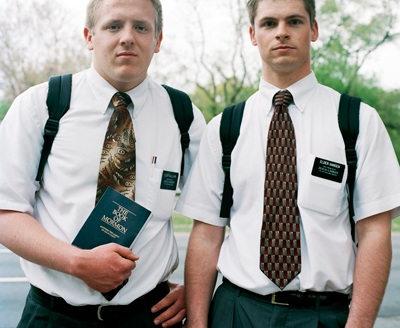
There’s an interesting link between physical disgust and moral disgust. Not only do we pull the same faces in response to both, but there is evidence that washing your hands can make you make you feel better about past transgression, and judge the transgressions of others more harshly (Lee and Schwarz, 2011).
Jesse Lee Preston and Ryan Ritter at the University of Illinois have previously shown that hand washing can reduce the sense of disgust felt by religious people towards atheism. Now they have taken a look at how cleanliness relates to religion.
Recruiting subjects through the Mechanical Turk, they found that subjects primed with religious concepts tended to complete ambiguous, incomplete words by filling in the blanks to make a word related to cleanliness (e.g., they completed W_ SH as WASH, rather than WISH).
In another study, they found that subjects primed with religion rated cleaning products as relatively more desirable than other products. As with the first study, this effect seemed equally strong regardless of how religious the subjects were to begin with.
But the third study was the most interesting. This one looked at the reverse effect: whether a feeling of cleanliness can make you more religious.
In this study, the subjects were asked to copy out and mentalize a paragraph – either describing being grubby or being clean.The ones made to think about cleanliness later reported that religious beliefs were more important to them.
In other words, just thinking about being clean made these people feel like they were more religious!
Preston and Ritter conclude that:
The present findings may suggest another important function of religion, to foster hygiene and cleanliness among its followers.
However, they do also point out that there might be other factors at work:
… purity rituals demonstrate commitment to the faith that can enhance group commitment Cleaning and grooming behavior have also been linked to social connection, and so the regimented hygiene reinforced in religious ritual could also promote prosocial behavior and large-scale cooperation within that group
But I wonder if there is another association. Cleanliness is hard work – the default, lazy option is to be dirty. It’s partly for this reason that cleanliness is a socially desirable trait – it’s a way of marking yourself out to be diligent and hard working.
 In most societies, religion similarly is a marker of a diligent, person who values social approval. It’s not a coincidence that evangelicals are often the epitome of clean-cut goodness. Grunge is for outsiders!
Perhaps, then, the psychological link between religion and cleanliness is a purely social one – and a modern one at that.
After all, while the conquistadors were astonished by the public hygiene to Aztec cities, Aztec priests were, notoriously, forbidden to wash for religious reasons!

Jesse Lee Preston, & Ryan S. Ritter (2012). Cleanliness and godliness: A mutual association between two forms of personal purity Journal of Experimental Social Psychology, 48, 1365-1368
 This article by Tom Rees was first published on Epiphenom. It is licensed under Creative Commons.
Previous Post

November 17, 2012
Under pressure, even scientists say things exist for a purpose
Browse Our Archives
Select a Category Causes of religion - evolution Causes of religion - psychological Causes of religion - social Demographics Digest Effects of religion - health Effects of religion - psychological Effects of religion - social Notifications Politics Uncategorized
Select a Month March 2016 February 2016 January 2016 December 2015 November 2015 October 2015 September 2015 August 2015 July 2015 June 2015 May 2015 April 2015 March 2015 February 2015 January 2015 December 2014 November 2014 October 2014 September 2014 August 2014 July 2014 June 2014 May 2014 April 2014 March 2014 February 2014 January 2014 December 2013 November 2013 October 2013 September 2013 August 2013 July 2013 June 2013 May 2013 April 2013 March 2013 February 2013 January 2013 December 2012 November 2012 October 2012 September 2012 August 2012 July 2012 June 2012 May 2012 April 2012 March 2012 February 2012 January 2012 December 2011 November 2011 October 2011 September 2011 August 2011 July 2011 June 2011 May 2011 April 2011 March 2011 February 2011 January 2011 December 2010 November 2010 October 2010 September 2010 August 2010 July 2010 June 2010 May 2010 April 2010 March 2010 February 2010 January 2010 December 2009 November 2009 October 2009 September 2009 August 2009 July 2009 June 2009 May 2009 April 2009 March 2009 February 2009 January 2009 December 2008 November 2008 October 2008 September 2008 August 2008 July 2008 June 2008 May 2008 April 2008 March 2008 February 2008 January 2008 December 2007 November 2007 October 2007
Follow Us!
TAKE THE
Religious Wisdom Quiz
What sea did Moses part?
Select your answer to see how you score.
Sea of Galilee Red Sea Mediterranean Sea Dead Sea
Related posts from Epiphenom

Do social crises lead to religious revivals? Nah!

What kind of woman would pray for health...

Can you use religion to change attitudes towards...

Dogmatic atheism and fundamentalist Christianity: creating certainty in...
TRENDING AT PATHEOS Nonreligious

Dethroning Jesus and Enthroning Yourself
Jesus Never Asked to Be Worshipped. He Asked to Be Understood. Christianity...

Why Most Christians are Really Paulians and Jobians
I Don't Care, But It Matters Let's get this out of the...

Essential Tips to Successfully Navigate the Selling Process
Selling a house can feel overwhelming, but it doesn’t have to be....

To Make Remote Work Effective, Think About Others
The COVID-19 pandemic forced many companies to rapidly transition to remote work....

Flexibility Is Key to Solving Problems of Tomorrow
The world of work is undergoing a dramatic transformation. The COVID-19 pandemic...
view all Nonreligious blogs
Ad-Free & Subscriber Log-In Subscription Support
- About Us
- 2026 Calendar
- Videos
- Podcasts
- Library of World Religions
- Faith In Media Tracker
- Advertise With Us
- Write for Us
- Privacy Policy
- Terms of Service
- Do Not Sell My Data
- Contact Us
- Radiant Digital
- Manage Newsletter Subscriptions
- Unsubscribe From Notifications
- Sitemap
Copyright 2008-2026, Patheos. All rights reserved.
Subscription Support Ad-Free & Subscriber Log-In
Follow Patheos