
BuddhistCatholicContemplativeEvangelicalGeneral ChristianHinduJewishLatter-day SaintMuslimNew VisionsProgressive Christian
Beliefs
- Buddhist
- Catholic
- Contemplative
- Evangelical
- General Christian
- Hindu
- Jewish
- Latter-day Saint
- More Voices
- Muslim
- New Visions
- Pagan
- Progressive Christian
Topics
- Religion News
- Food and Religion
- Sports and Religion
- Religious Art
- Religious Music and Entertainment
- Religious Events
- History and Religion
- Style and Religion
- Politics and Religion
- Women in Religion
- Recreation Outdoors and Religion
- Business Finance and Religion
- Careers Workplace and Religion
- Education and Religion
- Family Parenting and Religion
- Health Fitness and Religion
- Home and Religion
- Relationships and Religion
- Technology and Religion
- Travel and Religion
Columnists
- Buddhist Columnists
- Business Finance and Religion Columnists
- Careers Workplace and Religion Columnists
- Catholic Columnists
- Contemplative Columnists
- Education and Religion Columnists
- Evangelists Columnists
- Family Parenting and Religion Columnists
- General Christian Columnists
- Health Fitness and Religion Columnists
- Hindu Columnists
- History and Religion Columnists
- Home and Religion Columnists
- Jewish Columnists
- More Voices Columnists
- Latter Day Columnists
- Muslim Columnists
- New Visions Columnists
- Nonreligious Columnists
- Pagan Columnists
- Politics and Religion Columnists
- Progressive Columnists
- Recreation Outdoors and Religion Columnists
- Relationships and Religion Columnists
- Religion News Columnists
- Religious Art Columnists
- Religious Events Columnists
- Religious Music and Entertainment Columnists
- Sports and Religion Columnists
- Style and Religion Columnists
- Technology and Religion Columnists
- Travel and Religion Columnists
- Women in Religion Columnists
Resource Library
- 2026 Calendar
- Library of World Religions
- The 100 Most Holy Places on Earth
- Patheos Answers
- Podcasts
- Videos
- Faith Leaders Database
- Anglican Episcopalian
- Bahai
- Baptist
- Buddhism
- Christianity
- Confucianism
- Eastern Orthodoxy
- Hinduism
- Holiness and Pentecostal
- ISKCON
- Islam
- Judaism
- Lutheran
- Methodist
- The Church of Jesus Christ of Latter-day Saints
- New Age
- Paganism
- Presbytarian and Reformed
- Protestantism
- Religion Behind the Scenes
- Roman Catholic
- Scientology
- Shia Islam
- Sikhism
- Sufism
- Sunni Islam
- Taoism
- Zen
- See all religions
Research Tools
 Ad-Free & Subscriber Log-In Subscription Support
Ad-Free & Subscriber Log-In Subscription Support
Follow Patheos 

- Trending:
- Forgiveness
- |
- Marriage
- |
- Consciousness
- |
- Death Penalty
- |
- Election
- |
- Halloween
 Epiphenom
- Home
- Nonreligious
- Why is there something rather than nothing?
Why is there something rather than nothing?
Last updated on: November 12, 2014 at 3:20 am by Epiphenom
Why is there something rather than nothing? 2014-11-12T03:20:15+01:00 Epiphenom
Patheos Explore the world's faith through different perspectives on religion and spirituality! Patheos has the views of the prevalent religions and spiritualities of the world.
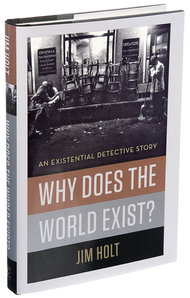
One of the perks of writing a blog is that sometimes publishers offer to send you copies of new books. Sadly, they are mostly not the books that I actually want to read.
But here’s one that was really enjoyable, but was also (tangentially) relevant to this blog. So here’s a brief review – consider it an advertorial 🙂
The book Why does the World Exist? is framed as an ‘existential detective story’. Basically what this means is that the writer, Jim Holt, has shuttled around the world chatting to a bunch of intellectuals (mostly philosophers, but the occasional scientist and even one or two theologians) who give their spin on the question.
Now, the idea that Holt set out on a pilgrimage of enlightenment in the way depicted in the book is clearly a bit of narrative fiction. It’s obvious from the way he writes that the guy knows his stuff, and I’m sure he knew pretty much what he was going to hear each of them say before he met them. But it’s a fiction that works well, and makes the book very readable despite what are often pretty tough topics.
The questions he starts off with were not what I was expecting at all – what is nothing, and is it actually possible for nothing to exist? What does it mean to say that A causes B, and does A have to precede B in order to cause B?
That last point turns out to be pretty critical to the whole story.You see, Holt’s not interested in what caused the universe to exist – well, he is but, as the Oxford Quantum Theorist David Deutsch points, the problem with conventional explanations is that even if you find an explanation, it needs to have some context. There’s always the problem of why this explanation and not some other explanation.
That, of course, is the problem with using the existence of the universe to argue for the existence of God. What explains the existence of God and, as importantly, why this God and not some other God?
The theological explanations (from Richard Swinburne and John Leslie) were not terribly convincing. But what I liked about this book is that Holt treats all the arguments put forward with a great deal of sympathy. He carefully explains why it is that they might be right – sometimes to the point where I was on the verge of putting the book down in exasperation – before methodically pulling the arguments to pieces!
If you are into this sort of stuff, then many of the themes (Anslem’s and Goedel’s arguments, the many worlds hypothesis, platonic forms etc) will be familiar to you. But even when I knew the philosopher and the argument, I found myself enjoying the ride because Holt really has a gift for writing about these topics. There are some tough concepts to digest, but Holt paces it well and keeps it interesting.
I’m sure I won’t be spoiling the story if I reveal to you that, sadly, Holt does not reveal the mystery of existence at the end of the book.
However, he does get rather closer than I was expecting. At least now I have some idea what kind of explanation could possibly suffice. And that’s got to be a step forward!
 This article by Tom Rees was first published on Epiphenom. It is licensed under Creative Commons.
Next Post

September 10, 2012 When did moralising gods emerge?
Browse Our Archives
Select a Category Causes of religion - evolution Causes of religion - psychological Causes of religion - social Demographics Digest Effects of religion - health Effects of religion - psychological Effects of religion - social Notifications Politics Uncategorized
Select a Month March 2016 February 2016 January 2016 December 2015 November 2015 October 2015 September 2015 August 2015 July 2015 June 2015 May 2015 April 2015 March 2015 February 2015 January 2015 December 2014 November 2014 October 2014 September 2014 August 2014 July 2014 June 2014 May 2014 April 2014 March 2014 February 2014 January 2014 December 2013 November 2013 October 2013 September 2013 August 2013 July 2013 June 2013 May 2013 April 2013 March 2013 February 2013 January 2013 December 2012 November 2012 October 2012 September 2012 August 2012 July 2012 June 2012 May 2012 April 2012 March 2012 February 2012 January 2012 December 2011 November 2011 October 2011 September 2011 August 2011 July 2011 June 2011 May 2011 April 2011 March 2011 February 2011 January 2011 December 2010 November 2010 October 2010 September 2010 August 2010 July 2010 June 2010 May 2010 April 2010 March 2010 February 2010 January 2010 December 2009 November 2009 October 2009 September 2009 August 2009 July 2009 June 2009 May 2009 April 2009 March 2009 February 2009 January 2009 December 2008 November 2008 October 2008 September 2008 August 2008 July 2008 June 2008 May 2008 April 2008 March 2008 February 2008 January 2008 December 2007 November 2007 October 2007
Follow Us!
TAKE THE
Religious Wisdom Quiz
What event occurred immediately after Jesus died?
Select your answer to see how you score.
A great flood An earthquake split the land The sun turned red The temple curtain tore
Related posts from Epiphenom

Do social crises lead to religious revivals? Nah!

What kind of woman would pray for health...

Can you use religion to change attitudes towards...

Dogmatic atheism and fundamentalist Christianity: creating certainty in...
TRENDING AT PATHEOS Nonreligious

Dethroning Jesus and Enthroning Yourself
Jesus Never Asked to Be Worshipped. He Asked to Be Understood. Christianity...

Why Most Christians are Really Paulians and Jobians
I Don't Care, But It Matters Let's get this out of the...

Essential Tips to Successfully Navigate the Selling Process
Selling a house can feel overwhelming, but it doesn’t have to be....

To Make Remote Work Effective, Think About Others
The COVID-19 pandemic forced many companies to rapidly transition to remote work....

Flexibility Is Key to Solving Problems of Tomorrow
The world of work is undergoing a dramatic transformation. The COVID-19 pandemic...
view all Nonreligious blogs
Ad-Free & Subscriber Log-In Subscription Support
- About Us
- 2026 Calendar
- Videos
- Podcasts
- Library of World Religions
- Faith In Media Tracker
- Advertise With Us
- Write for Us
- Privacy Policy
- Terms of Service
- Do Not Sell My Data
- Contact Us
- Radiant Digital
- Manage Newsletter Subscriptions
- Unsubscribe From Notifications
- Sitemap
Copyright 2008-2026, Patheos. All rights reserved.
Subscription Support Ad-Free & Subscriber Log-In
Follow Patheos