
BuddhistCatholicContemplativeEvangelicalGeneral ChristianHinduJewishLatter-day SaintMuslimNew VisionsProgressive Christian
Beliefs
- Buddhist
- Catholic
- Contemplative
- Evangelical
- General Christian
- Hindu
- Jewish
- Latter-day Saint
- More Voices
- Muslim
- New Visions
- Pagan
- Progressive Christian
Topics
- Religion News
- Food and Religion
- Sports and Religion
- Religious Art
- Religious Music and Entertainment
- Religious Events
- History and Religion
- Style and Religion
- Politics and Religion
- Women in Religion
- Recreation Outdoors and Religion
- Business Finance and Religion
- Careers Workplace and Religion
- Education and Religion
- Family Parenting and Religion
- Health Fitness and Religion
- Home and Religion
- Relationships and Religion
- Technology and Religion
- Travel and Religion
Columnists
- Buddhist Columnists
- Business Finance and Religion Columnists
- Careers Workplace and Religion Columnists
- Catholic Columnists
- Contemplative Columnists
- Education and Religion Columnists
- Evangelists Columnists
- Family Parenting and Religion Columnists
- General Christian Columnists
- Health Fitness and Religion Columnists
- Hindu Columnists
- History and Religion Columnists
- Home and Religion Columnists
- Jewish Columnists
- More Voices Columnists
- Latter Day Columnists
- Muslim Columnists
- New Visions Columnists
- Nonreligious Columnists
- Pagan Columnists
- Politics and Religion Columnists
- Progressive Columnists
- Recreation Outdoors and Religion Columnists
- Relationships and Religion Columnists
- Religion News Columnists
- Religious Art Columnists
- Religious Events Columnists
- Religious Music and Entertainment Columnists
- Sports and Religion Columnists
- Style and Religion Columnists
- Technology and Religion Columnists
- Travel and Religion Columnists
- Women in Religion Columnists
Resource Library
- 2026 Calendar
- Library of World Religions
- The 100 Most Holy Places on Earth
- Patheos Answers
- Podcasts
- Videos
- Faith Leaders Database
- Anglican Episcopalian
- Bahai
- Baptist
- Buddhism
- Christianity
- Confucianism
- Eastern Orthodoxy
- Hinduism
- Holiness and Pentecostal
- ISKCON
- Islam
- Judaism
- Lutheran
- Methodist
- The Church of Jesus Christ of Latter-day Saints
- New Age
- Paganism
- Presbytarian and Reformed
- Protestantism
- Religion Behind the Scenes
- Roman Catholic
- Scientology
- Shia Islam
- Sikhism
- Sufism
- Sunni Islam
- Taoism
- Zen
- See all religions
Research Tools
 Ad-Free & Subscriber Log-In Subscription Support
Ad-Free & Subscriber Log-In Subscription Support
Follow Patheos 

- Trending:
- Forgiveness
- |
- Marriage
- |
- Consciousness
- |
- Death Penalty
- |
- Election
- |
- Halloween
 Epiphenom
- Home
- Nonreligious
- Christians find it harder than atheists to recognize their own faces
Christians find it harder than atheists to recognize their own faces
Last updated on: November 12, 2014 at 3:30 am by Epiphenom
Christians find it harder than atheists to recognize their own faces 2014-11-12T03:30:03+01:00 Epiphenom
Patheos Explore the world's faith through different perspectives on religion and spirituality! Patheos has the views of the prevalent religions and spiritualities of the world.
Christianity, many people would agree, encourages adherents to think less about themselves and more about their group of co-religionists. Yina Ma and Shihui Han, of Peking University in Beijing, China, wanted to know if these teachings actually had meaningful psychological effects.
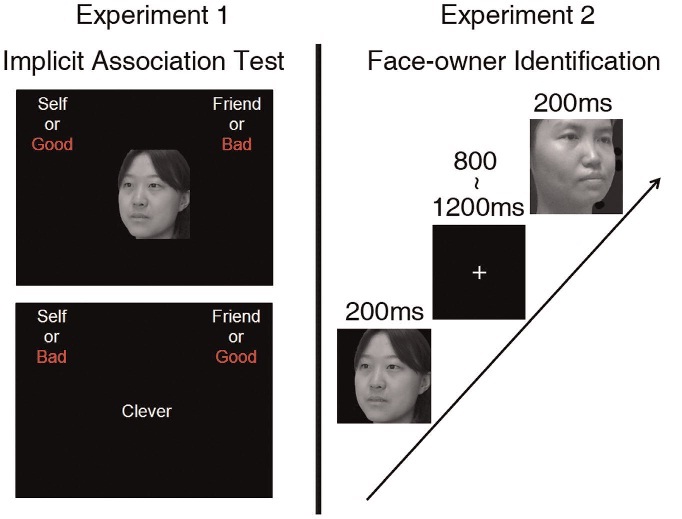
They recruited pairs of students: 10 pairs of atheists, and 10 pairs of Christians. All the pairs were matched for age and gender, and each pair of friends had known each other for at least two years during which they were roommates or classmates.
The did two tests, on of which was quite straightforward. They flashed up photographs of either the subjects own face, or their friend’s. The task was to recognised them by pressing an appropriate key: fast reactions on this one indicate that it was easy to recognize the face.
The second was a version of the Implicit Association Test. In this test, the subjects had to match either their own or their friend’s faces with positive (e.g. “good”) or negative (e.g. “bad”) words.
The theory goes that if you have a good opinion of yourself, or your friend, then you will find it easier to match the face with a positive word, and harder (i.e. take longer) to match it with a negative word. So this test is a measure of your gut feeling towards them.
Ma and Han found that atheists and Christians were equally fast at recognizing friend’s faces. Atheists were faster at recognizing their own faces but, remarkably, Christians weren’t.
They also found that atheists and Christians had equally positive feelings about their friends. However, while atheists were even more positive about themselves, Christians weren’t.
They went on to show that the results of the Implicit Association Test explained the results on the first test. In other words, the relatively low opinion Christians had of themselves was linked to their relatively tardy reactions on the self recognition test.
Ma and Han note that previous research has shown that Christian belief and practice that
emphasize human sinfulness seems to weaken positive attitudes toward the self, and suspect that this is what their results have shown:
…our results suggest that the implicit positive view of the self can be reduced by Christian belief and practice that repudiates the distinctness of the self and friends and this in turn can eliminate the advantage of self-face over friend-face in the believers.
Of course, Christianity is very much a minority religion in China, and Chinese have a collectivist culture, compared with Western individualism. So we can’t necessarily extrapolate these results to Christians and atheists elsewhere in the world.
Nor can it be assumed that all Christian sects have the same effect. Other research has shown that Calvinists seem to be ulta-individualistic compared with both atheists and Roman Catholics, for example.
However, it is intriguing to think about these results in the light of theories which propose that religions were invented as a tool to increase group cohesion.

Ma Y, & Han S (2012). Is the self always better than a friend? Self-face recognition in christians and atheists. PloS one, 7 (5) PMID: 22662231
 This article by Tom Rees was first published on Epiphenom. It is licensed under Creative Commons.
Next Post

June 14, 2012 Do 'world religions' make cuckoldry easier?
Browse Our Archives
Select a Category Causes of religion - evolution Causes of religion - psychological Causes of religion - social Demographics Digest Effects of religion - health Effects of religion - psychological Effects of religion - social Notifications Politics Uncategorized
Select a Month March 2016 February 2016 January 2016 December 2015 November 2015 October 2015 September 2015 August 2015 July 2015 June 2015 May 2015 April 2015 March 2015 February 2015 January 2015 December 2014 November 2014 October 2014 September 2014 August 2014 July 2014 June 2014 May 2014 April 2014 March 2014 February 2014 January 2014 December 2013 November 2013 October 2013 September 2013 August 2013 July 2013 June 2013 May 2013 April 2013 March 2013 February 2013 January 2013 December 2012 November 2012 October 2012 September 2012 August 2012 July 2012 June 2012 May 2012 April 2012 March 2012 February 2012 January 2012 December 2011 November 2011 October 2011 September 2011 August 2011 July 2011 June 2011 May 2011 April 2011 March 2011 February 2011 January 2011 December 2010 November 2010 October 2010 September 2010 August 2010 July 2010 June 2010 May 2010 April 2010 March 2010 February 2010 January 2010 December 2009 November 2009 October 2009 September 2009 August 2009 July 2009 June 2009 May 2009 April 2009 March 2009 February 2009 January 2009 December 2008 November 2008 October 2008 September 2008 August 2008 July 2008 June 2008 May 2008 April 2008 March 2008 February 2008 January 2008 December 2007 November 2007 October 2007
Follow Us!
TAKE THE
Religious Wisdom Quiz
How old was Abraham when he died?
Select your answer to see how you score.
150 years 125 years 200 years 175 years
Related posts from Epiphenom

Do social crises lead to religious revivals? Nah!

What kind of woman would pray for health...

Can you use religion to change attitudes towards...

Dogmatic atheism and fundamentalist Christianity: creating certainty in...
TRENDING AT PATHEOS Nonreligious

Dethroning Jesus and Enthroning Yourself
Jesus Never Asked to Be Worshipped. He Asked to Be Understood. Christianity...

Why Most Christians are Really Paulians and Jobians
I Don't Care, But It Matters Let's get this out of the...

Essential Tips to Successfully Navigate the Selling Process
Selling a house can feel overwhelming, but it doesn’t have to be....

To Make Remote Work Effective, Think About Others
The COVID-19 pandemic forced many companies to rapidly transition to remote work....

Flexibility Is Key to Solving Problems of Tomorrow
The world of work is undergoing a dramatic transformation. The COVID-19 pandemic...
view all Nonreligious blogs
Ad-Free & Subscriber Log-In Subscription Support
- About Us
- 2026 Calendar
- Videos
- Podcasts
- Library of World Religions
- Faith In Media Tracker
- Advertise With Us
- Write for Us
- Privacy Policy
- Terms of Service
- Do Not Sell My Data
- Contact Us
- Radiant Digital
- Manage Newsletter Subscriptions
- Unsubscribe From Notifications
- Sitemap
Copyright 2008-2026, Patheos. All rights reserved.
Subscription Support Ad-Free & Subscriber Log-In
Follow Patheos