
BuddhistCatholicContemplativeEvangelicalGeneral ChristianHinduJewishLatter-day SaintMuslimNew VisionsProgressive Christian
Beliefs
- Buddhist
- Catholic
- Contemplative
- Evangelical
- General Christian
- Hindu
- Jewish
- Latter-day Saint
- More Voices
- Muslim
- New Visions
- Pagan
- Progressive Christian
Topics
- Religion News
- Food and Religion
- Sports and Religion
- Religious Art
- Religious Music and Entertainment
- Religious Events
- History and Religion
- Style and Religion
- Politics and Religion
- Women in Religion
- Recreation Outdoors and Religion
- Business Finance and Religion
- Careers Workplace and Religion
- Education and Religion
- Family Parenting and Religion
- Health Fitness and Religion
- Home and Religion
- Relationships and Religion
- Technology and Religion
- Travel and Religion
Columnists
- Buddhist Columnists
- Business Finance and Religion Columnists
- Careers Workplace and Religion Columnists
- Catholic Columnists
- Contemplative Columnists
- Education and Religion Columnists
- Evangelists Columnists
- Family Parenting and Religion Columnists
- General Christian Columnists
- Health Fitness and Religion Columnists
- Hindu Columnists
- History and Religion Columnists
- Home and Religion Columnists
- Jewish Columnists
- More Voices Columnists
- Latter Day Columnists
- Muslim Columnists
- New Visions Columnists
- Nonreligious Columnists
- Pagan Columnists
- Politics and Religion Columnists
- Progressive Columnists
- Recreation Outdoors and Religion Columnists
- Relationships and Religion Columnists
- Religion News Columnists
- Religious Art Columnists
- Religious Events Columnists
- Religious Music and Entertainment Columnists
- Sports and Religion Columnists
- Style and Religion Columnists
- Technology and Religion Columnists
- Travel and Religion Columnists
- Women in Religion Columnists
Resource Library
- 2026 Calendar
- Library of World Religions
- The 100 Most Holy Places on Earth
- Patheos Answers
- Podcasts
- Videos
- Faith Leaders Database
- Anglican Episcopalian
- Bahai
- Baptist
- Buddhism
- Christianity
- Confucianism
- Eastern Orthodoxy
- Hinduism
- Holiness and Pentecostal
- ISKCON
- Islam
- Judaism
- Lutheran
- Methodist
- The Church of Jesus Christ of Latter-day Saints
- New Age
- Paganism
- Presbytarian and Reformed
- Protestantism
- Religion Behind the Scenes
- Roman Catholic
- Scientology
- Shia Islam
- Sikhism
- Sufism
- Sunni Islam
- Taoism
- Zen
- See all religions
Research Tools
 Ad-Free & Subscriber Log-In Subscription Support
Ad-Free & Subscriber Log-In Subscription Support
Follow Patheos 

- Trending:
- Forgiveness
- |
- Marriage
- |
- Consciousness
- |
- Death Penalty
- |
- Election
- |
- Halloween
 Epiphenom
- Home
- Nonreligious
- What kind of insecurity turns Europeans on to religion?
What kind of insecurity turns Europeans on to religion?
Last updated on: March 29, 2015 at 9:59 pm by Epiphenom
What kind of insecurity turns Europeans on to religion? 2015-03-29T21:59:10+01:00 Epiphenom
Patheos Explore the world's faith through different perspectives on religion and spirituality! Patheos has the views of the prevalent religions and spiritualities of the world.
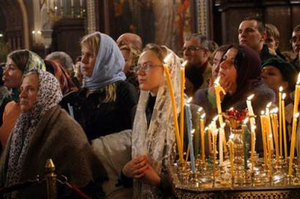
As Europe staggers towards financial apocalypse, one question that’s almost certainly not in the minds of Merkel, Sarkozy, and Papandreou is what effect all the turmoil will have on people’s religious beliefs. After all, there’s been a bunch of research linking anxiety and insecurity to heightened religious beliefs, and earlier this year there was more evidence linking religion to economic insecurity.
But a lot of these studies have been pretty broad brush. They look at average conditions and average levels of religion among a wide basket of countries. Tim Immerzeel and Frank van Tubergen, at Utrecht University in the Netherlands, wanted to dig a little deeper (you might remember van Tubergen from an earlier study looking at income inequality and Church attendance).
They wanted to separate out the effects of an individual’s insecurity from the effects of simply living in a country which is, well, less secure. They wanted to separate out the effects of what has happened in the past, from the effects of the current situation. And they also wanted to separate out financial insecurity from existential insecurity (e.g threats to your life).
They did this by looking at the European Social Survey, which interviewed people in 32 European countries and Israel in several rounds from 2002-2009 (actually, they could only use data from 25 countries because several countries [Bulgaria, Cyprus, Croatia, Latvia, Portugal, Romania, and Ukraine] didn’t ask all the questions).
They found some interesting things. Firstly, people who are in good health are less religious – although they are more likely to attend Church (perhaps because it’s easier for them to get there). Widows and widowers are more religious (people who are divorced are the least religious, however).
People who have experienced war in the past, or the threat of terrorism now, are also more religious.
Financial security also matters, although here it gets a little bit complicated. People in stable employment now are less religious (as are educated people), suggesting that current financial security dampens enthusiasm for religion. However, people whose parents were unemployed when they were kids are actually less religious!
They also found a weak link between the strength of individual religious beliefs and the economic environment. In countries with a high unemployment rate, people were more likely to go to Church but were actually no more religious. Probably they go to Church as a kind of social insurance.
And, unlike what others have found, there was not really very much effect of social welfare spending on religion. No effect on religious beliefs, and only a marginal (negative) effect on Church attendance.
In fact, Immerzeel and van Tubergen found, in general, that the characteristics of the country didn’t have all that much effect on an individual’s religion – the individual’s specific personal circumstances was at least as important.
Now that might sound like a no-brainer, but in fact it differs from what other studies have suggested. In fact, it directly contradicts two studies from earlier this year. The first, from Ed Diener, showed that religion only improves well-being in tough societies. The second, from Frederick Solt and colleagues, found that in unequal countries both rich and poor are more religious.
Maybe that’s because Immerzeel and van Tubergen only looked at European countries (and the wealthier ones at that – remember they had to drop some of the poorer ones out). So all the countries were pretty similar, in terms of social insurance and income inequality. Maybe they didn’t find a difference simply because there weren’t all that many differences to find.
So, not a reason to throw out the idea that general economic malaise can make people less religious, but food for thought.
Their take home is that both economic and existential insecurity can increase religion. More importantly, perhaps, current financial insecurity can indeed lead to stronger religious fervour. Coupled with fertility and immigration trends, this is yet another sign that Europe’s secularisation may yet turn a corner.

Immerzeel, T., & van Tubergen, F. (2011). Religion as Reassurance? Testing the Insecurity Theory in 26 European Countries European Sociological Review DOI: 10.1093/esr/jcr072
 This article by Tom Rees was first published on Epiphenom. It is licensed under Creative Commons.
Previous Post

November 1, 2011
Deliver us from temptation (and take care of everything else, too)
Next Post
November 11, 2011 In the West, religious nations are more sexist
Browse Our Archives
Select a Category Causes of religion - evolution Causes of religion - psychological Causes of religion - social Demographics Digest Effects of religion - health Effects of religion - psychological Effects of religion - social Notifications Politics Uncategorized
Select a Month March 2016 February 2016 January 2016 December 2015 November 2015 October 2015 September 2015 August 2015 July 2015 June 2015 May 2015 April 2015 March 2015 February 2015 January 2015 December 2014 November 2014 October 2014 September 2014 August 2014 July 2014 June 2014 May 2014 April 2014 March 2014 February 2014 January 2014 December 2013 November 2013 October 2013 September 2013 August 2013 July 2013 June 2013 May 2013 April 2013 March 2013 February 2013 January 2013 December 2012 November 2012 October 2012 September 2012 August 2012 July 2012 June 2012 May 2012 April 2012 March 2012 February 2012 January 2012 December 2011 November 2011 October 2011 September 2011 August 2011 July 2011 June 2011 May 2011 April 2011 March 2011 February 2011 January 2011 December 2010 November 2010 October 2010 September 2010 August 2010 July 2010 June 2010 May 2010 April 2010 March 2010 February 2010 January 2010 December 2009 November 2009 October 2009 September 2009 August 2009 July 2009 June 2009 May 2009 April 2009 March 2009 February 2009 January 2009 December 2008 November 2008 October 2008 September 2008 August 2008 July 2008 June 2008 May 2008 April 2008 March 2008 February 2008 January 2008 December 2007 November 2007 October 2007
Follow Us!
TAKE THE
Religious Wisdom Quiz
What is the lesson in the Parable of the Unforgiving Servant?
Select your answer to see how you score.
Obey without question Work for salvation Forgive others as you are forgiven Store up treasure on earth
Related posts from Epiphenom

Do social crises lead to religious revivals? Nah!

America is finally losing its religion - and...
Surprisingly, belief that God is in control increases...

Churchgoing has been on the decline for decades...
TRENDING AT PATHEOS Nonreligious

Dethroning Jesus and Enthroning Yourself
Jesus Never Asked to Be Worshipped. He Asked to Be Understood. Christianity...

Why Most Christians are Really Paulians and Jobians
I Don't Care, But It Matters Let's get this out of the...

Essential Tips to Successfully Navigate the Selling Process
Selling a house can feel overwhelming, but it doesn’t have to be....

To Make Remote Work Effective, Think About Others
The COVID-19 pandemic forced many companies to rapidly transition to remote work....

Flexibility Is Key to Solving Problems of Tomorrow
The world of work is undergoing a dramatic transformation. The COVID-19 pandemic...
view all Nonreligious blogs
Ad-Free & Subscriber Log-In Subscription Support
- About Us
- 2026 Calendar
- Videos
- Podcasts
- Library of World Religions
- Faith In Media Tracker
- Advertise With Us
- Write for Us
- Privacy Policy
- Terms of Service
- Do Not Sell My Data
- Contact Us
- Radiant Digital
- Manage Newsletter Subscriptions
- Unsubscribe From Notifications
- Sitemap
Copyright 2008-2026, Patheos. All rights reserved.
Subscription Support Ad-Free & Subscriber Log-In
Follow Patheos