
BuddhistCatholicContemplativeEvangelicalGeneral ChristianHinduJewishLatter-day SaintMuslimNew VisionsProgressive Christian
Beliefs
- Buddhist
- Catholic
- Contemplative
- Evangelical
- General Christian
- Hindu
- Jewish
- Latter-day Saint
- More Voices
- Muslim
- New Visions
- Pagan
- Progressive Christian
Topics
- Religion News
- Food and Religion
- Sports and Religion
- Religious Art
- Religious Music and Entertainment
- Religious Events
- History and Religion
- Style and Religion
- Politics and Religion
- Women in Religion
- Recreation Outdoors and Religion
- Business Finance and Religion
- Careers Workplace and Religion
- Education and Religion
- Family Parenting and Religion
- Health Fitness and Religion
- Home and Religion
- Relationships and Religion
- Technology and Religion
- Travel and Religion
Columnists
- Buddhist Columnists
- Business Finance and Religion Columnists
- Careers Workplace and Religion Columnists
- Catholic Columnists
- Contemplative Columnists
- Education and Religion Columnists
- Evangelists Columnists
- Family Parenting and Religion Columnists
- General Christian Columnists
- Health Fitness and Religion Columnists
- Hindu Columnists
- History and Religion Columnists
- Home and Religion Columnists
- Jewish Columnists
- More Voices Columnists
- Latter Day Columnists
- Muslim Columnists
- New Visions Columnists
- Nonreligious Columnists
- Pagan Columnists
- Politics and Religion Columnists
- Progressive Columnists
- Recreation Outdoors and Religion Columnists
- Relationships and Religion Columnists
- Religion News Columnists
- Religious Art Columnists
- Religious Events Columnists
- Religious Music and Entertainment Columnists
- Sports and Religion Columnists
- Style and Religion Columnists
- Technology and Religion Columnists
- Travel and Religion Columnists
- Women in Religion Columnists
Resource Library
- 2026 Calendar
- Library of World Religions
- The 100 Most Holy Places on Earth
- Patheos Answers
- Podcasts
- Videos
- Faith Leaders Database
- Anglican Episcopalian
- Bahai
- Baptist
- Buddhism
- Christianity
- Confucianism
- Eastern Orthodoxy
- Hinduism
- Holiness and Pentecostal
- ISKCON
- Islam
- Judaism
- Lutheran
- Methodist
- The Church of Jesus Christ of Latter-day Saints
- New Age
- Paganism
- Presbytarian and Reformed
- Protestantism
- Religion Behind the Scenes
- Roman Catholic
- Scientology
- Shia Islam
- Sikhism
- Sufism
- Sunni Islam
- Taoism
- Zen
- See all religions
Research Tools
 Ad-Free & Subscriber Log-In Subscription Support
Ad-Free & Subscriber Log-In Subscription Support
Follow Patheos 

- Trending:
- Forgiveness
- |
- Marriage
- |
- Consciousness
- |
- Death Penalty
- |
- Election
- |
- Halloween
 Epiphenom
- Home
- Nonreligious
- Well that settles it: income inequality really does go hand in hand with religion
Well that settles it: income inequality really does go hand in hand with religion
Last updated on: March 29, 2015 at 9:49 pm by Epiphenom
Well that settles it: income inequality really does go hand in hand with religion 2015-03-29T21:49:52+01:00 Epiphenom
Patheos Explore the world's faith through different perspectives on religion and spirituality! Patheos has the views of the prevalent religions and spiritualities of the world.
Long-time readers of this blog will know that the link between inequality and religion has a particular fascination for me. In fact, the blog started while I was doing background research into a paper I wrote in 2009, on the link between income inequality and religion in countries around the world.
The idea was first put forward in rough form in an earlier book by Pippa Norris and Ronald Ingelhart. My paper took that a modest step further, by showing that income inequality really did seem to be an independent factor helping to explain why people in some countries pray more often than in others.
But you should always treat any particular piece of research with a healthy pinch of salt. All too often, promising findings tend to evaporate on closer examination. You can only be confident that the effect is real if it holds up when you kick the tyres a bit and test out the hypothesis in different ways.
Which is why it was good to see another paper, later in 2009, which used different (more sophisticated) statistical tools to showed a link between inequality and Church attendance. That was good corroboration, because it used a different set of data and compared it with a different aspect of religion.
And now, a new paper by Nigel Barber has, to my mind, sealed the deal. One of the challenges in this kind of research comes in choosing the data. For example, you would like to look at as big a set of countries as you possibly can. The problem is that, as you move away from the wealthy democracies, the quality of the data becomes increasingly patchy.
You could use a small set of high quality data – but then the problem is that you won’t get a good sample of poorer countries. Or you could throw your net wide, and run the risk of including some dodgy data.
Ideally, you should do both, and Barber’s paper is the first to take the latter approach. He uses data on the prevalence of atheists around the world originally put together by Phil Zuckerman, who compiled it using a mixed bag of surveys and opinion polls. Not the most robust dataset, but it did mean that Barber could look at religion across a whopping 137 countries, representing every part of the globe.
The second challenge comes in figuring out whether the correlation is real, or just a coincidence due to some third factor. For example, the numbers of cars and the numbers of televisions in a country is quite well correlated – but not because cars ’cause’ televisions. In fact, they’re both a product of a third factor – wealth.
So you need to include other factors in your analysis that could reasonably also explain differences in religion between countries. Not too many though! Simply throwing variables into the pot will create spurious results. You have to choose your variables carefully, based on sound reasoning.
Barber choose to include a set of variables that were mostly different to those that have been used before. That’s useful because it effectively means looking at the problem from a fresh perspective. More kicking of the tyres.
[Geek note: Jerry Coyne wrote a review of this paper, but complained that it was a flawed study because it didn’t use multiple regression. He must’ve misread Table 2 in the paper, because that’s where the multiple regression results are presented – complete with estimates of variance inflation to check that there were no issues of multicollinearity]
So, Barber found that countries with more Muslims, a larger agricultural workforce, and more infectious diseases had fewer atheists. And countries that were once communist, had more education, and had higher taxation had more atheists.
But even after taking all this into account, those countries with higher income inequality still had fewer atheists.
That’s a remarkable result, especially when you consider that one of the main ways to reduce income inequality and its bad effects is to increase taxes. So those countries that raise taxes without fixing income inequality are still going to be more religious.
I think now we really can be pretty confident that income inequality is in itself strongly and directly related to religion. But the question is why, and how? Which way does the effect run? Does more income inequality mean more religion? Or is it that religion increases income inequality?
Well, long-time readers of this blog will also know that’s a big question. But there’s another new paper out that digs into this issue in a really clever way. But that’s the topic for the next post!

Barber, N. (2011). A Cross-National Test of the Uncertainty Hypothesis of Religious Belief Cross-Cultural Research, 45 (3), 318-333 DOI: 10.1177/1069397111402465
 This article by Tom Rees was first published on Epiphenom. It is licensed under Creative Commons.
Previous Post

July 31, 2011
Sorry to break it to you like this, but we are all doomed!
Next Post
August 7, 2011 Do the rich use religion to keep the poor in their place?
Browse Our Archives
Select a Category Causes of religion - evolution Causes of religion - psychological Causes of religion - social Demographics Digest Effects of religion - health Effects of religion - psychological Effects of religion - social Notifications Politics Uncategorized
Select a Month March 2016 February 2016 January 2016 December 2015 November 2015 October 2015 September 2015 August 2015 July 2015 June 2015 May 2015 April 2015 March 2015 February 2015 January 2015 December 2014 November 2014 October 2014 September 2014 August 2014 July 2014 June 2014 May 2014 April 2014 March 2014 February 2014 January 2014 December 2013 November 2013 October 2013 September 2013 August 2013 July 2013 June 2013 May 2013 April 2013 March 2013 February 2013 January 2013 December 2012 November 2012 October 2012 September 2012 August 2012 July 2012 June 2012 May 2012 April 2012 March 2012 February 2012 January 2012 December 2011 November 2011 October 2011 September 2011 August 2011 July 2011 June 2011 May 2011 April 2011 March 2011 February 2011 January 2011 December 2010 November 2010 October 2010 September 2010 August 2010 July 2010 June 2010 May 2010 April 2010 March 2010 February 2010 January 2010 December 2009 November 2009 October 2009 September 2009 August 2009 July 2009 June 2009 May 2009 April 2009 March 2009 February 2009 January 2009 December 2008 November 2008 October 2008 September 2008 August 2008 July 2008 June 2008 May 2008 April 2008 March 2008 February 2008 January 2008 December 2007 November 2007 October 2007
Follow Us!
TAKE THE
Religious Wisdom Quiz
What was the name of the sea Jesus calmed during a storm?
Select your answer to see how you score.
Mediterranean Sea Sea of Galilee Red Sea Dead Sea
Related posts from Epiphenom

Do social crises lead to religious revivals? Nah!

America is finally losing its religion - and...
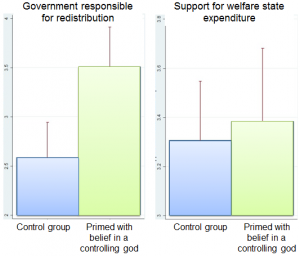
Surprisingly, belief that God is in control increases...

Churchgoing has been on the decline for decades...
TRENDING AT PATHEOS Nonreligious

Dethroning Jesus and Enthroning Yourself
Jesus Never Asked to Be Worshipped. He Asked to Be Understood. Christianity...

Why Most Christians are Really Paulians and Jobians
I Don't Care, But It Matters Let's get this out of the...

Essential Tips to Successfully Navigate the Selling Process
Selling a house can feel overwhelming, but it doesn’t have to be....

To Make Remote Work Effective, Think About Others
The COVID-19 pandemic forced many companies to rapidly transition to remote work....

Flexibility Is Key to Solving Problems of Tomorrow
The world of work is undergoing a dramatic transformation. The COVID-19 pandemic...
view all Nonreligious blogs
Ad-Free & Subscriber Log-In Subscription Support
- About Us
- 2026 Calendar
- Videos
- Podcasts
- Library of World Religions
- Faith In Media Tracker
- Advertise With Us
- Write for Us
- Privacy Policy
- Terms of Service
- Do Not Sell My Data
- Contact Us
- Radiant Digital
- Manage Newsletter Subscriptions
- Unsubscribe From Notifications
- Sitemap
Copyright 2008-2026, Patheos. All rights reserved.
Subscription Support Ad-Free & Subscriber Log-In
Follow Patheos