
BuddhistCatholicContemplativeEvangelicalGeneral ChristianHinduJewishLatter-day SaintMuslimNew VisionsProgressive Christian
Beliefs
- Buddhist
- Catholic
- Contemplative
- Evangelical
- General Christian
- Hindu
- Jewish
- Latter-day Saint
- More Voices
- Muslim
- New Visions
- Pagan
- Progressive Christian
Topics
- Religion News
- Food and Religion
- Sports and Religion
- Religious Art
- Religious Music and Entertainment
- Religious Events
- History and Religion
- Style and Religion
- Politics and Religion
- Women in Religion
- Recreation Outdoors and Religion
- Business Finance and Religion
- Careers Workplace and Religion
- Education and Religion
- Family Parenting and Religion
- Health Fitness and Religion
- Home and Religion
- Relationships and Religion
- Technology and Religion
- Travel and Religion
Columnists
- Buddhist Columnists
- Business Finance and Religion Columnists
- Careers Workplace and Religion Columnists
- Catholic Columnists
- Contemplative Columnists
- Education and Religion Columnists
- Evangelists Columnists
- Family Parenting and Religion Columnists
- General Christian Columnists
- Health Fitness and Religion Columnists
- Hindu Columnists
- History and Religion Columnists
- Home and Religion Columnists
- Jewish Columnists
- More Voices Columnists
- Latter Day Columnists
- Muslim Columnists
- New Visions Columnists
- Nonreligious Columnists
- Pagan Columnists
- Politics and Religion Columnists
- Progressive Columnists
- Recreation Outdoors and Religion Columnists
- Relationships and Religion Columnists
- Religion News Columnists
- Religious Art Columnists
- Religious Events Columnists
- Religious Music and Entertainment Columnists
- Sports and Religion Columnists
- Style and Religion Columnists
- Technology and Religion Columnists
- Travel and Religion Columnists
- Women in Religion Columnists
Resource Library
- 2026 Calendar
- Library of World Religions
- The 100 Most Holy Places on Earth
- Patheos Answers
- Podcasts
- Videos
- Faith Leaders Database
- Anglican Episcopalian
- Bahai
- Baptist
- Buddhism
- Christianity
- Confucianism
- Eastern Orthodoxy
- Hinduism
- Holiness and Pentecostal
- ISKCON
- Islam
- Judaism
- Lutheran
- Methodist
- The Church of Jesus Christ of Latter-day Saints
- New Age
- Paganism
- Presbytarian and Reformed
- Protestantism
- Religion Behind the Scenes
- Roman Catholic
- Scientology
- Shia Islam
- Sikhism
- Sufism
- Sunni Islam
- Taoism
- Zen
- See all religions
Research Tools
 Ad-Free & Subscriber Log-In Subscription Support
Ad-Free & Subscriber Log-In Subscription Support
Follow Patheos 

- Trending:
- Forgiveness
- |
- Marriage
- |
- Consciousness
- |
- Death Penalty
- |
- Election
- |
- Halloween
 Epiphenom
- Home
- Nonreligious
- How chilled are the religious and non-religious?
How chilled are the religious and non-religious?
Last updated on: November 12, 2014 at 4:09 am by Epiphenom
How chilled are the religious and non-religious? 2014-11-12T04:09:07+01:00 Epiphenom
Patheos Explore the world's faith through different perspectives on religion and spirituality! Patheos has the views of the prevalent religions and spiritualities of the world.
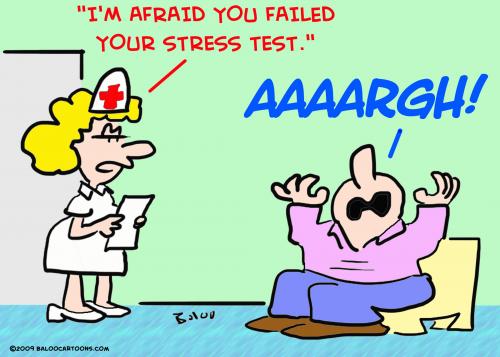
When you get in a stressful situation, your heart rate goes up and your blood pressure rises – the classic ‘fight or flight’ response. Not all people react the same, however.
Kevin Masters, of the University of Colorado, and Andrea Knestel (Brigham Young University), decided to test whether religious and non-religious people react differently to stress. People who do react badly to stress are more likely to die young, and they were wondering if this might help explain the differences in life expectancy between the religious and non-religious.
So they advertised for people to come into their lab (they got 131 people in total, aged between 40-70 years). Then they stressed them!
The stress task involved a spot of mental arithmetic, followed by role-playing (having a row with a medical insurance rep over a claim – a typically American situation!). They first had to spend 5 minutes preparing (aka fretting), and the role-play was filmed – just to add to the stress.
A third of their group was non-religious, and they divided their religious subjects according to whether they were intrinsically religious (i.e. for their own, internal reasons), extrinsically religious (because they love all the external trappings – the social activities, social status etc). Religious people who were both intrinsically and extrinsically religious were called ‘pro-religious’.
Well, it turned out that too few religious people would admit to being solely motivated by extrinsic motives. So they only got the ‘pro-religious’, and an equal number of intrinsically religious.
Well, the strange thing was that the non-religious and the intrinsically religious reacted similarly badly to stress, while the pro-religious were better than either of the other two groups.
It’s a bit of a mystery why this should be – the researchers admit that it’s not what they were expecting. The pro-religious group also said that they thought the situation, if they experienced it for real, would not be that stressful.
Interestingly, although (like everyone) the pro-religious initially volunteered for the experiment, they were the hardest to track down and follow up on. That’s pretty characteristic of extrinsically motivated people in general – they work hard at creating an appearance of being committed and hard-working, but are less interested in following through. Perhaps they were just less empathic.
The pro-religious were also more neurotic. Neurotic people have previously been shown to react with less stress in this sorts of task.
But I think there is something else going on here. Studies of the relationship between religion and health have found that it’s not the believing that matters, but the attending. People who go to Church more often are healthier.
Going to Church (mixing with other people, using religion as a tool to improve your social status) is exactly what distinguishes the ‘pro-religious’ from the intrinsically religious and the non-religious. Could it simply be that the ‘pro-religious’ are more confident in themselves, as a result of being embedded in society, and so find it easier to brush stress off?
And might this help explain why church-goers tend to live a little longer?

Masters KS, & Knestel A (2011). Religious motivation and cardiovascular reactivity among middle aged adults: is being pro-religious really that good for you? Journal of Behavioral Medicine PMID: 21604184
 This article by Tom Rees was first published on Epiphenom. It is licensed under Creative Commons.
Previous Post

May 24, 2011
Subliminal religious prompts make Spanish atheists nicer
Next Post
June 3, 2011 Religion and support for torture
Browse Our Archives
Select a Category Causes of religion - evolution Causes of religion - psychological Causes of religion - social Demographics Digest Effects of religion - health Effects of religion - psychological Effects of religion - social Notifications Politics Uncategorized
Select a Month March 2016 February 2016 January 2016 December 2015 November 2015 October 2015 September 2015 August 2015 July 2015 June 2015 May 2015 April 2015 March 2015 February 2015 January 2015 December 2014 November 2014 October 2014 September 2014 August 2014 July 2014 June 2014 May 2014 April 2014 March 2014 February 2014 January 2014 December 2013 November 2013 October 2013 September 2013 August 2013 July 2013 June 2013 May 2013 April 2013 March 2013 February 2013 January 2013 December 2012 November 2012 October 2012 September 2012 August 2012 July 2012 June 2012 May 2012 April 2012 March 2012 February 2012 January 2012 December 2011 November 2011 October 2011 September 2011 August 2011 July 2011 June 2011 May 2011 April 2011 March 2011 February 2011 January 2011 December 2010 November 2010 October 2010 September 2010 August 2010 July 2010 June 2010 May 2010 April 2010 March 2010 February 2010 January 2010 December 2009 November 2009 October 2009 September 2009 August 2009 July 2009 June 2009 May 2009 April 2009 March 2009 February 2009 January 2009 December 2008 November 2008 October 2008 September 2008 August 2008 July 2008 June 2008 May 2008 April 2008 March 2008 February 2008 January 2008 December 2007 November 2007 October 2007
Follow Us!
TAKE THE
Religious Wisdom Quiz
What is the correct order for putting off the old self and putting on the new self as described in Colossians?
Select your answer to see how you score.
Put on the new self, put to death earthly nature, clothe yourself with compassion, rid yourself of anger Put to death earthly nature, rid yourself of anger/rage/malice, take off the old self, put on the new self, clothe yourself with compassion Rid yourself of anger, take off the old self, put to death earthly nature, put on the new self Clothe yourself with compassion, put on the new self, put to death earthly nature, rid yourself of anger
Related posts from Epiphenom

Do social crises lead to religious revivals? Nah!

What kind of woman would pray for health...

Can you use religion to change attitudes towards...

Dogmatic atheism and fundamentalist Christianity: creating certainty in...
TRENDING AT PATHEOS Nonreligious

Dethroning Jesus and Enthroning Yourself
Jesus Never Asked to Be Worshipped. He Asked to Be Understood. Christianity...

Why Most Christians are Really Paulians and Jobians
I Don't Care, But It Matters Let's get this out of the...

Essential Tips to Successfully Navigate the Selling Process
Selling a house can feel overwhelming, but it doesn’t have to be....

To Make Remote Work Effective, Think About Others
The COVID-19 pandemic forced many companies to rapidly transition to remote work....

Flexibility Is Key to Solving Problems of Tomorrow
The world of work is undergoing a dramatic transformation. The COVID-19 pandemic...
view all Nonreligious blogs
Ad-Free & Subscriber Log-In Subscription Support
- About Us
- 2026 Calendar
- Videos
- Podcasts
- Library of World Religions
- Faith In Media Tracker
- Advertise With Us
- Write for Us
- Privacy Policy
- Terms of Service
- Do Not Sell My Data
- Contact Us
- Radiant Digital
- Manage Newsletter Subscriptions
- Unsubscribe From Notifications
- Sitemap
Copyright 2008-2026, Patheos. All rights reserved.
Subscription Support Ad-Free & Subscriber Log-In
Follow Patheos