
BuddhistCatholicContemplativeEvangelicalGeneral ChristianHinduJewishLatter-day SaintMuslimNew VisionsProgressive Christian
Beliefs
- Buddhist
- Catholic
- Contemplative
- Evangelical
- General Christian
- Hindu
- Jewish
- Latter-day Saint
- More Voices
- Muslim
- New Visions
- Pagan
- Progressive Christian
Topics
- Religion News
- Food and Religion
- Sports and Religion
- Religious Art
- Religious Music and Entertainment
- Religious Events
- History and Religion
- Style and Religion
- Politics and Religion
- Women in Religion
- Recreation Outdoors and Religion
- Business Finance and Religion
- Careers Workplace and Religion
- Education and Religion
- Family Parenting and Religion
- Health Fitness and Religion
- Home and Religion
- Relationships and Religion
- Technology and Religion
- Travel and Religion
Columnists
- Buddhist Columnists
- Business Finance and Religion Columnists
- Careers Workplace and Religion Columnists
- Catholic Columnists
- Contemplative Columnists
- Education and Religion Columnists
- Evangelists Columnists
- Family Parenting and Religion Columnists
- General Christian Columnists
- Health Fitness and Religion Columnists
- Hindu Columnists
- History and Religion Columnists
- Home and Religion Columnists
- Jewish Columnists
- More Voices Columnists
- Latter Day Columnists
- Muslim Columnists
- New Visions Columnists
- Nonreligious Columnists
- Pagan Columnists
- Politics and Religion Columnists
- Progressive Columnists
- Recreation Outdoors and Religion Columnists
- Relationships and Religion Columnists
- Religion News Columnists
- Religious Art Columnists
- Religious Events Columnists
- Religious Music and Entertainment Columnists
- Sports and Religion Columnists
- Style and Religion Columnists
- Technology and Religion Columnists
- Travel and Religion Columnists
- Women in Religion Columnists
Resource Library
- 2026 Calendar
- Library of World Religions
- The 100 Most Holy Places on Earth
- Patheos Answers
- Podcasts
- Videos
- Faith Leaders Database
- Anglican Episcopalian
- Bahai
- Baptist
- Buddhism
- Christianity
- Confucianism
- Eastern Orthodoxy
- Hinduism
- Holiness and Pentecostal
- ISKCON
- Islam
- Judaism
- Lutheran
- Methodist
- The Church of Jesus Christ of Latter-day Saints
- New Age
- Paganism
- Presbytarian and Reformed
- Protestantism
- Religion Behind the Scenes
- Roman Catholic
- Scientology
- Shia Islam
- Sikhism
- Sufism
- Sunni Islam
- Taoism
- Zen
- See all religions
Research Tools
 Ad-Free & Subscriber Log-In Subscription Support
Follow Patheos 

- Trending:
- Advent
- |
- Forgiveness
- |
- Thanksgiving
- |
- Election
- |
- Seasonal Holidays
- |
- Marriage
 Epiphenom
- Home
- Nonreligious
- A rant on the evolution of religion
A rant on the evolution of religion
Last updated on: November 12, 2014 at 4:45 am by Epiphenom
A rant on the evolution of religion 2014-11-12T04:45:22+01:00 Epiphenom
Patheos Explore the world's faith through different perspectives on religion and spirituality! Patheos has the views of the prevalent religions and spiritualities of the world.
There’s been a minor explosion of punditry about the evolution of religion, some of it naive and some of it making my blood boil. It seems that it was Jesse Bering who kicked it off. Before Christmas, he wrote up Michael Blume’s research into religion and fertility. Then in the New Year, Jonathan Leake picked up the story in the Sunday Times. Most recently, Nick Spencer took up the cudgels in the Guardian.
Each of them made me more exasperated than the last! And what is it that’s got them so excited? Well, it’s the idea that the relatively higher fertility rate of the religious in the modern world means that religion is somehow at the apex at the tree of life. Here’s Jonathan Leake spouting off:
Such a view – that the ubiquitous phenomenon of human religiosity is not only in the blood but also delivers a distinct evolutionary advantage – is gloriously consonant with (most) religious views.
Well, maybe it is consonant with religious views, but it’s also nonsense, based on a profound (but common) misunderstanding of religion, and the connection between religion and psychology. Let me try to explain in three steps…
First off, we are not naturally religious.
At least, we are no more naturally religious than we are naturally football fans, or concert goers.
Of course, football and pop concerts are popular because they appeal to a number of deep-rooted instincts, but no-one would claim they are natural. They are things we invented.
And here’s the critical bit: we invented them specifically to satisfy our instincts.
So that’s the way that it works. We have mental biases, that make us want to do certain things. We make culture, and we make culture that appeals to and works with our mental biases.
Religion, like music, is cheesecake for the mind – an “exquisite confection crafted to tickle the sensitive spots of our mental faculties”. So the fact that religion, like football and pop concerts, taps into our instincts is not a coincidence and it’s not a surprise.
In fact, it’s bleeding obvious.
That leads to another critical concept. There is more than one way of tickling these sensitive mental spots. All of culture does it. It just so happens that one group of cultural practices in the West that seem to appeal to similar mental biases have been given the label ‘religion’.
But try to apply these categories to other cultures, and you fall flat. Other cultures have invented kirschtorte, not cheesecake, while some choose not to have dessert at all. These people have the same cognitive biases, but different ways of tickling them.
Once you get that point, the next is obvious: Religion can be beneficial without being optimal.
If someone invents a cultural practice that’s harmful, it’s not going to be very popular. But if someone invents a cultural practice that’s really the bees knees, it still won’t be popular if it doesn’t tickle our cognition.
So the most popular cultural practices are going to be ones that make the best of our mental deficiencies, while still appealing to our blinkered mental capacities.
You can be reasonably sure that religions have, in some way, been optimised. But optimised for what? In the great landscape of cultural possibilities, any given religion is probably at a local optimum. It will have been designed that way by its human inventors. But that doesn’t mean that a better culture is not possible, if you shift radically to another part of the landscape.
To the people of Iron Age northern Europe, garotting members of their community and dumping their bodies in the bog probably seemed like a damned fine idea. No doubt it appealed to a host of human mental biases. It also seems to have been successful in building communities (at least, in relative terms) – after all, the culture survived for millennia.
And yet, it’s an approach to life that most people would frown upon today.
In other words, it’s perfectly possible for religion to be beneficial in terms of the local cultural landscape, and yet harmful compared with the potential possibilities. Religion can be beneficial and harmful at the same time. It just depends what you are comparing it with.
Which brings me to my last point. High fertility is not a sure indicator of evolutionary advantage.
Sounds odd? But it all depends on context. Let me explain with an example.
Fat people are less fertile. They get fat because they’re predisposed to eat too much and not exercise unless they have to. So it’s clear that these traits are not going to be favoured by evolution, right?
Which, no doubt, explains why why my local shopping mall is populated by such svelte, athletic-looking individuals!
Well of course it’s immediately obvious what’s wrong with that line of argument. In fact, 2 million years of evolution, in a harsh, food-scarce environment, has favoured precisely those individuals who stuff their faces with all the calorie-dense food they can get, and who do the absolute minimum of exercise required to get it.
It’s only in the modern environment where the tables have been turned. It’s only now that over-eating and under-exercising carries an evolutionary penalty. And that’s why so many people in rich countries struggle with their weight.
Now compare that to atheism. Atheism, like religion, is a cultural construction. It’s taken up by people with the right mental biases who are placed in the right cultural setting. And like obesity, atheism is increasing, not decreasing. The majority of people in Scandinavian countries (and, yes, now the UK too) are now not religious, just as the majority of Germans are now overweight.
Clearly, the mental biases that predispose for atheism were not selected against in our evolutionary past, no more than the mental biases that predispose to obesity were.
Perhaps, in the cultural settings that occurred in the past, the mental biases that are today linked to atheism actually increased fertility. Perhaps those mental biases led to a higher proportion of children survived to reproductive age. Who knows!
Today, atheists and the non-religious have fewer kids. Now, that could mean all sorts of interesting things in the future. But predicting the future is a mug’s game, and simple extrapolation almost always results in embarrassment.
Predicting the past is much easier. And whatever else, we can be sure that a good grip on reality does seem to have been evolutionarily beneficial. Which is nice.
To finish, here’s one Mormon woman’s remarkable story, just published in the NY Times. Just to show that the relationship between religion and fertility is never going to be as simple as the pundits would have you believe.
If you liked this… then you might also like the follow-up posts, There’s no such thing as a gene for religion, and Why we are all different (and not all religious).
 This article by Tom Rees was first published on Epiphenom. It is licensed under Creative Commons.
Previous Post

January 7, 2011
Americans: not as religious as they think they are
Next Post
January 14, 2011 About.com Reader's Choice Awards - nominations open
Browse Our Archives
Select a Category Causes of religion - evolution Causes of religion - psychological Causes of religion - social Demographics Digest Effects of religion - health Effects of religion - psychological Effects of religion - social Notifications Politics Uncategorized
Select a Month March 2016 February 2016 January 2016 December 2015 November 2015 October 2015 September 2015 August 2015 July 2015 June 2015 May 2015 April 2015 March 2015 February 2015 January 2015 December 2014 November 2014 October 2014 September 2014 August 2014 July 2014 June 2014 May 2014 April 2014 March 2014 February 2014 January 2014 December 2013 November 2013 October 2013 September 2013 August 2013 July 2013 June 2013 May 2013 April 2013 March 2013 February 2013 January 2013 December 2012 November 2012 October 2012 September 2012 August 2012 July 2012 June 2012 May 2012 April 2012 March 2012 February 2012 January 2012 December 2011 November 2011 October 2011 September 2011 August 2011 July 2011 June 2011 May 2011 April 2011 March 2011 February 2011 January 2011 December 2010 November 2010 October 2010 September 2010 August 2010 July 2010 June 2010 May 2010 April 2010 March 2010 February 2010 January 2010 December 2009 November 2009 October 2009 September 2009 August 2009 July 2009 June 2009 May 2009 April 2009 March 2009 February 2009 January 2009 December 2008 November 2008 October 2008 September 2008 August 2008 July 2008 June 2008 May 2008 April 2008 March 2008 February 2008 January 2008 December 2007 November 2007 October 2007
Follow Us!
TAKE THE
Religious Wisdom Quiz
How many days was Jesus in the tomb before His resurrection?
Select your answer to see how you score.
Nine Forty Seven Three
Related posts from Epiphenom
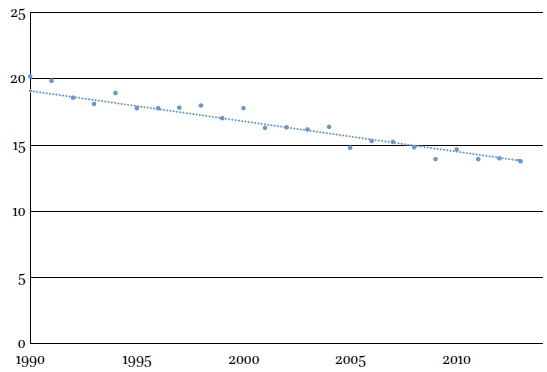
Do social crises lead to religious revivals? Nah!

What kind of woman would pray for health...
Can you use religion to change attitudes towards...
Dogmatic atheism and fundamentalist Christianity: creating certainty in...
TRENDING AT PATHEOS Nonreligious

Dethroning Jesus and Enthroning Yourself
Jesus Never Asked to Be Worshipped. He Asked to Be Understood. Christianity...

Why Most Christians are Really Paulians and Jobians
I Don't Care, But It Matters Let's get this out of the...

Essential Tips to Successfully Navigate the Selling Process
Selling a house can feel overwhelming, but it doesn’t have to be....

To Make Remote Work Effective, Think About Others
The COVID-19 pandemic forced many companies to rapidly transition to remote work....

Flexibility Is Key to Solving Problems of Tomorrow
The world of work is undergoing a dramatic transformation. The COVID-19 pandemic...
view all Nonreligious blogs
Ad-Free & Subscriber Log-In Subscription Support
- About Us
- 2026 Calendar
- Videos
- Podcasts
- Library of World Religions
- Faith In Media Tracker
- Advertise With Us
- Write for Us
- Privacy Policy
- Terms of Service
- Do Not Sell My Data
- Contact Us
- Radiant Digital
- Manage Newsletter Subscriptions
- Unsubscribe From Notifications
- Sitemap
Copyright 2008-2026, Patheos. All rights reserved.
Subscription Support Ad-Free & Subscriber Log-In
Follow Patheos