
BuddhistCatholicContemplativeEvangelicalGeneral ChristianHinduJewishLatter-day SaintMuslimNew VisionsProgressive Christian
Beliefs
- Buddhist
- Catholic
- Contemplative
- Evangelical
- General Christian
- Hindu
- Jewish
- Latter-day Saint
- More Voices
- Muslim
- New Visions
- Pagan
- Progressive Christian
Topics
- Religion News
- Food and Religion
- Sports and Religion
- Religious Art
- Religious Music and Entertainment
- Religious Events
- History and Religion
- Style and Religion
- Politics and Religion
- Women in Religion
- Recreation Outdoors and Religion
- Business Finance and Religion
- Careers Workplace and Religion
- Education and Religion
- Family Parenting and Religion
- Health Fitness and Religion
- Home and Religion
- Relationships and Religion
- Technology and Religion
- Travel and Religion
Columnists
- Buddhist Columnists
- Business Finance and Religion Columnists
- Careers Workplace and Religion Columnists
- Catholic Columnists
- Contemplative Columnists
- Education and Religion Columnists
- Evangelists Columnists
- Family Parenting and Religion Columnists
- General Christian Columnists
- Health Fitness and Religion Columnists
- Hindu Columnists
- History and Religion Columnists
- Home and Religion Columnists
- Jewish Columnists
- More Voices Columnists
- Latter Day Columnists
- Muslim Columnists
- New Visions Columnists
- Nonreligious Columnists
- Pagan Columnists
- Politics and Religion Columnists
- Progressive Columnists
- Recreation Outdoors and Religion Columnists
- Relationships and Religion Columnists
- Religion News Columnists
- Religious Art Columnists
- Religious Events Columnists
- Religious Music and Entertainment Columnists
- Sports and Religion Columnists
- Style and Religion Columnists
- Technology and Religion Columnists
- Travel and Religion Columnists
- Women in Religion Columnists
Resource Library
- 2026 Calendar
- Library of World Religions
- The 100 Most Holy Places on Earth
- Patheos Answers
- Podcasts
- Videos
- Faith Leaders Database
- Anglican Episcopalian
- Bahai
- Baptist
- Buddhism
- Christianity
- Confucianism
- Eastern Orthodoxy
- Hinduism
- Holiness and Pentecostal
- ISKCON
- Islam
- Judaism
- Lutheran
- Methodist
- The Church of Jesus Christ of Latter-day Saints
- New Age
- Paganism
- Presbytarian and Reformed
- Protestantism
- Religion Behind the Scenes
- Roman Catholic
- Scientology
- Shia Islam
- Sikhism
- Sufism
- Sunni Islam
- Taoism
- Zen
- See all religions
Research Tools
 Ad-Free & Subscriber Log-In Subscription Support
Follow Patheos 

- Trending:
- Advent
- |
- Forgiveness
- |
- Thanksgiving
- |
- Election
- |
- Seasonal Holidays
- |
- Marriage
 Epiphenom
- Home
- Nonreligious
- Science education inoculates against religion
Science education inoculates against religion
Last updated on: November 13, 2014 at 5:49 pm by Epiphenom
Science education inoculates against religion 2014-11-13T17:49:30+01:00 Epiphenom
Patheos Explore the world's faith through different perspectives on religion and spirituality! Patheos has the views of the prevalent religions and spiritualities of the world.
 At the back end of 2007, I wrote that science education doesn’t inoculate against religion. But the time has come to indulge in a bit of revisionism.
Here’s why. Darren Sherkat (who has a paper out on religious fundamentalism and verbal ability that I covered in the previous post) has also taken a look at the link with scientific knowledge. The paper isn’t published yet, but he sent me the manuscript – and he’s also blogged it, if you want the ‘horse’s mouth’ version!
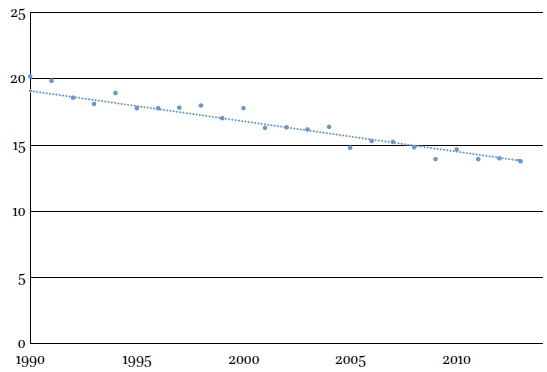
As before, this is an analysis of the US General Social Survey, which includes a set of 13 questions on general science topics. As you can see in the graph, people who think the Bible is a book of fables scored nearly 40% higher that those who think it is the literal word of God.
You get a similar result for people who are members of Conservative Protestant sects. What’s more, it persists even after controlling for other factors that might explain the difference – like age, education, income, race, immigrant status and region.
It seems that there is something about conservative Christianity in the US that works directly against science skills. In part, this might be down to the nature of the questions.
Sherkat omitted from the analysis the question about evolution, but there are also questions about continental drift and also the Big Bang. A Young Earth Creationist, might give the wrong answer to these even though they had been taught the correct answer.
So why did I previously suggest no link between science proficiency and religiosity? Well, I looked at international student scores on science collected by PISA, and correlated these with data on how often people in those countries prayed. I didn’t find any link.
But Sherkat’s work suggests that the link is strongest with people who have a rather extreme attachment to their religion. So I went back and redid the analysis, using the latest religious data from the World Values Survey.
 This time I looked at people who rated themselves ’10’ on a 10-point scale asking how important God is in their life. This is a question that really picks out the very devout.
It turns out that countries with a lot of these really devout people do very poorly at educating their children about science.
In a way that’s not too surprising, because these countries also tend to be poorer and less well educated in general.
But PISA also provide data adjusted for socioeconomic differences between the countries. So this score reflects how effective countries are at educating their children on science, after taking into account their different circumstances.
 The data are only available for OECD countries, but that’s good because these countries are broadly similar to start with. Unfortunately, the WVS didn’t collect religious data from all OECD countries, which makes the sample even smaller. But even so…
The remarkable fact is that even within this small, relatively homogenous, pool of countries there’s still a significant correlation.
Although this is an ecological study (it didn’t look at individual data, like Sherkat’s can do with the GSS data), it does support his findings.
Either highly religious people shield their children from science, or good science education shifts people from being highly religious to a more moderate stance (or perhaps both, of course).
Either way, I’m going to have to revise my previous belief that science education and religion aren’t linked!
__________________________________________________________________________
 This article by Tom Rees was first published on Epiphenom. It is licensed under Creative Commons.
Previous Post

January 19, 2010
Bible done be the Word of God!
Next Post
January 26, 2010 Be religious and live forever!
Browse Our Archives
Select a Category Causes of religion - evolution Causes of religion - psychological Causes of religion - social Demographics Digest Effects of religion - health Effects of religion - psychological Effects of religion - social Notifications Politics Uncategorized
Select a Month March 2016 February 2016 January 2016 December 2015 November 2015 October 2015 September 2015 August 2015 July 2015 June 2015 May 2015 April 2015 March 2015 February 2015 January 2015 December 2014 November 2014 October 2014 September 2014 August 2014 July 2014 June 2014 May 2014 April 2014 March 2014 February 2014 January 2014 December 2013 November 2013 October 2013 September 2013 August 2013 July 2013 June 2013 May 2013 April 2013 March 2013 February 2013 January 2013 December 2012 November 2012 October 2012 September 2012 August 2012 July 2012 June 2012 May 2012 April 2012 March 2012 February 2012 January 2012 December 2011 November 2011 October 2011 September 2011 August 2011 July 2011 June 2011 May 2011 April 2011 March 2011 February 2011 January 2011 December 2010 November 2010 October 2010 September 2010 August 2010 July 2010 June 2010 May 2010 April 2010 March 2010 February 2010 January 2010 December 2009 November 2009 October 2009 September 2009 August 2009 July 2009 June 2009 May 2009 April 2009 March 2009 February 2009 January 2009 December 2008 November 2008 October 2008 September 2008 August 2008 July 2008 June 2008 May 2008 April 2008 March 2008 February 2008 January 2008 December 2007 November 2007 October 2007
Follow Us!
TAKE THE
Religious Wisdom Quiz
What food did Jesus multiply to feed 5,000 people?
Select your answer to see how you score.
Bread and wine Quail and manna Loaves and fish Grapes and figs
Related posts from Epiphenom
Do social crises lead to religious revivals? Nah!

What kind of woman would pray for health...
Can you use religion to change attitudes towards...
Dogmatic atheism and fundamentalist Christianity: creating certainty in...
TRENDING AT PATHEOS Nonreligious

Dethroning Jesus and Enthroning Yourself
Jesus Never Asked to Be Worshipped. He Asked to Be Understood. Christianity...

Why Most Christians are Really Paulians and Jobians
I Don't Care, But It Matters Let's get this out of the...

Essential Tips to Successfully Navigate the Selling Process
Selling a house can feel overwhelming, but it doesn’t have to be....

To Make Remote Work Effective, Think About Others
The COVID-19 pandemic forced many companies to rapidly transition to remote work....

Flexibility Is Key to Solving Problems of Tomorrow
The world of work is undergoing a dramatic transformation. The COVID-19 pandemic...
view all Nonreligious blogs
Ad-Free & Subscriber Log-In Subscription Support
- About Us
- 2026 Calendar
- Videos
- Podcasts
- Library of World Religions
- Faith In Media Tracker
- Advertise With Us
- Write for Us
- Privacy Policy
- Terms of Service
- Do Not Sell My Data
- Contact Us
- Radiant Digital
- Manage Newsletter Subscriptions
- Unsubscribe From Notifications
- Sitemap
Copyright 2008-2026, Patheos, part of the Radiant Digital network of media brands. All rights reserved.
Subscription Support Ad-Free & Subscriber Log-In
Follow Patheos