
BuddhistCatholicContemplativeEvangelicalGeneral ChristianHinduJewishLatter-day SaintMuslimNew VisionsProgressive Christian
Beliefs
- Buddhist
- Catholic
- Contemplative
- Evangelical
- General Christian
- Hindu
- Jewish
- Latter-day Saint
- More Voices
- Muslim
- New Visions
- Pagan
- Progressive Christian
Topics
- Religion News
- Food and Religion
- Sports and Religion
- Religious Art
- Religious Music and Entertainment
- Religious Events
- History and Religion
- Style and Religion
- Politics and Religion
- Women in Religion
- Recreation Outdoors and Religion
- Business Finance and Religion
- Careers Workplace and Religion
- Education and Religion
- Family Parenting and Religion
- Health Fitness and Religion
- Home and Religion
- Relationships and Religion
- Technology and Religion
- Travel and Religion
Columnists
- Buddhist Columnists
- Business Finance and Religion Columnists
- Careers Workplace and Religion Columnists
- Catholic Columnists
- Contemplative Columnists
- Education and Religion Columnists
- Evangelists Columnists
- Family Parenting and Religion Columnists
- General Christian Columnists
- Health Fitness and Religion Columnists
- Hindu Columnists
- History and Religion Columnists
- Home and Religion Columnists
- Jewish Columnists
- More Voices Columnists
- Latter Day Columnists
- Muslim Columnists
- New Visions Columnists
- Nonreligious Columnists
- Pagan Columnists
- Politics and Religion Columnists
- Progressive Columnists
- Recreation Outdoors and Religion Columnists
- Relationships and Religion Columnists
- Religion News Columnists
- Religious Art Columnists
- Religious Events Columnists
- Religious Music and Entertainment Columnists
- Sports and Religion Columnists
- Style and Religion Columnists
- Technology and Religion Columnists
- Travel and Religion Columnists
- Women in Religion Columnists
Resource Library
- 2026 Calendar
- Library of World Religions
- The 100 Most Holy Places on Earth
- Patheos Answers
- Podcasts
- Videos
- Faith Leaders Database
- Anglican Episcopalian
- Bahai
- Baptist
- Buddhism
- Christianity
- Confucianism
- Eastern Orthodoxy
- Hinduism
- Holiness and Pentecostal
- ISKCON
- Islam
- Judaism
- Lutheran
- Methodist
- The Church of Jesus Christ of Latter-day Saints
- New Age
- Paganism
- Presbytarian and Reformed
- Protestantism
- Religion Behind the Scenes
- Roman Catholic
- Scientology
- Shia Islam
- Sikhism
- Sufism
- Sunni Islam
- Taoism
- Zen
- See all religions
Research Tools
 Ad-Free & Subscriber Log-In Subscription Support
Ad-Free & Subscriber Log-In Subscription Support
Follow Patheos 

- Trending:
- Forgiveness
- |
- Marriage
- |
- Consciousness
- |
- Death Penalty
- |
- Election
- |
- Halloween
 Epiphenom
- Home
- Nonreligious
- How does religion prevent suicide?
How does religion prevent suicide?
Last updated on: March 2, 2015 at 9:19 pm by Epiphenom
How does religion prevent suicide? 2015-03-02T21:19:07+01:00 Epiphenom
Patheos Explore the world's faith through different perspectives on religion and spirituality! Patheos has the views of the prevalent religions and spiritualities of the world.
Religious people are less likely to commit suicide. This is pretty much established as fact; the big question is how the effect is mediated. Is it that the spiritual beliefs of religious people help resolve existential anxieties, gives them hope for the future, or perhaps even fear of punishment in the hereafter? Or is it that religion provides a framework for mutual support that helps people through tough times?
There’s a new study from a Canadian team that sheds some light on this question. They used data from a massive survey of over 35,000 Canadians (the Canadian Community Health Survey) to take a look at some of the factors associated with thinking about suicide (suicide ideation) or even attempting suicide. It was a nationally representative sample – around two-thirds were spiritual and slightly more were religious – and around half were both religious and spiritual. Religious people were those who went to church (for reasons other than weddings or funerals) at least once a year.
What they found was that people who were either spiritual or attended religious services (or both) were significantly less likely to have attempted suicide. But the problem is that spiritual and religious people are different to atheists. For example, women are more likely to be spiritual, and also more likely to attempt suicide.
So they took this into account in their statistical analysis. Importantly (and uniquely, as far as I know), they also took account of differences in social supports. Religious people might simply have better access to information, more friends, and more emotional support. So their analysis takes this into account too, to try to provide an estimate of the ‘pure’ effects of spirituality and religion.
What they found was that, taking demographic factors and social support into account, spirituality no longer had any significant effect. Religion, however, did. A top-line interpretation of this is that spirituality doesn’t offer any particular help above and beyond what can (in theory at least) be provided by other means. But religion seems to. That’s certainly how the Christian Post sees it:
According to the data, the former category [spirituality] did not show a decreased inclination to take their lives, suggesting something more was involved that was related to the actual attendance at a religious event occurring in a church, mosque, temple or other spiritual gathering.
But I think there’s something else going on here. Looking at the data closely, what it looks like to me is that spirituality is linked to fewer suicide attempts, even after accounting for demography and social support – it’s just that their model become so statistically weak that it can’t show this. And the data also seem to show that religious attendance reduces suicide despite being associated with less social support.
 The explanation for this is a little bit complicated, but here goes! You’ll need to refer to the graph on the right. The blue diamonds show the point estimate – the best guess from the statistical model. The light blue boxes show the 95% confidence intervals. They’re an indication of how uncertain the point estimate is.
In short: if the 95% confidence interval crosses the ‘zero’ line, you can’t be confident that what you’re testing (spirituality, for example) has any effect – no matter where the point estimate lies.
You can see what’s happening with spirituality. Once you expand the model to include demographics and social support, the 95% confidence interval balloons. Although the best estimate for the effect does go down a little (from a 43% reduction to a 37% reduction in attempted suicides), the main reason they don’t find any effect is that the more complex model simply doesn’t have the power to detect anything but a massive effect.
It’s not that the effect goes away if we add demographics and social support – it’s more that adding these factors makes the model so weak that we simply can’t tell if there’s any effect.
Look at the situation with religion, by comparison. Although the confidence interval increases, it’s not by nearly so much. And the point estimate also goes down – from a 47% reduction to a massive 62% reduction in the risk of attempted suicide.
In fact the effect of social support is even larger than you would think from the graph. Compared with the model that controls for everything except social support, controlling for social support as well nearly doubles the effect of religion on the risk of attempting suicide.
This is a big surprise! Intuitively, you would expect that religion increases social support, and that this would explain part of the effect of religion on suicide rate. But if this were so, controlling for social support would reduce the estimated effect of religion, not increase it.
In other words, what this model seems to be showing is that religious people get less social support. And how do they define social support?
… informational support (offering of advice or guidance), tangible support (material aid or behavioral support), positive social interaction (available persons to do things with), affection (involving expressions of love and affection) and emotional support (expression of positive affect, understanding and encouragement).
Now, it’s impossible to be sure about this without digging into the original data. I’ve contacted the authors, and will update this if they get back.
There are some other caveats here. First, this was a study on suicide ideation and suicide attempts, not completed suicides. Complete suicides have a very different epidemiology (they are more frequent among men than women, for example. So the conclusions of this study might not hold for actual suicides.
Second, over 40% of Canadians go to religious services less than once a year. That’s quite low by global (although not UK) standards. In poorer countries, non-spiritual people are more likely to attend religious services – so the results might not hold elsewhere.
Bearing all that in mind, here’s what I conclude from this study. First, spirituality might help reduce suicide attempts, but if it does the effect is small after accounting for other relevant factors.
Second, religion probably does help stop people going down the path towards suicide, but it does it in spite of seemingly reducing other forms of social support.

D Rasic, S Belik, B Elias, L Katz, M Enns, J Sareen (2008). Spirituality, religion and suicidal behavior in a nationally representative sample Journal of Affective Disorders DOI: 10.1016/j.jad.2008.08.007
Effects of religion - psychological
Previous Post

January 28, 2009
What is atheism?
Next Post
January 30, 2009 Which came first - temples or civilisation?
Browse Our Archives
Select a Category Causes of religion - evolution Causes of religion - psychological Causes of religion - social Demographics Digest Effects of religion - health Effects of religion - psychological Effects of religion - social Notifications Politics Uncategorized
Select a Month March 2016 February 2016 January 2016 December 2015 November 2015 October 2015 September 2015 August 2015 July 2015 June 2015 May 2015 April 2015 March 2015 February 2015 January 2015 December 2014 November 2014 October 2014 September 2014 August 2014 July 2014 June 2014 May 2014 April 2014 March 2014 February 2014 January 2014 December 2013 November 2013 October 2013 September 2013 August 2013 July 2013 June 2013 May 2013 April 2013 March 2013 February 2013 January 2013 December 2012 November 2012 October 2012 September 2012 August 2012 July 2012 June 2012 May 2012 April 2012 March 2012 February 2012 January 2012 December 2011 November 2011 October 2011 September 2011 August 2011 July 2011 June 2011 May 2011 April 2011 March 2011 February 2011 January 2011 December 2010 November 2010 October 2010 September 2010 August 2010 July 2010 June 2010 May 2010 April 2010 March 2010 February 2010 January 2010 December 2009 November 2009 October 2009 September 2009 August 2009 July 2009 June 2009 May 2009 April 2009 March 2009 February 2009 January 2009 December 2008 November 2008 October 2008 September 2008 August 2008 July 2008 June 2008 May 2008 April 2008 March 2008 February 2008 January 2008 December 2007 November 2007 October 2007
Follow Us!
TAKE THE
Religious Wisdom Quiz
What does Proverbs say about "a soft answer"?
Select your answer to see how you score.
It brings riches It brings rain It turns away wrath It makes a fool wise
Related posts from Epiphenom

Use of prayer by African-Americans can help explain...

Planned Parenthood is disgusting? What does that even...

Kids in atheist families are more altruistic! The...
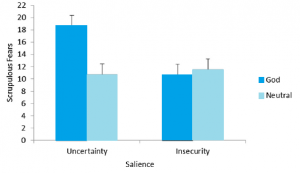
Make people uncertain then remind them about God,...
TRENDING AT PATHEOS Nonreligious

Dethroning Jesus and Enthroning Yourself
Jesus Never Asked to Be Worshipped. He Asked to Be Understood. Christianity...

Why Most Christians are Really Paulians and Jobians
I Don't Care, But It Matters Let's get this out of the...

Essential Tips to Successfully Navigate the Selling Process
Selling a house can feel overwhelming, but it doesn’t have to be....

To Make Remote Work Effective, Think About Others
The COVID-19 pandemic forced many companies to rapidly transition to remote work....

Flexibility Is Key to Solving Problems of Tomorrow
The world of work is undergoing a dramatic transformation. The COVID-19 pandemic...
view all Nonreligious blogs
Ad-Free & Subscriber Log-In Subscription Support
- About Us
- 2026 Calendar
- Videos
- Podcasts
- Library of World Religions
- Faith In Media Tracker
- Advertise With Us
- Write for Us
- Privacy Policy
- Terms of Service
- Do Not Sell My Data
- Contact Us
- Radiant Digital
- Manage Newsletter Subscriptions
- Unsubscribe From Notifications
- Sitemap
Copyright 2008-2026, Patheos. All rights reserved.
Subscription Support Ad-Free & Subscriber Log-In
Follow Patheos