
BuddhistCatholicContemplativeEvangelicalGeneral ChristianHinduJewishLatter-day SaintMuslimNew VisionsProgressive Christian
Beliefs
- Buddhist
- Catholic
- Contemplative
- Evangelical
- General Christian
- Hindu
- Jewish
- Latter-day Saint
- More Voices
- Muslim
- New Visions
- Pagan
- Progressive Christian
Topics
- Religion News
- Food and Religion
- Sports and Religion
- Religious Art
- Religious Music and Entertainment
- Religious Events
- History and Religion
- Style and Religion
- Politics and Religion
- Women in Religion
- Recreation Outdoors and Religion
- Business Finance and Religion
- Careers Workplace and Religion
- Education and Religion
- Family Parenting and Religion
- Health Fitness and Religion
- Home and Religion
- Relationships and Religion
- Technology and Religion
- Travel and Religion
Columnists
- Buddhist Columnists
- Business Finance and Religion Columnists
- Careers Workplace and Religion Columnists
- Catholic Columnists
- Contemplative Columnists
- Education and Religion Columnists
- Evangelists Columnists
- Family Parenting and Religion Columnists
- General Christian Columnists
- Health Fitness and Religion Columnists
- Hindu Columnists
- History and Religion Columnists
- Home and Religion Columnists
- Jewish Columnists
- More Voices Columnists
- Latter Day Columnists
- Muslim Columnists
- New Visions Columnists
- Nonreligious Columnists
- Pagan Columnists
- Politics and Religion Columnists
- Progressive Columnists
- Recreation Outdoors and Religion Columnists
- Relationships and Religion Columnists
- Religion News Columnists
- Religious Art Columnists
- Religious Events Columnists
- Religious Music and Entertainment Columnists
- Sports and Religion Columnists
- Style and Religion Columnists
- Technology and Religion Columnists
- Travel and Religion Columnists
- Women in Religion Columnists
Resource Library
- 2026 Calendar
- Library of World Religions
- The 100 Most Holy Places on Earth
- Patheos Answers
- Podcasts
- Videos
- Faith Leaders Database
- Anglican Episcopalian
- Bahai
- Baptist
- Buddhism
- Christianity
- Confucianism
- Eastern Orthodoxy
- Hinduism
- Holiness and Pentecostal
- ISKCON
- Islam
- Judaism
- Lutheran
- Methodist
- The Church of Jesus Christ of Latter-day Saints
- New Age
- Paganism
- Presbytarian and Reformed
- Protestantism
- Religion Behind the Scenes
- Roman Catholic
- Scientology
- Shia Islam
- Sikhism
- Sufism
- Sunni Islam
- Taoism
- Zen
- See all religions
Research Tools
 Ad-Free & Subscriber Log-In Subscription Support
Ad-Free & Subscriber Log-In Subscription Support
Follow Patheos 

- Trending:
- Forgiveness
- |
- Marriage
- |
- Consciousness
- |
- Death Penalty
- |
- Election
- |
- Halloween
 Witch at the Crossroads
- Home
- Pagan
- Mabon: Where Did It Come From?
Mabon: Where Did It Come From?
Last updated on: September 19, 2015 at 3:36 am by Katrina Rasbold
Mabon: Where Did It Come From? 2015-09-19T03:36:13-08:00 Katrina Rasbold
Patheos Explore the world's faith through different perspectives on religion and spirituality! Patheos has the views of the prevalent religions and spiritualities of the world.
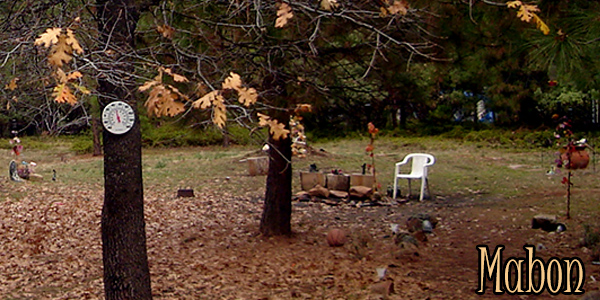
There are several theories about the assignment of the name “Mabon” to the Autumn Equinox and many historians and researchers theorize that the name was not even used until the 20th century. While the other harvest holiday names are rooted in generally agreed upon extractions from other languages, the history of the name “Mabon” amounts to a conversation that goes like this. “This is where it comes from.” “No it’s not.” “Yes it is.” “I don’t believe you.” “I don’t care.” All of the theories for how the name was derived are weak, so I give you my best High Priestessy blessings to call this wonderful season whatever you want without caring what the pretentious snobs think. Carry on, my child.
Back in Factual Land, there are two days out of the year when the Northern and Southern hemisphere receive the exact same amount of sunlight due to the tilting of the earth at a right angle to the Sun. At the two equinoxes, spring and autumn, the sun is directly over the equator, which gives us what is in the Latin language called “equinox” or “equal night.” From the point of the Autumnal Equinox forward, if you’re in the Northern hemisphere, the days will get shorter after the Autumn Equinox and in the Southern hemisphere, the days will get longer.
Since the Moon is considered feminine and the Sun is seen as the male astrological energy, male-female energy is also in balance at the equinoxes. This is reflected beautifully in the historical time of the Autumn Equinox since the work of the second harvest involved the men harvesting in the fields while the women canned and otherwise preserved the newly harvested foods for the coming winter.
The idea of the forces of light and dark changing power was an important transition for the ancient agricultural people. They used this transitional time to begin the process of closing down the year in preparation of the descent into darkness and cold. The harvested fruits and vegetables were canned and stored. Wood was chopped for the winter. Animals began to hibernate. The sale of excess harvest foods allowed for the purchase of or bartering for new clothes to keep people warm in the coming cold months. There was a rush to complete the harvest process before November 1st, after which anything remaining in the fields or woods was considered poisoned and must be left to nature. As the days become markedly shorter before the time of electric lights, there was a rush to harvest as much as possible in the shortened daylight hours. The brilliant Harvest Moon, which occurs during the Full Moon closest to the Autumn Equinox, provided additional light through the night for the harvesting efforts to continue after dark.
The last sheaf of grain harvested in the season received special treatment. The removal of the last sheaf signaled that the harvest was over. Water was sprinkled on both the sheaf and the bearer as a blessing on the coming year. The final sheaf was then fashioned into the form of a woman, called a “corn dolly,” and within her skirts, the kernels dried to provide the initial, blessed seed for the crop of the next year. She was decorated with ribbons and other adornments and placed in a position of honor near the hearth of the home of the farmer who owned the land.
In Ireland, young, unmarried girls were invited to bring in the last sheaf. Whichever one of them managed to cut it down with one swing would marry within the year. In Ireland, England and Scotland, farmers would wear a “harvest knot” on their clothing like a corsage or a boutonniere to show that their own harvest was completed.
In earlier times, the harvesting of the last sheaf was celebrated with a huge feast provided by the landowner for the workers. There would be toasts, drinking games, singing and great celebration that the major work of the harvest season was ended. During the 19th century, tensions were high between the classes and this resulted in a decline of the celebratory parties as most landlords preferred to pay their workers in cash rather than provide a huge feast.
The first harvest filled the larders and was a good indicator of how the winter would go. Supplementation would come later with meat from the hunts, but the hunts could be wildly successful or sparse and undependable. If the harvest was bountiful, food for the coming winter was assured. The first harvest was the result of hard work invested by many people, each devoted to feeding the village or large farm where the crops grew. What they pulled from the gardens and fields was the result of work from their own hands and the sweat of their brow.
Autumn Equinox was celebrated as the second harvest, particularly in European countries. The second harvest begins on September 21st and comes from fruit trees, nuts, and berries that grow wild in the wooded areas. These are available for harvest without any form of cultivating on the part of the harvester. In times of a compromised first harvest, this second harvest and the hunt could save entire villages from starvation. Because of the value of these untended, ample food sources, the second harvest was a “boon” and a blessing from God and Goddess.
The second harvest was supplemental and this extra food that grew without the assistance of humans was sacred. A blessed addition to the man made harvest, it provided what was needed without being asked or encouraged to do so. People could go into the woods and pick baskets of blackberries, apples, walnuts and other delicious foods to add to the results of their own efforts.
In modern Pagan celebration of the Autumn Equinox, we honor the extra blessings that come to our life exclusive of our own efforts. It is a time to give thanks and offer our gratitude to the Deities for all we have been given so far and to welcome in the boon of the second harvest. As many of you can see in your lives now, Mabon is a time in the year when change happens. The blessings of Mabon often take the form of unexpected, pleasant experiences, a quick “save” from a difficult situation, or downright miracles.
As we ease into the Dark of the Year with Mabon as the gatekeeper, pay attention to the little “boons” you receive in your life. Say “thank you” and smile, knowing that others are on their way. As you stand in your Mabon circle, reach up and welcome the blessings that are yours and yours alone and be assured, they are coming.
Katrina Rasbold writes books that are available at Amazon.com and runs a magical shop full of cool, needful things in Roseville, CA (also with online sales) called Botánica de La Reina.
Sources For This Blog Post
Barnhart, Robert K. The Barnhart Concise Dictionary of Etymology. Harper Collins. 1995
Broch, Janice, Veronica, and Veronica MacLer. Seasonal Dance. 1st. York Beach, ME: Samuel Weiser, Inc, 1993.
Campanelli, Pauline. Ancient Ways. 1st. St Paul, MN: Llewellyn Worldwide, 1993.
Campbell, LeRoy A. Mithraic Iconography and Ideology. Leiden: E.J. Brill, 1968.
Chadwick, Nora K. The Celts. Harmondsworth: Penguin, 1970.
Danaher, Kevin. The Year in Ireland: Irish Calendar Customs. Dublin, Mercier, 1972
Jacob Grimm, (trans. James Stallybrass). Teutonic Mythology, Dover Books, reprint of 1883 edition, volume one.
Montley, Patricia. In Nature’s Honor. 1st. Boston, MA: Skinner House Books, 2005.
Hennessy, W. M., & Atkinson, R. (eds.). Ancient laws of Ireland, published under direction of the Commissioners for Publishing the Ancient Laws and Institutes of Ireland. Buffalo, New York: W.S. Hein, 2000
Orel, Vladimir. A Handbook of Germanic Etymology. Leiden: Brill Publishers, 2003
Rahber, Karl. Encyclopedia of Theology: a Concise Sacramentum Mundi. New York, NY: Seabury Press.2004
Wallis, Faith (Trans.). Bede: The Reckoning of Time. Liverpool University Press, 1999
Previous Post
September 9, 2015
Kim Davis: Everybody Must Get Stoned
Next Post
September 16, 2015 A Mabon Ritual
Browse Our Archives
Select a Category Astrology Book Reviews Current Events CUSP Energy Magic Energy Magic Words Kitchen Magic Magic in the Media Magical Ethics Magical Protection Meditations Modern Mythologies Pagan Commentary Pagan Humor Poetry Rituals Sabbats Spell Work Spiral of the Year Tarot Tarot Deck Reviews Uncategorized Witchcraft
Select a Month February 2021 January 2021 December 2020 November 2020 October 2020 September 2020 August 2020 July 2020 June 2020 May 2020 April 2020 March 2020 February 2020 January 2020 September 2015 August 2015 July 2015 June 2015 May 2015 April 2015 March 2015 February 2015
Follow Us!
TAKE THE
Religious Wisdom Quiz
Which book of the Bible is known as the 'Book of Beginnings'?
Select your answer to see how you score.
Psalms Exodus Job Genesis
Related posts from Witch at the Crossroads
ABCs of Conjure Curios: Magical Tools for Crisis...
Soul Cleansing: 15 Ways to Clean Out Your...
A Yule Ritual: Celebrating the Return of the...
Magic! Spell Work! Why is It Taking So...
TRENDING AT PATHEOS Pagan

I was recently chatting with someone on Instagram. She asked me what...

While there are many people who share their results, the end of...

On July 23, I saw Christopher Nolan's The Odyssey which is Homer’s...

As I write this two big events have just finished up. One...

Restoring the Watershed of Divine Love
Perhaps cooperation is not something we manufacture through legislation, ideology, or moral...

Many UUs don’t pray because of bad experiences in a previous religion,...
view all Pagan blogs
Ad-Free & Subscriber Log-In Subscription Support
- About Us
- 2026 Calendar
- Videos
- Podcasts
- Library of World Religions
- Faith In Media Tracker
- Advertise With Us
- Write for Us
- Privacy Policy
- Terms of Service
- Do Not Sell My Data
- Contact Us
- Radiant Digital
- Manage Newsletter Subscriptions
- Unsubscribe From Notifications
- Sitemap
Copyright 2008-2026, Patheos. All rights reserved.
Subscription Support Ad-Free & Subscriber Log-In
Follow Patheos