
BuddhistCatholicContemplativeEvangelicalGeneral ChristianHinduJewishLatter-day SaintMuslimNew VisionsProgressive Christian
Beliefs
- Buddhist
- Catholic
- Contemplative
- Evangelical
- General Christian
- Hindu
- Jewish
- Latter-day Saint
- More Voices
- Muslim
- New Visions
- Pagan
- Progressive Christian
Topics
- Religion News
- Food and Religion
- Sports and Religion
- Religious Art
- Religious Music and Entertainment
- Religious Events
- History and Religion
- Style and Religion
- Politics and Religion
- Women in Religion
- Recreation Outdoors and Religion
- Business Finance and Religion
- Careers Workplace and Religion
- Education and Religion
- Family Parenting and Religion
- Health Fitness and Religion
- Home and Religion
- Relationships and Religion
- Technology and Religion
- Travel and Religion
Columnists
- Buddhist Columnists
- Business Finance and Religion Columnists
- Careers Workplace and Religion Columnists
- Catholic Columnists
- Contemplative Columnists
- Education and Religion Columnists
- Evangelists Columnists
- Family Parenting and Religion Columnists
- General Christian Columnists
- Health Fitness and Religion Columnists
- Hindu Columnists
- History and Religion Columnists
- Home and Religion Columnists
- Jewish Columnists
- More Voices Columnists
- Latter Day Columnists
- Muslim Columnists
- New Visions Columnists
- Nonreligious Columnists
- Pagan Columnists
- Politics and Religion Columnists
- Progressive Columnists
- Recreation Outdoors and Religion Columnists
- Relationships and Religion Columnists
- Religion News Columnists
- Religious Art Columnists
- Religious Events Columnists
- Religious Music and Entertainment Columnists
- Sports and Religion Columnists
- Style and Religion Columnists
- Technology and Religion Columnists
- Travel and Religion Columnists
- Women in Religion Columnists
Resource Library
- 2026 Calendar
- Library of World Religions
- The 100 Most Holy Places on Earth
- Patheos Answers
- Podcasts
- Videos
- Faith Leaders Database
- Anglican Episcopalian
- Bahai
- Baptist
- Buddhism
- Christianity
- Confucianism
- Eastern Orthodoxy
- Hinduism
- Holiness and Pentecostal
- ISKCON
- Islam
- Judaism
- Lutheran
- Methodist
- The Church of Jesus Christ of Latter-day Saints
- New Age
- Paganism
- Presbytarian and Reformed
- Protestantism
- Religion Behind the Scenes
- Roman Catholic
- Scientology
- Shia Islam
- Sikhism
- Sufism
- Sunni Islam
- Taoism
- Zen
- See all religions
Research Tools
 Ad-Free & Subscriber Log-In Subscription Support
Ad-Free & Subscriber Log-In Subscription Support
Follow Patheos 

- Trending:
- Forgiveness
- |
- Marriage
- |
- Consciousness
- |
- Death Penalty
- |
- Election
- |
- Halloween
 Witch at the Crossroads
- Home
- Pagan
- Family Coven: Birthing Hereditary Witchcraft (A Book Review)
Family Coven: Birthing Hereditary Witchcraft (A Book Review)
Last updated on: August 4, 2015 at 6:13 am by Katrina Rasbold
Family Coven: Birthing Hereditary Witchcraft (A Book Review) 2015-08-03T14:40:20-08:00 Katrina Rasbold
Patheos Explore the world's faith through different perspectives on religion and spirituality! Patheos has the views of the prevalent religions and spiritualities of the world.
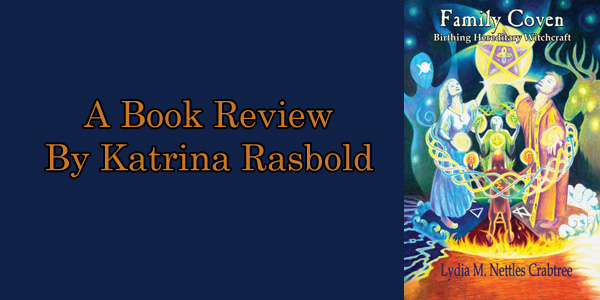
I am honored that I was asked to review the book Family Coven: Birthing Hereditary Witchcraft by Lydia M. Nettles Crabtree. I approach this book as a Witch of more than three decades and a mother of an even longer period of time, as well as an author and publisher, so my assessment of any book is multilayered. That applies here in particular.
Ms. Crabtree is an engaging writer who is clearly dedicated to both her family and her Craft. This particular book is full of wonderful ideas for rituals throughout the year, as well as suggestions for integrating magic into day to day life. The author also includes valid insights to family and interpersonal dynamics that are quite interesting and refreshing. Structurally, the book is well written and very readable. She has an excellent understanding of duality dynamics and energy flow within the circle structure and relates it well through her writing. It is a worthy read and a strong addition to any Pagan library.
There are, however, four points within the book that are concerning and three of them directly relate to the specific subject matter addressed.
Wicca and Witchcraft: Although the book is subtitled “Birthing Hereditary Witchcraft,” the author seems confused about the necessary distinction between Wicca and Witchcraft. She speaks in absolutes about “traditional” Witchcraft, when what she proceeds to describe are specifically Wiccan practices. Throughout the book, Wicca is equated with Witchcraft and while most Wiccans are Witches, most Witches are not Wiccans. This is akin to writing about candy and then proceeding as though all candy is chocolate. Most Witches who are not Wiccan find this extremely off-putting. Had the book title specified “Wicca” rather than “Witchcraft,” there would have been greater truth in advertising.
Counting on a Gamble: In her discussion about how the book and her own hereditary practice came into being, she paints a utopian vision in which her son, Bear Tree, will produce a continuous line of Witches who will look back on herself and her partner with dewy-eyed reverence as the “first Witches in our family” and be grateful for the legacy she had the foresight to create. While I appreciate this consideration and in no way fault the actual application of those ideas, what she seems to miss is the wildcard that is in the DNA and personal choices of every child. I have six children, all of whom are now grown and all of whom were raised in a Pagan household with a Pagan upbringing. Of those six, only two identify as Pagan and have any interest at all in our family practice (and we have a darned good one). They did not run screaming into the night away from our practice. They simply chose other directions for their own spirituality. I have found this to be common in Pagan families since they tend to generally be more open to helping their children explore different faiths.
If the author wrote this book retrospectively about the value her Pagan grandchildren hold for the legacy she created, there would be some understandable substantiation to her investment into the process. I have little doubt that she and others are and will be grateful for the guidelines she establishes for building her own hereditary family coven. I do believe she overinvests in the idea that her son will continue the practice that is so dear to her. This is an outgrowth of…
Lack of Experience: It is never pleasing or rewarding to call rank and I do not think I am the only one who winces when it is necessary. The child through whom the author plans her legacy of Witchcraft is seven-years-old at the time of the writing and by all appearances is her only child. She speaks authoritatively throughout the text about how to manage coven experiences with children of all ages when as nearly as I can tell, she has not experienced this first-hand and is presuming what will work or is relating to working with children who not her own. There is a huge difference in running a coven involving the children of others versus running a coven with your own children. I do not think any parent wishes to be schooled on how to parent, magically or otherwise, by someone with only seven years of experience working with their own children at various developmental ages unless the schooling only covers the first seven years. Her book is ambitious and as I read it, I felt that some of her ideas would work beautifully while others showed a lack of the experience that she would late glean as a mother of older children. As with the Wicca/Witchcraft snag, writing a book that is essentially about Pagan parenting when your one child is only seven years old might not speak to tremendous authority on the subject.
Judging the Community: Despite those glitches, I was rolling hot through the book until I got almost to the end and landed in a discussion about “Community Myths” in which the author states, “Communities who reject the participation of children are, in essence, rejecting the God and Goddess within them.” She then moves further into continued discussion central to the idea that all adult practitioners should embrace the lessons that come from having children in ritual. I must respectfully disagree with this perspective.
1) Regardless of how liberal-minded a parent one might be, some rituals are not appropriate for children.
2) Some adults truly do enjoy ritual without the need to tend children, their own or those belonging to others. They should be able to do so without anyone thinking less of them for that choice. Just as not all humans want children, not all humans want to work magic with children.
3) Forcing the opinion that all covens should include children lest they affront the God and Goddess is unnecessarily divisive and harshly judgmental. Determining and then spreading the word that people who eschew working with children are offending the Divine creates unnecessary condemnation when we already have too many pious Pagans among us.
The author’s knowledge of British Traditional Wicca is tight and impressive. Within the construct of her own spiritual path and the general knowledge of the flow of circle energy, she is beyond reproach and I would strongly recommend her as a resource or instructor in that capacity. Regarding this particular book, as a publisher, I would suggest rebranding it as specific to Wicca and reconsidering the targeting of non-family covens as suboptimal.
Thank you for the opportunity to offer this review. Best of luck to the author in her continued pursuits.
Previous Post

August 3, 2015
5 Common Energy Killing Beliefs
Next Post
August 4, 2015 The Witch's Guide to Wands (A Book Review)
Browse Our Archives
Select a Category Astrology Book Reviews Current Events CUSP Energy Magic Energy Magic Words Kitchen Magic Magic in the Media Magical Ethics Magical Protection Meditations Modern Mythologies Pagan Commentary Pagan Humor Poetry Rituals Sabbats Spell Work Spiral of the Year Tarot Tarot Deck Reviews Uncategorized Witchcraft
Select a Month February 2021 January 2021 December 2020 November 2020 October 2020 September 2020 August 2020 July 2020 June 2020 May 2020 April 2020 March 2020 February 2020 January 2020 September 2015 August 2015 July 2015 June 2015 May 2015 April 2015 March 2015 February 2015
Follow Us!
TAKE THE
Religious Wisdom Quiz
What was the result of Jesus meeting the Gerasene demoniac?
Select your answer to see how you score.
A storm calmed Bread multiplied Demons cast into pigs A man healed of leprosy
Related posts from Witch at the Crossroads
15 Best Contemporary Pagan Voices
15 Influential Pagan Voices From My Past
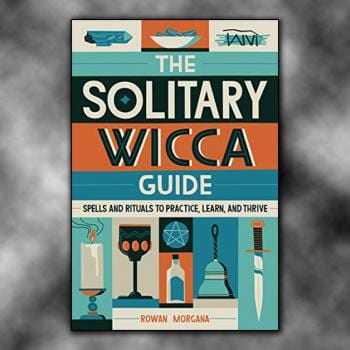
The Solitary Wicca Guide - Book Review
Llewellyn's Little Book of Yule
TRENDING AT PATHEOS Pagan

I was recently chatting with someone on Instagram. She asked me what...

While there are many people who share their results, the end of...

On July 23, I saw Christopher Nolan's The Odyssey which is Homer’s...

As I write this two big events have just finished up. One...

Restoring the Watershed of Divine Love
Perhaps cooperation is not something we manufacture through legislation, ideology, or moral...

Many UUs don’t pray because of bad experiences in a previous religion,...
view all Pagan blogs
Ad-Free & Subscriber Log-In Subscription Support
- About Us
- 2026 Calendar
- Videos
- Podcasts
- Library of World Religions
- Faith In Media Tracker
- Advertise With Us
- Write for Us
- Privacy Policy
- Terms of Service
- Do Not Sell My Data
- Contact Us
- Radiant Digital
- Manage Newsletter Subscriptions
- Unsubscribe From Notifications
- Sitemap
Copyright 2008-2026, Patheos. All rights reserved.
Subscription Support Ad-Free & Subscriber Log-In
Follow Patheos