
BuddhistCatholicContemplativeEvangelicalGeneral ChristianHinduJewishLatter-day SaintMuslimNew VisionsProgressive Christian
Beliefs
- Buddhist
- Catholic
- Contemplative
- Evangelical
- General Christian
- Hindu
- Jewish
- Latter-day Saint
- More Voices
- Muslim
- New Visions
- Pagan
- Progressive Christian
Topics
- Religion News
- Food and Religion
- Sports and Religion
- Religious Art
- Religious Music and Entertainment
- Religious Events
- History and Religion
- Style and Religion
- Politics and Religion
- Women in Religion
- Recreation Outdoors and Religion
- Business Finance and Religion
- Careers Workplace and Religion
- Education and Religion
- Family Parenting and Religion
- Health Fitness and Religion
- Home and Religion
- Relationships and Religion
- Technology and Religion
- Travel and Religion
Columnists
- Buddhist Columnists
- Business Finance and Religion Columnists
- Careers Workplace and Religion Columnists
- Catholic Columnists
- Contemplative Columnists
- Education and Religion Columnists
- Evangelists Columnists
- Family Parenting and Religion Columnists
- General Christian Columnists
- Health Fitness and Religion Columnists
- Hindu Columnists
- History and Religion Columnists
- Home and Religion Columnists
- Jewish Columnists
- More Voices Columnists
- Latter Day Columnists
- Muslim Columnists
- New Visions Columnists
- Nonreligious Columnists
- Pagan Columnists
- Politics and Religion Columnists
- Progressive Columnists
- Recreation Outdoors and Religion Columnists
- Relationships and Religion Columnists
- Religion News Columnists
- Religious Art Columnists
- Religious Events Columnists
- Religious Music and Entertainment Columnists
- Sports and Religion Columnists
- Style and Religion Columnists
- Technology and Religion Columnists
- Travel and Religion Columnists
- Women in Religion Columnists
Resource Library
- 2026 Calendar
- Library of World Religions
- The 100 Most Holy Places on Earth
- Patheos Answers
- Podcasts
- Videos
- Faith Leaders Database
- Anglican Episcopalian
- Bahai
- Baptist
- Buddhism
- Christianity
- Confucianism
- Eastern Orthodoxy
- Hinduism
- Holiness and Pentecostal
- ISKCON
- Islam
- Judaism
- Lutheran
- Methodist
- The Church of Jesus Christ of Latter-day Saints
- New Age
- Paganism
- Presbytarian and Reformed
- Protestantism
- Religion Behind the Scenes
- Roman Catholic
- Scientology
- Shia Islam
- Sikhism
- Sufism
- Sunni Islam
- Taoism
- Zen
- See all religions
Research Tools
 Ad-Free & Subscriber Log-In Subscription Support
Ad-Free & Subscriber Log-In Subscription Support
Follow Patheos 

- Trending:
- Forgiveness
- |
- Marriage
- |
- Consciousness
- |
- Death Penalty
- |
- Election
- |
- Halloween
 Emma Higgs
-
More
- Home
- Progressive Christian
- Faith in the Fog: Rebuilding Trust When Belief Systems Have Crumbled
Faith in the Fog: Rebuilding Trust When Belief Systems Have Crumbled
Last updated on: February 27, 2018 at 10:07 pm by Emma Higgs
Faith in the Fog: Rebuilding Trust When Belief Systems Have Crumbled 2018-02-27T22:07:16+00:00 Emma Higgs
Patheos Explore the world's faith through different perspectives on religion and spirituality! Patheos has the views of the prevalent religions and spiritualities of the world.
This is Part 7 of my ‘Faith In The Fog’ series on my experiences with doubt, skepticism, mental health and forging a different kind of faith.
< Part 6: Good Religion, Bad Religion
Part 8: Mindfulness and the Doubting Christian
It’s easy to trust in God when you feel sure that he exists.
And it’s easy to feel sure that God exists when your faith is built upon a solid foundation of beliefs.
I used to feel certain about my beliefs. It felt great. No matter what happened, I knew that God was on my side and I had the answers to life’s biggest questions in my back pocket.
But then questions and doubts started hammering at the foundations. The idea that I held the one set of eternally correct answers grew increasingly implausible, and I began to notice how people can do horrible things when they hold their religious beliefs above all else.
Before long, my belief system had collapsed and I was left standing the rubble, straining to see through the clouds of dust.
I knew this wasn’t the end of my faith.
At least, I hoped it wasn’t.
Despite its many failings, I loved Christianity. It was still my spiritual home. Its stories and traditions continued to stir something in the depths of my soul, and nourished me in ways I couldn’t fully articulate.
I didn’t need or want to ditch the whole thing. I was still satisfied that the Christian worldview as I understood it was not only scientifically viable, but psychologically and sociologically beneficial. But I could no longer hold onto beliefs with a clenched fist. I had to find a way to cultivate an open mind, and learn to live with the possibility that I could be barking up entirely the wrong tree.
If I was to build a new kind of Christian faith, it would have to be built on something other than a static set of beliefs.
I imagine that some people achieve this shift in mindset with the serenity of a swan, gliding through the gently rippling waters of a river estuary into the calm expanse of the open ocean.
My experience was more like that of a seagull caught in a water spout. One minute I was high above the waves, soaring with blissful anticipation towards a glowing orange sunrise. The next minute I found myself being sucked into a spinning vortex, squawking and flapping in frenzied confusion, until only the faintest glimmer of that glorious sunrise was visible as I was dragged down into cold, unfathomable depths.
I am a worrier, you see. Uncertainty scares me. I have a deep need to feel secure, so I crave definitive answers and neatly packaged explanations. When I lost faith in my belief system, my anxious mind began searching frantically for something concrete it could grab a hold of.
I struggled to accept basic Christian concepts, not because I believed they were definitely false, but because my anxious mind couldn’t cope with the possibility that they might be.
God as a loving father? What sort of father can’t even be bothered to prove his own existence?
God has the whole world in his hands? But what if he doesn’t? What if there’s no point to any of it??
God hears our prayers? But what if he’s a figment of our imagination? What if we’re actually all alone in the universe???
I spent an absurd amount of time fretting over questions like this. It was exhausting, and completely pointless. The problem wasn’t that I didn’t have the answers. The problem was the fear and emotion that I had attached to concepts and ideas that I had absolutely no control over.
Once I could get past my fear, I could start to rebuild the simple trust that I so longed for.
I still have my drowning seagull moments. And they’re still pretty terrifying, I won’t lie.
But I now realise that the anxious, over-thinking part of my brain does not have to have the last word when it comes to faith.
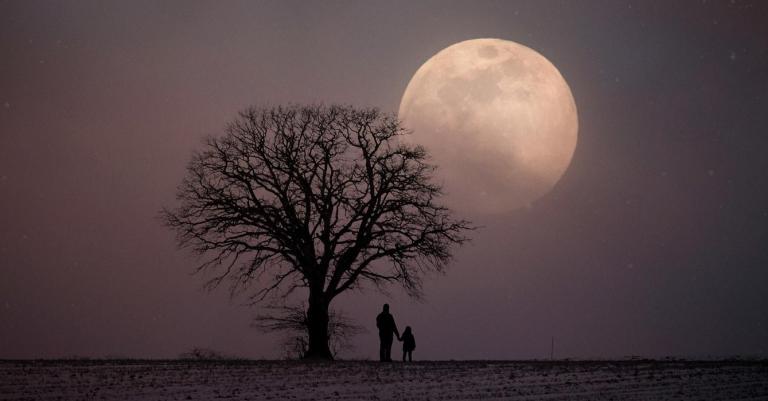
Fear makes me inward-facing, defensive and closed-minded, so when I feel afraid, I’ve learnt not to pay too much attention to myself. If I can ignore it for long enough, the fear tends to dissipate and I feel my mind and my heart opening up again. Hope starts to trickle back in to the deepest wells of my soul, and I feel the child within me cautiously stretching out her hand.
Faith is the realm of stories and mystery; music and art; poetry and metaphor. If I can bypass the skeptical, fearful part of my mind long enough to be open to these things, they can speak to the deepest parts of me. They can fill me with life like an invigorating breath of sea air and quiet my soul with a peace that transcends all understanding.
This doesn’t mean I don’t think about my faith. I am simply acknowledging that I can never really obtain objective knowledge about a subject like God, no matter how much time I spend thinking about it. This is all faith has ever been, really. Not a concrete system of beliefs, but a childlike trust in something we will never fully understand.
Reality is what it is, regardless of what I believe about it. So rather than endlessly scrambling for an intellectual grasp of God, I am better off putting my energy into being awake and present in the here and now, with an open mind and an open heart. This moment is where the life is, and this moment is all I really have any control over. And if God does exist, this is where I will find her.
< Part 6: Good Religion, Bad Religion
Part 8: Mindfulness and the Doubting Christian
Read the entire series here.
Image via Pixabay
Previous Post

November 16, 2017
Faith in the Fog: Good Religion, Bad Religion
Next Post

December 22, 2017 Light and Shadow: The Magic, the Mayhem and the Meaning of Christmas
Browse Our Archives
Select a Category Anxiety Anxiety Atheism Atonement Bible Blog Christianity Christmas Church Climate Change Contemplative Coronavirus Current affairs Depression Disability Faith Happiness Homosexuality LGBT Media Mental Mental health Millennials Mindfulness Motivation Mysticism New Year News Penal Substitution Politics Religion Science Statistics Stress Theology Trump Uncategorized War Yemen
Select a Month July 2021 June 2021 April 2020 March 2020 February 2020 February 2019 January 2019 November 2018 October 2018 July 2018 May 2018 March 2018 February 2018 January 2018 December 2017 November 2017 September 2017 July 2017 June 2017 May 2017 March 2017 February 2017 January 2017 December 2016 September 2016 August 2016 July 2016 June 2016 April 2016 February 2016 November 2015 October 2015 September 2015
Follow Us!
TAKE THE
Religious Wisdom Quiz
Who saw the vision of the valley of dry bones?
Select your answer to see how you score.
Jeremiah Ezekiel Daniel Isaiah
Related posts from Emma Higgs

How Paying Attention to My Mood Helps Me...

7 Reasons Why the Present Moment is the...

Coronavirus Anxiety: A Practical Checklist for a Healthy...

Windmills of Your Mind: The Tyranny of Thought
TRENDING AT PATHEOS Progressive Christian

Why Christians Have a Sacred Duty to Vote:...
The Bible offers strong support for the sacred duty to vote. Here...

What Being a Modern-Day Apostle Means to Me
In my last column, I discussed the ins and outs of modern-day...

Did Ancient China Once Worship the God of...
Across human history, a common thread weaves through the origins of the...

Love Your Neighbor – Including Earth-Kin: Lev. 19,...
God’s command to love your neighbor means acting in an ethical and...

Lead a Church Study of “Jesus and Lao...
Guest writer Jack Thomas (The Irreverent Reverend) reflects on leading his church...

Principles for Understanding the Apostolic Ministry Today
Whenever people discover that my formal ministry title is "apostle," as in...
view all Progressive Christian blogs
Ad-Free & Subscriber Log-In Subscription Support
- About Us
- 2026 Calendar
- Videos
- Podcasts
- Library of World Religions
- Faith In Media Tracker
- Advertise With Us
- Write for Us
- Privacy Policy
- Terms of Service
- Do Not Sell My Data
- Contact Us
- Radiant Digital
- Manage Newsletter Subscriptions
- Unsubscribe From Notifications
- Sitemap
Copyright 2008-2026, Patheos. All rights reserved.
Subscription Support Ad-Free & Subscriber Log-In
Follow Patheos