
BuddhistCatholicContemplativeEvangelicalGeneral ChristianHinduJewishLatter-day SaintMuslimNew VisionsProgressive Christian
Beliefs
- Buddhist
- Catholic
- Contemplative
- Evangelical
- General Christian
- Hindu
- Jewish
- Latter-day Saint
- More Voices
- Muslim
- New Visions
- Pagan
- Progressive Christian
Topics
- Religion News
- Food and Religion
- Sports and Religion
- Religious Art
- Religious Music and Entertainment
- Religious Events
- History and Religion
- Style and Religion
- Politics and Religion
- Women in Religion
- Recreation Outdoors and Religion
- Business Finance and Religion
- Careers Workplace and Religion
- Education and Religion
- Family Parenting and Religion
- Health Fitness and Religion
- Home and Religion
- Relationships and Religion
- Technology and Religion
- Travel and Religion
Columnists
- Buddhist Columnists
- Business Finance and Religion Columnists
- Careers Workplace and Religion Columnists
- Catholic Columnists
- Contemplative Columnists
- Education and Religion Columnists
- Evangelists Columnists
- Family Parenting and Religion Columnists
- General Christian Columnists
- Health Fitness and Religion Columnists
- Hindu Columnists
- History and Religion Columnists
- Home and Religion Columnists
- Jewish Columnists
- More Voices Columnists
- Latter Day Columnists
- Muslim Columnists
- New Visions Columnists
- Nonreligious Columnists
- Pagan Columnists
- Politics and Religion Columnists
- Progressive Columnists
- Recreation Outdoors and Religion Columnists
- Relationships and Religion Columnists
- Religion News Columnists
- Religious Art Columnists
- Religious Events Columnists
- Religious Music and Entertainment Columnists
- Sports and Religion Columnists
- Style and Religion Columnists
- Technology and Religion Columnists
- Travel and Religion Columnists
- Women in Religion Columnists
Resource Library
- 2026 Calendar
- Library of World Religions
- The 100 Most Holy Places on Earth
- Patheos Answers
- Podcasts
- Videos
- Faith Leaders Database
- Anglican Episcopalian
- Bahai
- Baptist
- Buddhism
- Christianity
- Confucianism
- Eastern Orthodoxy
- Hinduism
- Holiness and Pentecostal
- ISKCON
- Islam
- Judaism
- Lutheran
- Methodist
- The Church of Jesus Christ of Latter-day Saints
- New Age
- Paganism
- Presbytarian and Reformed
- Protestantism
- Religion Behind the Scenes
- Roman Catholic
- Scientology
- Shia Islam
- Sikhism
- Sufism
- Sunni Islam
- Taoism
- Zen
- See all religions
Research Tools
 Ad-Free & Subscriber Log-In Subscription Support
Ad-Free & Subscriber Log-In Subscription Support
Follow Patheos 

- Trending:
- Forgiveness
- |
- Marriage
- |
- Consciousness
- |
- Death Penalty
- |
- Election
- |
- Halloween
 Emerging into Orthodoxy
- Home
- Eastern Orthodox
- From Doubt to Mystery
From Doubt to Mystery
Last updated on: June 2, 2012 at 12:45 pm by Andrew Tatusko
From Doubt to Mystery 2012-06-02T12:45:52-06:00 Andrew Tatusko
Patheos Explore the world's faith through different perspectives on religion and spirituality! Patheos has the views of the prevalent religions and spiritualities of the world.
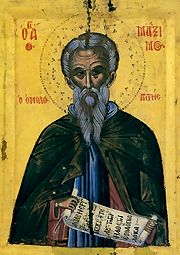
For about a decade I understood that doubt and faith go together. That is to say, faith should be a questioning and critical self-reflective exercise rather than walking blindly in total trust. But I doubted everything. Faith was a fully intellectual exercise and very safe because it was an object. Faith didn’t require any self-examination. But it was also unsatisfying. There was an absence of hope that I could be part of something to transform my human condition to be better.
On the other hand, doubt was an exercise that allowed me to persist in the same state. This worked for a while but I became loaded with confusion. Doubt, as has been the case with many a thinker, was transformed into an agnostic boredom with faith.
What was I to do? The vicious absolutism on the fundamentalist right and the dogmatic liberalism on the left offered little more than masks of conformity to a social get together. Other communities seemed to be grasping at straws working hard to solve as many social problems as possible in the name of biblical justice. A worthy endeavor but I couldn’t recognize fulfillment to my deepest spiritual yearning. Religion seemed to ask questions that have no answers, and offer answers that have no questions.
Where was the mystery? That was the question. Paradoxically the answer offered no satisfying conclusion, yet neither did it require doubt. Faith in something mysterious is a consent to a living albeit incomprehensible reality. While I cannot actually change the world to suit my desires at the time, I can certainly change how I react to the world and alter my desires accordingly. Through the veil of mystery is where clarity found its home. The question is then where to find the guidance in order to make real contact with this mystery.
As Peter Rollins writes,
(W)hat if the church could be a place where we found a liturgical structure that would not treat God as a product that would make us whole but as the mystery that enables us to live abundantly in the midst of life’s difficulties. A place where we are invited to confront the reality of our humanity, not so that we will despair, but so that we will be free of the despair that already lurks within us, the despair that enslaves us, the despair that we refuse to acknowledge.
Exactly. What I found is that there has always been a place that observes such mysteries and practices this kind of liturgical structure. It is a place where the worship space and the world itself is a sacrament and there is no such thing as death. Death itself is something of an illusion because of the remarkable grace of God who destroyed it. Death isn’t part of the natural state of human being.
This place is where doubt is cast aside to trust in the thousands of pages of the saints before us who describe their rigorous practices and visceral encounters with God. Faith isn’t living in the world as-if it has significance but a consent to and a paradoxical fidelity to the mystery that makes it so.
In the Divine Liturgy of St. John Chrysostom during the period between Pascha (Easter) and Pentecost the Eastern Orthodox sing a Troparion particular to the Paschal season which is the sum of the very object of faith:
Christ is risen from the dead
Trampling down death by death
And upon those in the tombs
Bestowing life.
This is not a view of reality through the eyes of death and absence, but of a profound presence that has destroyed the bondage of death before we were even born. Sin is a sickness and death is its consequence – an unnatural state for which we require healing. Church is a hospital for the spiritually sick and offers the remedy for this common chronic illness through the Divine Liturgy.
This is what I wanted. I sought healing not moralism or judgment. It was in the incense and beauty of a space transformed into an icon of heaven in our midst. This space, this kind of progressive union with God that Christ’s resurrection made possible completely changed my worldview. It was and is participating in the eternal life of God and the saints who came before us and are still with us even now.
Christ died and rose from the dead to transform a dead humanity with life itself. I would much rather live in a reality where the tombs are empty because life itself emptied them rather than fill with self-pity and resentment because Jesus left us alone and in despair. It is through this life that we become part of the life of the Trinity itself.
In the words of St. Maximos the Confessor:
For created things are not by nature able to accomplish deification, since they cannot grasp God. To bestow a consonant measure of deification on created beings is within the power of divine grace alone. Grace irradiates nature with a supernatural light and by the transcendence of its glory raises nature above its natural limits. – Philokalia, II, First Century of Various Texts, Sec. 76
Previous Post

July 8, 2014
Dragged into Healing at Wild Goose
Next Post
June 2, 2012 Leaving Protestantism
Browse Our Archives
Select a Category Uncategorized
Select a Month July 2014 November 2013 March 2013 January 2013 July 2012 June 2012
Follow Us!
TAKE THE
Religious Wisdom Quiz
What does Proverbs 23:4-5 warn against pursuing too much?
Select your answer to see how you score.
Status Knowledge Wealth Power
Related posts from Emerging into Orthodoxy

Did Jesus Die for Wrath or Sin?

Refusing the Gangster God: Why I'm Orthodox
TRENDING AT PATHEOS Eastern Orthodox

Did Prayer Cure His Cancer? Or Was It...
At 4 AM one morning, Joshua W. Brown’s wife awoke to a...

8 Ways a Near-Death Experience Rewires the Soul
Does Consciousness Survive Physical Death? After 50 Years of Research, Dr. Raymond...

Holy Longing: What Our Restlessness Is Telling Us
“One can find so many pains when the rain is falling.” -John...

What this is NOT about. This blog is definitely not about...

Who said the Israelites were God’s chosen? That’s right, they did. Who...

The Spirit World Is the Real World: God...
A Monk’s Wisdom on Body and Spirit I sit with Brother Martin...
view all Eastern Orthodox blogs
Ad-Free & Subscriber Log-In Subscription Support
- About Us
- 2026 Calendar
- Videos
- Podcasts
- Library of World Religions
- Faith In Media Tracker
- Advertise With Us
- Write for Us
- Privacy Policy
- Terms of Service
- Do Not Sell My Data
- Contact Us
- Radiant Digital
- Manage Newsletter Subscriptions
- Unsubscribe From Notifications
- Sitemap
Copyright 2008-2026, Patheos. All rights reserved.
Subscription Support Ad-Free & Subscriber Log-In
Follow Patheos