
BuddhistCatholicContemplativeEvangelicalGeneral ChristianHinduJewishLatter-day SaintMuslimNew VisionsProgressive Christian
Beliefs
- Buddhist
- Catholic
- Contemplative
- Evangelical
- General Christian
- Hindu
- Jewish
- Latter-day Saint
- More Voices
- Muslim
- New Visions
- Pagan
- Progressive Christian
Topics
- Religion News
- Food and Religion
- Sports and Religion
- Religious Art
- Religious Music and Entertainment
- Religious Events
- History and Religion
- Style and Religion
- Politics and Religion
- Women in Religion
- Recreation Outdoors and Religion
- Business Finance and Religion
- Careers Workplace and Religion
- Education and Religion
- Family Parenting and Religion
- Health Fitness and Religion
- Home and Religion
- Relationships and Religion
- Technology and Religion
- Travel and Religion
Columnists
- Buddhist Columnists
- Business Finance and Religion Columnists
- Careers Workplace and Religion Columnists
- Catholic Columnists
- Contemplative Columnists
- Education and Religion Columnists
- Evangelists Columnists
- Family Parenting and Religion Columnists
- General Christian Columnists
- Health Fitness and Religion Columnists
- Hindu Columnists
- History and Religion Columnists
- Home and Religion Columnists
- Jewish Columnists
- More Voices Columnists
- Latter Day Columnists
- Muslim Columnists
- New Visions Columnists
- Nonreligious Columnists
- Pagan Columnists
- Politics and Religion Columnists
- Progressive Columnists
- Recreation Outdoors and Religion Columnists
- Relationships and Religion Columnists
- Religion News Columnists
- Religious Art Columnists
- Religious Events Columnists
- Religious Music and Entertainment Columnists
- Sports and Religion Columnists
- Style and Religion Columnists
- Technology and Religion Columnists
- Travel and Religion Columnists
- Women in Religion Columnists
Resource Library
- 2026 Calendar
- Library of World Religions
- The 100 Most Holy Places on Earth
- Patheos Answers
- Podcasts
- Videos
- Faith Leaders Database
- Anglican Episcopalian
- Bahai
- Baptist
- Buddhism
- Christianity
- Confucianism
- Eastern Orthodoxy
- Hinduism
- Holiness and Pentecostal
- ISKCON
- Islam
- Judaism
- Lutheran
- Methodist
- The Church of Jesus Christ of Latter-day Saints
- New Age
- Paganism
- Presbytarian and Reformed
- Protestantism
- Religion Behind the Scenes
- Roman Catholic
- Scientology
- Shia Islam
- Sikhism
- Sufism
- Sunni Islam
- Taoism
- Zen
- See all religions
Research Tools
 Ad-Free & Subscriber Log-In Subscription Support
Ad-Free & Subscriber Log-In Subscription Support
Follow Patheos 

- Trending:
- Forgiveness
- |
- Marriage
- |
- Consciousness
- |
- Death Penalty
- |
- Election
- |
- Halloween
 Emerging into Orthodoxy
- Home
- Eastern Orthodox
- Entering Orthodoxy
Entering Orthodoxy
Last updated on: June 4, 2012 at 10:16 am by Andrew Tatusko
Entering Orthodoxy 2012-06-04T10:16:24-06:00 Andrew Tatusko
Patheos Explore the world's faith through different perspectives on religion and spirituality! Patheos has the views of the prevalent religions and spiritualities of the world.
 Yesterday I was sealed with the Holy Spirit and became an Orthodox Christian. What does this mean? As Father Deacon and I were making our way down to the church I told him that one thing that bothered me about so much Theology in the West is the continual insistence on trying to figure things out. With that said, he reminded me that the East has a problem with over-speculation which is why most of the heresies come from the East. To be sure, I know I am new to this way and need to be careful lest I’m a little over-zealous or just a blabbering romantic.
Yesterday in so many Western churches it was Trinity Sunday or the Solemnity of the Most Holy Trinity. Today I no longer call this a “doctrine” as much as the discovery of the nature of God as Three persons who are yet co-eternal in one substance and therefore in One God. I am no longer in the business of debating what it means as much as accepting that the way I have chosen is about experiencing the Trinity in worship. I can only describe God in my experience and through the experiences of the saints.
Have you ever tried to explain the Trinity so it makes sense? Good luck. The truth is that it makes no sense to any capability of human reason we can muster up. It is a mystery. It is no doubt the greatest mystery of the Christian faith and at the same time the most fundamental. Yet the nature of God is the most debated and discussed issue in all of Christianity. It’s why we have theology or “reasoning out God.” Here’s a little secret about the Eastern Orthodox tradition though: there aren’t many saints who are called “theologian.”
Theology isn’t so much about debating and reasoning out God as it is bearing witness to one’s experience with God. There are three saints recognized as theologian in the East: St. John the Evangelist, St. Gregory Nazianus, and St. Symeon the New Theologian. Why? The reason is that these three are recognized as having the authentic experience of union with God and it is from this union and mystical experience that their understanding of God emerges. Theology is the creative process of God working within us. It is a giving and receiving of the presence of God that we share with each other. Through the Eucharist, God literally communicates God’s very being with us.
As Metropolitan Maximos of Pittsburgh writes:
What counts when speaking about God is not how much we can understand of His Mystery and how much we can say; what counts is the mystical experience itself as we encounter God beyond concepts and ideas. Such experience cannot be fully conceptualized. However, something has to be said about our mystical experience of God in God’s communion and Presence, as God communicates Himself to us in His “energies.” That “something” is our share in “theologizing,” and our poor way of speaking about God’s Mystery, always inadequate and always imperfect.
Yesterday I took my first communion. The Holy Spirit was sealed in me with the anointing of the oil. It was a confirmation of my baptism and recognition that I have chosen a new way of relating to God. Father said before I partook of the mystery that as a long student trained in Reformed theology, as he once was, I had to unlearn a lot. This has been very true. But for every thing I have unlearned I have learned that those questions that didn’t have answers no longer need rational explanations. Those questions require participation in the very being of God.
Previous Post

June 2, 2012
Leaving Protestantism
Next Post
June 5, 2012 If This is Orthodoxy, What is Heterodoxy?
Browse Our Archives
Select a Category Uncategorized
Select a Month July 2014 November 2013 March 2013 January 2013 July 2012 June 2012
Follow Us!
TAKE THE
Religious Wisdom Quiz
What does Proverbs 23:4-5 warn against pursuing too much?
Select your answer to see how you score.
Status Knowledge Wealth Power
Related posts from Emerging into Orthodoxy
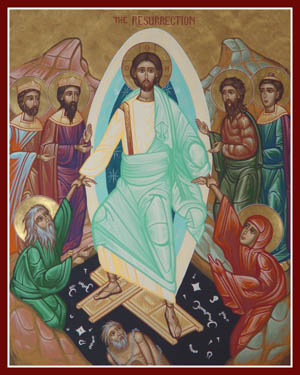
Did Jesus Die for Wrath or Sin?

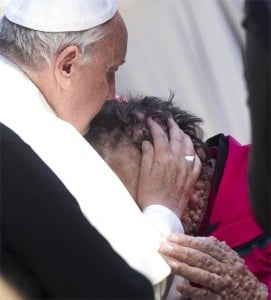
Dragged into Healing at Wild Goose

The "War on Christmas" is Sinful
TRENDING AT PATHEOS Eastern Orthodox

Did Prayer Cure His Cancer? Or Was It...
At 4 AM one morning, Joshua W. Brown’s wife awoke to a...

8 Ways a Near-Death Experience Rewires the Soul
Does Consciousness Survive Physical Death? After 50 Years of Research, Dr. Raymond...

Holy Longing: What Our Restlessness Is Telling Us
“One can find so many pains when the rain is falling.” -John...

What this is NOT about. This blog is definitely not about...

Who said the Israelites were God’s chosen? That’s right, they did. Who...

The Spirit World Is the Real World: God...
A Monk’s Wisdom on Body and Spirit I sit with Brother Martin...
view all Eastern Orthodox blogs
Ad-Free & Subscriber Log-In Subscription Support
- About Us
- 2026 Calendar
- Videos
- Podcasts
- Library of World Religions
- Faith In Media Tracker
- Advertise With Us
- Write for Us
- Privacy Policy
- Terms of Service
- Do Not Sell My Data
- Contact Us
- Radiant Digital
- Manage Newsletter Subscriptions
- Unsubscribe From Notifications
- Sitemap
Copyright 2008-2026, Patheos. All rights reserved.
Subscription Support Ad-Free & Subscriber Log-In
Follow Patheos