
BuddhistCatholicContemplativeEvangelicalGeneral ChristianHinduJewishLatter-day SaintMuslimNew VisionsProgressive Christian
Beliefs
- Buddhist
- Catholic
- Contemplative
- Evangelical
- General Christian
- Hindu
- Jewish
- Latter-day Saint
- More Voices
- Muslim
- New Visions
- Pagan
- Progressive Christian
Topics
- Religion News
- Food and Religion
- Sports and Religion
- Religious Art
- Religious Music and Entertainment
- Religious Events
- History and Religion
- Style and Religion
- Politics and Religion
- Women in Religion
- Recreation Outdoors and Religion
- Business Finance and Religion
- Careers Workplace and Religion
- Education and Religion
- Family Parenting and Religion
- Health Fitness and Religion
- Home and Religion
- Relationships and Religion
- Technology and Religion
- Travel and Religion
Columnists
- Buddhist Columnists
- Business Finance and Religion Columnists
- Careers Workplace and Religion Columnists
- Catholic Columnists
- Contemplative Columnists
- Education and Religion Columnists
- Evangelists Columnists
- Family Parenting and Religion Columnists
- General Christian Columnists
- Health Fitness and Religion Columnists
- Hindu Columnists
- History and Religion Columnists
- Home and Religion Columnists
- Jewish Columnists
- More Voices Columnists
- Latter Day Columnists
- Muslim Columnists
- New Visions Columnists
- Nonreligious Columnists
- Pagan Columnists
- Politics and Religion Columnists
- Progressive Columnists
- Recreation Outdoors and Religion Columnists
- Relationships and Religion Columnists
- Religion News Columnists
- Religious Art Columnists
- Religious Events Columnists
- Religious Music and Entertainment Columnists
- Sports and Religion Columnists
- Style and Religion Columnists
- Technology and Religion Columnists
- Travel and Religion Columnists
- Women in Religion Columnists
Resource Library
- 2026 Calendar
- Library of World Religions
- The 100 Most Holy Places on Earth
- Patheos Answers
- Podcasts
- Videos
- Faith Leaders Database
- Anglican Episcopalian
- Bahai
- Baptist
- Buddhism
- Christianity
- Confucianism
- Eastern Orthodoxy
- Hinduism
- Holiness and Pentecostal
- ISKCON
- Islam
- Judaism
- Lutheran
- Methodist
- The Church of Jesus Christ of Latter-day Saints
- New Age
- Paganism
- Presbytarian and Reformed
- Protestantism
- Religion Behind the Scenes
- Roman Catholic
- Scientology
- Shia Islam
- Sikhism
- Sufism
- Sunni Islam
- Taoism
- Zen
- See all religions
Research Tools
 Ad-Free & Subscriber Log-In Subscription Support
Ad-Free & Subscriber Log-In Subscription Support
Follow Patheos 

- Trending:
- Forgiveness
- |
- Marriage
- |
- Consciousness
- |
- Death Penalty
- |
- Election
- |
- Halloween

- Home
- General Christian
- Education and Religion
- Is ‘Male Headship’ Biblical? A Closer Look at 1 Corinthians
Is ‘Male Headship’ Biblical? A Closer Look at 1 Corinthians
Last updated on: November 28, 2025 at 12:41 am by Miranda Turner
Is ‘Male Headship’ Biblical? A Closer Look at 1 Corinthians 2025-11-28T00:41:24-05:00 Miranda Turner
Patheos Explore the world's faith through different perspectives on religion and spirituality! Patheos has the views of the prevalent religions and spiritualities of the world.
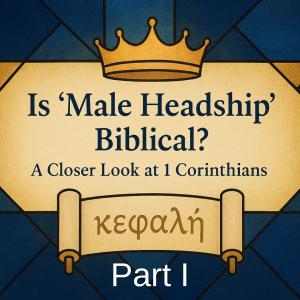
If you’re tired of seeing my posts about women preaching, please know that I’m equally exhausted from writing them. The deeper I examine this issue, the more ridiculous the whole argument seems to me. Nevertheless, having committed to it, I am determined to see it through to completion— at least, I’ll try to, anyway. That’s the most I can promise.
I’m even consolidating all my thoughts into a forthcoming e-book called ‘Girl, You Better Preach!: Answering the Call, Rejecting Convention,’ and will continue this exploration there. This way, everything is neatly compiled in one place, and easily accessible, because once this inquiry is complete, I never want to waste such time on it again.
Still, despite its perceived absurdity, I consider it important, as many people impede the word of God by promoting the assumption that women cannot preach. It’s shameful that one must validate their ability to proclaim God’s truth before being granted the opportunity to do so, and be heard.
Truly, it’s regrettable that so many sincere believers are brainwashed into believing baseless teachings of men, due to an incomplete understanding and lack of truth. But, hey, what can you do? Welcome to the 21st-century church! Where we invent our own doctrines and only partially heed God’s Word! It’s an unfortunate reality, but it is what it is. So, here we go.
When discussions arise regarding women preaching, 1 Corinthians 11:2-16 is a frequently cited reference. This passage demands careful study due to its apparent role as a foundational text for the “complementarian” concept of ‘male headship.’
This next series of posts will, therefore, conduct a thorough examination of these verses and their surrounding context, to investigate whether Paul intended to establish, or promote a hierarchical male authority over women, both in marriage and within the church, as he penned this portion of his letter to the Corinthians.
1 Corinthians 16
Let’s begin with a brief overview of chapter 16, which is the final chapter of the letter. In this section, Paul outlines instructions for a collection destined for Jerusalem, and mentions his plans to visit the Corinthian church, potentially remaining with them through the winter, following his travels through Macedonia.
He then offers counsel on how to treat Timothy upon his arrival, provides an update on Apollos, commends the household of Stephanas, and relays greetings from the Asian churches, as well as from Aquila and Priscilla.
This overview serves to highlight, even before a deeper textual examination, a crucial point many believers often miss or choose to ignore: this letter, and indeed Paul’s other epistles, were not written to us, but rather specifically to their original, designated recipients.
Therefore, not all content in this letter directly applies to us. Our task is to use research and discernment, while adhering to the Holy Spirit’s guidance, to identify and extract universal principles for application in our lives today.
This will require us to consider the entire piece, not just a part of it. Thus, in order to follow Paul’s thought process, we’ll next look at relevant verses from chapters 1-10 according to the NIV translation.
1 Corinthians 1-10: Brief Overview
Chapter 1
Paul begins his letter with an appeal to all those living in Corinth who pray to the Lord Jesus Christ (vv. 1-3). His appeal is that they all agree with one another in what they say and that there would be no divisions among them so they would be perfectly united in mind. Apparently, the people were divided over various instructions from various teachers. Paul goes on to make the point that Christ was not divided and that he and the others were essentially less important than Christ (vv. 13). He then begins to veer off topic for a bit which continues into chapter 2.
Chapter 2
Paul shifts focus to highlight a significant point: Individuals lacking the Spirit cannot grasp or comprehend spiritual matters, as these are discernible exclusively through the Spirit of God, which such individuals do not possess (vv. 11-14). In contrast, those with the Spirit can evaluate all things, forming judgments not merely by human standards but by the mind of Christ (vv. 15-16).
Chapter 3
Paul now resumes his message by rebuking the people for their worldly nature and divisive tendencies—traits characteristic of individuals lacking the mind of Christ (vv. 1-4). He uses himself and Apollos as illustrations, emphasizing that they are simply servants sent by God to convey a message that the Corinthians eventually believed.
Metaphorically describing the expansion of the church, he clarifies that with both sharing a common objective, he planted the seed and Apollos nurtured it, but God is the true source of its growth. Thus, Paul and Apollos are not of particular importance, and neither deserves more esteem than the other; they are both equal partners in God’s work, and God himself should be the primary focus (vv. 5-9).
Next, he asserts that anyone who considers themselves wise by worldly or cultural standards has it twisted, as such wisdom is foolishness in God’s eyes (vv. 18-19). He then instructs:
“21 So then, no more boasting about human leaders! All things are yours, 22 whether Paul or Apollos or Cephas[c] or the world or life or death or the present or the future—all are yours,” (vv. 21-22 NIV).
I interpret “all things are yours” to mean “everything is of you all,” signifying that every element contributes to, and affects the collective body of which they were a part, rather than denoting ownership or privilege. This conveys a sense of complete interconnectedness and fits a major theme of the letter: togetherness.
Together, they were spiritually God’s temple in whom the Holy Spirit dwelled (v. 16-17). Therefore, there should be no separations amongst them. Paul concludes by stating “and you (the whole) are of Christ and Christ is of God” (v. 23). We need to pay close attention to verse 23 when we get to our key passage in 1 Corinthians 11.
Chapter 4
Paul reiterates to the Corinthians that he, Apollos, and their fellow workers should be regarded as mere servants of Christ, entrusted with God’s message. Since they were entrusted with something so important, their faithfulness needed to be established (vv. 1-2). However, Paul wasn’t concerned with their scrutiny, which would take place in what he called a “human day” (v. 3), likely referring to an investigation set by mere humans. He was more concerned with the Lord’s examination of him.
The fact that he wasn’t aware of any wrongdoing on his part, did not make him innocent, but in accordance with the Lord’s righteousness, the Lord would judge him. Therefore, they were instructed not to examine, investigate, or dispute anything before the Lord’s appointed coming—a time likely referring to a divine visitation, not the ultimate end. During this event, the Lord would expose the heart’s hidden secrets, and each individual would then receive approval from him accordingly (vv. 4-5).
Paul then gave a vital instruction: to adhere strictly to what is written, so they would not become arrogant by favoring one teacher and his teachings over another (v. 6). He exhorted them to imitate him as their father in the faith and mentioned sending Timothy to refresh their memory of his way of life, which agreed with his teachings across all assemblies (vv. 14-17).
Chapter 5
Paul rebukes the people for their tolerance of a known sin and he urges them to expel the sinful person from the assembly (vv 1-5). This is because a little yeast leavens the whole batch of dough (v. 6). In other words: sin spreads. Therefore, they should not allow this person to remain physically within the community since he or she may spread these corrupt ideas and tendencies throughout it.
He clarifies that they are not to disassociate with immoral people of the world but immoral people of the church, which includes idolaters (vv. 9-10). One who claimed to be a brother or sister but took part in any of the named activities—they were not to even eat with such a person (v. 11). Their business was not to judge those outside the church but those within the church (v. 12-13).
Chapter 6
Picking up from chapter 5, Paul continues his discussion on judging and resolving conflicts among believers. Instead of settling their disagreements within their faith community, they were apparently taking each other to secular courts. Paul seems to suggest that it’s preferable to endure being wronged or cheated than to let individuals with differing principles and beliefs resolve their disputes based on those unshared values. Additionally, some were themselves committing wrongs yet were suing their fellow believers (vv. 1-8).
He then seems to go off-topic, but to deliver a vital reminder: those who engage in evil practices will not enter God’s kingdom (vv. 9-11). The focus here appears to be on idolatry. He states the body is not for fornication or “porneia,” (v. 13) which, while commonly rendered as ‘sexual immorality,’ more likely signifies idolatry in a metaphorical sense—a concept illuminated by the narrative of Hosea and his disloyal wife, Gomer (Book of Hosea).
Paul then uses the analogy of prostitution to help them grasp the implications of idolatry. Just as becoming intimate with a prostitute makes one physically united with her, similarly, joining with idols and gods through participating in their offerings creates a union with them. However, anyone united with the Lord becomes one with him in spirit (vv. 15-17).
He therefore exhorts them to shun idolatry, as their bodies are temples of the Holy Spirit who dwells within them. They are not their own, but belong to God, who purchased them at a cost (vv. 18-19). It would therefore be adultery to join themselves to another. Consequently, while the Lord permits anything that serves their well-being, not all things align with the Lord and his teachings and should thus be avoided.
Chapter 7
Chapter 7 appears somewhat misplaced, perhaps branching out from Paul’s discussions on prostitution, adultery, and unfaithfulness. He addresses a Corinthian concern—-matters they had written to him about previously. He asserts that it is beneficial for a man to avoid becoming ‘joined,’ ‘bound,’ or ‘fastened’ to a woman, generally referring to a marital relationship.
However, due to ‘fornication’ (whatever its specific nature, but likely involving adultery, which according to the Bible, implies a man having sex with another man’s woman, regardless of a piece of paper from the government), men and women were advised to have an exclusive partner, meaning someone who belonged solely to them (vv. 1-2).
They were expected to fulfill their marital obligations to one another (v. 3), and despite Paul’s initial recommendation against marriage (v. 8), if a couple chose to marry, they were not to withhold sexual intimacy (except in certain situations) (v. 5) or separate until death. Indeed, a woman is bound to her husband as long as he is alive (v. 39). If she separates from him, she must either remain “un-joined” to a man, or reconcile with her husband.
In situations where a believer was married to an unbeliever, the believer was not to initiate separation; but if the unbeliever chose to leave, they should be permitted to do so (vv. 12-15). The believer is not bound in such cases.
It’s important for me to note that the Greek term απιστος (apistos) appears frequently throughout the letter, typically rendered as “unbeliever.” Nevertheless, this word can also signify “faithless,” “untrustworthy,” “disobedient,” or “unfaithful person,” among other interpretations.
My concern is that it doesn’t always imply someone who lacks belief in God, yet that’s the message the translation conveys. For someone in one of these situations, it could be misleading, as an unbeliever can be distrustful, faithless, or disobedient, but so can a believer. Therefore, I will use more general terms like “faithless” or “disobedient” over “unbeliever” when addressing verses containing this word.
Continuing on, with few exceptions, such as slavery, where freedom should be sought if possible, individuals were generally encouraged to remain in the life circumstances they were in when God called them—whether single or married, circumcised or uncircumcised, etc.
There was no need to change one’s situation to live for God. It is not circumcision or uncircumcision that matters, but keeping God’s commands is what counts (vv. 18-19). That is to say, it is not the external circumstances that need to change, but the internal situation of the heart (Gal. 6:15).
Chapter 8
Next, Paul addresses the subject of things sacrificed to idols, which is likely another of the “matters” the Corinthians raised (1 Corinth. 7:1). Referring to himself and likely his co-workers and other leaders, he states they all acknowledge that they possess a shared comprehension regarding things sacrificed to idols. This insight, however, seemed to cause some individuals to become arrogant. He states that while the knowledge puffs up, charity builds up (v. 1).
So, they themselves have this understanding, however, if anyone (else) presumes to understand but has not yet fully grasped the matter as they ought, then if that individual pleases God, they are known, or rather “observed” or “marked” by God (v. 2-3). I understand this to mean that essentially, God is aware and will facilitate judgment. He will bring their deeds to light for the purpose of correction, since he disciplines those that he loves (Prov. 3:12; Heb. 12:6; 1 Cor. 4:4-5).
In practical terms, how could this occur? First Corinthians 14:24-25 depicts a scenario where a “faithless” or “disobedient” person enters a meeting where prophesying is taking place. Through prophesying, the individual is made aware of their sin and is convicted. They are then subjected to judgment as their innermost thoughts are brought to light, likely through their own admission.
They will fall to their knees and worship God, proclaiming, “God is indeed among you!” Consequently, it is the clear proclamation of God’s Word, empowered by the Holy Spirit, that convicts and unveils truths about sin.
As a result, those with understanding did not have to conduct investigations based on suspicions or probability. Neither did they have to go out of their way to correct someone to demonstrate their own knowledge, which usually only shames or alienates people, especially babies in Christ. Proclaiming the Word was all they needed; they didn’t need to nag, pick, threaten, or condemn people into doing right.
If a person loves God and is pleasing to him, he will guide them in the right direction. This took me some time to realize, but of course, the Lord revealed this to me as well. The source of true knowledge and understanding is God (Prov. 2:6). Thus, no one should become arrogant on account of their knowledge, as if it had come from themselves rather than God ( 1 Cor. 4:6-8). The specific knowledge or understanding Paul seems to allude to is outlined in verses 4-6 and verse 8.
4 So then, about eating food sacrificed to idols: We know that “An idol is nothing at all in the world” and that “There is no God but one.” 5 For even if there are so-called gods, whether in heaven or on earth (as indeed there are many “gods” and many “lords”), 6 yet for us there is but one God, the Father, from whom all things came and for whom we live; and there is but one Lord, Jesus Christ, through whom all things came and through whom we live. (NIV)
8 But food does not bring us near to God; we are no worse if we do not eat, and no better if we do. (NIV)
Essentially, they are unconcerned about consuming items offered to idols because they know there is only one God and one Lord, the source of all things and the source of their existence. Consequently, an idol holds no significance for them, making concern over such food unnecessary. However, despite this insight, not everyone possessed the same understanding.
Some individuals, having been deeply involved in idolatry, still perceived food sacrificed to idols as a genuine offering to a deity (v. 7). Therefore, while it seemed trivial to the well-informed, a person lacking this understanding might, in their heart, be participating in idolatry by consciously honoring another god.
The more knowledgeable believers were thus cautioned against allowing their confidence to lead those approved by God astray (v. 9). They were instructed to exercise their liberty carefully, ensuring it didn’t negatively impact the thinking of someone who might not yet grasp this deeper truth.
For instance, if such individuals observed Paul and other respected church leaders eating idol-sacrificed food, they might be encouraged to follow suit (v. 10). Although Paul viewed it merely as food, those without full comprehension might perceive their own participation as an offering to a god or idol, feeling justified because prominent figures like “Paul and ‘nem” did it.
Therefore, Paul declared that if his eating caused another believer to fall, he would abstain from meat forever to prevent their spiritual fall (v. 12), demonstrating a profound love for others that outweighed personal pleasure.
Chapter 9
In chapter 9, Paul presents a hypothetical argument to defend his previous conclusion against potential challenges. He uses himself as the basis for this argument, posing questions such as: Wasn’t he free? Didn’t he possess certain rights? According to the Law of Moses, weren’t he and his fellow laborers entitled to material resources to support their work in spreading the Gospel? (vv. 1-14)
Indeed, they were. However, they chose not to exercise these rights (vv. 15), fearing it might somehow hinder the gospel of Christ. This serves as an illustration of placing God’s work above personal interests. Though a free individual bound to no one, Paul chose to become a servant to all in order to win over as many people as possible (vv. 19-23). Mimicking Christ, he lived for serving others, not solely himself.
He essentially says that he makes sacrifices, forsaking things that, while perhaps not sinful, appeal to the flesh, so that after he has preached to others, he himself will not be disqualified from the everlasting crown. This potential disqualification could arise from a failure to fulfill one of God’s two greatest commandments: loving his neighbor as himself (Mark 12:30-31), which usually requires some sort of sacrifice.
Chapter 10:1-17
Paul clarifies why he shared the previous information: he wants them to be aware that his ancestors were entirely unified. All of them were protected and cared for by the Lord and belonged to him. However, God was displeased with them due to their collective engagement in idolatry, leading to many deaths at his hand (vv. 1-5).
This served as a cautionary tale for future generations, intended to deter them from becoming fixated on wickedness as their predecessors had. It was a dire warning: if you believe you are secure, beware of falling (vv. 6-12). Avoid developing pride or arrogance, and do not presume immunity to sin or overestimate your strength.
Acknowledge also, that as human beings, we easily influence one another. Therefore, consider what’s good for the whole and not just yourself, because no matter how tall you stand alone, as seen in this example, sin gets around and can cause massive adverse consequences. And you do not want that on your hands.
Paul says they ought to recognize, however, that any testing or temptation they face is universally experienced by humanity. God is faithful. He will provide a way out so they can endure it (13). He again urges them to flee from idolatry, implying he knew some of them were practicing it, hence the repeated warning (v. 14).
He then highlights that the cup of thanksgiving and the bread they share are both a participation in Christ’s blood or body. Though numerous, they form one body because they all partake in these elements (vv. 16-17). Once more, the point is stressed that they are unified as one entity. Therefore, it is crucial to consider others thoughtfully. Our next discussion will continue from 1 Corinthians 10, verses 23-31.
Evangelical
Women in Religion

About Miranda Turner
Miranda Turner is an author, blogger, and podcaster. In her writings, she discusses God, the Bible, and anything else related to glorifying the Lord. Find out more at https://truthtrumpstradition.wordpress.com/. You can read more about the author here.
Previous Post
September 24, 2025
A Non-Traditional Understanding: Examining Genesis 3:16
Next Post
December 2, 2025 Is 'Male Headship' Biblical?: 1 Corinthians Pt. II
Recent Comments
"Yes the world has changed. But is it for the better.The bad news for you ..."
Is ‘Male Headship’ Biblical?: 1 Corinthians ..."
"Many of us have been lured down that same path--and taken years to get over ..."
If God Knows Everything, Why Do ..."
"For some reason, many readers move straight through this section without noticing the clear transition, ..."
Crossing Cultures in Corinth: Unity Amid ..."
"Yes. Toss those rules. Whatever in scripture doesn't fit my current culture, toss it out, ..."
Is ‘Male Headship’ Biblical?: 1 Corinthians ..."
Browse Our Archives
Select a Category Beatitudes church leadership discipleship Practical Christian Living Salvation sin Uncategorized water baptism Women in Ministry
Select a Month July 2026 June 2026 May 2026 March 2026 February 2026 December 2025 November 2025 September 2025 August 2025 July 2025 June 2025 May 2025 April 2025 March 2025 February 2025 January 2025 December 2024 November 2024 October 2024 September 2024 August 2024 July 2024 June 2024 May 2024 April 2024 March 2024 February 2024 January 2024 December 2023 September 2023 August 2023 July 2023 June 2023 May 2023
Follow Us!
TAKE THE
Religious Wisdom Quiz
Who said, "For unto us a child is born, unto us a son is given"?
Select your answer to see how you score.
David Isaiah Zechariah Micah
Related posts from Embracing Truth, Escaping Tradition
Is Male Headship Biblical?: 1 Corinthians 11:2-3 -...
Embracing Truth, Escaping Tradition
Is ‘Male Headship’ Biblical?: 1 Corinthians Pt. III
Embracing Truth, Escaping Tradition
Aproskopos in the New Testament: Definition and Meaning
Embracing Truth, Escaping Tradition
Is 'Male Headship' Biblical?: 1 Corinthians Pt. II
Embracing Truth, Escaping Tradition
TRENDING AT PATHEOS General Christian

The Problem with False Prophets
Miller’s Station UMC| 10/18/26| Anchor Verse: Jeremiah 23: 1, 9-23 I...

Emotion in Early Christianity by Andrew Crislip
Andrew Crislip’s Emotion in Early Christianity examines an often overlooked dimension of...

16 Spiritual Touchstones for a More Grounded Life
After decades of spiritual study, here are 16 principles I try...

Catholic Evangelization: Sharing Your Faith Every Day
Welcome back to the Graceful Awakening mini-series called, “From Faith to Mission.” ...

The Pillar of the Boatmen: the Ancient Monument...
The Pillar of the Boatmen is a Romano-Gaulish sculpture that dates from...

In one sense walking into Westminster Abbey is like walking down the...
view all General Christian blogs
What Are Your Thoughts?leave a comment
Ad-Free & Subscriber Log-In Subscription Support
- About Us
- 2026 Calendar
- Videos
- Podcasts
- Library of World Religions
- Faith In Media Tracker
- Advertise With Us
- Write for Us
- Privacy Policy
- Terms of Service
- Do Not Sell My Data
- Contact Us
- Radiant Digital
- Manage Newsletter Subscriptions
- Unsubscribe From Notifications
- Sitemap
Copyright 2008-2026, Patheos. All rights reserved.
Subscription Support Ad-Free & Subscriber Log-In
Follow Patheos