
BuddhistCatholicContemplativeEvangelicalGeneral ChristianHinduJewishLatter-day SaintMuslimNew VisionsProgressive Christian
Beliefs
- Buddhist
- Catholic
- Contemplative
- Evangelical
- General Christian
- Hindu
- Jewish
- Latter-day Saint
- More Voices
- Muslim
- New Visions
- Pagan
- Progressive Christian
Topics
- Religion News
- Food and Religion
- Sports and Religion
- Religious Art
- Religious Music and Entertainment
- Religious Events
- History and Religion
- Style and Religion
- Politics and Religion
- Women in Religion
- Recreation Outdoors and Religion
- Business Finance and Religion
- Careers Workplace and Religion
- Education and Religion
- Family Parenting and Religion
- Health Fitness and Religion
- Home and Religion
- Relationships and Religion
- Technology and Religion
- Travel and Religion
Columnists
- Buddhist Columnists
- Business Finance and Religion Columnists
- Careers Workplace and Religion Columnists
- Catholic Columnists
- Contemplative Columnists
- Education and Religion Columnists
- Evangelists Columnists
- Family Parenting and Religion Columnists
- General Christian Columnists
- Health Fitness and Religion Columnists
- Hindu Columnists
- History and Religion Columnists
- Home and Religion Columnists
- Jewish Columnists
- More Voices Columnists
- Latter Day Columnists
- Muslim Columnists
- New Visions Columnists
- Nonreligious Columnists
- Pagan Columnists
- Politics and Religion Columnists
- Progressive Columnists
- Recreation Outdoors and Religion Columnists
- Relationships and Religion Columnists
- Religion News Columnists
- Religious Art Columnists
- Religious Events Columnists
- Religious Music and Entertainment Columnists
- Sports and Religion Columnists
- Style and Religion Columnists
- Technology and Religion Columnists
- Travel and Religion Columnists
- Women in Religion Columnists
Resource Library
- 2026 Calendar
- Library of World Religions
- The 100 Most Holy Places on Earth
- Patheos Answers
- Podcasts
- Videos
- Faith Leaders Database
- Anglican Episcopalian
- Bahai
- Baptist
- Buddhism
- Christianity
- Confucianism
- Eastern Orthodoxy
- Hinduism
- Holiness and Pentecostal
- ISKCON
- Islam
- Judaism
- Lutheran
- Methodist
- The Church of Jesus Christ of Latter-day Saints
- New Age
- Paganism
- Presbytarian and Reformed
- Protestantism
- Religion Behind the Scenes
- Roman Catholic
- Scientology
- Shia Islam
- Sikhism
- Sufism
- Sunni Islam
- Taoism
- Zen
- See all religions
Research Tools
 Ad-Free & Subscriber Log-In Subscription Support
Ad-Free & Subscriber Log-In Subscription Support
Follow Patheos 

- Trending:
- Forgiveness
- |
- Marriage
- |
- Consciousness
- |
- Death Penalty
- |
- Election
- |
- Halloween
 El Puente
- Home
- Catholic
- Black Lives Matter and the Preferential Option for the Poor
Black Lives Matter and the Preferential Option for the Poor
Last updated on: July 10, 2016 at 12:38 pm by Victor Carmona
Black Lives Matter and the Preferential Option for the Poor 2016-07-10T12:38:49-06:00 Victor Carmona
Patheos Explore the world's faith through different perspectives on religion and spirituality! Patheos has the views of the prevalent religions and spiritualities of the world.
The Black Lives Matter movement is again at the forefront and many have reacted again–almost instinctively–by affirming that all lives matter. Last week, police Officers in Falcon Heights, Minnesota, and Baton Rouge, Louisiana shot and killed two African Americans during routine encounters. An African American shot and killed five police officers and wounded seven more in Dallas, Texas. Those who affirm that all lives matter seem to assume that if a person asserts that black lives matter then white lives don’t and neither do the lives of police officers. Yet, as Bishop Edward Braxton explains:
The true intent of Black Lives Matter is a plea to all Americans to work to refashion our country so that the lives of people of color actually do matter as much as the lives of white people. It is a call to help us all live in communities in which everyone enjoys equal safety, education and employment opportunities, as well as equal political power and equal treatment by the criminal justice system.
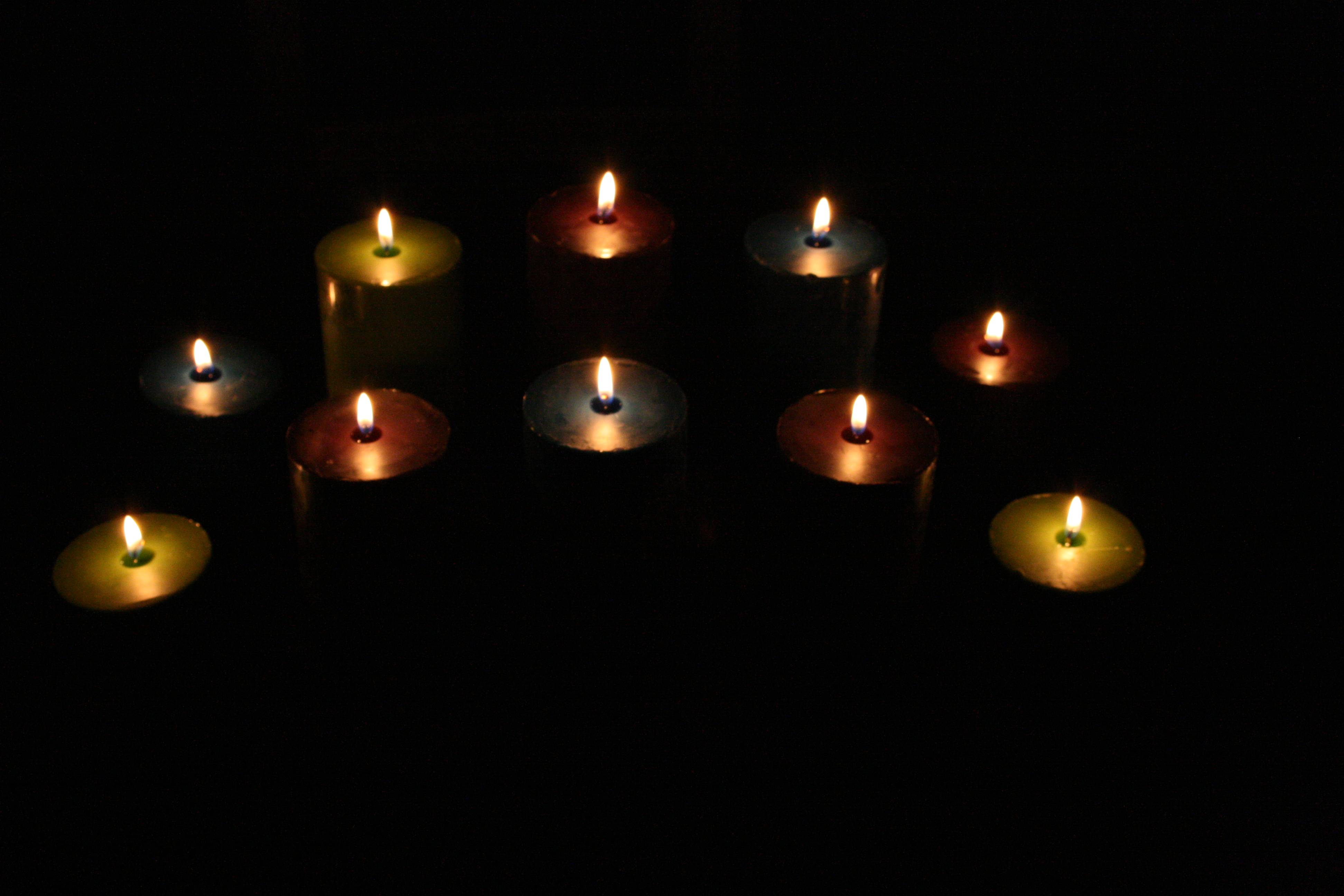
Ten Candles #2, by Michael Jastremski, creative commons license, http://openphoto.net/gallery/image/view/25580 at http://mike.openphoto.net/gallery
The backlash against Black Lives Matters reminds me of the opposition by some Latin American Catholics against the preferential option for the poor. To be clear: Black Lives Matter has a complicated relationship with the U.S. Catholic Church while the preferential option for the poor developed from within the Church in Latin America. Nevertheless, the near-instinctive opposition experienced by those who affirm the human dignity of African Americans in the U.S. and the poor in Latin America bears some resemblance. Some Latin American Catholics believed (and many still do) that if God and the Church have a preferential option for the poor, then they must hate the rich and the middle class. Others wondered what the suffering of the poor had to do with our faith, since that was their lot in life (a common misreading of Matthew 26: 11).
The bishops of Latin America discerned the preferential option for the poor as a necessary way to proclaim the Good News of God’s love. At the time, the social sciences had recently reached a consensus that poverty is man-made and sustained. The bishops’ purpose was not to glorify poverty but to follow Jesus’ lead in proclaiming a Reign that entails liberation from sin and all its effects, material and spiritual. Their purpose was to help us see that the Reign of God entails an end to the unjust suffering of the poor, to poverty itself.
Pope John Paul II took up the preferential option for the poor and wove it into Catholic social doctrine. He wrote that it “affects the life of each Christian inasmuch as he or she seeks to imitate the life of Christ, but it applies equally to our social responsibilities and hence to our manner of living [.]” (Compendium of the Social Doctrine of the Church, 182, quoting SRS 42) Our decisions must advance the Reign of God in our society.
The preferential option for the poor continues to be challenging to Catholics in Latin America–particularly those who are better off–because it requires a decentering of one’s self, a willingness to befriend those who are poor, and an openness to see the world through their eyes. It requires the humility and grace to see Lazarus at the gate (Luke 16:20).
What would a preferential option for African Americans look like for white Catholics in the United States? And for Hispanic Catholics?
Racism, like poverty, is man-made and sustained. It has no place in the Reign of God that the Church proclaims. As theologian Bryan Massingale writes, therein lies the hope and the challenge:
The society we live in is the outcome of human choices and decisions. This means that human beings can change things. There is nothing necessary or fated about racial hierarchies or white racial privilege. They are the result of human agency; it does not have to be so. What humans break, divide, and separate, we can—with God’s help—also heal, unite, and restore.
What is now does not have to be. Therein lies the hope. And the challenge.
The last time that our bishops joined to address racism in the United States in a pastorally significant way was in 1979. It is time for them to do so again. If they do, I hope they broaden the dialogue that Bishop Edward K. Braxton has begun with members of the Black Lives Matter movement because the Church needs it. And may they evoke in us the hope, as Massingale has, that “What is now does not have to be.”
Preferential Option for the Poor
Previous Post
April 21, 2016
Father Virgilio: A Reflection
Next Post

August 9, 2016 Refugee Distress: Do We Think We’re Immune to Suffering?
Browse Our Archives
Select a Category General Immigrants and Refugees Insights from the community News Reflection
Select a Month January 2017 August 2016 July 2016 April 2016
Follow Us!
TAKE THE
Religious Wisdom Quiz
What is the collective name of the stories Jesus told?
Select your answer to see how you score.
Gospel Miracles Psalms Parables
Related posts from El Puente
En esta solemnidad de María, madre de Dios,...
La angustia de los refugiados: ¿Creemos que somos...

Refugee Distress: Do We Think We’re Immune to...
TRENDING AT PATHEOS Catholic

Rejecting Doom: Christian Hope And Human Action
Christianity is a religion of hope. We are to have hope and...

It’s What Comes From Within Which Matters
One of the most difficult things for us to understand is why...

Why I Choose the Eucharist Over the Sermon
Choose the Eucharist, Not the Sermon What are we supposed to get...

5 Design Elements Found in Spiritually Rooted Homes
Putting Spirituality Into Home Decor Our homes are more than our living...

Credo: A Story of God Told with the...
About 10 years ago, I began to imagine a personal "Credo" that...

The Anatomy of Divine Revelation in Catholic Thought
The claim that God has made Himself known to human beings is...
view all Catholic blogs
Ad-Free & Subscriber Log-In Subscription Support
- About Us
- 2026 Calendar
- Videos
- Podcasts
- Library of World Religions
- Faith In Media Tracker
- Advertise With Us
- Write for Us
- Privacy Policy
- Terms of Service
- Do Not Sell My Data
- Contact Us
- Radiant Digital
- Manage Newsletter Subscriptions
- Unsubscribe From Notifications
- Sitemap
Copyright 2008-2026, Patheos. All rights reserved.
Subscription Support Ad-Free & Subscriber Log-In
Follow Patheos