
BuddhistCatholicContemplativeEvangelicalGeneral ChristianHinduJewishLatter-day SaintMuslimNew VisionsProgressive Christian
Beliefs
- Buddhist
- Catholic
- Contemplative
- Evangelical
- General Christian
- Hindu
- Jewish
- Latter-day Saint
- More Voices
- Muslim
- New Visions
- Pagan
- Progressive Christian
Topics
- Religion News
- Food and Religion
- Sports and Religion
- Religious Art
- Religious Music and Entertainment
- Religious Events
- History and Religion
- Style and Religion
- Politics and Religion
- Women in Religion
- Recreation Outdoors and Religion
- Business Finance and Religion
- Careers Workplace and Religion
- Education and Religion
- Family Parenting and Religion
- Health Fitness and Religion
- Home and Religion
- Relationships and Religion
- Technology and Religion
- Travel and Religion
Columnists
- Buddhist Columnists
- Business Finance and Religion Columnists
- Careers Workplace and Religion Columnists
- Catholic Columnists
- Contemplative Columnists
- Education and Religion Columnists
- Evangelists Columnists
- Family Parenting and Religion Columnists
- General Christian Columnists
- Health Fitness and Religion Columnists
- Hindu Columnists
- History and Religion Columnists
- Home and Religion Columnists
- Jewish Columnists
- More Voices Columnists
- Latter Day Columnists
- Muslim Columnists
- New Visions Columnists
- Nonreligious Columnists
- Pagan Columnists
- Politics and Religion Columnists
- Progressive Columnists
- Recreation Outdoors and Religion Columnists
- Relationships and Religion Columnists
- Religion News Columnists
- Religious Art Columnists
- Religious Events Columnists
- Religious Music and Entertainment Columnists
- Sports and Religion Columnists
- Style and Religion Columnists
- Technology and Religion Columnists
- Travel and Religion Columnists
- Women in Religion Columnists
Resource Library
- 2026 Calendar
- Library of World Religions
- The 100 Most Holy Places on Earth
- Patheos Answers
- Podcasts
- Videos
- Faith Leaders Database
- Anglican Episcopalian
- Bahai
- Baptist
- Buddhism
- Christianity
- Confucianism
- Eastern Orthodoxy
- Hinduism
- Holiness and Pentecostal
- ISKCON
- Islam
- Judaism
- Lutheran
- Methodist
- The Church of Jesus Christ of Latter-day Saints
- New Age
- Paganism
- Presbytarian and Reformed
- Protestantism
- Religion Behind the Scenes
- Roman Catholic
- Scientology
- Shia Islam
- Sikhism
- Sufism
- Sunni Islam
- Taoism
- Zen
- See all religions
Research Tools
 Ad-Free & Subscriber Log-In Subscription Support
Ad-Free & Subscriber Log-In Subscription Support
Follow Patheos 

- Trending:
- Forgiveness
- |
- Marriage
- |
- Consciousness
- |
- Death Penalty
- |
- Election
- |
- Halloween
 Ellen Painter Dollar
- Home
- Progressive Christian
- Books to Read and Give: My 2013 Favorites
Books to Read and Give: My 2013 Favorites
Last updated on: December 16, 2013 at 10:00 am by Ellen Painter Dollar
Books to Read and Give: My 2013 Favorites 2013-12-16T10:00:08-05:00 Ellen Painter Dollar
Patheos Explore the world's faith through different perspectives on religion and spirituality! Patheos has the views of the prevalent religions and spiritualities of the world.
As many of you know, I fell on the ice a couple of weeks ago, and ended up with broken ribs and a few other injuries. So instead of spending the first weeks of December baking, shopping, and decorating while keeping up with my usual housekeeping and writing work, I’ve been spending many hours parked on my couch. While I’m not thrilled with the reason behind my lazy days, I’ve had lots of time to read. In this post, I’ll share some of my favorite books from 2013, focusing on those with a Christian or faith angle. Perhaps one of these titles will be a perfect gift for someone on your list, or will help you enjoy a few lazy days of your own around Christmas.
Eat with Joy: Redeeming God’s Gift of Food by Rachel Stone
In Eat with Joy, Stone primarily reminds readers that food is a gift from a loving God who intends it for our good use and pleasure. She writes about the power of food to bring people together, build connections, and heal wounds. She also addresses food justice, writing movingly about factory farming and fair wages for farm workers—without a heavy guilt trip. Each chapter ends with a couple of recipes (most of them simple, and delicious!), as well as prayers to use at mealtime. Eat with Joy is a wise, refreshing antidote to our warped food culture in which we so often bring guilt, dogma, and misinformation to the table. Christianity Today just named it the top Christian Living book of 2013. Read my full review of it here. (Disclaimer: Rachel is a close friend of mine. After my recent injuries, she sent me a four-pound jar of Jelly Belly Jellybeans, proving that she truly understands the healing power of food!)
Pastrix: The Cranky, Beautiful Faith of a Sinner and Saint by Nadia Bolz-Weber
 Bolz-Weber is a Lutheran pastor in the Denver area whose story and persona defy many stereotypes about who answers the call to ordained ministry, and why. A heavily tattooed former stand-up comic and recovering alcoholic, Bolz-Weber decided to pursue ordination after, as the only person of faith among her peers, she was asked to lead a memorial service for a fellow addict. This is her story of figuring out her ministry and finding God’s grace among the “cynics and alcoholics and queers.” Bolz-Weber’s cynicism, honesty, salty language, and frequent admissions that there are lots of people she doesn’t really like keep her from coming across as a holier-than-thou do-gooder. I loved her meditations on God, grace, and suffering, like this one: “Grace isn’t about God creating humans as flawed beings and then acting all hurt when we inevitably fail and then stepping in like the hero to grant us grace….It’s God saying, ‘I love the world too much to let your sin define you and be the final word. I am a God who makes all things new.'” Did I mention that Bolz-Weber grew up in a conservative evangelical church where women were not allowed to be ordained? That fact leads to one of the most moving scenes in the book, when she tells her parents she is pursuing ordination. Bolz-Weber’s story is both surprising and ordinary, mundane and transcendent.
When We Were On Fire by Addie Ziernan
Named one of Publishers Weekly’s top religion books of 2013, When We Were on Fire is a moving, sometimes funny look into the evangelical world, and what happens when adulthood challenges an oversimplified, all-consuming faith. Ziernan was absolutely committed to the evangelical subculture as a teenager, wearing “WWJD” (“What would Jesus do?”) bracelets and organizing prayer rallies. Her first love was an intense young man destined for the foreign mission field. (I’m guessing most of you reading this never dated an evangelical boy. I did, and as I told Addie, her descriptions of uber-earnest conversations between her and her boyfriend gave me bouts of PTSD. But I digress…) As absurd or foreign as the trappings of evangelicalism might be to my Northeastern mainline peers, it remains a powerful force in American religion and culture, and Ziernan’s memoir sheds a bright—but not unforgiving—light on it. After college and marriage, Ziernan underwent a crisis of faith, rebelling against both the superficial trappings of evangelicalism, as well as more troubling, substantive norms, such as around gender roles or what is meant by “salvation.” But while she became fed up with her tradition, she did not give up on God: “Even in your raging,” she writes, “you couldn’t forget that Story, couldn’t deny the way it rang clear and true in your ears.” She begins, tentatively, to search for a Christian community where mystery and paradox and gray areas are allowed to stand. She discovers that, “….maybe this is the way you move on. You find the small slivers of light, and you hunker down in them. You hole up in the still warmth of this kind of beauty and you wait….” This is the story of Ziernan’s moving on, and waiting, and beginning to discover a less certain, but far deeper faith.
Love and Salt: A Spiritual Friendship in Letters by Amy Andrews and Jessica Mesman Griffith
Friends Griffith and Andrews started writing regular letters to each other during Lent 2005, when Andrews was preparing to convert to Catholicism. These women are deep theological thinkers who use their regular correspondence to ponder eternal life and the fear of death, the wisdom of Teresa of Avila, how prayer works, how to eat communion wafers with reverence, and other weighty matters. They quote poetry and urge each other to read Pope Benedict’s writings (they are both Roman Catholic) with the zeal that I recommended Gone Girl to my book group. Their sharp intellects and unabashed love of theology are daunting. But two things keep their correspondence from being dry and inaccessible to readers (like me) who don’t keep piles of theology books on the nightstand. First, Andrews’s and Griffith’s letters include plenty of references to everyday realities, from an obsession with Little House on the Prairie reruns and frequent Tolkien allusions to job complaints and annoyance with their husbands. Their lives as wives, employees, mothers, and laypeople will be relatable to many readers. Second, the friends delve deep into big theological questions not as some sort of intellectual exercise, but because they are trying to make sense of their own lives. They are pursuing the knowledge and love of God not because they are intrigued by the idea of God, but because their lives depend on it. Nowhere is this clearer than in Andrews’s and Griffith’s writing about how God is, or isn’t, present when we experience great pain. About two-thirds of the way through the book, crushing tragedy hits. Nearly all of the letters from then on include some wrestling with theodicy—how God does or doesn’t intervene in human life, and what we are to make of seemingly random, crippling pain. (You can read my full review of Love and Salt here.)
How the Light Gets In by Louise Penny
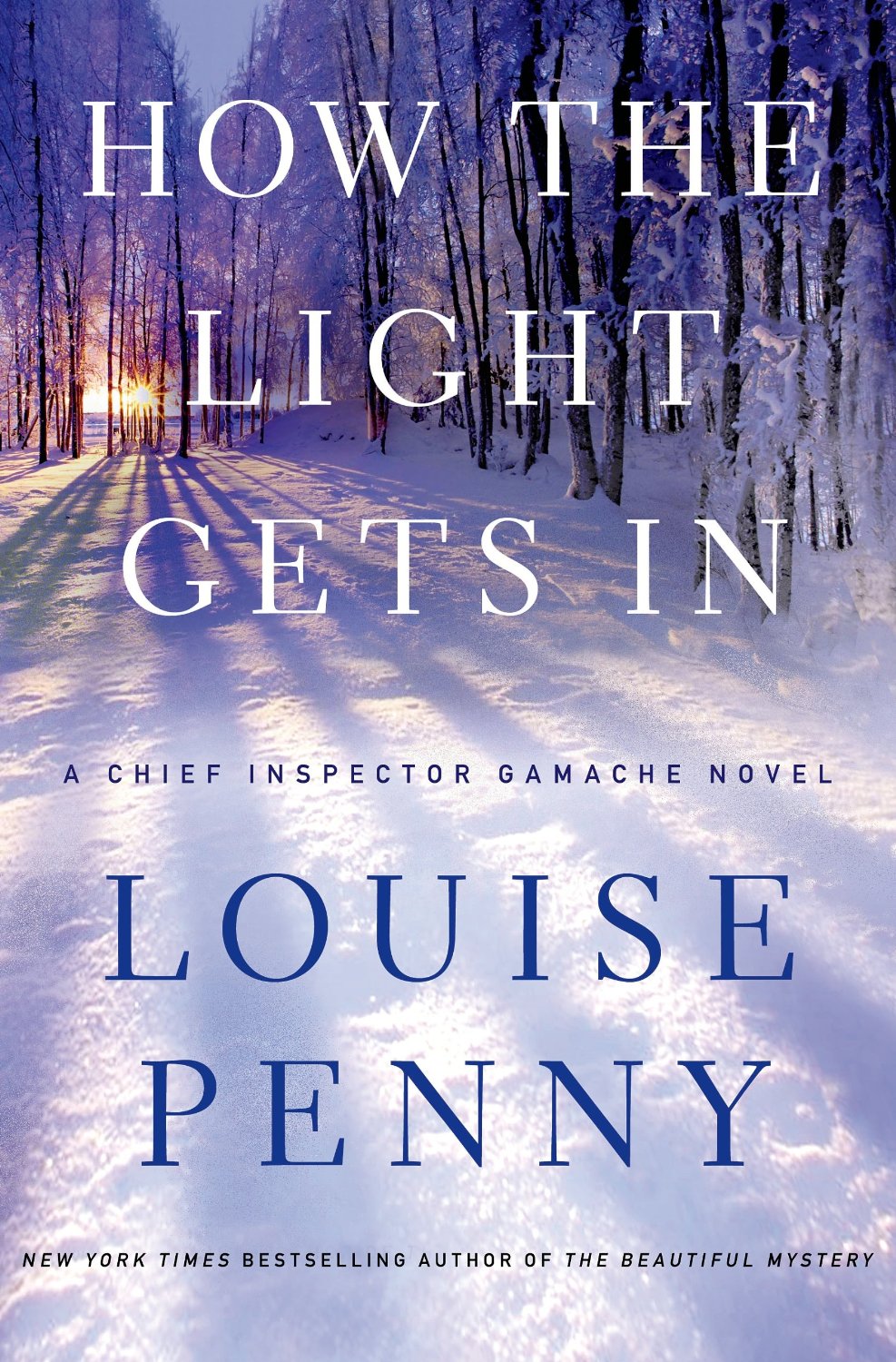 How the Light Gets In is the latest installment in Louise Penny’s Chief Inspector Gamache mystery series, chronicling the life and work of Quebec homicide detective Andre Gamache. I read How the Light Gets In, then immediately went back and read the entire nine-book series. The Chief Inspector Gamache books are typical “cozy mysteries,” with murder plots unfolding largely against the near-mythical backdrop of Three Pines, a tiny, hidden gem of a village in southern Quebec. The plots are intriguing, the characters well developed, and Three Pines is a place most of us would probably like to live. Woven into all of the stories is a subtle but powerful thread of grace. The characters in Penny’s novels are not religious; most of them only go to church for baptisms, weddings, and funerals. But Inspector Gamache and others carry convictions and live out of assumptions that are deeply Christian. In the world of Three Pines, forgiveness is necessary for healing, we are strongest where we are broken, wisdom and strength usually come from hidden or surprising places and people, and redemption and resurrection are always possible. The title of this latest novel comes from these Leonard Cohen lyrics: “Forget your perfect offering, there is a crack in everything, that’s how the light gets in.” In my own “cracked” state right now, those words speak an elusive but hopeful truth.
I hope you find one or more of these titles to be a good companion for cold winter nights, or just the right gift for someone on your list. Now that I’ve burnt through a lot of my “to read” pile, I’m looking for more recommendations. Share your favorite books of 2013 in the comments! (And no, they don’t have to be “religious,” although as the Louise Penny mysteries show, sometimes the least religious stories are nevertheless testaments to grace.)
Previous Post

December 13, 2013
On Grace, and Its Absence? One Year After Sandy Hook
Browse Our Archives
Select a Category disability ethics parenthood Uncategorized
Select a Month September 2016 June 2016 May 2016 April 2016 March 2016 February 2016 January 2016 December 2015 November 2015 October 2015 September 2015 August 2015 July 2015 June 2015 May 2015 April 2015 March 2015 February 2015 January 2015 December 2014 November 2014 October 2014 September 2014 August 2014 July 2014 June 2014 May 2014 April 2014 March 2014 February 2014 January 2014 December 2013 November 2013 October 2013 September 2013 August 2013 July 2013 June 2013 May 2013 April 2013 March 2013 February 2013 January 2013 December 2012 November 2012 October 2012 September 2012 August 2012 July 2012 June 2012 May 2012 April 2012 March 2012 February 2012 January 2012 December 2011
Follow Us!
TAKE THE
Religious Wisdom Quiz
What is the longest Gospel?
Select your answer to see how you score.
Matthew Luke Mark John
Related posts from Ellen Painter Dollar

Disability as the Last Acceptable Prejudice: A Farewell...

The Three Worst Stories That "Me Before You"...

Consider the Birds: What happens to a writer...

Seven Favorite Posts on Disability, in Honor of...
TRENDING AT PATHEOS Progressive Christian

Why Christians Have a Sacred Duty to Vote:...
The Bible offers strong support for the sacred duty to vote. Here...

What Being a Modern-Day Apostle Means to Me
In my last column, I discussed the ins and outs of modern-day...

Did Ancient China Once Worship the God of...
Across human history, a common thread weaves through the origins of the...

Love Your Neighbor – Including Earth-Kin: Lev. 19,...
God’s command to love your neighbor means acting in an ethical and...

Lead a Church Study of “Jesus and Lao...
Guest writer Jack Thomas (The Irreverent Reverend) reflects on leading his church...

Principles for Understanding the Apostolic Ministry Today
Whenever people discover that my formal ministry title is "apostle," as in...
view all Progressive Christian blogs
Ad-Free & Subscriber Log-In Subscription Support
- About Us
- 2026 Calendar
- Videos
- Podcasts
- Library of World Religions
- Faith In Media Tracker
- Advertise With Us
- Write for Us
- Privacy Policy
- Terms of Service
- Do Not Sell My Data
- Contact Us
- Radiant Digital
- Manage Newsletter Subscriptions
- Unsubscribe From Notifications
- Sitemap
Copyright 2008-2026, Patheos. All rights reserved.
Subscription Support Ad-Free & Subscriber Log-In
Follow Patheos