
BuddhistCatholicContemplativeEvangelicalGeneral ChristianHinduJewishLatter-day SaintMuslimNew VisionsProgressive Christian
Beliefs
- Buddhist
- Catholic
- Contemplative
- Evangelical
- General Christian
- Hindu
- Jewish
- Latter-day Saint
- More Voices
- Muslim
- New Visions
- Pagan
- Progressive Christian
Topics
- Religion News
- Food and Religion
- Sports and Religion
- Religious Art
- Religious Music and Entertainment
- Religious Events
- History and Religion
- Style and Religion
- Politics and Religion
- Women in Religion
- Recreation Outdoors and Religion
- Business Finance and Religion
- Careers Workplace and Religion
- Education and Religion
- Family Parenting and Religion
- Health Fitness and Religion
- Home and Religion
- Relationships and Religion
- Technology and Religion
- Travel and Religion
Columnists
- Buddhist Columnists
- Business Finance and Religion Columnists
- Careers Workplace and Religion Columnists
- Catholic Columnists
- Contemplative Columnists
- Education and Religion Columnists
- Evangelists Columnists
- Family Parenting and Religion Columnists
- General Christian Columnists
- Health Fitness and Religion Columnists
- Hindu Columnists
- History and Religion Columnists
- Home and Religion Columnists
- Jewish Columnists
- More Voices Columnists
- Latter Day Columnists
- Muslim Columnists
- New Visions Columnists
- Nonreligious Columnists
- Pagan Columnists
- Politics and Religion Columnists
- Progressive Columnists
- Recreation Outdoors and Religion Columnists
- Relationships and Religion Columnists
- Religion News Columnists
- Religious Art Columnists
- Religious Events Columnists
- Religious Music and Entertainment Columnists
- Sports and Religion Columnists
- Style and Religion Columnists
- Technology and Religion Columnists
- Travel and Religion Columnists
- Women in Religion Columnists
Resource Library
- 2026 Calendar
- Library of World Religions
- The 100 Most Holy Places on Earth
- Patheos Answers
- Podcasts
- Videos
- Faith Leaders Database
- Anglican Episcopalian
- Bahai
- Baptist
- Buddhism
- Christianity
- Confucianism
- Eastern Orthodoxy
- Hinduism
- Holiness and Pentecostal
- ISKCON
- Islam
- Judaism
- Lutheran
- Methodist
- The Church of Jesus Christ of Latter-day Saints
- New Age
- Paganism
- Presbytarian and Reformed
- Protestantism
- Religion Behind the Scenes
- Roman Catholic
- Scientology
- Shia Islam
- Sikhism
- Sufism
- Sunni Islam
- Taoism
- Zen
- See all religions
Research Tools
 Ad-Free & Subscriber Log-In Subscription Support
Ad-Free & Subscriber Log-In Subscription Support
Follow Patheos 

- Trending:
- Forgiveness
- |
- Marriage
- |
- Consciousness
- |
- Death Penalty
- |
- Election
- |
- Halloween
 Ellen Painter Dollar
- Home
- Progressive Christian
- Broken Ribs, Crooked Backs, & Seeing Our Vulnerable Selves Reflected in Another
Broken Ribs, Crooked Backs, & Seeing Our Vulnerable Selves Reflected in Another
Last updated on: December 17, 2013 at 4:00 am by Ellen Painter Dollar
Broken Ribs, Crooked Backs, & Seeing Our Vulnerable Selves Reflected in Another 2013-12-16T12:34:05-05:00 Ellen Painter Dollar
Patheos Explore the world's faith through different perspectives on religion and spirituality! Patheos has the views of the prevalent religions and spiritualities of the world.
Having a body that defies cultural norms as mine does (it is crooked, uneven, lumpy, and limpy) can be alienating. The regular absence of anyone who looks like me in my daily routine creates a space that can fill with either negative feelings (shame, frustration, grief) or positive (pride in the scars that testify to my survival through pain). But even when I’m in a good frame of mind, a sense of loneliness—of being an “other”—persists. This is why I love swimming laps at my local indoor pool, where aged and infirm bodies are the norm. This is why, when I attend gatherings of people with OI (my bone disorder), I feel a new lightness and confidence. A scene from my book, No Easy Choice, as we checked into the hotel at an OI Foundation National Conference:
I glanced up and saw a young women. She was less than five feet tall, with a square and thick torso over thin legs, and shoulder-length brown hair. She was pushing a baby stroller that came up too high on her, to her chest, making her look even smaller. I stared for just a moment, not long enough for her to notice, taking her in. I had never seen another mother who looked just like me. As I looked at her, all the strain I didn’t even know I was carrying around, all the self-consciousness of being a tiny, crooked, fragile mom in a world of tall, straight, strong moms—it all fell away. Here was a mom who looked just like me. And she was beautiful, capable, and strong. Which meant I must be beautiful, capable, and strong too—as strong as those moms who effortlessly dangle an infant seat on one arm while balancing a toddler on the opposite hip—because lifting and carrying and bending over to bathe my children are acts of will and courage as much as they are acts of strength.
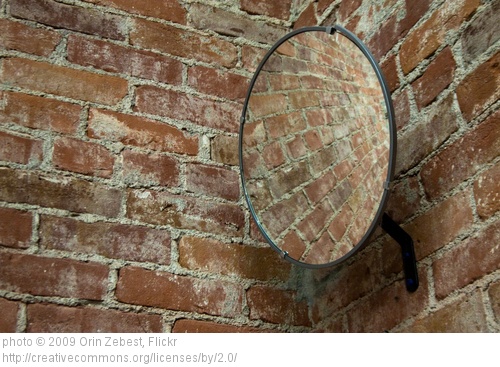 The writer Junot Diaz has said, “”If you want to make a human being into a monster, deny them, at the cultural level, any reflection of themselves.” A disconnect with cultural norms, whether of physical appearance or cognitive ability or social interactions, is behind many of our fears and misconceptions about life with disabilities. The Diaz quote introduces a moving video, in which a half dozen people with various physical impairments modeled for mannequins made in their images. The models, seeing their mannequins for the first time, are transformed; their eyes light up, they hold their heads a notch higher. Passers-by, too, exhibit surprise and transformation, stopping to cock their heads, take a good long look, nod their approval. Check out the video and accompanying article.
Watching this video was particularly powerful to me for two reasons. First, two of the models have physical characteristics very similar to mine (crooked back, leg-length discrepancies, skinny arms and legs), so I once again felt the lightness and confidence that comes with seeing oneself—ones’ unusual, different self—reflected in another. Second, I watched this video just a day or two after returning from a brief hospitalization.
On a Sunday morning two weeks ago, I stepped outside onto the wet front walk to get the newspaper, and found out too late that what looked wet was actually a sheet of ice. I landed hard on my back, breaking two ribs and a small bone in my shoulder socket, and collapsing part of my lung. I spent about 36 hours in the hospital for observation, pain management, and supplemental oxygen.
Hospitalization is a physically vulnerable experience for anyone, no matter the shape, size, or condition of your body. Loose gowns flap open. Clinicians inquire about your bladder and bowel habits. X-ray technicians and orderlies and phlebotomists and aides push and poke and prod and don’t blink an eye at a flash of underwear or bare breasts. Multiple people regularly examined a part of my body about which I am particularly self-conscious—my crooked, lumpy back. More than once, I wished I had one of those straight, muscular backs that my taller, athletic peers have.
So it was embarrassing, yes. But my embarrassment was tempered by the care of professionals who did everything they possibly could to ease my discomfort. I’m thinking particularly of a young West Indian man who came to my room early one morning to take me down for an X-ray. (Side note: Every single practitioner who cared for me in the hospital, other than the doctors, was either of West Indian/Caribbean or Eastern European descent.) Because of intense pain, I could barely shift position in bed, and here I had to get up out of bed and get myself onto a stretcher to be wheeled downstairs. The orderly reached out his gloved hands, which I grasped. He took tiny steps backward, leading me gently forward. I was unshowered, dressed only in a gown wide open in back, and taking mincing, unsteady steps. It was not my finest hour. But while I was a little embarrassed and a lot uncomfortable, I was also impressed by how this orderly—and all the others who cared for me those two days—did his job with quiet respect and skill. While there was no one in whom I could see my own reflection directly (no one who looked like me), the hospital is a place where weakness, vulnerability, and dependence are the norm. In that sense, the hospital was a place—like my swimming pool, like OI Foundation conferences, like the room where models with disabilities saw “their” mannequins unveiled—where people with impairments, scars, and obvious needs are not singled out as either remarkably sad or especially heroic, but are simply accepted and celebrated and attended to as we are.
To see oneself reflected in another is powerful; such experiences help us to love ourselves just as we are, to feel less alienated and more connected, to express needs and accept help without shame, to feel fully human. Perhaps this is why the incarnation happened, because God knew the transforming power of seeing ourselves reflected in the face of another.
Previous Post

December 16, 2013
Books to Read and Give: My 2013 Favorites
Next Post
December 18, 2013 A Busy Advent Doesn't Make You a Bad Christian
Browse Our Archives
Select a Category disability ethics parenthood Uncategorized
Select a Month September 2016 June 2016 May 2016 April 2016 March 2016 February 2016 January 2016 December 2015 November 2015 October 2015 September 2015 August 2015 July 2015 June 2015 May 2015 April 2015 March 2015 February 2015 January 2015 December 2014 November 2014 October 2014 September 2014 August 2014 July 2014 June 2014 May 2014 April 2014 March 2014 February 2014 January 2014 December 2013 November 2013 October 2013 September 2013 August 2013 July 2013 June 2013 May 2013 April 2013 March 2013 February 2013 January 2013 December 2012 November 2012 October 2012 September 2012 August 2012 July 2012 June 2012 May 2012 April 2012 March 2012 February 2012 January 2012 December 2011
Follow Us!
TAKE THE
Religious Wisdom Quiz
Who had a coat of many colors?
Select your answer to see how you score.
Esau Benjamin Joseph Jacob
Related posts from Ellen Painter Dollar

Disability as the Last Acceptable Prejudice: A Farewell...

The Three Worst Stories That "Me Before You"...


A Mother's Call to Care for Other People's...
TRENDING AT PATHEOS Progressive Christian

What Being a Modern-Day Apostle Means to Me
In my last column, I discussed the ins and outs of modern-day...

Did Ancient China Once Worship the God of...
Across human history, a common thread weaves through the origins of the...

Love Your Neighbor – Including Earth-Kin: Lev. 19,...
God’s command to love your neighbor means acting in an ethical and...

Lead a Church Study of “Jesus and Lao...
Guest writer Jack Thomas (The Irreverent Reverend) reflects on leading his church...

Pastoral Wisdom for Responding to Sermon Pushback
Getting sermon pushback on your social justice sermon? Learn practical, Proverbs-based strategies...

Principles for Understanding the Apostolic Ministry Today
Whenever people discover that my formal ministry title is "apostle," as in...
view all Progressive Christian blogs
Ad-Free & Subscriber Log-In Subscription Support
- About Us
- 2026 Calendar
- Videos
- Podcasts
- Library of World Religions
- Faith In Media Tracker
- Advertise With Us
- Write for Us
- Privacy Policy
- Terms of Service
- Do Not Sell My Data
- Contact Us
- Radiant Digital
- Manage Newsletter Subscriptions
- Unsubscribe From Notifications
- Sitemap
Copyright 2008-2026, Patheos. All rights reserved.
Subscription Support Ad-Free & Subscriber Log-In
Follow Patheos