
BuddhistCatholicContemplativeEvangelicalGeneral ChristianHinduJewishLatter-day SaintMuslimNew VisionsProgressive Christian
Beliefs
- Buddhist
- Catholic
- Contemplative
- Evangelical
- General Christian
- Hindu
- Jewish
- Latter-day Saint
- More Voices
- Muslim
- New Visions
- Pagan
- Progressive Christian
Topics
- Religion News
- Food and Religion
- Sports and Religion
- Religious Art
- Religious Music and Entertainment
- Religious Events
- History and Religion
- Style and Religion
- Politics and Religion
- Women in Religion
- Recreation Outdoors and Religion
- Business Finance and Religion
- Careers Workplace and Religion
- Education and Religion
- Family Parenting and Religion
- Health Fitness and Religion
- Home and Religion
- Relationships and Religion
- Technology and Religion
- Travel and Religion
Columnists
- Buddhist Columnists
- Business Finance and Religion Columnists
- Careers Workplace and Religion Columnists
- Catholic Columnists
- Contemplative Columnists
- Education and Religion Columnists
- Evangelists Columnists
- Family Parenting and Religion Columnists
- General Christian Columnists
- Health Fitness and Religion Columnists
- Hindu Columnists
- History and Religion Columnists
- Home and Religion Columnists
- Jewish Columnists
- More Voices Columnists
- Latter Day Columnists
- Muslim Columnists
- New Visions Columnists
- Nonreligious Columnists
- Pagan Columnists
- Politics and Religion Columnists
- Progressive Columnists
- Recreation Outdoors and Religion Columnists
- Relationships and Religion Columnists
- Religion News Columnists
- Religious Art Columnists
- Religious Events Columnists
- Religious Music and Entertainment Columnists
- Sports and Religion Columnists
- Style and Religion Columnists
- Technology and Religion Columnists
- Travel and Religion Columnists
- Women in Religion Columnists
Resource Library
- 2026 Calendar
- Library of World Religions
- The 100 Most Holy Places on Earth
- Patheos Answers
- Podcasts
- Videos
- Faith Leaders Database
- Anglican Episcopalian
- Bahai
- Baptist
- Buddhism
- Christianity
- Confucianism
- Eastern Orthodoxy
- Hinduism
- Holiness and Pentecostal
- ISKCON
- Islam
- Judaism
- Lutheran
- Methodist
- The Church of Jesus Christ of Latter-day Saints
- New Age
- Paganism
- Presbytarian and Reformed
- Protestantism
- Religion Behind the Scenes
- Roman Catholic
- Scientology
- Shia Islam
- Sikhism
- Sufism
- Sunni Islam
- Taoism
- Zen
- See all religions
Research Tools
 Ad-Free & Subscriber Log-In Subscription Support
Ad-Free & Subscriber Log-In Subscription Support
Follow Patheos 

- Trending:
- Forgiveness
- |
- Marriage
- |
- Consciousness
- |
- Death Penalty
- |
- Election
- |
- Halloween
 Ellen Painter Dollar
- Home
- Progressive Christian
- “Wonder” and the Paradoxes of Living with a Disability
“Wonder” and the Paradoxes of Living with a Disability
Last updated on: September 17, 2013 at 4:00 am by Ellen Painter Dollar
“Wonder” and the Paradoxes of Living with a Disability 2013-09-16T11:29:50-04:00 Ellen Painter Dollar
Patheos Explore the world's faith through different perspectives on religion and spirituality! Patheos has the views of the prevalent religions and spiritualities of the world.
R.J. Palacio’s young adult novel Wonder tells the story of Auggie, a boy with a severe facial deformity who goes to school for the first time in fifth grade. He confronts fear and bullies, but also makes friends—even with some of the very same kids who initially teased him. I thought it was a beautiful story, for both kids and adults (we read it as part of a parent/child book group at church). One thing that the author did particularly well was capture some of the paradoxes of living with an outward and obvious medical condition.
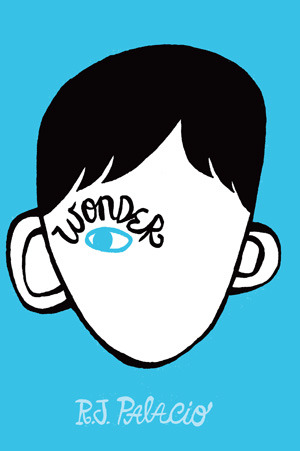 Throughout the book, Auggie notes the way people react upon first seeing his face. They look away, or stare, or smile extra big. Toddlers sometimes cry in fear and confusion. Auggie hates this, steeling himself for any situation (like the first day in his new school) where there will be lots of people who have never seen him before. But underneath his pain and exasperation is a trace of empathy. He understands that a face so unusual will attract attention, that people will wonder why he looks the way he does.
As someone with a pronounced limp and scars who has also been the object of stares or open curiosity in public, I understand the two forces pulling at Auggie—frustration at not being able to just blend in like everyone else, but a little empathy too, for people whose curiosity is understandable.
At the end of the book [spoiler alert], Auggie gets an award at fifth grade graduation. As he takes in the standing ovation given by the other students, their families, and his teachers, Auggie is thinking:
I wasn’t even sure why I was getting this medal, really.
No, that’s not true. I knew why.
It’s like people you see sometimes, and you can’t imagine what it would be like to be that person, whether it’s somebody in a wheelchair or somebody who can’t talk. Only, I know that I’m that person to other people, maybe to every single person in that whole auditorium.
To me, though, I’m just me. An ordinary kid.
But hey, if they want to give me a medal for being me, that’s okay. I’ll take it. I didn’t destroy a Death Star or anything like that, but I did just get through the fifth grade. And that’s not easy, even if you’re not me.
I loved that passage. Auggie’s insistence that he’s “just me…an ordinary kid” very gently chides our cultural tendency to consider people with disabilities extraordinary just for doing all the regular things that people do. There’s something a little patronizing about that attitude, a subtle implication that people with disabilities should be acclaimed simply for getting out of bed in the morning, rather than hiding ourselves away and feeling sorry for ourselves. At the same time, Auggie also understands that others don’t see him as ordinary. He knows that, in some ways, he’s not. He also understands that everyone, whether they live with a disability or not, does hard things. Like getting through fifth grade. The book ends a few pages later with a precept that Auggie submitted to his English teacher as part of an assignment:
Everyone in the world should get a standing ovation at least once in their life because we all overcometh the world.
There can be a tendency—in the media, in public and private discourse—to paint people with disabilities with an overly broad brush. We are heroes to be exalted. We are burdens to be pitied. Even those affected by various conditions can oversimplify the experience of living with a disability, reducing disability to a value-neutral “difference” in a way that fails to name the significant pain and impairments (of many kinds) that can accompany various conditions. Some pain associated with disabilities has nothing to do with social inclusion or exclusion, accommodations or barriers, but is inherent to the condition itself.
In my experience, living with a disability is full of paradox. The push-pull of anger and empathy when people stare or don’t know what to do or say, the knowledge that we are utterly ordinary but also not, that we are no different from anyone else who has to do hard things (which is everyone) but also, yeah, have to deal with lots of hard stuff much of the time—those are the paradoxes that R.J. Palacio deftly illustrates with her wise and gracious (but also ordinary—there is lots of bathroom humor in Wonder) 11-year-old protagonist.
Previous Post

September 16, 2013
Did Jesus Get Cranky Too? Thoughts on an Incarnational Faith
Next Post
September 19, 2013 Made by God in Rainbow Hues: On Raising a Gender Nonconforming Child
Browse Our Archives
Select a Category disability ethics parenthood Uncategorized
Select a Month September 2016 June 2016 May 2016 April 2016 March 2016 February 2016 January 2016 December 2015 November 2015 October 2015 September 2015 August 2015 July 2015 June 2015 May 2015 April 2015 March 2015 February 2015 January 2015 December 2014 November 2014 October 2014 September 2014 August 2014 July 2014 June 2014 May 2014 April 2014 March 2014 February 2014 January 2014 December 2013 November 2013 October 2013 September 2013 August 2013 July 2013 June 2013 May 2013 April 2013 March 2013 February 2013 January 2013 December 2012 November 2012 October 2012 September 2012 August 2012 July 2012 June 2012 May 2012 April 2012 March 2012 February 2012 January 2012 December 2011
Follow Us!
TAKE THE
Religious Wisdom Quiz
How old was Abraham when Sarah died?
Select your answer to see how you score.
117 years 127 years 137 years 147 years
Related posts from Ellen Painter Dollar

Disability as the Last Acceptable Prejudice: A Farewell...

The Three Worst Stories That "Me Before You"...

Prince, Chronic Pain, Opioids & Why Dependence is...

Please Don't Post a Photo of Your Kid's...
TRENDING AT PATHEOS Progressive Christian

Why Christians Have a Sacred Duty to Vote:...
The Bible offers strong support for the sacred duty to vote. Here...

What Being a Modern-Day Apostle Means to Me
In my last column, I discussed the ins and outs of modern-day...

Did Ancient China Once Worship the God of...
Across human history, a common thread weaves through the origins of the...

Love Your Neighbor – Including Earth-Kin: Lev. 19,...
God’s command to love your neighbor means acting in an ethical and...

Lead a Church Study of “Jesus and Lao...
Guest writer Jack Thomas (The Irreverent Reverend) reflects on leading his church...

Principles for Understanding the Apostolic Ministry Today
Whenever people discover that my formal ministry title is "apostle," as in...
view all Progressive Christian blogs
Ad-Free & Subscriber Log-In Subscription Support
- About Us
- 2026 Calendar
- Videos
- Podcasts
- Library of World Religions
- Faith In Media Tracker
- Advertise With Us
- Write for Us
- Privacy Policy
- Terms of Service
- Do Not Sell My Data
- Contact Us
- Radiant Digital
- Manage Newsletter Subscriptions
- Unsubscribe From Notifications
- Sitemap
Copyright 2008-2026, Patheos. All rights reserved.
Subscription Support Ad-Free & Subscriber Log-In
Follow Patheos