
BuddhistCatholicContemplativeEvangelicalGeneral ChristianHinduJewishLatter-day SaintMuslimNew VisionsProgressive Christian
Beliefs
- Buddhist
- Catholic
- Contemplative
- Evangelical
- General Christian
- Hindu
- Jewish
- Latter-day Saint
- More Voices
- Muslim
- New Visions
- Pagan
- Progressive Christian
Topics
- Religion News
- Food and Religion
- Sports and Religion
- Religious Art
- Religious Music and Entertainment
- Religious Events
- History and Religion
- Style and Religion
- Politics and Religion
- Women in Religion
- Recreation Outdoors and Religion
- Business Finance and Religion
- Careers Workplace and Religion
- Education and Religion
- Family Parenting and Religion
- Health Fitness and Religion
- Home and Religion
- Relationships and Religion
- Technology and Religion
- Travel and Religion
Columnists
- Buddhist Columnists
- Business Finance and Religion Columnists
- Careers Workplace and Religion Columnists
- Catholic Columnists
- Contemplative Columnists
- Education and Religion Columnists
- Evangelists Columnists
- Family Parenting and Religion Columnists
- General Christian Columnists
- Health Fitness and Religion Columnists
- Hindu Columnists
- History and Religion Columnists
- Home and Religion Columnists
- Jewish Columnists
- More Voices Columnists
- Latter Day Columnists
- Muslim Columnists
- New Visions Columnists
- Nonreligious Columnists
- Pagan Columnists
- Politics and Religion Columnists
- Progressive Columnists
- Recreation Outdoors and Religion Columnists
- Relationships and Religion Columnists
- Religion News Columnists
- Religious Art Columnists
- Religious Events Columnists
- Religious Music and Entertainment Columnists
- Sports and Religion Columnists
- Style and Religion Columnists
- Technology and Religion Columnists
- Travel and Religion Columnists
- Women in Religion Columnists
Resource Library
- 2026 Calendar
- Library of World Religions
- The 100 Most Holy Places on Earth
- Patheos Answers
- Podcasts
- Videos
- Faith Leaders Database
- Anglican Episcopalian
- Bahai
- Baptist
- Buddhism
- Christianity
- Confucianism
- Eastern Orthodoxy
- Hinduism
- Holiness and Pentecostal
- ISKCON
- Islam
- Judaism
- Lutheran
- Methodist
- The Church of Jesus Christ of Latter-day Saints
- New Age
- Paganism
- Presbytarian and Reformed
- Protestantism
- Religion Behind the Scenes
- Roman Catholic
- Scientology
- Shia Islam
- Sikhism
- Sufism
- Sunni Islam
- Taoism
- Zen
- See all religions
Research Tools
 Ad-Free & Subscriber Log-In Subscription Support
Ad-Free & Subscriber Log-In Subscription Support
Follow Patheos 

- Trending:
- Forgiveness
- |
- Marriage
- |
- Consciousness
- |
- Death Penalty
- |
- Election
- |
- Halloween
 Ellen Painter Dollar
- Home
- Progressive Christian
- Passing on the Faith: Community Trumps Theology
Passing on the Faith: Community Trumps Theology
Last updated on: August 29, 2013 at 2:27 pm by Ellen Painter Dollar
Passing on the Faith: Community Trumps Theology 2013-08-29T14:27:08-04:00 Ellen Painter Dollar
Patheos Explore the world's faith through different perspectives on religion and spirituality! Patheos has the views of the prevalent religions and spiritualities of the world.
In the spirit of “back to school” time, Patheos has invited bloggers to write about passing our faith down to our children.
Last week was Choir Camp for the Boys & Girls Choir at my suburban Episcopal church. The annual late-summer camp gives young choristers an opportunity to have fun together, as well as begin learning music and the choir director’s expectations before the program year starts. Each day of choir camp consists of several hours of music practice as well as on-site crafts and games, and off-site trips to places like a local lake and a kids’ fitness center.
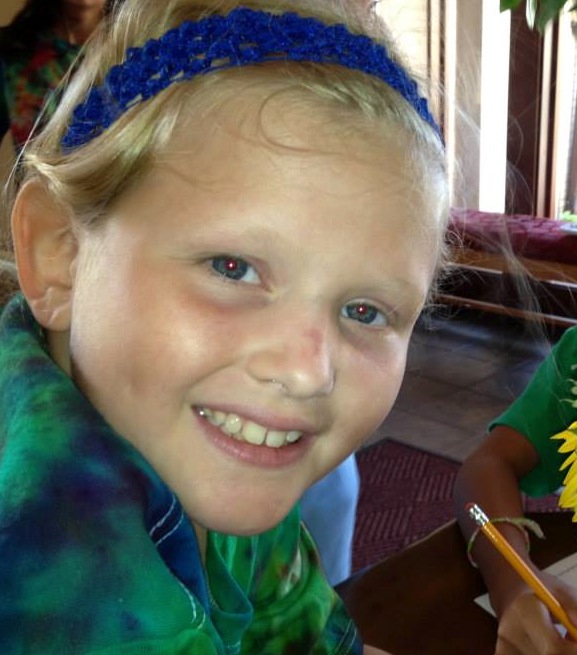
My daughter at choir camp last week.
My two girls love choir camp. In fact, they love choir. And my son cannot wait to join the choir this fall. They love it even though it is a demanding commitment, with up to three rehearsals per week, including 8:30 a.m. every Sunday, and weekly music theory classes. For my three kids, participating in the church choir goes far beyond a musical experience (although it is that) and beyond a fun experience (although it is that too). Fundamentally, being in the church choir has been a community experience. They feel at home when they are at choir. They feel they can be themselves. They make friends outside of their neighborhood and school. They come home from rehearsals and services with funny stories about pranks pulled and off-the-cuff cartoons passed around in the choir loft. And they work really, really hard—in part because they want to sound good, but in part because they want to please and support their fellow choir members and especially their choir director. In choir, my children are learning what it means not just to go to church, but what it is to be church for one another—what it means to be in a fellowship of people with a common faith, where standards are high and all are accepted, with a common goal of worshipping God with their best efforts and talents.
My children have participated their whole lives in various church programs, including the nursery, Sunday School, and outreach projects. But choir is the thing that (finally, after many years of hard Sunday mornings) has made them want to come to church. Choir is the thing that led them to belong to our church not just in name, but in reality. This makes sense to me, because choir is where they have most powerfully experienced what it feels like to be part of a Christian community.
I believe that meaningful experiences of community have the most potential to bind my children first to our local church and eventually to the greater Christian community, and therefore the most potential to lead them to an adult life of faith. Learning Bible stories and the creeds, figuring out exactly what they believe about God and Jesus, engaging in acts of love and charity for those less fortunate than they are—all of these are valuable. But for me, they are not the core of what it means to be part of a church. My children can do all those things elsewhere, on their own or with other people. And I’m not convinced that any of those things will, on their own, lead them to ultimately embrace Christianity and decide to live a life of faith (as I hope they will). I’m not sure it’s even possible for theological truths—God’s unconditional love, Christ’s suffering on the cross—to be meaningful to children in the deep, life-altering way they must be if one is to truly live as a Christian. Rather, I believe that the long-term potential of their faith will be most influenced by experiences of community—connecting with people whose paths they would otherwise not cross, engaging in work together for a common purpose, witnessing times when those who are struggling are held up by those who are strong, being the struggling ones or the strong ones at different times, continuing to belong to one another even in times of disagreement or trouble.
I grew up at the same church my children are growing up in. I learned the same Bible stories, heard sermons on the same topics, and participated in the same choir (under a different choir director, of course). When I eventually landed in an evangelical college fellowship, initially I wondered why I hadn’t heard all this stuff about Jesus and atonement and resurrection in church growing up. My dad pointed out the obvious, which was that of course I heard all that stuff in the church where I grew up, I probably just wasn’t ready or able to really hear it. And yet, in spite of my obliviousness to matters of sin and salvation, my church, especially the choir, was a primary community for me as a teenager. Being part of that community prepared me to hear and accept the theological truths that led me to an intentional embracing of Christianity in college. Being part of that community showed me what it looks like and feels like to be the church together with other believers, even as I wasn’t yet clear on what exactly I believed. While my children’s paths will no doubt be different than mine was, I hope their being part of our church community, primarily through the choir, will likewise prepare them to eventually decide exactly what they believe and to live accordingly.
So when I send my children to Sunday School, I’m not that concerned about which Bible stories they are learning. Instead, I hope that being taught by Ms. Tomlinson or Mr. Schott or Mrs. Hooper gives them a glimpse of the many ways one can be a minister of God’s grace in the world. When they help fill Christmas stockings or Easter baskets for people living in shelters, I hope they understand that such work is not just about “good deeds” or giving ourselves a pat on the back. Instead, I hope they see that when we come together, we can do a lot more than we can alone, and also that small acts of love done by regular people are meaningful, even if we’re not changing the world in one fell swoop. And when they go to choir camp, I don’t really care that they are learning to name musical intervals and how to harmonize. Instead, I hope know that the choir has bound them more tightly than our Sunday-morning cajoling ever could to our church community. And I believe that in such experiences of community lies our best hope that one day, our children will claim the faith we have raised them in as their own.
Previous Post

August 18, 2013
On Disquiet Time and Chickens
Next Post
August 30, 2013 [Snapshots from Oak Ridge] The Most Wonderful Time of the Year
Browse Our Archives
Select a Category disability ethics parenthood Uncategorized
Select a Month September 2016 June 2016 May 2016 April 2016 March 2016 February 2016 January 2016 December 2015 November 2015 October 2015 September 2015 August 2015 July 2015 June 2015 May 2015 April 2015 March 2015 February 2015 January 2015 December 2014 November 2014 October 2014 September 2014 August 2014 July 2014 June 2014 May 2014 April 2014 March 2014 February 2014 January 2014 December 2013 November 2013 October 2013 September 2013 August 2013 July 2013 June 2013 May 2013 April 2013 March 2013 February 2013 January 2013 December 2012 November 2012 October 2012 September 2012 August 2012 July 2012 June 2012 May 2012 April 2012 March 2012 February 2012 January 2012 December 2011
Follow Us!
TAKE THE
Religious Wisdom Quiz
What king was killed by an arrow in battle, fulfilling Elijah's prophecy?
Select your answer to see how you score.
Ahab Jeroboam Joash Ahaziah
Related posts from Ellen Painter Dollar


A Mother's Call to Care for Other People's...

Lenten Compline for the Weary Parent

Please Don't Post a Photo of Your Kid's...
TRENDING AT PATHEOS Progressive Christian

Why Christians Have a Sacred Duty to Vote:...
The Bible offers strong support for the sacred duty to vote. Here...

What Being a Modern-Day Apostle Means to Me
In my last column, I discussed the ins and outs of modern-day...

Did Ancient China Once Worship the God of...
Across human history, a common thread weaves through the origins of the...

Love Your Neighbor – Including Earth-Kin: Lev. 19,...
God’s command to love your neighbor means acting in an ethical and...

Lead a Church Study of “Jesus and Lao...
Guest writer Jack Thomas (The Irreverent Reverend) reflects on leading his church...

Principles for Understanding the Apostolic Ministry Today
Whenever people discover that my formal ministry title is "apostle," as in...
view all Progressive Christian blogs
Ad-Free & Subscriber Log-In Subscription Support
- About Us
- 2026 Calendar
- Videos
- Podcasts
- Library of World Religions
- Faith In Media Tracker
- Advertise With Us
- Write for Us
- Privacy Policy
- Terms of Service
- Do Not Sell My Data
- Contact Us
- Radiant Digital
- Manage Newsletter Subscriptions
- Unsubscribe From Notifications
- Sitemap
Copyright 2008-2026, Patheos. All rights reserved.
Subscription Support Ad-Free & Subscriber Log-In
Follow Patheos