
BuddhistCatholicContemplativeEvangelicalGeneral ChristianHinduJewishLatter-day SaintMuslimNew VisionsProgressive Christian
Beliefs
- Buddhist
- Catholic
- Contemplative
- Evangelical
- General Christian
- Hindu
- Jewish
- Latter-day Saint
- More Voices
- Muslim
- New Visions
- Pagan
- Progressive Christian
Topics
- Religion News
- Food and Religion
- Sports and Religion
- Religious Art
- Religious Music and Entertainment
- Religious Events
- History and Religion
- Style and Religion
- Politics and Religion
- Women in Religion
- Recreation Outdoors and Religion
- Business Finance and Religion
- Careers Workplace and Religion
- Education and Religion
- Family Parenting and Religion
- Health Fitness and Religion
- Home and Religion
- Relationships and Religion
- Technology and Religion
- Travel and Religion
Columnists
- Buddhist Columnists
- Business Finance and Religion Columnists
- Careers Workplace and Religion Columnists
- Catholic Columnists
- Contemplative Columnists
- Education and Religion Columnists
- Evangelists Columnists
- Family Parenting and Religion Columnists
- General Christian Columnists
- Health Fitness and Religion Columnists
- Hindu Columnists
- History and Religion Columnists
- Home and Religion Columnists
- Jewish Columnists
- More Voices Columnists
- Latter Day Columnists
- Muslim Columnists
- New Visions Columnists
- Nonreligious Columnists
- Pagan Columnists
- Politics and Religion Columnists
- Progressive Columnists
- Recreation Outdoors and Religion Columnists
- Relationships and Religion Columnists
- Religion News Columnists
- Religious Art Columnists
- Religious Events Columnists
- Religious Music and Entertainment Columnists
- Sports and Religion Columnists
- Style and Religion Columnists
- Technology and Religion Columnists
- Travel and Religion Columnists
- Women in Religion Columnists
Resource Library
- 2026 Calendar
- Library of World Religions
- The 100 Most Holy Places on Earth
- Patheos Answers
- Podcasts
- Videos
- Faith Leaders Database
- Anglican Episcopalian
- Bahai
- Baptist
- Buddhism
- Christianity
- Confucianism
- Eastern Orthodoxy
- Hinduism
- Holiness and Pentecostal
- ISKCON
- Islam
- Judaism
- Lutheran
- Methodist
- The Church of Jesus Christ of Latter-day Saints
- New Age
- Paganism
- Presbytarian and Reformed
- Protestantism
- Religion Behind the Scenes
- Roman Catholic
- Scientology
- Shia Islam
- Sikhism
- Sufism
- Sunni Islam
- Taoism
- Zen
- See all religions
Research Tools
 Ad-Free & Subscriber Log-In Subscription Support
Ad-Free & Subscriber Log-In Subscription Support
Follow Patheos 

- Trending:
- Forgiveness
- |
- Marriage
- |
- Consciousness
- |
- Death Penalty
- |
- Election
- |
- Halloween
 Ellen Painter Dollar
- Home
- Progressive Christian
- A Book to Help Us Be Informed Listeners on the Israeli-Palestinian Conflict
A Book to Help Us Be Informed Listeners on the Israeli-Palestinian Conflict
Last updated on: June 17, 2013 at 11:46 am by Ellen Painter Dollar
A Book to Help Us Be Informed Listeners on the Israeli-Palestinian Conflict 2013-06-17T11:46:09-04:00 Ellen Painter Dollar
Patheos Explore the world's faith through different perspectives on religion and spirituality! Patheos has the views of the prevalent religions and spiritualities of the world.
Until a few weeks ago, most of my knowledge of the Israeli-Palestinian conflict came from stories.
My father owned a Time-Life book set on World War II that sat on our living room bookshelf. I would periodically pull the one about “The Final Solution” off the shelf and page through solemnly, taking in the photos of huddled people with ragged stars stitched on their coats, of cattle cars, of a pale-faced little boy holding up his hands to surrender in the Warsaw ghetto. I sat looking at those photos, struggling to absorb the stories they told, their horror far too vast for my child’s heart (for anyone’s heart) to fully comprehend. What so moved and disturbed me about those photos, besides the history they portrayed, was how much like me so many of those doomed Jews were. Many of them were middle- and upper-middle-class educated people. Their children grew up much as I did, in comfortable homes filled with books and conversation, their days marked by school and the dinner hour and so many other taken-for-granted rituals. On the surface, the victims’ stories were much like my own in so many ways—but not in how they ended.
As I grew older, I continued to seek out Holocaust stories, fictional and not—When Hitler Stole Pink Rabbit, Sophie’s Choice, Night, The Sunflower. For my religion major in college, I took an entire course on the Holocaust, which gave a me a wider historical lens through which to view the horrific events of 1930s and 40s Europe. I learned how the Jews had been denied citizenship even in countries where they had lived for centuries. I began to understand how a people without the protection of a state that claims them are uniquely vulnerable to persecution. For the first time, I understood why the state of Israel was so necessary.
I started hearing stories of Palestinian life when my dear friend Sally started traveling regularly to the West Bank for her work with Christian Peacemaker Teams (CPT). CPT delegations aim to “get in the way,” providing both modest protections to Palestinians whose every movement is state-controlled, and a witness (people are less likely to overstep their legal bounds if a third party is watching). For example, Sally has met Palestinian shepherds who are unable to easily get to their land—land that has been in their families for generations—to care for their sheep because of a checkpoint or other barrier. CPTers accompany the shepherds on their daily trek, which makes it less likely the Palestinians will be held or harassed by soldiers. Sally and her teams have also accompanied Palestinian children to school, and held conversations with both Palestinians and Israelis. Some of Sally’s most poignant stories are of conversations with young Israeli soldiers, in which they let down their guard and say that they sometimes struggle with the moral questions raised by their job.
Stories have a unique power to connect people and blast through the platitudes that we so frequently pull out in response to hard questions. But when it comes to my knowledge of Israeli-Palestinian affairs, my appetite for stories needed to be enriched by some plain old facts. I knew the basics of the Zionist movement, Israel’s founding in 1948, and more recent developments concerning Jewish settlements in disputed territory. But I was missing many details as well as firm definitions of words and names featured in news stories. So I picked up Dale Hanson Bourke’s just-released addition to InterVarsity Press’s “Skeptics Guides” series on The Israeli-Palestinian Conflict: Tough Questions, Direct Answers.
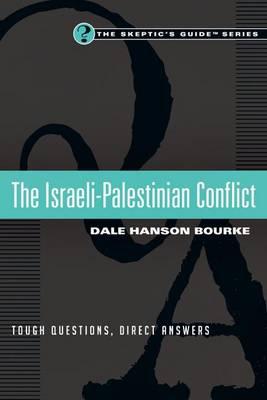 If you are concerned about what’s happening in the Middle East (and if you’re not, perhaps you should be!), if you want to be a more informed reader of the day’s top news stories, if you have ever wondered what people mean when they talk about the “two-state solution” or the “right of return,” if you don’t quite understand why Iran is so anti-Israel or why Palestinians don’t just go live somewhere else or what Jordan has to do with any of it—read this book! It is short (just more than 140 pages, including notes) and set up in a simple Q&A format. It is neutral on questions of which side is right or wrong, although as the author notes, Israeli-Palestinian affairs are so fraught that some readers will no doubt quibble with her word choices or perspective here and there.
While this little book is meant primarily as a source of information, Bourke’s skill as a writer, as well as her compassion, shines through. She writes:
As I researched and wrote this book, the two questions I was asked most often were, “Is there hope to end the conflict?” and “Have you decided who is wrong and who is right?” I now realize those two questions are linked. The more time we spend deciding who is wrong or right, the less hope there is to end the conflict. Even as Americans, thousands of miles away, we can add fuel to the fire by emotionally taking sides instead of looking at specific issues.
I have often argued that storytelling is vital to discourse around difficult issues, because stories are rarely black and white and thus they force us to see the complexities inherent in any conflict. The pitfall of storytelling, however, is that we learn to tell and listen to only a certain type of story—stories that prove we are right, with a moral point that just so happens to jibe with our opinions. As followers of the ultimate peacemaker, Christians must not merely welcome stories that make us uncomfortable and challenge our presuppositions, but also get our facts straight.
Bourke concludes her book by writing:
What I believe is this: We all need to learn more about Israelis and Palestinians, to better understand each of their struggles. We need to listen more. Yes, we need to advocate, but out of knowledge, not emotion. We need to meet more people who we see as representing “the other side,” and then we must sincerely listen to what they have to say.
Whether we’re telling stories or absorbing facts (or ideally, doing both), we are called to be compassionate listeners. Dale Hanson Bourke’s book, The Israeli-Palestinian Conflict: Tough Questions, Direct Answers is a vital tool for that endeavor.
The Israeli-Palestinian Conflict: Tough Questions
Previous Post

June 14, 2013
The Latest Mass Shooting Didn't Even Make the Front Page
Next Post
June 18, 2013 Have One Child or Many, Just Don't Plan on Getting What You Expect
Browse Our Archives
Select a Category disability ethics parenthood Uncategorized
Select a Month September 2016 June 2016 May 2016 April 2016 March 2016 February 2016 January 2016 December 2015 November 2015 October 2015 September 2015 August 2015 July 2015 June 2015 May 2015 April 2015 March 2015 February 2015 January 2015 December 2014 November 2014 October 2014 September 2014 August 2014 July 2014 June 2014 May 2014 April 2014 March 2014 February 2014 January 2014 December 2013 November 2013 October 2013 September 2013 August 2013 July 2013 June 2013 May 2013 April 2013 March 2013 February 2013 January 2013 December 2012 November 2012 October 2012 September 2012 August 2012 July 2012 June 2012 May 2012 April 2012 March 2012 February 2012 January 2012 December 2011
Follow Us!
TAKE THE
Religious Wisdom Quiz
How old was Abraham when Sarah died?
Select your answer to see how you score.
117 years 127 years 137 years 147 years
Related posts from Ellen Painter Dollar

The Three Worst Stories That "Me Before You"...

Prince, Chronic Pain, Opioids & Why Dependence is...

A Mother's Call to Care for Other People's...

Redefining "Fruitful": Is Procreation a Divine Mandate?
TRENDING AT PATHEOS Progressive Christian

Why Christians Have a Sacred Duty to Vote:...
The Bible offers strong support for the sacred duty to vote. Here...

What Being a Modern-Day Apostle Means to Me
In my last column, I discussed the ins and outs of modern-day...

Did Ancient China Once Worship the God of...
Across human history, a common thread weaves through the origins of the...

Love Your Neighbor – Including Earth-Kin: Lev. 19,...
God’s command to love your neighbor means acting in an ethical and...

Lead a Church Study of “Jesus and Lao...
Guest writer Jack Thomas (The Irreverent Reverend) reflects on leading his church...

Principles for Understanding the Apostolic Ministry Today
Whenever people discover that my formal ministry title is "apostle," as in...
view all Progressive Christian blogs
Ad-Free & Subscriber Log-In Subscription Support
- About Us
- 2026 Calendar
- Videos
- Podcasts
- Library of World Religions
- Faith In Media Tracker
- Advertise With Us
- Write for Us
- Privacy Policy
- Terms of Service
- Do Not Sell My Data
- Contact Us
- Radiant Digital
- Manage Newsletter Subscriptions
- Unsubscribe From Notifications
- Sitemap
Copyright 2008-2026, Patheos. All rights reserved.
Subscription Support Ad-Free & Subscriber Log-In
Follow Patheos