
BuddhistCatholicContemplativeEvangelicalGeneral ChristianHinduJewishLatter-day SaintMuslimNew VisionsProgressive Christian
Beliefs
- Buddhist
- Catholic
- Contemplative
- Evangelical
- General Christian
- Hindu
- Jewish
- Latter-day Saint
- More Voices
- Muslim
- New Visions
- Pagan
- Progressive Christian
Topics
- Religion News
- Food and Religion
- Sports and Religion
- Religious Art
- Religious Music and Entertainment
- Religious Events
- History and Religion
- Style and Religion
- Politics and Religion
- Women in Religion
- Recreation Outdoors and Religion
- Business Finance and Religion
- Careers Workplace and Religion
- Education and Religion
- Family Parenting and Religion
- Health Fitness and Religion
- Home and Religion
- Relationships and Religion
- Technology and Religion
- Travel and Religion
Columnists
- Buddhist Columnists
- Business Finance and Religion Columnists
- Careers Workplace and Religion Columnists
- Catholic Columnists
- Contemplative Columnists
- Education and Religion Columnists
- Evangelists Columnists
- Family Parenting and Religion Columnists
- General Christian Columnists
- Health Fitness and Religion Columnists
- Hindu Columnists
- History and Religion Columnists
- Home and Religion Columnists
- Jewish Columnists
- More Voices Columnists
- Latter Day Columnists
- Muslim Columnists
- New Visions Columnists
- Nonreligious Columnists
- Pagan Columnists
- Politics and Religion Columnists
- Progressive Columnists
- Recreation Outdoors and Religion Columnists
- Relationships and Religion Columnists
- Religion News Columnists
- Religious Art Columnists
- Religious Events Columnists
- Religious Music and Entertainment Columnists
- Sports and Religion Columnists
- Style and Religion Columnists
- Technology and Religion Columnists
- Travel and Religion Columnists
- Women in Religion Columnists
Resource Library
- 2026 Calendar
- Library of World Religions
- The 100 Most Holy Places on Earth
- Patheos Answers
- Podcasts
- Videos
- Faith Leaders Database
- Anglican Episcopalian
- Bahai
- Baptist
- Buddhism
- Christianity
- Confucianism
- Eastern Orthodoxy
- Hinduism
- Holiness and Pentecostal
- ISKCON
- Islam
- Judaism
- Lutheran
- Methodist
- The Church of Jesus Christ of Latter-day Saints
- New Age
- Paganism
- Presbytarian and Reformed
- Protestantism
- Religion Behind the Scenes
- Roman Catholic
- Scientology
- Shia Islam
- Sikhism
- Sufism
- Sunni Islam
- Taoism
- Zen
- See all religions
Research Tools
 Ad-Free & Subscriber Log-In Subscription Support
Ad-Free & Subscriber Log-In Subscription Support
Follow Patheos 

- Trending:
- Forgiveness
- |
- Marriage
- |
- Consciousness
- |
- Death Penalty
- |
- Election
- |
- Halloween
 Ellen Painter Dollar
- Home
- Progressive Christian
- Parents-to-Be Have More Choices Than Ever, But We Can’t Choose Our Way Out of Pain
Parents-to-Be Have More Choices Than Ever, But We Can’t Choose Our Way Out of Pain
Last updated on: May 2, 2013 at 10:50 am by Ellen Painter Dollar
Parents-to-Be Have More Choices Than Ever, But We Can’t Choose Our Way Out of Pain 2013-05-02T10:50:22-04:00 Ellen Painter Dollar
Patheos Explore the world's faith through different perspectives on religion and spirituality! Patheos has the views of the prevalent religions and spiritualities of the world.
Jennifer Gilmore’s story is enough to scare anyone away from open adoption. (It also provides the best supporting evidence ever for my contention that “Why don’t you just adopt?” might be one of the stupidest questions known to humankind.)
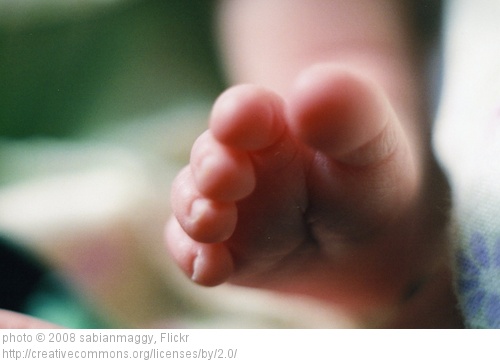 After years of fertility treatments , Gilmore and her husband settled on an open domestic adoption. And then everything that could go wrong did. Numerous birthmothers selected them—and then the couple would learn that the birthmother didn’t really intend to place her child for adoption, or wasn’t even pregnant. The couple took home a baby boy, then found out that the baby’s father didn’t know about the adoption and wanted his son. They flew to be present at the premature birth of another baby, who turned out to have Down syndrome:
As open as my husband and I were to adopting a baby of a different race and as open as we became to adopting from a mother with a history of drug use, this is the one choice we were not open to. And so we did not take the child. We were told there was another family waiting, and we were trying to do the right thing for this baby. But I won’t be able to forget the moment when we left the hospital without her.
Earlier in her essay, Gilmore wrote:
Open adoption is about choice. Those seeking to adopt may choose the race they’re prepared to parent, and the amount of drug and alcohol use they find acceptable during the pregnancy. They may decide what level of mental illness they are comfortable with in the birth mother’s history. And they may decide as well if they are prepared for—or desire—a child with special needs.
Once you choose to pursue adoption or reproductive technology, you are offered many other choices, whether you are looking for them or not. I recently met with a young woman who read my book. Like me, she has osteogenesis imperfecta (OI—a genetic bone disorder). She had no intention of using preimplantation genetic diagnosis (PGD, which is IVF with the added step of genetic screening) to avoid passing OI on to a child. But when she and her husband learned they were infertile and would have to do IVF to conceive, they were faced with a choice they didn’t seek—As long as they are doing IVF, should they also do PGD to ensure a child without OI?
Something about Gilmore’s choice to leave that little girl behind troubled me in a way that Gilmore’s other choices didn’t. It casts the heartbreaking fall-out from all those choices into sharp relief. Perhaps this is because I write far more about disability and genetic disorders than I do about race or other factors involved in adoption choices. I know it is because friends and colleagues, particularly Amy Julia Becker, have helped me understand that a child with Down syndrome is not even close to being the tragedy that our culture believes it to be.
In another compelling look at the consequences of choices we do and don’t make about our babies, the New York Times Motherlode blog featured concurrent essays by two mothers of twins, KJ Dell’Antonia and Lauren Apfel. In Dell’Antonia’s case, the “twins” are referred to in quotations because she adopted a child the same age as one of her biological children. Apfel discovered during her third pregnancy that she was going to have twins, not the single baby she hoped would complete her family.
Dell’Antonia’s essay focuses on the benefits of having “twins” even as she recognizes the limitations of having two children the same age. Apfel, though she of course loves her children, struggles with all the ways that twins reveal the limits of parental resources of every kind—money, time, attention, comfort.
KJ Dell’Antonia concludes her essay on why she’s glad to have “twins” by asking:
Did I really want “twins”? It’s probably more accurate to say that (as with so many other things) I didn’t think about it that hard. I just let it happen. For now, it looks as if it’s among the best not-exactly decisions I ever made.
Though she is referring to adoption decisions, she aptly names the dynamic that still governs most decisions about having babies. Most people who want children get pregnant after having made some very basic choices—when to stop using contraception, for example—but still end up taking what they get. They just let things happen.
But more and more, parents are offered the tantalizing possibility of not simply letting things happen. To some extent through open adoption, to a greater extent through reproductive technologies, particularly gamete donation and preimplantation genetic diagnosis (PGD), parents are offered choices about what sort of child they want, what sort of child they will accept.
To curtail the choices that some parents make in creating a family threatens to curtail all parents’ choices—a principal I adhere to in part because as a person with a disability, I am well aware that a small but dangerous cadre of people would like to make sure people with disabilities don’t can’t have babies.
But although I am aware of the ethical complexities of limiting parental choices, I’m still disturbed by some of those choices. I am truly happy that Jennifer Gilmore finally has a baby boy she will be able to raise as her own dear son. I am also truly happy that the little girl with Down syndrome had an adoptive family to welcome her. I still wonder why Gilmore was so sure that having a daughter with Down syndrome was off the table. I suspect it has less to do with her fundamental character, and more to do with a culture and medical system that insists on seeing Down syndrome and other genetic anomalies as avoidable tragedies.
Lauren Apfel concludes her essay on having twins with these questions:
But even if it does turn out that my twins become best friends, allies, a joy to raise as a result, will that be enough to erase altogether the ordeal of what went before [referring to the trials of having two babies at once, and being unable to respond as she would have liked to their many needs]? Or will I always carry that struggle with me as a scar, like the one that marks their entrance into this world, something that will fade over time but never truly disappear?
Um. Yes?
Anyone who nurtures children—whether born from her own body, that of a partner, or another woman’s body, whether brought home at a few days or a few years old—will be wounded. All parents will be left with scars that will throb and ache under the right conditions for the rest of our lives. All three of the writers featured here have chosen to reveal their wounds to the world (even KJ Dell’Antonia, whose essay was mostly positive, admits that having two children the same age means she cannot always help one without hurting the other—a fundamental wound that will be familiar to most mothers, the knowledge that we can’t always assuage our children’s hurts, and that we cause those hurts not infrequently).
My greatest hope for our cultural conversations and decisions around how we become parents, and the choices made possible by adoption and reproductive technologies, is that we will finally understand that we cannot choose our way out of heartbreak. We can, under some circumstances, choose to (try to) avoid a particular brand of suffering, difference, or limitation—and there may or may not be compelling reasons to do so—but we cannot choose to forgo all of it.
Next Post

May 6, 2013 How Mother's Day 2006 Was the Beginning of the Rest of My Life
Browse Our Archives
Select a Category disability ethics parenthood Uncategorized
Select a Month September 2016 June 2016 May 2016 April 2016 March 2016 February 2016 January 2016 December 2015 November 2015 October 2015 September 2015 August 2015 July 2015 June 2015 May 2015 April 2015 March 2015 February 2015 January 2015 December 2014 November 2014 October 2014 September 2014 August 2014 July 2014 June 2014 May 2014 April 2014 March 2014 February 2014 January 2014 December 2013 November 2013 October 2013 September 2013 August 2013 July 2013 June 2013 May 2013 April 2013 March 2013 February 2013 January 2013 December 2012 November 2012 October 2012 September 2012 August 2012 July 2012 June 2012 May 2012 April 2012 March 2012 February 2012 January 2012 December 2011
Follow Us!
TAKE THE
Religious Wisdom Quiz
Where does Scripture say, "do not let the sun go down on your anger"?
Select your answer to see how you score.
Proverbs Genesis Ephesians Luke
Related posts from Ellen Painter Dollar

Disability as the Last Acceptable Prejudice: A Farewell...

The Three Worst Stories That "Me Before You"...

Prince, Chronic Pain, Opioids & Why Dependence is...

A Mother's Call to Care for Other People's...
TRENDING AT PATHEOS Progressive Christian

What Being a Modern-Day Apostle Means to Me
In my last column, I discussed the ins and outs of modern-day...

Did Ancient China Once Worship the God of...
Across human history, a common thread weaves through the origins of the...

Love Your Neighbor – Including Earth-Kin: Lev. 19,...
God’s command to love your neighbor means acting in an ethical and...

Lead a Church Study of “Jesus and Lao...
Guest writer Jack Thomas (The Irreverent Reverend) reflects on leading his church...

Pastoral Wisdom for Responding to Sermon Pushback
Getting sermon pushback on your social justice sermon? Learn practical, Proverbs-based strategies...

Principles for Understanding the Apostolic Ministry Today
Whenever people discover that my formal ministry title is "apostle," as in...
view all Progressive Christian blogs
Ad-Free & Subscriber Log-In Subscription Support
- About Us
- 2026 Calendar
- Videos
- Podcasts
- Library of World Religions
- Faith In Media Tracker
- Advertise With Us
- Write for Us
- Privacy Policy
- Terms of Service
- Do Not Sell My Data
- Contact Us
- Radiant Digital
- Manage Newsletter Subscriptions
- Unsubscribe From Notifications
- Sitemap
Copyright 2008-2026, Patheos. All rights reserved.
Subscription Support Ad-Free & Subscriber Log-In
Follow Patheos