
BuddhistCatholicContemplativeEvangelicalGeneral ChristianHinduJewishLatter-day SaintMuslimNew VisionsProgressive Christian
Beliefs
- Buddhist
- Catholic
- Contemplative
- Evangelical
- General Christian
- Hindu
- Jewish
- Latter-day Saint
- More Voices
- Muslim
- New Visions
- Pagan
- Progressive Christian
Topics
- Religion News
- Food and Religion
- Sports and Religion
- Religious Art
- Religious Music and Entertainment
- Religious Events
- History and Religion
- Style and Religion
- Politics and Religion
- Women in Religion
- Recreation Outdoors and Religion
- Business Finance and Religion
- Careers Workplace and Religion
- Education and Religion
- Family Parenting and Religion
- Health Fitness and Religion
- Home and Religion
- Relationships and Religion
- Technology and Religion
- Travel and Religion
Columnists
- Buddhist Columnists
- Business Finance and Religion Columnists
- Careers Workplace and Religion Columnists
- Catholic Columnists
- Contemplative Columnists
- Education and Religion Columnists
- Evangelists Columnists
- Family Parenting and Religion Columnists
- General Christian Columnists
- Health Fitness and Religion Columnists
- Hindu Columnists
- History and Religion Columnists
- Home and Religion Columnists
- Jewish Columnists
- More Voices Columnists
- Latter Day Columnists
- Muslim Columnists
- New Visions Columnists
- Nonreligious Columnists
- Pagan Columnists
- Politics and Religion Columnists
- Progressive Columnists
- Recreation Outdoors and Religion Columnists
- Relationships and Religion Columnists
- Religion News Columnists
- Religious Art Columnists
- Religious Events Columnists
- Religious Music and Entertainment Columnists
- Sports and Religion Columnists
- Style and Religion Columnists
- Technology and Religion Columnists
- Travel and Religion Columnists
- Women in Religion Columnists
Resource Library
- 2026 Calendar
- Library of World Religions
- The 100 Most Holy Places on Earth
- Patheos Answers
- Podcasts
- Videos
- Faith Leaders Database
- Anglican Episcopalian
- Bahai
- Baptist
- Buddhism
- Christianity
- Confucianism
- Eastern Orthodoxy
- Hinduism
- Holiness and Pentecostal
- ISKCON
- Islam
- Judaism
- Lutheran
- Methodist
- The Church of Jesus Christ of Latter-day Saints
- New Age
- Paganism
- Presbytarian and Reformed
- Protestantism
- Religion Behind the Scenes
- Roman Catholic
- Scientology
- Shia Islam
- Sikhism
- Sufism
- Sunni Islam
- Taoism
- Zen
- See all religions
Research Tools
 Ad-Free & Subscriber Log-In Subscription Support
Ad-Free & Subscriber Log-In Subscription Support
Follow Patheos 

- Trending:
- Forgiveness
- |
- Marriage
- |
- Consciousness
- |
- Death Penalty
- |
- Election
- |
- Halloween
 Ellen Painter Dollar
- Home
- Progressive Christian
- Factory Disasters in Bangladesh, Consumerism, and Original Sin
Factory Disasters in Bangladesh, Consumerism, and Original Sin
Last updated on: May 22, 2013 at 12:17 pm by Ellen Painter Dollar
Factory Disasters in Bangladesh, Consumerism, and Original Sin 2013-05-22T12:17:05-04:00 Ellen Painter Dollar
Patheos Explore the world's faith through different perspectives on religion and spirituality! Patheos has the views of the prevalent religions and spiritualities of the world.
I approach buying clothes for my children with the same compulsive attention to my kids’ individual needs and wants that I bring to Christmas gift buying. Focused attention to my kids’ clothing needs is, for me, as much an embodiment of maternal love as cooking is for some moms. Finding a shirt that I just know one of the kids will love, zipping up a child’s heavy fleece jacket on a cold morning, watching them tear out the front door on the first really warm spring day in new shorts and sandals, even folding the constant stream of laundry—each of these tasks gives me the satisfying thrill of caring well for my children.
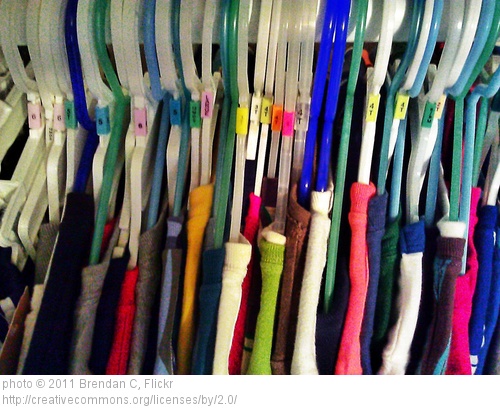 The other morning, I went to a discount chain to get Leah some summer clothes. While I usually don’t shop there, it was easy (close to home, lots of parking) and I knew they would stock the basic denim shorts that are her summer mainstays. I was having a great time, seeking out things in her favorite colors (shades of green and blue), looking for tanks to layer under a deep vee-neck shirt, chatting with a friend who was also shopping. Then, I picked up a pair of shorts and in looking for the size, saw that the shorts were made in Bangladesh. Suddenly my fun morning of shopping was marred by images of garment workers crushed by collapsed concrete, others trapped in a burning factory.
I was forced to remember that the mounds of cute, inexpensive clothes through which I so cheerfully picked are likely made by very poor people on the other side of the world. Maybe even people whose work is governed by powerful folk who put profit ahead of treating workers with the care they deserve.
Beyond the sharp reminder of how my privileged life contrasts with, and is connected to, lives of far less privileged people and the concomitant guilt was another feeling—helplessness. What am I to do? What are we to do with the knowledge that heaps of clothes with familiar labels were found outside the garment factories that became mass graves for workers?
In a post here on Patheos, Chris Smith quotes Amy Peterson in arguing for a “slow” approach to clothing—one that values clothing as something to be cared for, rather than bought on sale and thrown away when it is no longer fashionable or comfortable. Her suggestions are good ones—getting clothes secondhand, finding local seamstresses able to mend or make clothes, getting good-quality fabrics and finishes that will last. I already do some of that. But I am still left feeling that a significantly different relationship with my family’s clothing is a pie-in-the-sky dream, not a doable reality.
For all sorts of noble and good reasons, I could send my children to school in basic cotton dresses, shirts and pants easily made on a sewing machine, by me (if I first obtained the right equipment, developed sewing skills, and took time away from other pursuits to sew) or someone else. But the fact is that fashions matter (even to my relatively non-fashion conscious teenager). That such a fact testifies to our culture’s (and my family’s) superficiality and frivolity doesn’t change that it is, indeed, a fact. There are all sorts of reasons I’m not going to start making my kids’ clothes. That they would not want to wear them is a significant one, even if it shouldn’t be.
The more doable option is to purchase clothes produced in factories that pay a fair wage and ensure worker safety. Such practices likely drive up prices. In fact, I usually avoid the type of discount stores where I shopped last week. Because I don’t buy my kids a whole lot of clothes, and because we get some secondhand items, I usually shop for higher quality clothes that also cost a bit more, albeit with coupons and sale prices. But these clothes also have labels saying they are made in Vietnam or China or Bangladesh. I am not at all sure that paying more ensures that our family’s clothes are being made under better conditions.
It strikes me that this conundrum—my complicity, as a Western consumer, in injustices committed on my behalf—speaks to what we mean when we talk about “original sin” or the scriptural truth that “all have sinned and fall short of the glory of God.” From the moment we are born, with pain and blood and tearing, our very existence becomes complicit in other people’s anguish. Sometimes, as with the pain of birth or the pain of growing up, learning life’s important lessons the hard way, we can see purpose in that pain. We witness redemption, pain embraced because it brings new life, pain accepted because of love.
But sometimes, our very existence, our most mundane daily actions, cause pain that is not so easily redeemed. Sometimes our existence creates ruptures in the fabric of life that aren’t so readily healed. The clothes that protect my children from the weather and bring color to their days endanger children on the other side of the world, because their parents make those clothes in unsafe conditions. The minivan that enables me, with my weak bones and painful joints, to do the many errands that sustain my family’s life, also contributes to climate change endangering people and species around the globe (as does the fossil-fueled mechanicals that keep my family warm in winter and allow me to take the near-daily hot baths that ease my joint pain).
Human beings are born consumers, our existence exacting a cost, demanding nourishment from soil, water, and other living organisms; the burning of one thing or another to heat homes in cold climates; the labor of sewing fabrics to clothe our bodies. Westerners, of course, have become uber-consumers, demanding more than our fair share, imperiling other people and our planet.
Every day, in ways big and small, my existence and my children’s existence demands something from this earth and its inhabitants. We can and do take small steps to lessen harm, from accepting the offer of secondhand clothes to keeping the house uncomfortably chilly on winter days. But I can’t help but feel, in the aftermath of these months of factory fires and collapses, devastating hurricanes, news of ice caps melting at an unprecedented pace, that whatever we do cannot possibly be enough.
Contemplating these dynamics, the truth in some scripture passages is all too apparent—”All have sinned and fall short of the glory of God” (Romans 3:23), “…there is no one who does good, not even one” (Psalm 14:3), “Indeed, there is no one on earth who is righteous; no one who does what is right and never sins” (Ecclesiastes 7:20), “For I do not do the good I want to do, but the evil I do not want to do—this I keep on doing” (Romans 7:19).
The problem is clear, the remedy less so. The assurances that follow some of these passages, assurances that we are saved from sin by God’s grace, ring hollow. These assurances are so often interpreted as being about the salvation of individual souls, when I want assurances that the gashes we have created—the gashes I have created—in our communal fabric will be repaired. The reparation of such brokenness seems too huge for my meager offering to check labels more carefully, to spend a few dollars more, to only shop at retailers that follow through on pledges to oversee garment workers’ safety. It seems that reparation must require something far more powerful, far more sacrificial, to become manifest.
God has promised to bring about a new heaven and a new earth. This reparation and restoration is not a mere prophecy of divine wand-waving. Rather, in responding to God’s grace by offering grace to other human beings and our planet, we work alongside God to bring this new heaven and new earth to life.
But while I believe this, I cannot see it. I feel helpless. Whatever I do, it is not enough. In a theological sense, this is okay. I am not supposed to save the world. I am not even supposed to save myself. One reason that recovering addicts find so much strength in the notion of a “higher power” is that they know, better than those of us who delusionally believe that we can control our lives by exercising prudent choice, that they are utterly helpless to save themselves, much less anyone else, and especially the world.
So we admit we are helpless. And then we take steps—tiny, faltering steps—to own up to the ways we have wronged and continue to wrong other people. We take even more faltering steps to make amends. This is all good, but there is still pain. Women in Bangladesh still labor to make the cute summer clothes my privileged children wear. Factory owners and company CEOs still decide to cut corners in the name of profit. Buildings catch on fire and collapse and people who were trapped by circumstance become trapped in body. And all I have to offer, besides those tiny steps, are excuses for the ways in which I too am trapped in a consuming culture, struggling to imagine a different way of being.
Update: This article discusses retailers’ efforts to better ensure worker safety. I am sorry to note that the company whose store I was shopping in last week is on the list of retailers who have refused to sign on.
Christian responses to suffering
Previous Post

May 14, 2013
Does God Hate Clutter? I Used to Think So, But Now I'm Not So Sure
Next Post
May 23, 2013 The Kingdom Comes One Lonely Step at a Time—Until We Are Not Lonely Any More
Browse Our Archives
Select a Category disability ethics parenthood Uncategorized
Select a Month September 2016 June 2016 May 2016 April 2016 March 2016 February 2016 January 2016 December 2015 November 2015 October 2015 September 2015 August 2015 July 2015 June 2015 May 2015 April 2015 March 2015 February 2015 January 2015 December 2014 November 2014 October 2014 September 2014 August 2014 July 2014 June 2014 May 2014 April 2014 March 2014 February 2014 January 2014 December 2013 November 2013 October 2013 September 2013 August 2013 July 2013 June 2013 May 2013 April 2013 March 2013 February 2013 January 2013 December 2012 November 2012 October 2012 September 2012 August 2012 July 2012 June 2012 May 2012 April 2012 March 2012 February 2012 January 2012 December 2011
Follow Us!
TAKE THE
Religious Wisdom Quiz
Who said, "The Lord will fight for you; you need only to be still"?
Select your answer to see how you score.
David Solomon Joshua Moses
Related posts from Ellen Painter Dollar

The Three Worst Stories That "Me Before You"...

Prince, Chronic Pain, Opioids & Why Dependence is...


A Mother's Call to Care for Other People's...
TRENDING AT PATHEOS Progressive Christian

Why Christians Have a Sacred Duty to Vote:...
The Bible offers strong support for the sacred duty to vote. Here...

What Being a Modern-Day Apostle Means to Me
In my last column, I discussed the ins and outs of modern-day...

Did Ancient China Once Worship the God of...
Across human history, a common thread weaves through the origins of the...

Love Your Neighbor – Including Earth-Kin: Lev. 19,...
God’s command to love your neighbor means acting in an ethical and...

Lead a Church Study of “Jesus and Lao...
Guest writer Jack Thomas (The Irreverent Reverend) reflects on leading his church...

Principles for Understanding the Apostolic Ministry Today
Whenever people discover that my formal ministry title is "apostle," as in...
view all Progressive Christian blogs
Ad-Free & Subscriber Log-In Subscription Support
- About Us
- 2026 Calendar
- Videos
- Podcasts
- Library of World Religions
- Faith In Media Tracker
- Advertise With Us
- Write for Us
- Privacy Policy
- Terms of Service
- Do Not Sell My Data
- Contact Us
- Radiant Digital
- Manage Newsletter Subscriptions
- Unsubscribe From Notifications
- Sitemap
Copyright 2008-2026, Patheos. All rights reserved.
Subscription Support Ad-Free & Subscriber Log-In
Follow Patheos