
BuddhistCatholicContemplativeEvangelicalGeneral ChristianHinduJewishLatter-day SaintMuslimNew VisionsProgressive Christian
Beliefs
- Buddhist
- Catholic
- Contemplative
- Evangelical
- General Christian
- Hindu
- Jewish
- Latter-day Saint
- More Voices
- Muslim
- New Visions
- Pagan
- Progressive Christian
Topics
- Religion News
- Food and Religion
- Sports and Religion
- Religious Art
- Religious Music and Entertainment
- Religious Events
- History and Religion
- Style and Religion
- Politics and Religion
- Women in Religion
- Recreation Outdoors and Religion
- Business Finance and Religion
- Careers Workplace and Religion
- Education and Religion
- Family Parenting and Religion
- Health Fitness and Religion
- Home and Religion
- Relationships and Religion
- Technology and Religion
- Travel and Religion
Columnists
- Buddhist Columnists
- Business Finance and Religion Columnists
- Careers Workplace and Religion Columnists
- Catholic Columnists
- Contemplative Columnists
- Education and Religion Columnists
- Evangelists Columnists
- Family Parenting and Religion Columnists
- General Christian Columnists
- Health Fitness and Religion Columnists
- Hindu Columnists
- History and Religion Columnists
- Home and Religion Columnists
- Jewish Columnists
- More Voices Columnists
- Latter Day Columnists
- Muslim Columnists
- New Visions Columnists
- Nonreligious Columnists
- Pagan Columnists
- Politics and Religion Columnists
- Progressive Columnists
- Recreation Outdoors and Religion Columnists
- Relationships and Religion Columnists
- Religion News Columnists
- Religious Art Columnists
- Religious Events Columnists
- Religious Music and Entertainment Columnists
- Sports and Religion Columnists
- Style and Religion Columnists
- Technology and Religion Columnists
- Travel and Religion Columnists
- Women in Religion Columnists
Resource Library
- 2026 Calendar
- Library of World Religions
- The 100 Most Holy Places on Earth
- Patheos Answers
- Podcasts
- Videos
- Faith Leaders Database
- Anglican Episcopalian
- Bahai
- Baptist
- Buddhism
- Christianity
- Confucianism
- Eastern Orthodoxy
- Hinduism
- Holiness and Pentecostal
- ISKCON
- Islam
- Judaism
- Lutheran
- Methodist
- The Church of Jesus Christ of Latter-day Saints
- New Age
- Paganism
- Presbytarian and Reformed
- Protestantism
- Religion Behind the Scenes
- Roman Catholic
- Scientology
- Shia Islam
- Sikhism
- Sufism
- Sunni Islam
- Taoism
- Zen
- See all religions
Research Tools
 Ad-Free & Subscriber Log-In Subscription Support
Ad-Free & Subscriber Log-In Subscription Support
Follow Patheos 

- Trending:
- Forgiveness
- |
- Marriage
- |
- Consciousness
- |
- Death Penalty
- |
- Election
- |
- Halloween
 Ellen Painter Dollar
- Home
- Progressive Christian
- Broken Bones, School Shootings, Divine Intentions, and Why We Suffer
Broken Bones, School Shootings, Divine Intentions, and Why We Suffer
Last updated on: December 21, 2012 at 4:00 am by Ellen Painter Dollar
Broken Bones, School Shootings, Divine Intentions, and Why We Suffer 2012-12-20T11:00:57-05:00 Ellen Painter Dollar
Patheos Explore the world's faith through different perspectives on religion and spirituality! Patheos has the views of the prevalent religions and spiritualities of the world.
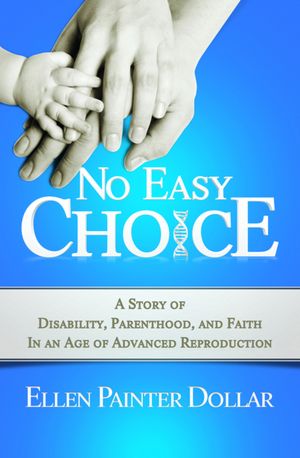
As the one-year anniversary of my book publication approaches in January, I’m devoting Fridays from now until the end of the year to revisiting the book’s major themes. Each Friday, I’ll post an excerpt from No Easy Choice: A Story of Disability, Parenthood, and Suffering in an Age of Advanced Reproduction. This week’s excerpt focuses on the nature of suffering. I thought this passage might be particularly relevant given that our nation is grappling with the terrible suffering wrought by last week’s mass murder at a Connecticut elementary school. When discussing illness and disability, people (especially Christians) love to argue that we must embrace these things as gifts from God because of how they change us for the better, because of all the good that can come from our grappling with these difficulties. I find that idea offensive, and this week’s events illustrate why. There is no doubt much good that will come in the aftermath of the Newtown shooting—more kindness? national conversations around how to curb violence and death by firearm? more hugs and kisses bestowed on the living, breathing first graders among us? more appreciation for how teachers selflessly care for their students, day after day? And there is no doubt that, no matter how much good might come, what happened in Sandy Hook Elementary School on December 14 was a horrendous tragedy, period. As I write in this excerpt, there is a mighty difference between saying that God intends (or even allows) bad things to happen because of the good that can result, and saying that God ends up bringing about good even in the worst of circumstances. Theologian David B. Hart’s comments in this excerpt about the suffering of children are particularly relevant as we ponder what happened in Newtown last week. The Sandy Hook shooting provides us with the best opportunity yet to forever banish clichés such as, “Everything happens for a reason,” “God doesn’t give us more than we can handle,” and others that ascribe divine intent to human suffering.
In my ongoing research and conversations about God, suffering, and disability, I have come across three broad Christian narratives on the origins and meaning of suffering caused by illness, disability, and disease.
First is the idea that suffering is something God either proactively orchestrates (suffering as a fundamentally good thing that God gives for good reasons) or passively allows (God does not cause the suffering but allows it to happen to further some purpose) as part of a divine plan that humans cannot fully understand.
 In the second common Christian narrative about suffering, God created humans as free to live an abundant life in full communion with God (Genesis 2–3). Once human beings failed to hold up their end of the bargain by trying to transcend the limits God put on them, a separation (sin) came between God and creation. As a result of this separation (the fall), the world does not work as God meant it to. People must engage in ceaseless labor to survive, women experience more pain in childbirth, people are separated from one another and from God, and bodies break and eventually die. As my friend Tina once said in an e-mail exchange, this narrative assumes that “our world is so fallen that even our cells don’t act as God designed them.”
A third approach specifically addresses genetic disorders and other suffering caused by occurrences in the natural world (such as natural disasters). A commenter to an online article I wrote insisted that “disability is disability, period,” the result neither of God’s intent nor the world’s fallenness. God designed the world in all its glory and intricacy, but the same God-given laws that work for the good of the world and humans can also work against them. Genetic mutations are good and necessary because they ensure human adaptation and diversity. That some mutations have disabling or devastating effects is inevitable, just as the good gifts of rain and rivers that support humans, animals, and plants can also wipe out villages in catastrophic floods.
Until I dug deep into questions about the nature of suffering and disability in writing this book, I accepted the third approach. I thought questions of “Why?” and particularly “Why me?” were a waste of time and a reflection of a skewed self-centeredness that inflates the questioners’ importance, implying that there must be some grand reason that they, in all their fabulousness, should have to suffer so. The idea that my OI is the result of an inevitable mishap in the intricate beauty of the genetic code seemed neat and simple; it allowed me to avoid tedious theological discussions that I generally find inaccessible and far removed from the daily experiences of actual people.
But in doing research for this book, I started to see two major problems with this approach to genetic anomalies. First, if I believe that with God all things are possible (Matthew 19:26; Mark 10:27)—and I do believe that—then it’s a stretch to believe that God would create precise and intricate mechanisms for genetic diversity without also creating precise and intricate mechanisms for ensuring that major mistakes don’t happen. Second, this approach fails to explain or satisfy my gut-level sense that bones breaking when a child sits down on the bathroom floor (or lungs filling up with mucus when they shouldn’t, as in cystic fibrosis; or muscles wasting away, as in muscular dystrophy; or aortas bursting open with no warning, as in Marfan syndrome) are fundamentally bad things. Is “evil” too strong a word? I’m not sure. They are somehow a manifestation of the separation between what God intends and desires for humankind on one hand, and on the other hand what humankind actually lives with, day after heartbreaking day. Ascribing such suffering to plain old genetic diversity feels inadequate.
In responding to the devastating Asian tsunami on December 26, 2004, Eastern Orthodox theologian David B. Hart argues against any attempt to rationalize, ascribe meaning to, or trumpet God’s intent in human suffering: “Ours is, after all, a religion of salvation; our faith is in a God who has come to rescue His creation from the absurdity of sin and the emptiness of death, and so we are permitted to hate these things with a perfect hatred.” Hart calls attempts to justify human misery on grounds that our suffering is necessary to reveal God’s true nature “immeasurably . . . vile”; he goes on to ask which attributes of God the tragic deaths of children (and I would add, the painful disabilities of children) are meant to reveal: “Capricious cruelty, perhaps? Morbid indifference? A twisted sense of humor?” A thousand ancient knots in my chest undid themselves the moment I read this sentence: “Simply said, there is no more liberating knowledge given us by the gospel—and none in which we should find more comfort—than the knowledge that suffering and death, considered in themselves, have no ultimate meaning at all.”
I have come to believe that illness, disability, and disease are neither fundamentally good things disguised as bad (thus not the intentional work of a loving God who works in mysterious ways) nor value-neutral manifestations of human diversity. I view suffering as a characteristic life in a fallen world; illness, disability, and disease are, quite simply, the result of life in a world that does not work as God intended. I believe they are bad things and that we are allowed to name them as bad things. This does not mean, however, that we have license to try to fix what is wrong at all costs, or that we can’t learn valuable lessons, find meaning, and come to know God and ourselves better as a result of suffering. There is a huge difference between saying that my bone disorder was intended to reveal God’s truth or teach me something I need to know, and saying that my bone disorder ended up revealing God’s truth or teaching me something I need to know. While I refuse to ascribe God’s intent to disability, disease, and suffering, I acknowledge that they often provide life-changing opportunities for growth.
Next Post

December 24, 2012 Let All Mortal Flesh Keep Silence (Including Me)
Browse Our Archives
Select a Category disability ethics parenthood Uncategorized
Select a Month September 2016 June 2016 May 2016 April 2016 March 2016 February 2016 January 2016 December 2015 November 2015 October 2015 September 2015 August 2015 July 2015 June 2015 May 2015 April 2015 March 2015 February 2015 January 2015 December 2014 November 2014 October 2014 September 2014 August 2014 July 2014 June 2014 May 2014 April 2014 March 2014 February 2014 January 2014 December 2013 November 2013 October 2013 September 2013 August 2013 July 2013 June 2013 May 2013 April 2013 March 2013 February 2013 January 2013 December 2012 November 2012 October 2012 September 2012 August 2012 July 2012 June 2012 May 2012 April 2012 March 2012 February 2012 January 2012 December 2011
Follow Us!
TAKE THE
Religious Wisdom Quiz
What is the collective name of the stories Jesus told?
Select your answer to see how you score.
Gospel Miracles Parables Psalms
Related posts from Ellen Painter Dollar

Disability as the Last Acceptable Prejudice: A Farewell...

The Three Worst Stories That "Me Before You"...

Prince, Chronic Pain, Opioids & Why Dependence is...

TRENDING AT PATHEOS Progressive Christian

What Being a Modern-Day Apostle Means to Me
In my last column, I discussed the ins and outs of modern-day...

Did Ancient China Once Worship the God of...
Across human history, a common thread weaves through the origins of the...

Love Your Neighbor – Including Earth-Kin: Lev. 19,...
God’s command to love your neighbor means acting in an ethical and...

Lead a Church Study of “Jesus and Lao...
Guest writer Jack Thomas (The Irreverent Reverend) reflects on leading his church...

Pastoral Wisdom for Responding to Sermon Pushback
Getting sermon pushback on your social justice sermon? Learn practical, Proverbs-based strategies...

Principles for Understanding the Apostolic Ministry Today
Whenever people discover that my formal ministry title is "apostle," as in...
view all Progressive Christian blogs
Ad-Free & Subscriber Log-In Subscription Support
- About Us
- 2026 Calendar
- Videos
- Podcasts
- Library of World Religions
- Faith In Media Tracker
- Advertise With Us
- Write for Us
- Privacy Policy
- Terms of Service
- Do Not Sell My Data
- Contact Us
- Radiant Digital
- Manage Newsletter Subscriptions
- Unsubscribe From Notifications
- Sitemap
Copyright 2008-2026, Patheos. All rights reserved.
Subscription Support Ad-Free & Subscriber Log-In
Follow Patheos