
BuddhistCatholicContemplativeEvangelicalGeneral ChristianHinduJewishLatter-day SaintMuslimNew VisionsProgressive Christian
Beliefs
- Buddhist
- Catholic
- Contemplative
- Evangelical
- General Christian
- Hindu
- Jewish
- Latter-day Saint
- More Voices
- Muslim
- New Visions
- Pagan
- Progressive Christian
Topics
- Religion News
- Food and Religion
- Sports and Religion
- Religious Art
- Religious Music and Entertainment
- Religious Events
- History and Religion
- Style and Religion
- Politics and Religion
- Women in Religion
- Recreation Outdoors and Religion
- Business Finance and Religion
- Careers Workplace and Religion
- Education and Religion
- Family Parenting and Religion
- Health Fitness and Religion
- Home and Religion
- Relationships and Religion
- Technology and Religion
- Travel and Religion
Columnists
- Buddhist Columnists
- Business Finance and Religion Columnists
- Careers Workplace and Religion Columnists
- Catholic Columnists
- Contemplative Columnists
- Education and Religion Columnists
- Evangelists Columnists
- Family Parenting and Religion Columnists
- General Christian Columnists
- Health Fitness and Religion Columnists
- Hindu Columnists
- History and Religion Columnists
- Home and Religion Columnists
- Jewish Columnists
- More Voices Columnists
- Latter Day Columnists
- Muslim Columnists
- New Visions Columnists
- Nonreligious Columnists
- Pagan Columnists
- Politics and Religion Columnists
- Progressive Columnists
- Recreation Outdoors and Religion Columnists
- Relationships and Religion Columnists
- Religion News Columnists
- Religious Art Columnists
- Religious Events Columnists
- Religious Music and Entertainment Columnists
- Sports and Religion Columnists
- Style and Religion Columnists
- Technology and Religion Columnists
- Travel and Religion Columnists
- Women in Religion Columnists
Resource Library
- 2026 Calendar
- Library of World Religions
- The 100 Most Holy Places on Earth
- Patheos Answers
- Podcasts
- Videos
- Faith Leaders Database
- Anglican Episcopalian
- Bahai
- Baptist
- Buddhism
- Christianity
- Confucianism
- Eastern Orthodoxy
- Hinduism
- Holiness and Pentecostal
- ISKCON
- Islam
- Judaism
- Lutheran
- Methodist
- The Church of Jesus Christ of Latter-day Saints
- New Age
- Paganism
- Presbytarian and Reformed
- Protestantism
- Religion Behind the Scenes
- Roman Catholic
- Scientology
- Shia Islam
- Sikhism
- Sufism
- Sunni Islam
- Taoism
- Zen
- See all religions
Research Tools
 Ad-Free & Subscriber Log-In Subscription Support
Ad-Free & Subscriber Log-In Subscription Support
Follow Patheos 

- Trending:
- Forgiveness
- |
- Marriage
- |
- Consciousness
- |
- Death Penalty
- |
- Election
- |
- Halloween
 Ellen Painter Dollar
- Home
- Progressive Christian
- Why I am Grateful to Be an Episcopalian: Part 3 – Thanksgiving
Why I am Grateful to Be an Episcopalian: Part 3 – Thanksgiving
Last updated on: November 21, 2012 at 4:00 am by Ellen Painter Dollar
Why I am Grateful to Be an Episcopalian: Part 3 – Thanksgiving 2012-11-20T14:52:55-05:00 Ellen Painter Dollar
Patheos Explore the world's faith through different perspectives on religion and spirituality! Patheos has the views of the prevalent religions and spiritualities of the world.
Read Part 1 and Part 2 of this series.
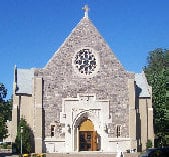 My identity as an Episcopalian stems partly from family history and partly from choice. On this Thanksgiving Eve, I am grateful for how the Episcopal Church has formed and is forming my Christian journey. I am particularly grateful for:
I am a lousy pray-er. When I set aside time to pray, I spend far too much time figuring out what to pray about/for, or what kind of prayer to focus on (thanksgivings, intercessions, confession). When I try centering prayer, I fall asleep. I’ve finally come up with a twofold strategy that works pretty well. I offer lots of short, spontaneous prayers throughout the day of the Anne Lamott “help, thanks, wow” variety, in response to whatever events or feelings come up. And for set prayer times, whether at home, at church, or in some other communal setting, I rely on words other people have already written, especially the Psalms, the Jesus prayer (“Lord Jesus, Son of God, have mercy on me, a sinner”), and the rich offerings of the Book of Common Prayer. Whether I’m confessing my sins with my congregation on a Sunday morning, using one of the daily devotions to structure my morning or evening prayer at home, or finding a suitable prayer for a specific need in the “Prayers and Thanksgivings” section in the back, I can always count on the BCP to provide authentic, beautiful prayers when I am incapable of coming up with anything on my own (which is most of the time).
A favorite scripture verse is Romans 8:26: “For we do not know what to pray for as we ought, but the Spirit himself intercedes for us with groanings too deep for words.” It is comforting to know that even when I am unable to pray, the Holy Spirit prays in me, articulating those things I cannot articulate. The Book of Common Prayer, by giving me words with which to pray, helps make audible the Spirit’s silent intercessions.
Sometimes, of course, we Episcopalians get a little too attached to our BCP, a bit uncomfortable with newfangled prayers and liturgies. The down side of having such a rich, beautiful book to guide our prayers and worship is that we become reluctant to see the value in other ways of doing things. I have occasionally penned original, informal liturgies for use during outdoor summer services, and watched as some congregants and visiting clergy have become visibly squirmy when reading words that aren’t taken straight from the BCP. But by and large, our Book of Common Prayer deserves a central place in our worshipping life, because it so often uses just the right words for the right occasion. The Church of England’s beginnings may have been a mishmash of political and religious impulses, some of them misguided, but Archbishop Cranmer’s book has stood the test of time. For me, the liturgies and prayers of the BCP are the language of home, their words reminding me week after week who I am and whose I am.
Sacrament and Liturgy
I wrote yesterday about why the sacrament of baptism is more meaningful to me than a generic infant dedication. Likewise, I have come to find other sacraments indispensable, particularly the practice of weekly Eucharist. Christianity is a religion of the tangible and the material abiding alongside the intangible and the spiritual. God came to us as a hungry, crying baby. He grew into a man who slept and ate and died a brutal death, complete with blood and thirst and pain. After the resurrection, Thomas was able to touch his wounded hands and side.
The Eucharist reminds us, week after week, of the material, corporeal nature of this world, our lives, and God’s involvement in both. The Eucharist is not a quaint custom to be done monthly, with little plastic cups of grape juice passed around that make it seem like nothing more important than preschool snack time. The Eucharist, rather, is the act of literally sinking one’s teeth into God’s lavish love and resurrection promise, an actual meal shared among the broken, beautiful people who make up the body of Christ. And it requires wine, for those who are able to drink wine. Wine is a drink for special occasions and for sharing. Grape juice is a drink for thirsty three-year-olds. A religion that recognizes the tangible nature of human life and God’s presence in it needs to get the tangible stuff right.
I am increasingly appreciative of the liturgical language and structure that are common to any Episcopal Church—or any church in the Anglican Communion, really. My husband Daniel traveled to Tanzania 12 years ago, to visit our then-church’s partner congregation in the town of Tabora. Although he did not understand much of the Swahili in which they worshipped, he could easily follow the service, because they were using the same exact liturgy we use in the U.S., just in a different language.
I also adore the special liturgies contained in the Book of Common Prayer, like Compline (the service for evening). Several Sundays throughout the year, my church hosts a Sunday evening Compline service, in a darkened church lit only by candles, with no sermon and few or no spoken prayers beyond the psalms and anthems sung by the choir. Surrounded by the gentle darkness, the warmth of mostly silent community, and the comfort of ancient hymns and scriptures, I am able to breathe in God’s peace and carry it with me into the week ahead.
“The Big Tent”
I am grateful that every week, the rector of my church finishes up the mid-service announcements by saying, “The most important thing I can tell you is that everyone is welcome to receive communion at this table,” as he points back toward the altar and the rail where we kneel to receive bread and wine. I am grateful that in the 13 years that I have been an Episcopalian (again), I have heard sermons and received pastoral council and worked alongside straight married clergy and gay married clergy and single clergy and male clergy and female clergy and clergy with kids and clergy without kids. I am grateful that being an Episcopalian means welcoming everyone, doing lots of outreach, making beautiful music, loving the words that say the right thing for the right occasion, and figuring out how to worship God and what God asks of us in the company of a beautiful variety of God’s children.
On this Thanksgiving Eve, what are you most grateful for in your spiritual life?
Next Post

November 23, 2012 I Don't Want to Be an Inspiration, I Just Want to Be Human
Browse Our Archives
Select a Category disability ethics parenthood Uncategorized
Select a Month September 2016 June 2016 May 2016 April 2016 March 2016 February 2016 January 2016 December 2015 November 2015 October 2015 September 2015 August 2015 July 2015 June 2015 May 2015 April 2015 March 2015 February 2015 January 2015 December 2014 November 2014 October 2014 September 2014 August 2014 July 2014 June 2014 May 2014 April 2014 March 2014 February 2014 January 2014 December 2013 November 2013 October 2013 September 2013 August 2013 July 2013 June 2013 May 2013 April 2013 March 2013 February 2013 January 2013 December 2012 November 2012 October 2012 September 2012 August 2012 July 2012 June 2012 May 2012 April 2012 March 2012 February 2012 January 2012 December 2011
Follow Us!
TAKE THE
Religious Wisdom Quiz
What does "Golgotha" literally mean?
Select your answer to see how you score.
Suffering ground Place of death Skull place Crucifixion hill
Related posts from Ellen Painter Dollar




Redefining "Fruitful": Is Procreation a Divine Mandate?
TRENDING AT PATHEOS Progressive Christian

Why Christians Have a Sacred Duty to Vote:...
The Bible offers strong support for the sacred duty to vote. Here...

What Being a Modern-Day Apostle Means to Me
In my last column, I discussed the ins and outs of modern-day...

Did Ancient China Once Worship the God of...
Across human history, a common thread weaves through the origins of the...

Love Your Neighbor – Including Earth-Kin: Lev. 19,...
God’s command to love your neighbor means acting in an ethical and...

Lead a Church Study of “Jesus and Lao...
Guest writer Jack Thomas (The Irreverent Reverend) reflects on leading his church...

Principles for Understanding the Apostolic Ministry Today
Whenever people discover that my formal ministry title is "apostle," as in...
view all Progressive Christian blogs
Ad-Free & Subscriber Log-In Subscription Support
- About Us
- 2026 Calendar
- Videos
- Podcasts
- Library of World Religions
- Faith In Media Tracker
- Advertise With Us
- Write for Us
- Privacy Policy
- Terms of Service
- Do Not Sell My Data
- Contact Us
- Radiant Digital
- Manage Newsletter Subscriptions
- Unsubscribe From Notifications
- Sitemap
Copyright 2008-2026, Patheos. All rights reserved.
Subscription Support Ad-Free & Subscriber Log-In
Follow Patheos