
BuddhistCatholicContemplativeEvangelicalGeneral ChristianHinduJewishLatter-day SaintMuslimNew VisionsProgressive Christian
Beliefs
- Buddhist
- Catholic
- Contemplative
- Evangelical
- General Christian
- Hindu
- Jewish
- Latter-day Saint
- More Voices
- Muslim
- New Visions
- Pagan
- Progressive Christian
Topics
- Religion News
- Food and Religion
- Sports and Religion
- Religious Art
- Religious Music and Entertainment
- Religious Events
- History and Religion
- Style and Religion
- Politics and Religion
- Women in Religion
- Recreation Outdoors and Religion
- Business Finance and Religion
- Careers Workplace and Religion
- Education and Religion
- Family Parenting and Religion
- Health Fitness and Religion
- Home and Religion
- Relationships and Religion
- Technology and Religion
- Travel and Religion
Columnists
- Buddhist Columnists
- Business Finance and Religion Columnists
- Careers Workplace and Religion Columnists
- Catholic Columnists
- Contemplative Columnists
- Education and Religion Columnists
- Evangelists Columnists
- Family Parenting and Religion Columnists
- General Christian Columnists
- Health Fitness and Religion Columnists
- Hindu Columnists
- History and Religion Columnists
- Home and Religion Columnists
- Jewish Columnists
- More Voices Columnists
- Latter Day Columnists
- Muslim Columnists
- New Visions Columnists
- Nonreligious Columnists
- Pagan Columnists
- Politics and Religion Columnists
- Progressive Columnists
- Recreation Outdoors and Religion Columnists
- Relationships and Religion Columnists
- Religion News Columnists
- Religious Art Columnists
- Religious Events Columnists
- Religious Music and Entertainment Columnists
- Sports and Religion Columnists
- Style and Religion Columnists
- Technology and Religion Columnists
- Travel and Religion Columnists
- Women in Religion Columnists
Resource Library
- 2026 Calendar
- Library of World Religions
- The 100 Most Holy Places on Earth
- Patheos Answers
- Podcasts
- Videos
- Faith Leaders Database
- Anglican Episcopalian
- Bahai
- Baptist
- Buddhism
- Christianity
- Confucianism
- Eastern Orthodoxy
- Hinduism
- Holiness and Pentecostal
- ISKCON
- Islam
- Judaism
- Lutheran
- Methodist
- The Church of Jesus Christ of Latter-day Saints
- New Age
- Paganism
- Presbytarian and Reformed
- Protestantism
- Religion Behind the Scenes
- Roman Catholic
- Scientology
- Shia Islam
- Sikhism
- Sufism
- Sunni Islam
- Taoism
- Zen
- See all religions
Research Tools
 Ad-Free & Subscriber Log-In Subscription Support
Ad-Free & Subscriber Log-In Subscription Support
Follow Patheos 

- Trending:
- Forgiveness
- |
- Marriage
- |
- Consciousness
- |
- Death Penalty
- |
- Election
- |
- Halloween
 Ellen Painter Dollar
- Home
- Progressive Christian
- This is What Love Looks Like
This is What Love Looks Like
Last updated on: May 25, 2012 at 10:36 am by Ellen Painter Dollar
This is What Love Looks Like 2012-05-25T10:36:54-04:00 Ellen Painter Dollar
Patheos Explore the world's faith through different perspectives on religion and spirituality! Patheos has the views of the prevalent religions and spiritualities of the world.
A mother, mother-in-law, aunt, grandmother, and great-grandmother dies, and we gather. We walk through Ruby’s house, running our hands along the dresser tops and counters and armchairs that witnessed her raising five children, cooking thousands of meals, going over the books for the business she built with her husband, making and receiving phone calls from the family and friends who gave her life its heft and texture. They witnessed also the far too many calls Ruby made or received sharing the worst kind of news, about a brother, a father, two sisters, a husband, and (God help us) two sons. And witnessed too her world narrowing to one favorite recliner in the TV room, her door opening to a parade of hired help who allowed her to stay as long as she could. Which was simply not long enough for her. In her last months, lived in a nursing home, she would call people to ask that they tell Jim—her late husband, my father-in-law—to please come get her. She wanted to go home.
She is home now, with Jim, and the others. And perhaps, as her minister put it so beautifully in her funeral homily, now Ruby can finally ask—and receive answers to—the questions she did not dare voice when she was alive, all of them starting with one word: “Why?”
These are the questions that plague us all, aren’t they? At least, if we are lucky enough to have people to love. Because those people get hurt and sick, they die when they shouldn’t.
Why?
My work has taken a back seat this past week, as being with our family (not to mention managing the hundreds of details that need attention when a family of five takes a last-minute 1,200-mile round trip excursion) has taken center stage. This morning, I eased myself back into my regular routine by reading an article by Stanley Hauerwas, the renowned Christian ethicist at Duke Divinity School whose endorsement of my book remains a high point (very, very high point) of my publishing journey thus far.
Hauerwas wrote an essay for an Australian news site reflecting on disability, particularly on the conundrum posed by the word “disability” itself. Too often, the word allows others to dismiss, to belittle, to overlook. Yet it also opens the door to help, support, and services that can allow people with all manner of physical, intellectual, and/or psychological limitations to survive and thrive.
I came upon this article on the Australian Broadcasting Corporation’s Religion and Ethics portal because Hauerwas included my book, my family’s story, among those he used to illustrate the tension involved in labeling disabilities—and in living with them. He asks, “How are we to rightly regard [people with disabilities] as precious creatures of God and yet wish they might not suffer from their disability?”
This remains the central tension in my own grappling with our family’s life with disability. How is it possible that I treasure my beautiful daughter just as she is, because I do, and yet also wish that she had strong bones? How is is possible that I treasure my own life, because I do, and yet also know without a doubt that, were I to have the chance to live life without these fragile bones, crooked spine, grating joints, I would gladly take it?
Hauerwas doesn’t fully unravel this tension in his essay. But he does say emphatically that we cannot begin to make sense of it without stories, stories like mine, which he holds up along with several others as examples. Here he draws on philosopher Eleonore Stump’s work on narrative and suffering:
Stump begins her account of narrative by quoting Isak Dinesen that, “All sorrows can be borne if you … tell a story about them.” Stump confesses she is not sure Dinesen’s claim is true, but Stump is sure that reflection on suffering is better with the help of a story…Crucial to Stump’s argument is the contention that there are things to be known by way of a narrative that cannot be known by more analytical modes of reasoning.
Hauerwas concludes by reflecting on my story and that of Alex Sider, who has written about his godson Martin, who has autism:
Sider is right to wish that Martin was not autistic. Dollar was right to wish her daughter had not been born with brittle bone disease. Dollar was right to rejoice that her other children did not suffer from her disease.
But let us rejoice that Sider and Martin have one another, that the Dollar family exists, for without stories like theirs we would not know what love looks like.
Well. It is hard to put into words how such an affirmation of my family’s story makes me feel, especially now, in the aftermath of burying my husband’s mother. It feels good, like someone gets it—what I was trying to do. (That the “someone” happens to be a renowned theologian is icing on the cake.) It feels hard, because Hauerwas’s essay articulates questions for which we do not have clear answers. It makes my heart hurt, because he is affirming my family as a blessing just as my family has begun life without one of its members.
But mostly it feels like Hauerwas has articulated something that is not only true of the story I tell in the book, but true of our family’s entire story (and all family stories), a story that stretches back and back, encompassing Ruby’s story and so many others, and reaches toward the as-yet-untold stories of our children as they grow into adults.
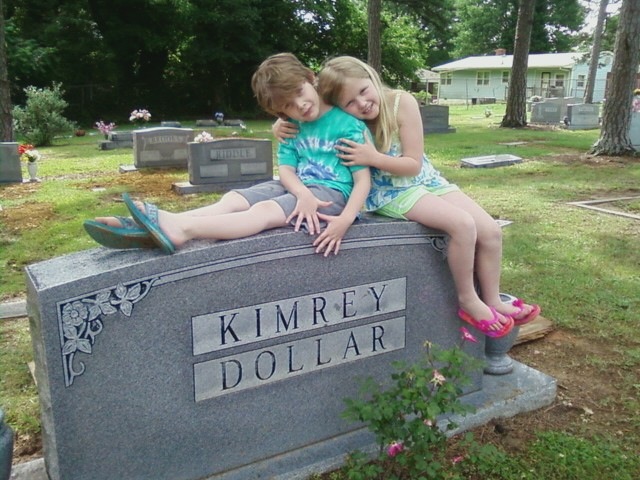
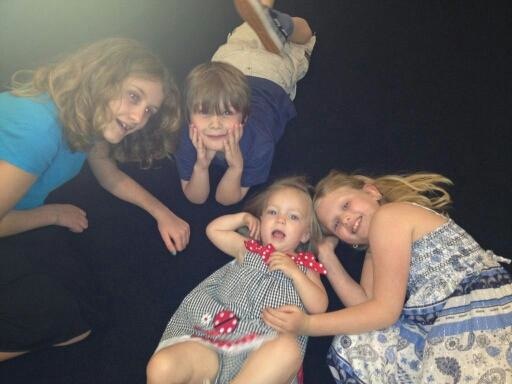
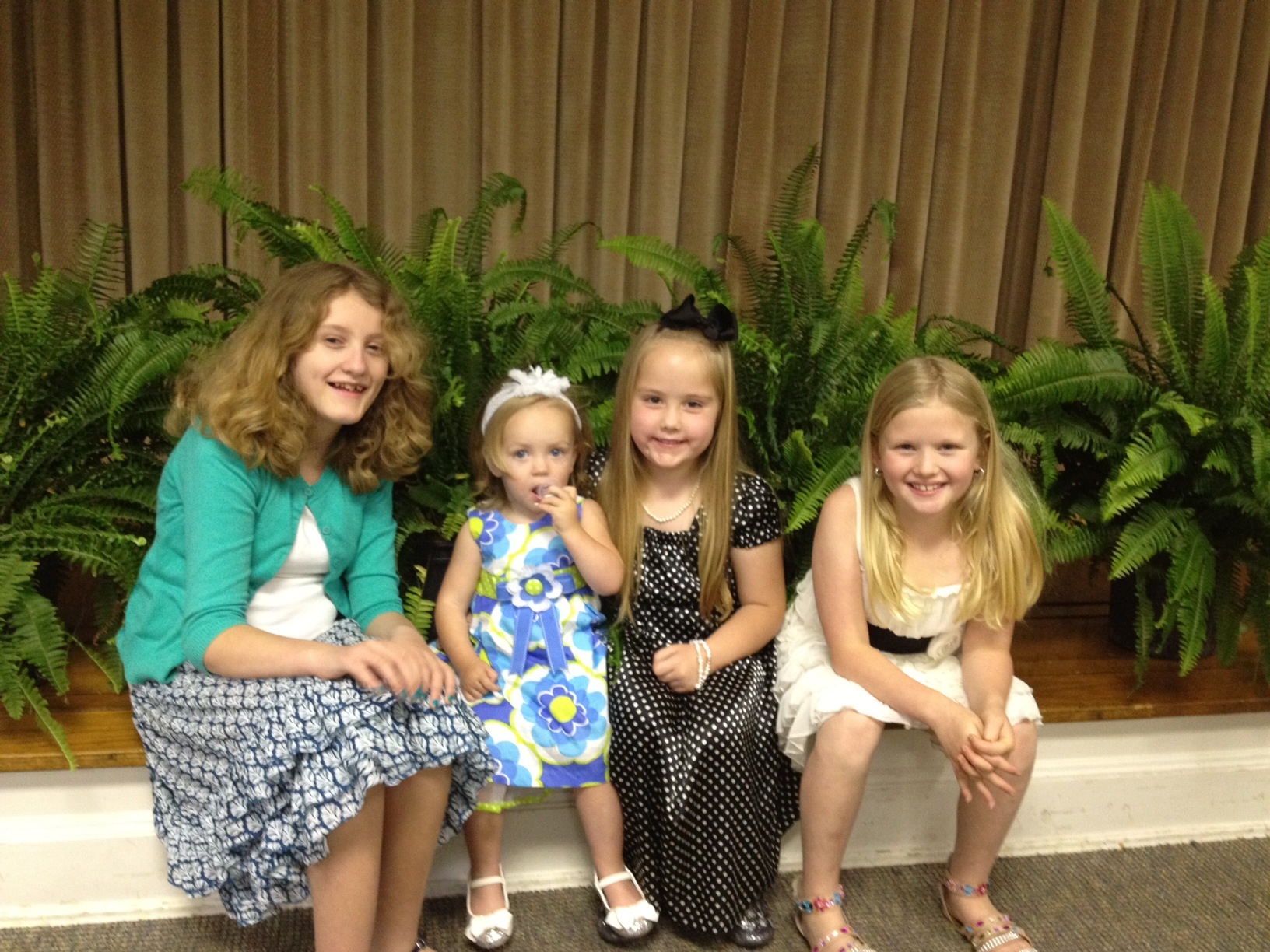
Last week, we buried a mother, mother-in-law, aunt, grandmother, and great-grandmother whose life had been full, hard, long, tragic, joyful. We gathered for a funeral, and we cried some, and we watched our children giggle with their cousins; splash in the hotel pool; gape at old photos of a glamorous young grandmother, their aunts and uncles as toddlers, and a grandfather they never got to know; get a better grasp on the family tree through a keen study of grave markers at the family burial plot; and stuff themselves with sweet tea, fried chicken, coconut cake, and Cheerwine. And so, even as we mourned and retold stories of Ruby’s long life, we were creating new stories, stories that our children may one day pull out to tell their own children.
We are right to wish that Ruby was still sitting in that favorite recliner, making and receiving phone calls, planning where to go out to lunch, and fussing over whether her church committee members would make sure there were sufficient paper products on hand for a funeral lunch. We are right to wish that, in her 88 years of life, she didn’t have to know how it feels to receive the worst of news far, far more times than any one person should have to do so.
But let us rejoice she had us, we had her, and that her remaining children, children-in-law, nieces and nephews, grandchildren, and great-grandchild have one another, for without stories like hers, like ours, we would not know what love looks like.
Previous Post

May 16, 2012
Goodbye to Ruby
Browse Our Archives
Select a Category disability ethics parenthood Uncategorized
Select a Month September 2016 June 2016 May 2016 April 2016 March 2016 February 2016 January 2016 December 2015 November 2015 October 2015 September 2015 August 2015 July 2015 June 2015 May 2015 April 2015 March 2015 February 2015 January 2015 December 2014 November 2014 October 2014 September 2014 August 2014 July 2014 June 2014 May 2014 April 2014 March 2014 February 2014 January 2014 December 2013 November 2013 October 2013 September 2013 August 2013 July 2013 June 2013 May 2013 April 2013 March 2013 February 2013 January 2013 December 2012 November 2012 October 2012 September 2012 August 2012 July 2012 June 2012 May 2012 April 2012 March 2012 February 2012 January 2012 December 2011
Follow Us!
TAKE THE
Religious Wisdom Quiz
What does 2 John emphasize believers should walk in?
Select your answer to see how you score.
Love and truth Fear and wisdom Knowledge and power Faith and law
Related posts from Ellen Painter Dollar


A Mother's Call to Care for Other People's...

Lenten Compline for the Weary Parent

Please Don't Post a Photo of Your Kid's...
TRENDING AT PATHEOS Progressive Christian

What Being a Modern-Day Apostle Means to Me
In my last column, I discussed the ins and outs of modern-day...

Did Ancient China Once Worship the God of...
Across human history, a common thread weaves through the origins of the...

Love Your Neighbor – Including Earth-Kin: Lev. 19,...
God’s command to love your neighbor means acting in an ethical and...

Lead a Church Study of “Jesus and Lao...
Guest writer Jack Thomas (The Irreverent Reverend) reflects on leading his church...

Pastoral Wisdom for Responding to Sermon Pushback
Getting sermon pushback on your social justice sermon? Learn practical, Proverbs-based strategies...

Principles for Understanding the Apostolic Ministry Today
Whenever people discover that my formal ministry title is "apostle," as in...
view all Progressive Christian blogs
Ad-Free & Subscriber Log-In Subscription Support
- About Us
- 2026 Calendar
- Videos
- Podcasts
- Library of World Religions
- Faith In Media Tracker
- Advertise With Us
- Write for Us
- Privacy Policy
- Terms of Service
- Do Not Sell My Data
- Contact Us
- Radiant Digital
- Manage Newsletter Subscriptions
- Unsubscribe From Notifications
- Sitemap
Copyright 2008-2026, Patheos. All rights reserved.
Subscription Support Ad-Free & Subscriber Log-In
Follow Patheos