
BuddhistCatholicContemplativeEvangelicalGeneral ChristianHinduJewishLatter-day SaintMuslimNew VisionsProgressive Christian
Beliefs
- Buddhist
- Catholic
- Contemplative
- Evangelical
- General Christian
- Hindu
- Jewish
- Latter-day Saint
- More Voices
- Muslim
- New Visions
- Pagan
- Progressive Christian
Topics
- Religion News
- Food and Religion
- Sports and Religion
- Religious Art
- Religious Music and Entertainment
- Religious Events
- History and Religion
- Style and Religion
- Politics and Religion
- Women in Religion
- Recreation Outdoors and Religion
- Business Finance and Religion
- Careers Workplace and Religion
- Education and Religion
- Family Parenting and Religion
- Health Fitness and Religion
- Home and Religion
- Relationships and Religion
- Technology and Religion
- Travel and Religion
Columnists
- Buddhist Columnists
- Business Finance and Religion Columnists
- Careers Workplace and Religion Columnists
- Catholic Columnists
- Contemplative Columnists
- Education and Religion Columnists
- Evangelists Columnists
- Family Parenting and Religion Columnists
- General Christian Columnists
- Health Fitness and Religion Columnists
- Hindu Columnists
- History and Religion Columnists
- Home and Religion Columnists
- Jewish Columnists
- More Voices Columnists
- Latter Day Columnists
- Muslim Columnists
- New Visions Columnists
- Nonreligious Columnists
- Pagan Columnists
- Politics and Religion Columnists
- Progressive Columnists
- Recreation Outdoors and Religion Columnists
- Relationships and Religion Columnists
- Religion News Columnists
- Religious Art Columnists
- Religious Events Columnists
- Religious Music and Entertainment Columnists
- Sports and Religion Columnists
- Style and Religion Columnists
- Technology and Religion Columnists
- Travel and Religion Columnists
- Women in Religion Columnists
Resource Library
- 2026 Calendar
- Library of World Religions
- The 100 Most Holy Places on Earth
- Patheos Answers
- Podcasts
- Videos
- Faith Leaders Database
- Anglican Episcopalian
- Bahai
- Baptist
- Buddhism
- Christianity
- Confucianism
- Eastern Orthodoxy
- Hinduism
- Holiness and Pentecostal
- ISKCON
- Islam
- Judaism
- Lutheran
- Methodist
- The Church of Jesus Christ of Latter-day Saints
- New Age
- Paganism
- Presbytarian and Reformed
- Protestantism
- Religion Behind the Scenes
- Roman Catholic
- Scientology
- Shia Islam
- Sikhism
- Sufism
- Sunni Islam
- Taoism
- Zen
- See all religions
Research Tools
 Ad-Free & Subscriber Log-In Subscription Support
Ad-Free & Subscriber Log-In Subscription Support
Follow Patheos 

- Trending:
- Forgiveness
- |
- Marriage
- |
- Consciousness
- |
- Death Penalty
- |
- Election
- |
- Halloween
 Ellen Painter Dollar
- Home
- Progressive Christian
- Christians: Let’s Get Real About Suffering
Christians: Let’s Get Real About Suffering
Last updated on: February 1, 2012 at 4:00 am by Ellen Painter Dollar
Christians: Let’s Get Real About Suffering 2012-01-31T09:53:38-05:00 Ellen Painter Dollar
Patheos Explore the world's faith through different perspectives on religion and spirituality! Patheos has the views of the prevalent religions and spiritualities of the world.
 My post last week on why prenatal screening for disabilities is motivated by different impulses than prenatal screening for gender led to a lot of heated but helpful discussion. One commenter was troubled by my empathy for parents who, motivated by a desire to spare their child great suffering, terminate a pregnancy after learning that their child has a disability. He felt that I was using a typical “eugenics” argument to justify the devaluing, perhaps even the eventual extinction, of people with disabilities. We went back and forth, on the blog and via e-mail. While we still don’t see eye to eye, we’ve also learned from each other. He is even writing a guest post for me, so stay tuned.
But I’d like to write again about suffering, because I think how Christians perceive and respond to suffering is a huge component of how we respond to disabilities and medical technologies designed to address them.
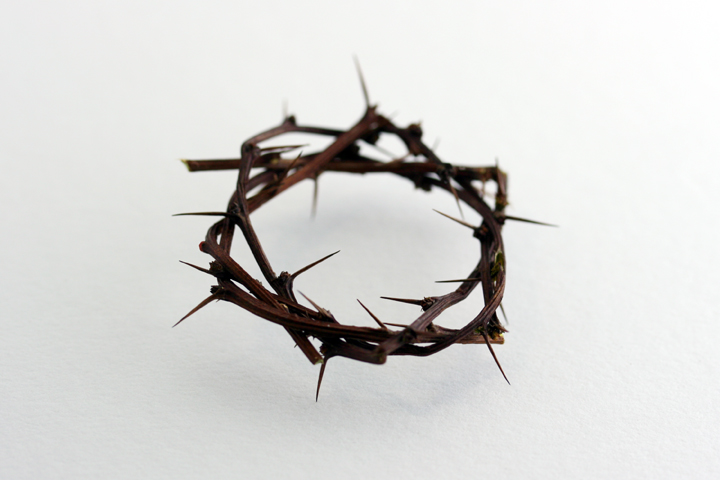
As Christians, we believe that life is worth living and that human lives are valuable, even if they involve suffering. We even believe that suffering can become a means of grace. Through Christ’s suffering on the cross, we are reconciled with God. Through our own suffering, we can be transformed in life-giving ways.
But Christians too often gloss over the harsh realities of suffering to get to the transformation part. We want to rush right past the cries of agony to get to the grace. This tendency is obvious in all those terrible cliches that Christians pull out of our hats when responding to someone’s pain, fear, and grief: “It’s God’s will.” “God won’t give you more than you can handle.” “Everything happens for a reason.”
Nonsense. This is bad theology. It is even worse pastoral care.
The following is an excerpt from my recently released book, No Easy Choice: A Story of Disability, Parenthood, and Faith in an Age of Advanced Reproduction. I hope it sheds a bit more light on how I approach suffering in general, and specifically as it occurs with disabilities and genetic disorders:
In responding to the devastating Asian tsunami on December 26, 2004, Eastern Orthodox theologian David B. Hart argues against any attempt to rationalize, ascribe meaning to, or trumpet God’s intent in human suffering: “Ours is, after all, a religion of salvation; our faith is in a God who has come to rescue His creation from the absurdity of sin and the emptiness of death, and so we are permitted to hate these things with a perfect hatred.” Hart calls attempts to justify human misery on grounds that our suffering is necessary to reveal God’s true nature “immeasurably . . . vile”; he goes on to ask which attributes of God the tragic deaths of children (and I would add, the painful disabilities of children) are meant to reveal: “Capricious cruelty, perhaps? Morbid indifference? A twisted sense of humor?” A thousand ancient knots in my chest undid themselves the moment I read this sentence: “Simply said, there is no more liberating knowledge given us by the gospel—and none in which we should find more comfort—than the knowledge that suffering and death, considered in themselves, have no ultimate meaning at all.”
I have come to believe that illness, disability, and disease are neither fundamentally good things disguised as bad (thus not the intentional work of a loving God who works in mysterious ways) nor value-neutral manifestations of human diversity. I view suffering as a characteristic of life in a fallen world; illness, disability, and disease are, quite simply, the result of life in a world that does not work as God intended. I believe they are bad things and that we are allowed to name them as bad things. This does not mean, however, that we have license to try to fix what is wrong at all costs, or that we can’t learn valuable lessons, find meaning, and come to know God and ourselves better as a result of suffering. There is a huge difference between saying that my bone disorder was intended to reveal God’s truth or teach me something I need to know, and saying that my bone disorder ended up revealing God’s truth or teaching me something I need to know. While I refuse to ascribe God’s intent to disability, disease, and suffering, I acknowledge that they often provide life-changing opportunities for growth.
I’ve been pondering Christian responses to suffering in part because of the dialogue inspired by last week’s post on prenatal screening. But I also came across several posts by theologian Ben Witherington as he reacts to his 32-year-old daughter’s sudden death from a pulmonary embolism a few weeks ago. In the first post in this series, titled Good Grief, Witherington writes:
The first point that was immediately confirmed in my heart was theological: God did not do this to my baby. God is not the author of evil. God does not terminate sweet children’s lives with pulmonary embolisms. Pulmonary embolisms are a result of human fallenness and the bent nature of this world…“He came that we might have life and have abundantly.” If there are promises I cling to, as I weep for my sweet Christy, it is this promise, not the sorry solace and cold comfort of “God did this but we do not know why.” No. A thousand times, no! God and his will are always and only for what is good, and true, and beautiful, and loving, and holy.
This post includes an interesting look at the line in Job, “the lord gives and the lord takes away.” Witherington asserts that this view does not come from God, but from Satan. Go read this post, and the others in Witherington’s Good Grief series. When it comes to Christian responses to suffering, he’s got it right. And that he has written something so clear and moving in the immediate aftermath of searing grief is something of a miracle.
Previous Post

January 31, 2012
Where Imperfect Bodies Reign
Next Post
February 2, 2012 How a Diagnosis Can Both Help and Hurt
Browse Our Archives
Select a Category disability ethics parenthood Uncategorized
Select a Month September 2016 June 2016 May 2016 April 2016 March 2016 February 2016 January 2016 December 2015 November 2015 October 2015 September 2015 August 2015 July 2015 June 2015 May 2015 April 2015 March 2015 February 2015 January 2015 December 2014 November 2014 October 2014 September 2014 August 2014 July 2014 June 2014 May 2014 April 2014 March 2014 February 2014 January 2014 December 2013 November 2013 October 2013 September 2013 August 2013 July 2013 June 2013 May 2013 April 2013 March 2013 February 2013 January 2013 December 2012 November 2012 October 2012 September 2012 August 2012 July 2012 June 2012 May 2012 April 2012 March 2012 February 2012 January 2012 December 2011
Follow Us!
TAKE THE
Religious Wisdom Quiz
What does 2 John emphasize believers should walk in?
Select your answer to see how you score.
Love and truth Fear and wisdom Knowledge and power Faith and law
Related posts from Ellen Painter Dollar

Disability as the Last Acceptable Prejudice: A Farewell...

The Three Worst Stories That "Me Before You"...

Prince, Chronic Pain, Opioids & Why Dependence is...

TRENDING AT PATHEOS Progressive Christian

What Being a Modern-Day Apostle Means to Me
In my last column, I discussed the ins and outs of modern-day...

Did Ancient China Once Worship the God of...
Across human history, a common thread weaves through the origins of the...

Love Your Neighbor – Including Earth-Kin: Lev. 19,...
God’s command to love your neighbor means acting in an ethical and...

Lead a Church Study of “Jesus and Lao...
Guest writer Jack Thomas (The Irreverent Reverend) reflects on leading his church...

Pastoral Wisdom for Responding to Sermon Pushback
Getting sermon pushback on your social justice sermon? Learn practical, Proverbs-based strategies...

Principles for Understanding the Apostolic Ministry Today
Whenever people discover that my formal ministry title is "apostle," as in...
view all Progressive Christian blogs
Ad-Free & Subscriber Log-In Subscription Support
- About Us
- 2026 Calendar
- Videos
- Podcasts
- Library of World Religions
- Faith In Media Tracker
- Advertise With Us
- Write for Us
- Privacy Policy
- Terms of Service
- Do Not Sell My Data
- Contact Us
- Radiant Digital
- Manage Newsletter Subscriptions
- Unsubscribe From Notifications
- Sitemap
Copyright 2008-2026, Patheos. All rights reserved.
Subscription Support Ad-Free & Subscriber Log-In
Follow Patheos