
BuddhistCatholicContemplativeEvangelicalGeneral ChristianHinduJewishLatter-day SaintMuslimNew VisionsProgressive Christian
Beliefs
- Buddhist
- Catholic
- Contemplative
- Evangelical
- General Christian
- Hindu
- Jewish
- Latter-day Saint
- More Voices
- Muslim
- New Visions
- Pagan
- Progressive Christian
Topics
- Religion News
- Food and Religion
- Sports and Religion
- Religious Art
- Religious Music and Entertainment
- Religious Events
- History and Religion
- Style and Religion
- Politics and Religion
- Women in Religion
- Recreation Outdoors and Religion
- Business Finance and Religion
- Careers Workplace and Religion
- Education and Religion
- Family Parenting and Religion
- Health Fitness and Religion
- Home and Religion
- Relationships and Religion
- Technology and Religion
- Travel and Religion
Columnists
- Buddhist Columnists
- Business Finance and Religion Columnists
- Careers Workplace and Religion Columnists
- Catholic Columnists
- Contemplative Columnists
- Education and Religion Columnists
- Evangelists Columnists
- Family Parenting and Religion Columnists
- General Christian Columnists
- Health Fitness and Religion Columnists
- Hindu Columnists
- History and Religion Columnists
- Home and Religion Columnists
- Jewish Columnists
- More Voices Columnists
- Latter Day Columnists
- Muslim Columnists
- New Visions Columnists
- Nonreligious Columnists
- Pagan Columnists
- Politics and Religion Columnists
- Progressive Columnists
- Recreation Outdoors and Religion Columnists
- Relationships and Religion Columnists
- Religion News Columnists
- Religious Art Columnists
- Religious Events Columnists
- Religious Music and Entertainment Columnists
- Sports and Religion Columnists
- Style and Religion Columnists
- Technology and Religion Columnists
- Travel and Religion Columnists
- Women in Religion Columnists
Resource Library
- 2026 Calendar
- Library of World Religions
- The 100 Most Holy Places on Earth
- Patheos Answers
- Podcasts
- Videos
- Faith Leaders Database
- Anglican Episcopalian
- Bahai
- Baptist
- Buddhism
- Christianity
- Confucianism
- Eastern Orthodoxy
- Hinduism
- Holiness and Pentecostal
- ISKCON
- Islam
- Judaism
- Lutheran
- Methodist
- The Church of Jesus Christ of Latter-day Saints
- New Age
- Paganism
- Presbytarian and Reformed
- Protestantism
- Religion Behind the Scenes
- Roman Catholic
- Scientology
- Shia Islam
- Sikhism
- Sufism
- Sunni Islam
- Taoism
- Zen
- See all religions
Research Tools
 Ad-Free & Subscriber Log-In Subscription Support
Ad-Free & Subscriber Log-In Subscription Support
Follow Patheos 

- Trending:
- Forgiveness
- |
- Marriage
- |
- Consciousness
- |
- Death Penalty
- |
- Election
- |
- Halloween
 Letters from the Edge of Elfland
- Home
- About
- Distributist Resources
- Publications and Presentations
- Support
- Works in Progress
- The Epistolarian Around the Web
- Home
- Catholic
- Catholic School Removes Harry Potter from New Library
Catholic School Removes Harry Potter from New Library
Last updated on: September 2, 2019 at 10:36 am by David Russell Mosley
Catholic School Removes Harry Potter from New Library 2019-09-02T10:36:55-04:00 David Russell Mosley
Patheos Explore the world's faith through different perspectives on religion and spirituality! Patheos has the views of the prevalent religions and spiritualities of the world.
Ordinary Time
2 September 2019
The Edge of Elfland
Concord, New Hampshire
Dearest Readers,
By now, you’ve likely seen the news that St. Edward Catholic School in Nashville, TN (a pre-K through 8th grade school) has removed the Harry Potter Series from their new library building. Thanks to reporting at the Tennessean, we know that the email sent to parents contained the following:
“These books present magic as both good and evil, which is not true, but in fact a clever deception. The curses and spells used in the books are actual curses and spells; which when read by a human being risk conjuring evil spirits into the presence of the person reading the text.”
I really can’t believe it is 12 years since the last book was published and we’re still having this debate. Even stranger is that I sit here writing about on the anniversary of J.R.R. Tolkien’s death. Tolkien, who was clearly so important to Rowling, must be shaking his head, though with a hint of laughter I’m guessing, at how this school, and so many other Christians the world over, are reacting to Harry Potter.
Some might note that Tolkien actually uses little magic in his books, particularly in The Hobbit and The Lord of the Rings. Slightly deeper readers might point out that primarily only wizards and elves do magic. Slightly deeper readers still might point out that wizards are actually angels (sort of) and so that’s why they can do magic. Of course, what these readers seem to forget is that all of this knowledge came out only after Tolkien’s death. When The Hobbit was published, Gandalf was clearly just an old man who could do magic. Even in The Lord of the Rings, Gandalf isn’t clearly a maia. That word would have had no meaning to any of Tolkien’s readers outside of C.S. Lewis, his family, and possibly other members of the Inklings. So to everyone else, when Gandalf talks of knowing spells, these are magical incantations relying on magic words to have real world effects.
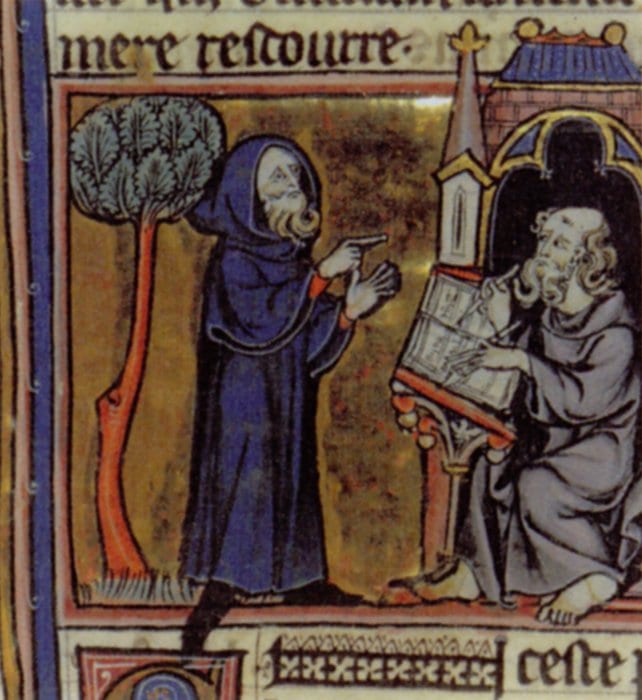
So why do some people react so strongly to Harry Potter? Why do we give C.S. Lewis or J.R.R. Tolkien a pass, but not Rowling? Some have said it is because Lewis and Tolkien are Christians. But so is Rowling. Some have said it is because Rowling’s works take place in the real world, not some mythological or fantasy world. But even this does not pass muster. Tolkien is quite clear that Middle-earth is our planet a very long time ago. And while The Silmarillion certainly reads like mythology, the majority of The Lord of the Rings does not. And yes, for Lewis “our world” was a place without magic. This is why Jadis could not perform her magic when she came here. But Merlin could. Merlin didn’t, Ransom stops him, suggesting it would no longer be right to do the kinds of magic Merlin once did, but it was possible, and Merlin did do a different kind of magic. So why the hatred of Harry Potter?
Ultimately, I believe the answer may lie, in part, in lies. People believe the lies or ignorance of others. As you can see in the quotation from the email, the pastor of St. Edwards believes the spells in Harry Potter, “are actual curses and spells.” I actually find this line quite funny when left unexplained (which it is). What does he mean they are actual curses and spells? Does he mean they are effectual? Could I, under the right conditions, shout rictusempra and cause my opponent to double up with laughter? Or is the suggestion that the spell is effective, but not to the end suggested in the book? In other words, would shouting rictusempra cause some other mouth always open (rictus meaning mouth in Latin, and sempra deriving from semper which means always) or would have some other effect, completely disconnected from the Latin roots of the words? Clearly, this pastor doesn’t know what the words for the spells are, or if he does, he doesn’t know Latin well enough to recognize it when he sees it. Clearly, someone out there is either lying or ignorant and are spreading it around. Some have even said that “exorcists” have said Harry Potter leads to possession. While I fully believe in the reality of demons (and angels and other things), I have come to the point where I am immediately sceptical anytime someone mentions something said by an exorcist. These stories nearly always come without citation, without the ability to check the credibility of the source. And the few times I have seen sources, it was the demons themselves who said something. And as we know, demons, the proverbial children of the Father of Lies, always tell the truth. (I strongly recommend Scott Eric Alt’s post on this subject as it relates to Taylor Marshall and Infiltration).
The other side of this has to do with the meaning of words. We have long associated magic and witchcraft with things the Bible and the Church condemns. But the problem is the etymologies are confusing here. First, it is clear in Scripture that one of the main things being condemned is any attempt to tell the future. This is completely condemned. Now, you might point out that divination (fortune telling) is a class taught at Hogwarts. Of course, everyone, including the headmaster, disbelieves in the subject as practiced by Professor Trewlaney. She’s allowed to teach because she has made accurate prophecies, which she cannot remember and in no way involved any magical practices. She simply forthtold as some kind of natural reaction. Jeremiah describes his own prophecy in a similar way. Even when Trewlaney is sacked by Umbridge, she is replaced by Firenze the centaur. His version of “divination” is to read the stars and planets. But the astrology involved there is not particular. It isn’t about discerning what will happen to me next Tuesday, but what direction the world is tending toward, things like war in a general sense are “predicted” but not their precise moments. In fact, one could argue that this version of astrology has more to do with taking the temperature of the world as it is right now, not, exactly, foretelling events to unfold, certainly not with any specificity.
But again, what about these words, magic, spell, witchcraft? Well, we will certainly have to throwout Lewis and Tolkien (and many others) if we want to throw out the words spell and magic. But again, we should look to what is meant by these words. For Rowling as for Lewis and Tolkien magic seems to mean a kind of way of working with or around nature. Wizards use magic in the way muggles use technology. What it isn’t, within the confines of the world Rowling has created, is communication with spirits, whether departed humans or demons. These things are condemned explicitly by Scripture. The Witch of Endor conjures Samuel, a forbidden act, and rightly so. Faust conjures the devil to help him do magic, again, a forbidden act and rightly so. But this is not how magic works in Harry Potter. Rather, the witch or wizard has a kind of power completely absent in ordinary humans. And it is by this power or talent that they practice their art. If you or I were zapped into the world of Harry Potter and yet remained “muggles” we could pick up a magic wand and do precisely nothing.
And even the words witch and witchcraft need to be explored. The word witch itself may have roots in words for knowledge or wisdom. Whereas the word we translate as witch or witchcraft from Scripture is the source for our words pharmacology and pharmacy. In other words, the brewing of potions to overcome the life or will of another. And this is not, primarily, the use of them in Harry Potter, and when it is, it is a bad thing. Clearly, neither evil pharmacology nor augury nor necromancy are the primary ways we are meant to understand the words witch or wizard.
You see, I think many people have heard the stories about exorcists claiming Harry Potter has caused kids to become possessed (and kind of harkening back to the Satanic Panic of the 80s where everything from rock music to Dungeons and Dragons and The Lord of the Rings was claimed to cause evil spirits to enter the youth of America) and added that to their misunderstanding of how the words witch and wizard are employed by Rowling and have come to the conclusion that no child should ever be allowed to read them. Yet these are stories about a child who learns obedience and humility, despite being important, and ultimately comes to sacrifice his life for others, which results not only is his own death being undone, but also stops his friends from dying when attacked by death incarnate who is ultimately overcome by death. The books are not perfect. Nor is Ms. Rowling. But a child intentionally deprived of them, a child told they are not to read them lives in a darker world.
Sincerely,
David Russell Mosley
For more posts on Harry Potter by yours truly, please see:
In Defence of Harry Potter, Or Harry Potter and the Magic of Christianity
The Sacramental Imagination of Harry Potter
Overcoming Evil with the Common and the Ordinary: Reflections on Harry Potter and G.K. Chesterton
The Scene from Harry Potter and the Half-Blood Prince that always Makes Me Cry
Meandering Reflections on and Questions about the Harry Potter Series

Browse Our Archives
Select a Category A Secular Age Advent Apologetics Atheism Beauty Being a Catholic Evangelical Being Catholic Being Deified: Poetry and Fantasy on the Path to God Blogging Book Reviews C. S. Lewis Catholic Imagination Catholic Social Teaching Catholicism Christmas Church Calendar Church Fathers Church Life Community Conferences Cosmology Creation Curdled Words Deification Distributism Easter Economics Education Epiphany Essay Extracts Eucharist Faerie Faeriean Metaphysics Fatherhood Films Folk Liturgy Food and Drink G. K. Chesterton Harry Potter J. R. R. Tolkien Jove King Arthur Language Lent Life Literature and Poetry Liturgy Medieval Theology Music My Publications Mythology On the Edges of Elfland Ordinary Time Ordination Parenthood Parish Patristic Theology Pentecost Politics Prayer Racism Radical Orthodoxy Restoration Movement Sacramental Ontology Saints Science Sex and Sexuality Sophiology Stories The Inklings The Radical Catholic Reimagination of Everything Theologians in the Church Theopoetics Thesis Research Uncategorized University of Nottingham What I'm Reading Writing
Select a Month December 2019 November 2019 October 2019 September 2019 August 2019 July 2019 June 2019 May 2019 April 2019 March 2019 February 2019 January 2019 December 2018 November 2018 October 2018 September 2018 August 2018 July 2018 June 2018 May 2018 April 2018 March 2018 February 2018 January 2018 December 2017 November 2017 October 2017 August 2017 July 2017 June 2017 May 2017 April 2017 March 2017 February 2017 January 2017 December 2016 November 2016 October 2016 September 2016 August 2016 July 2016 June 2016 May 2016 April 2016 March 2016 February 2016 January 2016 December 2015 November 2015 October 2015 September 2015 August 2015 July 2015 June 2015 May 2015 April 2015 March 2015 February 2015 January 2015 December 2014 November 2014 October 2014 September 2014 August 2014 July 2014 June 2014 May 2014 April 2014 March 2014 February 2014 January 2014 December 2013 November 2013 October 2013 September 2013 August 2013 July 2013 June 2013 May 2013 April 2013 March 2013 February 2013 January 2013 December 2012 November 2012 October 2012 September 2012 July 2012
Follow Us!
TAKE THE
Religious Wisdom Quiz
How old was Abraham when he died?
Select your answer to see how you score.
175 years 200 years 125 years 150 years
Related posts from Letters from the Edge of Elfland

Day 1 of the Catholic Imagination Conference: Exhaustion...
Letters from the Edge of Elfland
Harry Potter, Demons, and Exorcists: A Follow Up...
Letters from the Edge of Elfland
Get Him to the Catholic Imagination Conference
Letters from the Edge of Elfland
Can You Imagine? Beginning a Definition of the...
Letters from the Edge of Elfland
TRENDING AT PATHEOS Catholic

Rejecting Doom: Christian Hope And Human Action
Christianity is a religion of hope. We are to have hope and...

It’s What Comes From Within Which Matters
One of the most difficult things for us to understand is why...

Why I Choose the Eucharist Over the Sermon
Choose the Eucharist, Not the Sermon What are we supposed to get...

5 Design Elements Found in Spiritually Rooted Homes
Putting Spirituality Into Home Decor Our homes are more than our living...

Credo: A Story of God Told with the...
About 10 years ago, I began to imagine a personal "Credo" that...

The Anatomy of Divine Revelation in Catholic Thought
The claim that God has made Himself known to human beings is...
view all Catholic blogs
Ad-Free & Subscriber Log-In Subscription Support
- About Us
- 2026 Calendar
- Videos
- Podcasts
- Library of World Religions
- Faith In Media Tracker
- Advertise With Us
- Write for Us
- Privacy Policy
- Terms of Service
- Do Not Sell My Data
- Contact Us
- Radiant Digital
- Manage Newsletter Subscriptions
- Unsubscribe From Notifications
- Sitemap
Copyright 2008-2026, Patheos. All rights reserved.
Subscription Support Ad-Free & Subscriber Log-In
Follow Patheos