
BuddhistCatholicContemplativeEvangelicalGeneral ChristianHinduJewishLatter-day SaintMuslimNew VisionsProgressive Christian
Beliefs
- Buddhist
- Catholic
- Contemplative
- Evangelical
- General Christian
- Hindu
- Jewish
- Latter-day Saint
- More Voices
- Muslim
- New Visions
- Pagan
- Progressive Christian
Topics
- Religion News
- Food and Religion
- Sports and Religion
- Religious Art
- Religious Music and Entertainment
- Religious Events
- History and Religion
- Style and Religion
- Politics and Religion
- Women in Religion
- Recreation Outdoors and Religion
- Business Finance and Religion
- Careers Workplace and Religion
- Education and Religion
- Family Parenting and Religion
- Health Fitness and Religion
- Home and Religion
- Relationships and Religion
- Technology and Religion
- Travel and Religion
Columnists
- Buddhist Columnists
- Business Finance and Religion Columnists
- Careers Workplace and Religion Columnists
- Catholic Columnists
- Contemplative Columnists
- Education and Religion Columnists
- Evangelists Columnists
- Family Parenting and Religion Columnists
- General Christian Columnists
- Health Fitness and Religion Columnists
- Hindu Columnists
- History and Religion Columnists
- Home and Religion Columnists
- Jewish Columnists
- More Voices Columnists
- Latter Day Columnists
- Muslim Columnists
- New Visions Columnists
- Nonreligious Columnists
- Pagan Columnists
- Politics and Religion Columnists
- Progressive Columnists
- Recreation Outdoors and Religion Columnists
- Relationships and Religion Columnists
- Religion News Columnists
- Religious Art Columnists
- Religious Events Columnists
- Religious Music and Entertainment Columnists
- Sports and Religion Columnists
- Style and Religion Columnists
- Technology and Religion Columnists
- Travel and Religion Columnists
- Women in Religion Columnists
Resource Library
- 2026 Calendar
- Library of World Religions
- The 100 Most Holy Places on Earth
- Patheos Answers
- Podcasts
- Videos
- Faith Leaders Database
- Anglican Episcopalian
- Bahai
- Baptist
- Buddhism
- Christianity
- Confucianism
- Eastern Orthodoxy
- Hinduism
- Holiness and Pentecostal
- ISKCON
- Islam
- Judaism
- Lutheran
- Methodist
- The Church of Jesus Christ of Latter-day Saints
- New Age
- Paganism
- Presbytarian and Reformed
- Protestantism
- Religion Behind the Scenes
- Roman Catholic
- Scientology
- Shia Islam
- Sikhism
- Sufism
- Sunni Islam
- Taoism
- Zen
- See all religions
Research Tools
 Ad-Free & Subscriber Log-In Subscription Support
Ad-Free & Subscriber Log-In Subscription Support
Follow Patheos 

- Trending:
- Forgiveness
- |
- Marriage
- |
- Consciousness
- |
- Death Penalty
- |
- Election
- |
- Halloween
 Letters from the Edge of Elfland
- Home
- About
- Distributist Resources
- Publications and Presentations
- Support
- Works in Progress
- The Epistolarian Around the Web
- Home
- Catholic
- William Blake on the Creative Spirit, Beauty, and Imagination: A Response to Brain Pickings
William Blake on the Creative Spirit, Beauty, and Imagination: A Response to Brain Pickings
Last updated on: August 25, 2019 at 4:32 pm by David Russell Mosley
William Blake on the Creative Spirit, Beauty, and Imagination: A Response to Brain Pickings 2019-08-25T16:32:02-04:00 David Russell Mosley
Patheos Explore the world's faith through different perspectives on religion and spirituality! Patheos has the views of the prevalent religions and spiritualities of the world.
Ordinary Time 21st Sunday in Ordinary Time The Edge of Elfland Concord, New Hampshire

Night Startled by the Lark, Watercolor Illustration to Milton’s L’Allegro and Il Penseroso by William Blake PD
Dearest Readers,
A few days ago, the ever excellent Brain Pickings, run by Maria Popova, posted an article about William Blake. The article, written by Ms. Popova, was titled, ”William Blake’s Most Beautiful Letter: A Searing Defense of the Imagination and the Creative Spirit,” and looked closely at a set of letters Blake wrote after being commissioned, through his friend George Cumberland, to paint pictures concerning the themes of malevolence, benevolence, etc for a certain Rev. Dr. John Trusler. The article is an excellent one. Blake is someone I’m only just beginning to learn more about thanks in large part to Michael Martin (whose most recent book Transfiguration I reviewed here) and Malcolm Guite. But I do have two bones to pick with the article, particularly after having read the three letters myself. They are the articles failure to attend to Blake’s meaning concerning the creative spirit and a misunderstanding concerning Blake’s conception of beauty and sight.
The problem between Trusler and Blake concerned style. Trusler, evidently, wanted paintings more in a caricature style and while Blake initially agreed to these terms, he found he must obey another impulse. Here, Ms. Popova quotes two parts of the letter:
I find more & more that my style of designing is a species by itself, and in this which I send you have been compelled by my Genius or Angel to follow where he led; if I were to act otherwise it would not fulfill the purpose for which alone I live, which is … to renew the lost art of the Greeks.
I attempted every morning for a fortnight together to follow your dictate, but when I found my attempts were in vain, resolved to show an independence which I know will please an author better than slavishly following the track of another, however admirable that track may be. At any rate, my excuse must be: I could not do otherwise; it was out of my power!
I know I begged of you to give me your ideas and promised to build on them; here I counted without my host. I now find my mistake.
And then she quotes him saying
[I] cannot previously describe in words what I mean to design, for fear I should evaporate the spirit of my invention… And tho’ I call them mine, I know that they are not mine, being of the same opinion with Milton when he says that the Muse visits his slumbers and awakes and governs his song when morn purples the East, and being also in the predicament of that prophet who says: “I cannot go beyond the command of the Lord, to speak good or bad.”
The problem lies in Ms. Popova seemingly taking these references to the Muse, the the Genius, and the Angel to be more metaphorical. In her defense, she never says this outright, but nor does she make much of what is truly astonishing. Blake is here claiming that he is directed by outside forces, by God himself through the agent of one of his angels. This is not some creative spirit in the abstract, or the individual imagination of a solitary artist. No, this is much more like Coleridge’s claim that our individual imaginations participate in the creative act of God, only Blake adds to it the sense that his hand is guided not just by a natural participation in God’s creativity, but through a mediating angel.
My second complaint is with this particular section of Ms. Popova’s:
Asserting that Trusler’s eye has been “perverted by caricature prints, which ought not to abound so much as they do,” Blake makes a beautiful case for beauty (or ugliness) being in the eye of the beholder, implying that the art of living lies largely in training the eye to attend to what is beautiful and noble — an argument all the more urgent amid our present culture of rampant cynicism and a media ecosystem that traffics in outrage as its chief currency.
The problem is, Blake is emphatically not making the claim that beauty is in the eye of the beholder. Look at what she herself says, beauty is something we need to train our eyes to see. If we need training to see it, then it isn’t simply in the eye of the beholder, but exists external to any given self. Blake’s whole point is how he is, or attempts to be, attuned to deeper spiritual realities to which this Anglican priest has become blind. Blake isn’t suggesting his way of seeing the world is just that, his way of seeing, but rather that he is depicting what is actually there. It is his peculiar vision of reality because he has it and others don’t, but Blake doesn’t appear to think this is because it is dependent on him:
And I know that This World Is a World of Imagination and Vision I see Every thing I paint In This World, but Every body does not see alike. To the Eyes of a Miser a Guinea is more beautiful than the Sun and a bag worn with the use of Money has more beautiful proportions than a Vine filled with Grapes. The tree which moves some to joy is in the Eyes of others only a Green thing that stands in the way. Some See Nature all Ridicule and Deformity and by these I shall not regulate my proportions, and Some Scarce see Nature at all But to the Eyes of the Man of Imagination Nature is Imagination itself. As a man is So he Sees. As the Eye is formed such are its Powers You certainly Mistake when you say that the Visions of Fancy are not to be found in This World. To Me This World is all One continued Vision of Fancy or Imagination and I feel Flattered when I am told So.
While difficult to parse his lack of punctuation in places, Blake here seems to be saying that the world is as he sees it. Those who see the guinea as more beautiful than the sun or trees simply as green obstructions have ill-formed eyes and see ill. The eye which is attuned to visions and fancy and imagination, that eye, when it listens to its Angel or Genius is more likely to see clearly. Coleridge knew this, so did Tolkien and Barfield. Beauty is in the eye of the beholder, but only if the beholder has been attuned to Beauty outside of its eye, only if the beholder has eyes to see.
Sincerely,
David Russell Mosley
The Radical Catholic Reimagination of Everything
Previous Post

August 24, 2019
Friendship, Love, and the Arts: A Belated Review of Tolkien
Next Post
September 2, 2019 Catholic School Removes Harry Potter from New Library
Browse Our Archives
Select a Category A Secular Age Advent Apologetics Atheism Beauty Being a Catholic Evangelical Being Catholic Being Deified: Poetry and Fantasy on the Path to God Blogging Book Reviews C. S. Lewis Catholic Imagination Catholic Social Teaching Catholicism Christmas Church Calendar Church Fathers Church Life Community Conferences Cosmology Creation Curdled Words Deification Distributism Easter Economics Education Epiphany Essay Extracts Eucharist Faerie Faeriean Metaphysics Fatherhood Films Folk Liturgy Food and Drink G. K. Chesterton Harry Potter J. R. R. Tolkien Jove King Arthur Language Lent Life Literature and Poetry Liturgy Medieval Theology Music My Publications Mythology On the Edges of Elfland Ordinary Time Ordination Parenthood Parish Patristic Theology Pentecost Politics Prayer Racism Radical Orthodoxy Restoration Movement Sacramental Ontology Saints Science Sex and Sexuality Sophiology Stories The Inklings The Radical Catholic Reimagination of Everything Theologians in the Church Theopoetics Thesis Research Uncategorized University of Nottingham What I'm Reading Writing
Select a Month December 2019 November 2019 October 2019 September 2019 August 2019 July 2019 June 2019 May 2019 April 2019 March 2019 February 2019 January 2019 December 2018 November 2018 October 2018 September 2018 August 2018 July 2018 June 2018 May 2018 April 2018 March 2018 February 2018 January 2018 December 2017 November 2017 October 2017 August 2017 July 2017 June 2017 May 2017 April 2017 March 2017 February 2017 January 2017 December 2016 November 2016 October 2016 September 2016 August 2016 July 2016 June 2016 May 2016 April 2016 March 2016 February 2016 January 2016 December 2015 November 2015 October 2015 September 2015 August 2015 July 2015 June 2015 May 2015 April 2015 March 2015 February 2015 January 2015 December 2014 November 2014 October 2014 September 2014 August 2014 July 2014 June 2014 May 2014 April 2014 March 2014 February 2014 January 2014 December 2013 November 2013 October 2013 September 2013 August 2013 July 2013 June 2013 May 2013 April 2013 March 2013 February 2013 January 2013 December 2012 November 2012 October 2012 September 2012 July 2012
Follow Us!
TAKE THE
Religious Wisdom Quiz
What was the primary trade route in Biblical times?
Select your answer to see how you score.
Royal Road Mediterranean Route Spice Route Silk Road
Related posts from Letters from the Edge of Elfland

Poetry, Podcasts, and More: Some Updates on Other...
Letters from the Edge of Elfland

Working on a Book of Poetry: An Apology...
Letters from the Edge of Elfland

Poetry Shapes the World around Us: Reflecting on...
Letters from the Edge of Elfland
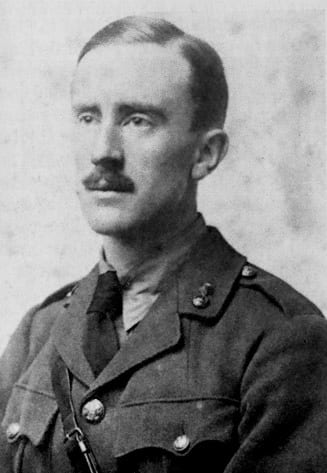
Friendship, Love, and the Arts: A Belated Review...
Letters from the Edge of Elfland
TRENDING AT PATHEOS Catholic

Rejecting Doom: Christian Hope And Human Action
Christianity is a religion of hope. We are to have hope and...

It’s What Comes From Within Which Matters
One of the most difficult things for us to understand is why...

Why I Choose the Eucharist Over the Sermon
Choose the Eucharist, Not the Sermon What are we supposed to get...

5 Design Elements Found in Spiritually Rooted Homes
Putting Spirituality Into Home Decor Our homes are more than our living...

Credo: A Story of God Told with the...
About 10 years ago, I began to imagine a personal "Credo" that...

The Anatomy of Divine Revelation in Catholic Thought
The claim that God has made Himself known to human beings is...
view all Catholic blogs
Ad-Free & Subscriber Log-In Subscription Support
- About Us
- 2026 Calendar
- Videos
- Podcasts
- Library of World Religions
- Faith In Media Tracker
- Advertise With Us
- Write for Us
- Privacy Policy
- Terms of Service
- Do Not Sell My Data
- Contact Us
- Radiant Digital
- Manage Newsletter Subscriptions
- Unsubscribe From Notifications
- Sitemap
Copyright 2008-2026, Patheos. All rights reserved.
Subscription Support Ad-Free & Subscriber Log-In
Follow Patheos