
BuddhistCatholicContemplativeEvangelicalGeneral ChristianHinduJewishLatter-day SaintMuslimNew VisionsProgressive Christian
Beliefs
- Buddhist
- Catholic
- Contemplative
- Evangelical
- General Christian
- Hindu
- Jewish
- Latter-day Saint
- More Voices
- Muslim
- New Visions
- Pagan
- Progressive Christian
Topics
- Religion News
- Food and Religion
- Sports and Religion
- Religious Art
- Religious Music and Entertainment
- Religious Events
- History and Religion
- Style and Religion
- Politics and Religion
- Women in Religion
- Recreation Outdoors and Religion
- Business Finance and Religion
- Careers Workplace and Religion
- Education and Religion
- Family Parenting and Religion
- Health Fitness and Religion
- Home and Religion
- Relationships and Religion
- Technology and Religion
- Travel and Religion
Columnists
- Buddhist Columnists
- Business Finance and Religion Columnists
- Careers Workplace and Religion Columnists
- Catholic Columnists
- Contemplative Columnists
- Education and Religion Columnists
- Evangelists Columnists
- Family Parenting and Religion Columnists
- General Christian Columnists
- Health Fitness and Religion Columnists
- Hindu Columnists
- History and Religion Columnists
- Home and Religion Columnists
- Jewish Columnists
- More Voices Columnists
- Latter Day Columnists
- Muslim Columnists
- New Visions Columnists
- Nonreligious Columnists
- Pagan Columnists
- Politics and Religion Columnists
- Progressive Columnists
- Recreation Outdoors and Religion Columnists
- Relationships and Religion Columnists
- Religion News Columnists
- Religious Art Columnists
- Religious Events Columnists
- Religious Music and Entertainment Columnists
- Sports and Religion Columnists
- Style and Religion Columnists
- Technology and Religion Columnists
- Travel and Religion Columnists
- Women in Religion Columnists
Resource Library
- 2026 Calendar
- Library of World Religions
- The 100 Most Holy Places on Earth
- Patheos Answers
- Podcasts
- Videos
- Faith Leaders Database
- Anglican Episcopalian
- Bahai
- Baptist
- Buddhism
- Christianity
- Confucianism
- Eastern Orthodoxy
- Hinduism
- Holiness and Pentecostal
- ISKCON
- Islam
- Judaism
- Lutheran
- Methodist
- The Church of Jesus Christ of Latter-day Saints
- New Age
- Paganism
- Presbytarian and Reformed
- Protestantism
- Religion Behind the Scenes
- Roman Catholic
- Scientology
- Shia Islam
- Sikhism
- Sufism
- Sunni Islam
- Taoism
- Zen
- See all religions
Research Tools
 Ad-Free & Subscriber Log-In Subscription Support
Follow Patheos 

- Trending:
- Advent
- |
- Forgiveness
- |
- Thanksgiving
- |
- Election
- |
- Seasonal Holidays
- |
- Marriage
 Letters from the Edge of Elfland
- Home
- About
- Distributist Resources
- Publications and Presentations
- Support
- Works in Progress
- The Epistolarian Around the Web
- Home
- Catholic
- The Magic of Language: Stephen Fry, Pedantry, and Racism
The Magic of Language: Stephen Fry, Pedantry, and Racism
Last updated on: July 5, 2019 at 11:41 am by David Russell Mosley
The Magic of Language: Stephen Fry, Pedantry, and Racism 2019-07-05T11:41:04-04:00 David Russell Mosley
Patheos Explore the world's faith through different perspectives on religion and spirituality! Patheos has the views of the prevalent religions and spiritualities of the world.
Ordinary Time
5 July 2019
The Edge of Elfland
Concord, New Hampshire
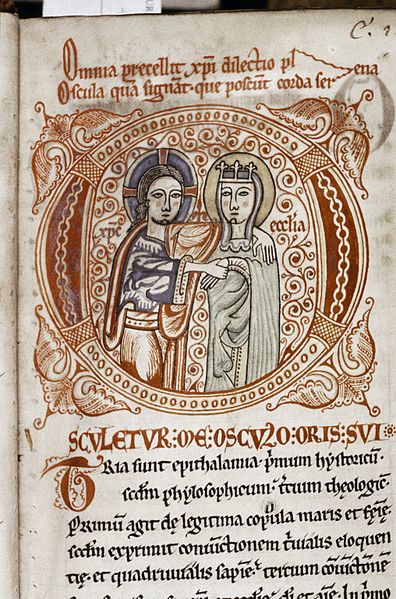
Public Domain
Dearest Readers,
Recently I saw a short video from the BBC with the inimitable Stephen Fry. Fry, and his mellifluous voice, discussed language and pedantry. Essentially, Fry’s point was that we should not get caught up in the minutia of language, correcting the grammatical glitches we see in public, in the use of our friends, online, etc. Rather, says Fry, we should exult in language, take delight in the feel of the words in our mouths. He even concludes that language is a native born right to all who speak and no one should tell them they have no right to use it, or that they should feel inferior because they “can’t spell broccoli or moccasins.” Fry emphasizes delight in language and contrasts it with pedantry.
https://www.facebook.com/bbctwo/videos/457597215017351/
Similarly, I saw a meme not long after seeing that video which suggested that grammar is racist because there are multiple American vernaculars and everything is meaningless. I’ve seen this kind of thing before. In fact, I once saw a very interesting and well done video concerning some African American dialects and how they follow certain grammatical rules that others don’t. The chief instance I can remember is the leaving out of to be verbs. This is common in both Greek and Latin. But the point of the meme was that grammar is inherently racist.
On the one hand, I am sympathetic with Fry and, if not the meme declaring all grammar racist, at least the video pointing out the language naturally follows certain rules and different dialects of the same language can follow different rules. After all, no one likes a pedant, especially outside the classroom. Shouldn’t we exult in the sound and feel and meaning of words? Shouldn’t language delight us? Yes! But does this inherently mean that grammar or spelling are of no consequence? I don’t think so.
Take someone like Tolkien, for instance. Here is someone who clearly loved language itself. He loved language as such so much that he invented multiple languages of his own. And in inventing those languages he wrote stories which have changed and shaped the landscape of fantasy literature. But his languages had rules, had grammars. If we abandon grammar altogether––which is likely an overstatement of Fry’s point––then language itself can have no meaning. If we don’t know ahead of time how verbs and nouns, and even punctuation work then we can never be certain of a statement’s meaning. Now, I will grant Fry that punctuation and to an extent spelling are modern inventions and that language existed for quite some time without either, especially punctuation. But the reason we standardized spelling (to an extent anyway) and invented punctuation was to help make our meanings clearer, so we could better engage with one another through language.
Similarly, on the charge that grammar is racist, I submit that grammar as such is not racist, but that often its applications can be. Too many high school English teachers have likely used their position as grammarians to abuse those who do speak a different dialect of English (American or otherwise). But, I can’t submit that grammar as such is racist. In fact, the word has some magical history behind it, as it gave form both to the English word glamour which once meant (and in some ways still does) a magical spell or enchantment, and the French word grimoire which means a book of magical spells. Language and the rules that govern it are magical, they open up new ways of knowing and seeing the world around us, they help us shape reality. That some have used it without understanding that the rules contain a certain fluidity and that the rules of particular expression can be superseded by older rules, does not mean that English grammar is inherently racist or that life and language is meaningless as the meme suggested.
So, by all means should we be attentive to the dialectical aspect of language in different communities. And what is, perhaps, more important, we should fall in love with language and savor the words we have been given. But this does not mean we should abandon the seemingly pedantic rules of grammar and punctuation. Rather, we must simply remember that the rules common to our age or our particular dialect are just that, particularities, that participate in a higher Grammar, in the Word.
Sincerely,
David Russell Mosley
Next Post

August 4, 2019 Get Him to the Catholic Imagination Conference
Browse Our Archives
Select a Category A Secular Age Advent Apologetics Atheism Beauty Being a Catholic Evangelical Being Catholic Being Deified: Poetry and Fantasy on the Path to God Blogging Book Reviews C. S. Lewis Catholic Imagination Catholic Social Teaching Catholicism Christmas Church Calendar Church Fathers Church Life Community Conferences Cosmology Creation Curdled Words Deification Distributism Easter Economics Education Epiphany Essay Extracts Eucharist Faerie Faeriean Metaphysics Fatherhood Films Folk Liturgy Food and Drink G. K. Chesterton Harry Potter J. R. R. Tolkien Jove King Arthur Language Lent Life Literature and Poetry Liturgy Medieval Theology Music My Publications Mythology On the Edges of Elfland Ordinary Time Ordination Parenthood Parish Patristic Theology Pentecost Politics Prayer Racism Radical Orthodoxy Restoration Movement Sacramental Ontology Saints Science Sex and Sexuality Sophiology Stories The Inklings The Radical Catholic Reimagination of Everything Theologians in the Church Theopoetics Thesis Research Uncategorized University of Nottingham What I'm Reading Writing
Select a Month December 2019 November 2019 October 2019 September 2019 August 2019 July 2019 June 2019 May 2019 April 2019 March 2019 February 2019 January 2019 December 2018 November 2018 October 2018 September 2018 August 2018 July 2018 June 2018 May 2018 April 2018 March 2018 February 2018 January 2018 December 2017 November 2017 October 2017 August 2017 July 2017 June 2017 May 2017 April 2017 March 2017 February 2017 January 2017 December 2016 November 2016 October 2016 September 2016 August 2016 July 2016 June 2016 May 2016 April 2016 March 2016 February 2016 January 2016 December 2015 November 2015 October 2015 September 2015 August 2015 July 2015 June 2015 May 2015 April 2015 March 2015 February 2015 January 2015 December 2014 November 2014 October 2014 September 2014 August 2014 July 2014 June 2014 May 2014 April 2014 March 2014 February 2014 January 2014 December 2013 November 2013 October 2013 September 2013 August 2013 July 2013 June 2013 May 2013 April 2013 March 2013 February 2013 January 2013 December 2012 November 2012 October 2012 September 2012 July 2012
Follow Us!
TAKE THE
Religious Wisdom Quiz
Cast your bread upon the waters and after many days you will find it again. What does this encourage?
Select your answer to see how you score.
Fishing Patience Sharing Generosity
Related posts from Letters from the Edge of Elfland
Ethnicity, DNA, White Supremacy, and the Pro-Life Movement
Letters from the Edge of Elfland

Reflections on Jonathan Strange and Mr Norrell Part...
Letters from the Edge of Elfland

Am I Racist? A Primer on Race, Racism,...
Letters from the Edge of Elfland
The Sacramental Imagination of Harry Potter
Letters from the Edge of Elfland
TRENDING AT PATHEOS Catholic

The Kingdom Of God In Ordinary Life And...
The kingdom of God is all around us; it is in us...

How Discretion Guides Us Away From Extremes
Prudence is an important virtue for all of us. While we should...

If Baptism Washes Away Sin, Why Do Catholics...
The seven sacraments stand as the foundation of Catholic ecclesial life. The...

The Power of Setting a Good Example
Remember last August when the Chicago White Sox hosted a "Pope Hat...

A Catholic Critique of Biblical Unitarianism
If the statistics are to be believed, Unitarianism is rising worldwide. Although...

How Grandma Tourism Helps Grandparents Live Their Vocation
Grandma, The New Travel Influencer What started as a nostalgia-inspired social media...
view all Catholic blogs
Ad-Free & Subscriber Log-In Subscription Support
- About Us
- 2026 Calendar
- Videos
- Podcasts
- Library of World Religions
- Faith In Media Tracker
- Advertise With Us
- Write for Us
- Privacy Policy
- Terms of Service
- Do Not Sell My Data
- Contact Us
- Radiant Digital
- Manage Newsletter Subscriptions
- Unsubscribe From Notifications
- Sitemap
Copyright 2008-2026, Patheos, part of the Radiant Digital network of media brands. All rights reserved.
Subscription Support Ad-Free & Subscriber Log-In
Follow Patheos