
BuddhistCatholicContemplativeEvangelicalGeneral ChristianHinduJewishLatter-day SaintMuslimNew VisionsProgressive Christian
Beliefs
- Buddhist
- Catholic
- Contemplative
- Evangelical
- General Christian
- Hindu
- Jewish
- Latter-day Saint
- More Voices
- Muslim
- New Visions
- Pagan
- Progressive Christian
Topics
- Religion News
- Food and Religion
- Sports and Religion
- Religious Art
- Religious Music and Entertainment
- Religious Events
- History and Religion
- Style and Religion
- Politics and Religion
- Women in Religion
- Recreation Outdoors and Religion
- Business Finance and Religion
- Careers Workplace and Religion
- Education and Religion
- Family Parenting and Religion
- Health Fitness and Religion
- Home and Religion
- Relationships and Religion
- Technology and Religion
- Travel and Religion
Columnists
- Buddhist Columnists
- Business Finance and Religion Columnists
- Careers Workplace and Religion Columnists
- Catholic Columnists
- Contemplative Columnists
- Education and Religion Columnists
- Evangelists Columnists
- Family Parenting and Religion Columnists
- General Christian Columnists
- Health Fitness and Religion Columnists
- Hindu Columnists
- History and Religion Columnists
- Home and Religion Columnists
- Jewish Columnists
- More Voices Columnists
- Latter Day Columnists
- Muslim Columnists
- New Visions Columnists
- Nonreligious Columnists
- Pagan Columnists
- Politics and Religion Columnists
- Progressive Columnists
- Recreation Outdoors and Religion Columnists
- Relationships and Religion Columnists
- Religion News Columnists
- Religious Art Columnists
- Religious Events Columnists
- Religious Music and Entertainment Columnists
- Sports and Religion Columnists
- Style and Religion Columnists
- Technology and Religion Columnists
- Travel and Religion Columnists
- Women in Religion Columnists
Resource Library
- 2026 Calendar
- Library of World Religions
- The 100 Most Holy Places on Earth
- Patheos Answers
- Podcasts
- Videos
- Faith Leaders Database
- Anglican Episcopalian
- Bahai
- Baptist
- Buddhism
- Christianity
- Confucianism
- Eastern Orthodoxy
- Hinduism
- Holiness and Pentecostal
- ISKCON
- Islam
- Judaism
- Lutheran
- Methodist
- The Church of Jesus Christ of Latter-day Saints
- New Age
- Paganism
- Presbytarian and Reformed
- Protestantism
- Religion Behind the Scenes
- Roman Catholic
- Scientology
- Shia Islam
- Sikhism
- Sufism
- Sunni Islam
- Taoism
- Zen
- See all religions
Research Tools
 Ad-Free & Subscriber Log-In Subscription Support
Ad-Free & Subscriber Log-In Subscription Support
Follow Patheos 

- Trending:
- Forgiveness
- |
- Marriage
- |
- Consciousness
- |
- Death Penalty
- |
- Election
- |
- Halloween
 Letters from the Edge of Elfland
- Home
- About
- Distributist Resources
- Publications and Presentations
- Support
- Works in Progress
- The Epistolarian Around the Web
- Home
- Catholic
- Curdled Words: A Review of The Lost Words by Robert Macfarlane and Jackie Morris
Curdled Words: A Review of The Lost Words by Robert Macfarlane and Jackie Morris
Last updated on: March 21, 2019 at 2:49 pm by David Russell Mosley
Curdled Words: A Review of The Lost Words by Robert Macfarlane and Jackie Morris 2019-03-21T14:49:42-04:00 David Russell Mosley
Patheos Explore the world's faith through different perspectives on religion and spirituality! Patheos has the views of the prevalent religions and spiritualities of the world.
Lent
21 March 2019
The Edge of Elfland
Manchester, NH
Dearest Readers,
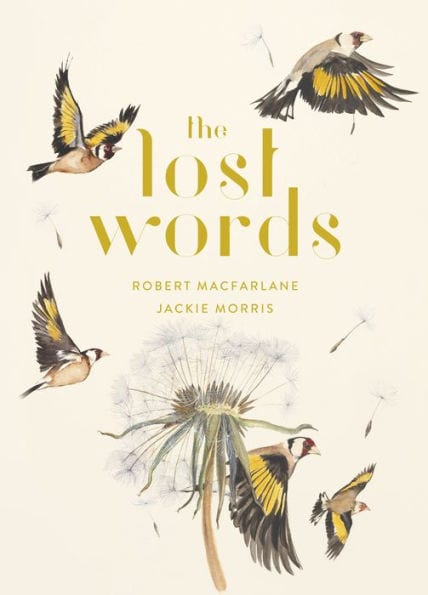
Recently, thanks to the work and suggestion of Malcolm Guite, I have had the opportunity to read The Lost Words. The book is written by Robert Macfarlane and illustrated by Jackie Morris. The origin of the book can be found in the most recent edition of the Oxford Junior Dictionary. For reasons best known to themselves, the editors decided to remove somewhere around 40 formerly common words. What did these words have in common? They were all about nature. In their place words such as broadband, blog, attachment, and cut-and-paste.
Author Robert Macfarlane and illustrator Jackie Morris were not going to take this lying down. So, they decided to write a spell book, a book incantations calling upon 20 of those words to work their magic. The 20 words Macfarlane and Morris have incantated are as follows: acorn, adder, bluebell, bramble, conker, dandelion, fern, heather, heron, ivy, kingfisher, lark, magpie, newt, otter, raven, starling, weasel, willow, and wren.
Macfarlane turns each word into an acrostic poem evoking images and stories about the creature represented. The most moving of which for me was the spell for the willow. The willow, a tree which has always enchanted me, is set up as a whisperer with some secret to tell that we long to hear but cannot, “you will never know a word of willow––for we are willow/and you are not.” When I read that final line for the first time, it chilled me. My skin tingled. And then I turned the page and saw the beautiful, two-page illustration Jackie Morris provides. A large, leafless, twisted willow leans out over the water as the moon rises behind, just beneath the willow’s twisted arch far in the distance and set above the far off trees.
The book is, in a sense, an illuminated incantus. Each spell is not only accompanied with a facing-page illustration, but before it comes a jumble of letters, the letters of the coming word bolded or colored differently. Then after comes a two page spread setting the spell and the word in their proper supernaturally natural context. These pictures help bring to life the words and thus help enact the spells. It is, in a way, like the illuminated manuscript Lucy read’s in Coriakin’s house. The magician’s book has pictures that move as the spells are read. And I swear I saw a twitch in the otter’s tail and heard the wordless whispers of the willow.
This book should delight children and adults alike. The poetry is complex following different patterns. Sometimes it is rhymed, other poems are alliterative. Sometimes the acrostic is only one line per letter, sometimes the letter only serves as the beginning letter of a much longer stanza. It gives a sense of wood-longing, of desire to be out in nature so as to see the spells most fully enacted. And, what is more, it gives a sense that these words are important, not because they are good to know, but because they convey something of the reality of the objects they signify. There is no nominalism here. Rather the very word “raven” provides the ground upon which the poem can be told. The acrostic nature of the poetry shows the deep-seated and mutually informing relationship between a word and its object. Macfarlane and Morris invite the reader inside the words and thus into the creatures themselves, into ravenness, willowness, acornness. And when once read, the spell has been enacted and the reader is enchanted.
Sincerely,
David Russell Mosley
Previous Post

March 17, 2019
For the Old Man at Apotheca
Next Post
March 25, 2019 Sonnets for the Annunciation
Browse Our Archives
Select a Category A Secular Age Advent Apologetics Atheism Beauty Being a Catholic Evangelical Being Catholic Being Deified: Poetry and Fantasy on the Path to God Blogging Book Reviews C. S. Lewis Catholic Imagination Catholic Social Teaching Catholicism Christmas Church Calendar Church Fathers Church Life Community Conferences Cosmology Creation Curdled Words Deification Distributism Easter Economics Education Epiphany Essay Extracts Eucharist Faerie Faeriean Metaphysics Fatherhood Films Folk Liturgy Food and Drink G. K. Chesterton Harry Potter J. R. R. Tolkien Jove King Arthur Language Lent Life Literature and Poetry Liturgy Medieval Theology Music My Publications Mythology On the Edges of Elfland Ordinary Time Ordination Parenthood Parish Patristic Theology Pentecost Politics Prayer Racism Radical Orthodoxy Restoration Movement Sacramental Ontology Saints Science Sex and Sexuality Sophiology Stories The Inklings The Radical Catholic Reimagination of Everything Theologians in the Church Theopoetics Thesis Research Uncategorized University of Nottingham What I'm Reading Writing
Select a Month December 2019 November 2019 October 2019 September 2019 August 2019 July 2019 June 2019 May 2019 April 2019 March 2019 February 2019 January 2019 December 2018 November 2018 October 2018 September 2018 August 2018 July 2018 June 2018 May 2018 April 2018 March 2018 February 2018 January 2018 December 2017 November 2017 October 2017 August 2017 July 2017 June 2017 May 2017 April 2017 March 2017 February 2017 January 2017 December 2016 November 2016 October 2016 September 2016 August 2016 July 2016 June 2016 May 2016 April 2016 March 2016 February 2016 January 2016 December 2015 November 2015 October 2015 September 2015 August 2015 July 2015 June 2015 May 2015 April 2015 March 2015 February 2015 January 2015 December 2014 November 2014 October 2014 September 2014 August 2014 July 2014 June 2014 May 2014 April 2014 March 2014 February 2014 January 2014 December 2013 November 2013 October 2013 September 2013 August 2013 July 2013 June 2013 May 2013 April 2013 March 2013 February 2013 January 2013 December 2012 November 2012 October 2012 September 2012 July 2012
Follow Us!
TAKE THE
Religious Wisdom Quiz
Who was the priest that escaped Saul's massacre and joined David?
Select your answer to see how you score.
Abiathar Phinehas Zadok Ahimelech
Related posts from Letters from the Edge of Elfland

Poetry, Podcasts, and More: Some Updates on Other...
Letters from the Edge of Elfland

Working on a Book of Poetry: An Apology...
Letters from the Edge of Elfland

Poetry Shapes the World around Us: Reflecting on...
Letters from the Edge of Elfland

William Blake on the Creative Spirit, Beauty, and...
Letters from the Edge of Elfland
TRENDING AT PATHEOS Catholic

Rejecting Doom: Christian Hope And Human Action
Christianity is a religion of hope. We are to have hope and...

It’s What Comes From Within Which Matters
One of the most difficult things for us to understand is why...

Why I Choose the Eucharist Over the Sermon
Choose the Eucharist, Not the Sermon What are we supposed to get...

5 Design Elements Found in Spiritually Rooted Homes
Putting Spirituality Into Home Decor Our homes are more than our living...

Credo: A Story of God Told with the...
About 10 years ago, I began to imagine a personal "Credo" that...

The Anatomy of Divine Revelation in Catholic Thought
The claim that God has made Himself known to human beings is...
view all Catholic blogs
Ad-Free & Subscriber Log-In Subscription Support
- About Us
- 2026 Calendar
- Videos
- Podcasts
- Library of World Religions
- Faith In Media Tracker
- Advertise With Us
- Write for Us
- Privacy Policy
- Terms of Service
- Do Not Sell My Data
- Contact Us
- Radiant Digital
- Manage Newsletter Subscriptions
- Unsubscribe From Notifications
- Sitemap
Copyright 2008-2026, Patheos. All rights reserved.
Subscription Support Ad-Free & Subscriber Log-In
Follow Patheos