
BuddhistCatholicContemplativeEvangelicalGeneral ChristianHinduJewishLatter-day SaintMuslimNew VisionsProgressive Christian
Beliefs
- Buddhist
- Catholic
- Contemplative
- Evangelical
- General Christian
- Hindu
- Jewish
- Latter-day Saint
- More Voices
- Muslim
- New Visions
- Pagan
- Progressive Christian
Topics
- Religion News
- Food and Religion
- Sports and Religion
- Religious Art
- Religious Music and Entertainment
- Religious Events
- History and Religion
- Style and Religion
- Politics and Religion
- Women in Religion
- Recreation Outdoors and Religion
- Business Finance and Religion
- Careers Workplace and Religion
- Education and Religion
- Family Parenting and Religion
- Health Fitness and Religion
- Home and Religion
- Relationships and Religion
- Technology and Religion
- Travel and Religion
Columnists
- Buddhist Columnists
- Business Finance and Religion Columnists
- Careers Workplace and Religion Columnists
- Catholic Columnists
- Contemplative Columnists
- Education and Religion Columnists
- Evangelists Columnists
- Family Parenting and Religion Columnists
- General Christian Columnists
- Health Fitness and Religion Columnists
- Hindu Columnists
- History and Religion Columnists
- Home and Religion Columnists
- Jewish Columnists
- More Voices Columnists
- Latter Day Columnists
- Muslim Columnists
- New Visions Columnists
- Nonreligious Columnists
- Pagan Columnists
- Politics and Religion Columnists
- Progressive Columnists
- Recreation Outdoors and Religion Columnists
- Relationships and Religion Columnists
- Religion News Columnists
- Religious Art Columnists
- Religious Events Columnists
- Religious Music and Entertainment Columnists
- Sports and Religion Columnists
- Style and Religion Columnists
- Technology and Religion Columnists
- Travel and Religion Columnists
- Women in Religion Columnists
Resource Library
- 2026 Calendar
- Library of World Religions
- The 100 Most Holy Places on Earth
- Patheos Answers
- Podcasts
- Videos
- Faith Leaders Database
- Anglican Episcopalian
- Bahai
- Baptist
- Buddhism
- Christianity
- Confucianism
- Eastern Orthodoxy
- Hinduism
- Holiness and Pentecostal
- ISKCON
- Islam
- Judaism
- Lutheran
- Methodist
- The Church of Jesus Christ of Latter-day Saints
- New Age
- Paganism
- Presbytarian and Reformed
- Protestantism
- Religion Behind the Scenes
- Roman Catholic
- Scientology
- Shia Islam
- Sikhism
- Sufism
- Sunni Islam
- Taoism
- Zen
- See all religions
Research Tools
 Ad-Free & Subscriber Log-In Subscription Support
Ad-Free & Subscriber Log-In Subscription Support
Follow Patheos 

- Trending:
- Forgiveness
- |
- Marriage
- |
- Consciousness
- |
- Death Penalty
- |
- Election
- |
- Halloween
 Letters from the Edge of Elfland
- Home
- About
- Distributist Resources
- Publications and Presentations
- Support
- Works in Progress
- The Epistolarian Around the Web
- Home
- Catholic
- Curdled Words: George Herbert, The Milky Way, and Prayer
Curdled Words: George Herbert, The Milky Way, and Prayer
Last updated on: February 27, 2019 at 9:00 am by David Russell Mosley
Curdled Words: George Herbert, The Milky Way, and Prayer 2019-02-26T10:39:29-04:00 David Russell Mosley
Patheos Explore the world's faith through different perspectives on religion and spirituality! Patheos has the views of the prevalent religions and spiritualities of the world.
Ordinary Time
27 February 2019
The Edge of Elfland
Concord, New Hampshire
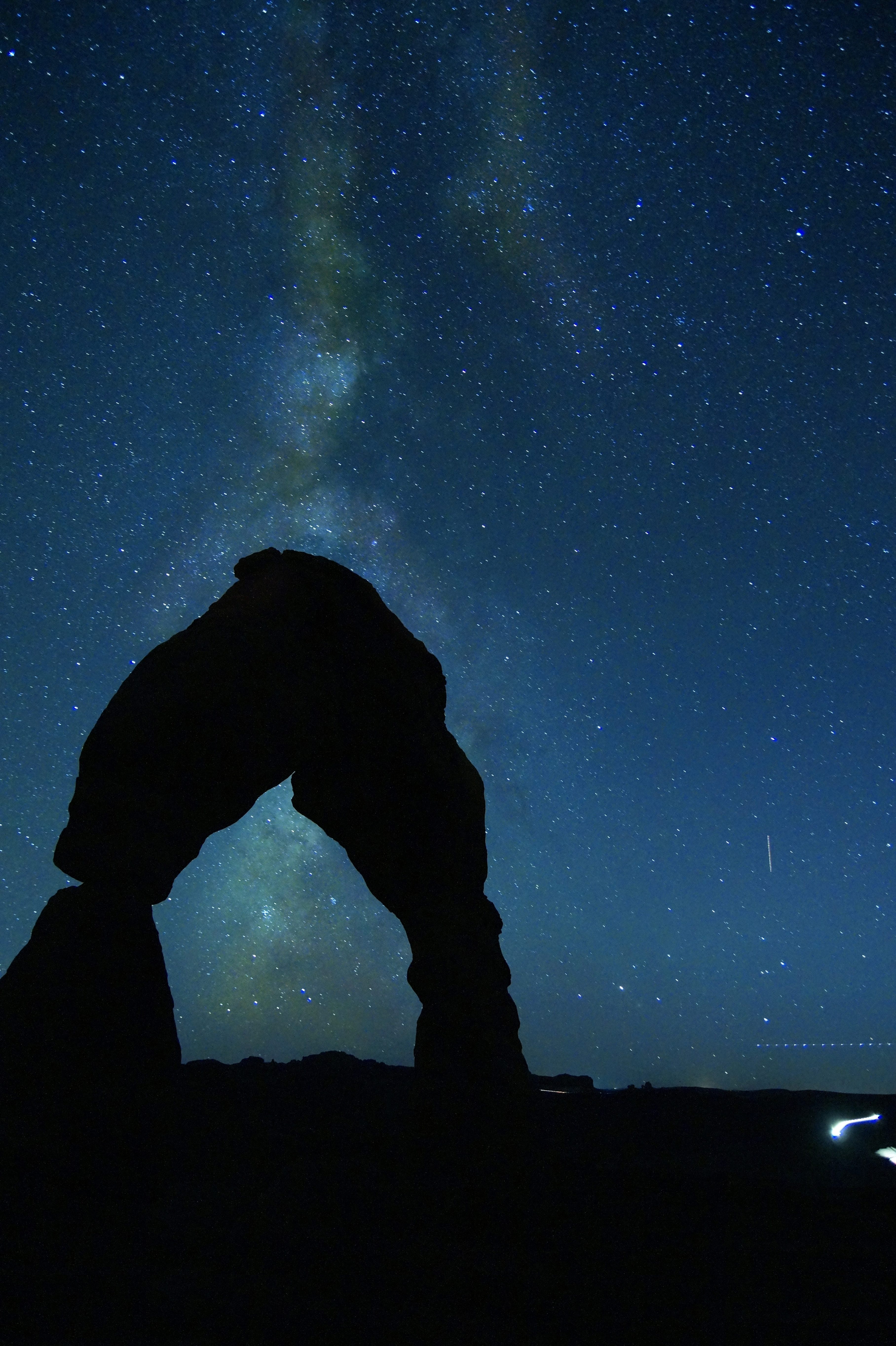
PiConsti/Wikimedia Commons (CC BY-SA 2.0)
Dearest Readers,
Today we commemorate the life and death George Herbert. Herbert was born in Wales (a fact I find interesting as my name day, St. David’s Day, is on Friday) and lived to become a celebrated Anglican priest and poet. I was first introduced to Herbert when I picked up a small volume of his poetry from charity shop in the UK. Thus it seems only fitting to me that I choose one of his most famous poems: “Prayer (I).” It seems even more fitting to me to contemplate this poem with Lent arriving a week from today:
Prayer the Churches banquet, Angels age,
Gods breath in man returning to his birth,
The soul in paraphrase, heart in pilgrimage,
The Christian plummet sounding heav’n and earth;Engine against th’ Almightie, sinners towre,
Reversed thunder, Christ-side-piercing spear,
The six-daies––world transposing in an houre,
A kinde of tune, which all things heare and fear;Softnesse, and peace, and joy, and love, and blisse,
Exalted Manna, gladnesse of the best,
Heaven in ordinarie, man well dress,
The milkie way, the bird of Paradise,
Church-bels beyond the starres heard, the souls bloud,
The land of spices; something understood.
Perhaps the first thing I notice about this poem is that it is a sonnet, a Shakespearean or English sonnet. This means that we should look for varied meditations on the subject of prayer in each of the three quatrains. In the first Herbert is drawing us up to heaven. Prayer is given as the food of the church, the age of the ageless angels, it is way of understanding the self as united to Heaven. This is most clear in the final line of the first stanza. Prayer is the plummet, the measuring line that the Christian uses to measure the depths of earth and heaven. Prayer draws us up. But it does more.
The second stanza shows an understanding, I think, of the imprecatory psalms, of the desire to pull God down that had seized the builders at Babel. That phrase, “reversed thunder” sends shivers through me. In thunder, of course, the gods belt out to us from the heavens. But in the reverse, we thunder up to the heavens with our cries and calls. With these selfish prayers, we pierced the side of Christ, we upturned the world in a hour that was made in six days. I’m not certain what Herbert means by the final line in this stanza, but I wonder, and the final stanza makes me think it, that perhaps it is some infernal mockery of the music of the spheres. That music moves the planets, ours causes fear.
But prayer does not end in anger. It resolves. I love Herberts use of the word bliss. One of my sons is named Edwyn or bliss-friend. Tolkien used this name to signify those willing to receive the bliss offered by the Valar, the angelic gods who ruled and shaped Middle-earth. Julian of Norwich, of whom Herbert may have known, uses it to discuss the Trinity, ascribing it to the Son as a gift he gives to us. Prayer, then, is that connecting point, a place where (though not the only) we are connected to the Son. And this is seen most clearly toward the end: “The milkie way, the bird of Paradise,/Church-bels beyond the starres heard….” Now, instead of our rage thundering up to heaven, it is the bells of the Church which ring with our prayers and are heard beyond the music of the spheres, beyond the milky way, the fixed stars, the Primum Mobile, to borrow from Dante, into the Empyrean, to God himself. He hears and he understands and he shares that understanding with us. This is what it means to pray.
Sincerely,
David Russell Mosley
Previous Post

February 26, 2019
Malcolm Guite and Marty O'Donnell's Music of the Spheres
Next Post
March 5, 2019 Love, Sin, and Death: Reflecting on Ash Wednesday
Browse Our Archives
Select a Category A Secular Age Advent Apologetics Atheism Beauty Being a Catholic Evangelical Being Catholic Being Deified: Poetry and Fantasy on the Path to God Blogging Book Reviews C. S. Lewis Catholic Imagination Catholic Social Teaching Catholicism Christmas Church Calendar Church Fathers Church Life Community Conferences Cosmology Creation Curdled Words Deification Distributism Easter Economics Education Epiphany Essay Extracts Eucharist Faerie Faeriean Metaphysics Fatherhood Films Folk Liturgy Food and Drink G. K. Chesterton Harry Potter J. R. R. Tolkien Jove King Arthur Language Lent Life Literature and Poetry Liturgy Medieval Theology Music My Publications Mythology On the Edges of Elfland Ordinary Time Ordination Parenthood Parish Patristic Theology Pentecost Politics Prayer Racism Radical Orthodoxy Restoration Movement Sacramental Ontology Saints Science Sex and Sexuality Sophiology Stories The Inklings The Radical Catholic Reimagination of Everything Theologians in the Church Theopoetics Thesis Research Uncategorized University of Nottingham What I'm Reading Writing
Select a Month December 2019 November 2019 October 2019 September 2019 August 2019 July 2019 June 2019 May 2019 April 2019 March 2019 February 2019 January 2019 December 2018 November 2018 October 2018 September 2018 August 2018 July 2018 June 2018 May 2018 April 2018 March 2018 February 2018 January 2018 December 2017 November 2017 October 2017 August 2017 July 2017 June 2017 May 2017 April 2017 March 2017 February 2017 January 2017 December 2016 November 2016 October 2016 September 2016 August 2016 July 2016 June 2016 May 2016 April 2016 March 2016 February 2016 January 2016 December 2015 November 2015 October 2015 September 2015 August 2015 July 2015 June 2015 May 2015 April 2015 March 2015 February 2015 January 2015 December 2014 November 2014 October 2014 September 2014 August 2014 July 2014 June 2014 May 2014 April 2014 March 2014 February 2014 January 2014 December 2013 November 2013 October 2013 September 2013 August 2013 July 2013 June 2013 May 2013 April 2013 March 2013 February 2013 January 2013 December 2012 November 2012 October 2012 September 2012 July 2012
Follow Us!
TAKE THE
Religious Wisdom Quiz
Who was the father of King Solomon?
Select your answer to see how you score.
Saul Jonathan Samuel David
Related posts from Letters from the Edge of Elfland

Poetry, Podcasts, and More: Some Updates on Other...
Letters from the Edge of Elfland

Working on a Book of Poetry: An Apology...
Letters from the Edge of Elfland

Poetry Shapes the World around Us: Reflecting on...
Letters from the Edge of Elfland
The Journey Is Almost Over: Reflecting on Six...
Letters from the Edge of Elfland
TRENDING AT PATHEOS Catholic

Creation, Preservation, and Teleology in Catholic Theology
As I write this, it is very early Monday morning. Like millions...

The Parable Of The Sower And The Word...
One of Christ’s most famous parables is that of the sower who...

Rejecting Doom: Christian Hope And Human Action
Christianity is a religion of hope. We are to have hope and...

Why I Choose the Eucharist Over the Sermon
Choose the Eucharist, Not the Sermon What are we supposed to get...

5 Design Elements Found in Spiritually Rooted Homes
Putting Spirituality Into Home Decor Our homes are more than our living...

Credo: A Story of God Told with the...
About 10 years ago, I began to imagine a personal "Credo" that...
view all Catholic blogs
Ad-Free & Subscriber Log-In Subscription Support
- About Us
- 2026 Calendar
- Videos
- Podcasts
- Library of World Religions
- Faith In Media Tracker
- Advertise With Us
- Write for Us
- Privacy Policy
- Terms of Service
- Do Not Sell My Data
- Contact Us
- Radiant Digital
- Manage Newsletter Subscriptions
- Unsubscribe From Notifications
- Sitemap
Copyright 2008-2026, Patheos. All rights reserved.
Subscription Support Ad-Free & Subscriber Log-In
Follow Patheos