
BuddhistCatholicContemplativeEvangelicalGeneral ChristianHinduJewishLatter-day SaintMuslimNew VisionsProgressive Christian
Beliefs
- Buddhist
- Catholic
- Contemplative
- Evangelical
- General Christian
- Hindu
- Jewish
- Latter-day Saint
- More Voices
- Muslim
- New Visions
- Pagan
- Progressive Christian
Topics
- Religion News
- Food and Religion
- Sports and Religion
- Religious Art
- Religious Music and Entertainment
- Religious Events
- History and Religion
- Style and Religion
- Politics and Religion
- Women in Religion
- Recreation Outdoors and Religion
- Business Finance and Religion
- Careers Workplace and Religion
- Education and Religion
- Family Parenting and Religion
- Health Fitness and Religion
- Home and Religion
- Relationships and Religion
- Technology and Religion
- Travel and Religion
Columnists
- Buddhist Columnists
- Business Finance and Religion Columnists
- Careers Workplace and Religion Columnists
- Catholic Columnists
- Contemplative Columnists
- Education and Religion Columnists
- Evangelists Columnists
- Family Parenting and Religion Columnists
- General Christian Columnists
- Health Fitness and Religion Columnists
- Hindu Columnists
- History and Religion Columnists
- Home and Religion Columnists
- Jewish Columnists
- More Voices Columnists
- Latter Day Columnists
- Muslim Columnists
- New Visions Columnists
- Nonreligious Columnists
- Pagan Columnists
- Politics and Religion Columnists
- Progressive Columnists
- Recreation Outdoors and Religion Columnists
- Relationships and Religion Columnists
- Religion News Columnists
- Religious Art Columnists
- Religious Events Columnists
- Religious Music and Entertainment Columnists
- Sports and Religion Columnists
- Style and Religion Columnists
- Technology and Religion Columnists
- Travel and Religion Columnists
- Women in Religion Columnists
Resource Library
- 2026 Calendar
- Library of World Religions
- The 100 Most Holy Places on Earth
- Patheos Answers
- Podcasts
- Videos
- Faith Leaders Database
- Anglican Episcopalian
- Bahai
- Baptist
- Buddhism
- Christianity
- Confucianism
- Eastern Orthodoxy
- Hinduism
- Holiness and Pentecostal
- ISKCON
- Islam
- Judaism
- Lutheran
- Methodist
- The Church of Jesus Christ of Latter-day Saints
- New Age
- Paganism
- Presbytarian and Reformed
- Protestantism
- Religion Behind the Scenes
- Roman Catholic
- Scientology
- Shia Islam
- Sikhism
- Sufism
- Sunni Islam
- Taoism
- Zen
- See all religions
Research Tools
 Ad-Free & Subscriber Log-In Subscription Support
Ad-Free & Subscriber Log-In Subscription Support
Follow Patheos 

- Trending:
- Forgiveness
- |
- Marriage
- |
- Consciousness
- |
- Death Penalty
- |
- Election
- |
- Halloween
 Letters from the Edge of Elfland
- Home
- About
- Distributist Resources
- Publications and Presentations
- Support
- Works in Progress
- The Epistolarian Around the Web
- Home
- Catholic
- Caring for Creation: Reflections on an Old Address by Prince Charles
Caring for Creation: Reflections on an Old Address by Prince Charles
Last updated on: May 24, 2018 at 5:32 am by David Russell Mosley
Caring for Creation: Reflections on an Old Address by Prince Charles 2018-05-24T05:32:23-04:00 David Russell Mosley
Patheos Explore the world's faith through different perspectives on religion and spirituality! Patheos has the views of the prevalent religions and spiritualities of the world.
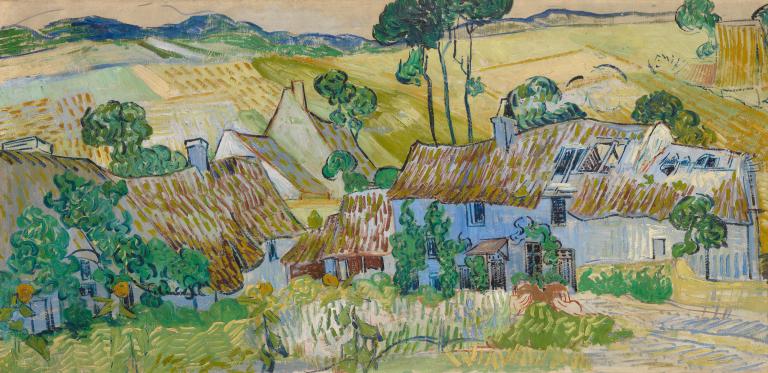
Vincent van Gogh (1853–1890) Title Farms near Auvers / Thatched Cottages by a Hill Object type painting Date July 1890 Medium oil on canvas PD
Ordinary Time
24 May 2018
The Edge of Elfland
Concord, New Hampshire
Dearest Readers,
Thanks to Michael Martin, sophiologist, poet, philosopher, theologian, musician, and biodynamic farmer, I recently came across this video of HRH Prince Charles speaking to the Associazione per l’Agricoltura Biodinamica conference ‘Economy of the earth’ in February of 2016. Prince Charles extols the virtues of Rudolph Steiner’s vision for biodynamic farming and excoriates the modern industrialized farming practices that have plagued not only Britain but the world.
I have to say, by and large I have increasingly become a fan of … aspects of Prince Charles. When I was growing up he was a bit of a joke. He had big ears, wasn’t exactly easy on the eyes, but had a beautiful wife. Then there was the scandal with Princess Di, his remarriage after her death, etc. But when you look at the things he has actually done or at least supported, especially when you consider how non-political members of the Royal family have to be, it is really rather astonishing the causes he has championed. But this isn’t a letter about his royal highness. Rather, I’m intrigued by this consistent hum, as if of a tune we all know but can’t quite remember the words to, of better ecology.
Whether it is Wendell Berry, Michael Polan, Hugh Fearnley-Whittingstall, Pope Francis, Prince Charles, Mondragon or before them Steiner, Chesterton, Belloc, and their ilk there has been this insistent thrum calling us to return to the land, or at least to return to better farming and ecological practices. We keep coming back to these ideas and I find this fascinating. I find it all the more so since we haven’t, on the one hand, really moved forward with them as society (whether local to the US or the UK or global). Capitalism and industrialized farming are still the go to practices. It could lead a person to think that nothing will ever change, but I’m not so sure. I take hope in the fact that we keep talking about it, that people, like Michael Martin, actually do it. This gives me hope.
After all, this is paramount. The world as Pope Francis reminds us, and as Prince Charles echoed, is our common home. We must care for it, we must work with it. While I am often uninterested the genealogical game of blaming an individual or even an idea for our modern woes, I cannot help but see how the continual bracketing out not only of God and the supernatural but of the relationship between words and the things they signify from the sciences as being amongst the chief instigators of this problem. But, to that extent, it no longer matters who is at fault, or if it does it only matters to help us remember that if the problem began in theology only theology can help us solve it. But not just any theology.
I’ve recently begun reading the new and complete translation of Maximus the Confessor’s Ad Thalassium done by Fr. Maximos (Nicholas) Constas. While there are many ways I could invoke Maximus in this discussion, I want to focus on one thing. After writing his letters and compiling them, Maximus read back through his own work and began adding what are called scholia, little marginal notes, like footnotes added well after the fact. He insisted they be kept in any future copies of his text because they added to the beauty of his work. This is the kind of theology that will aid us, a theology that is attentive to beauty, particularly as a transcendental. Many theology books today are not so much theology in the sense that Maximus or Gregory of Nazianzus would use the word––meaning a way of life––but rather academic treatises on a particular thinker or particular subject that might, sometimes, lead one toward the beatific vision, but that is often not their purpose. This is something we theologians need to reclaim, the sense that doing theology means speaking of and about God and his effects in such a way that actually calls us to worship, to act as well as contemplate.
So we need a theology of creation, one that causes us to think more seriously about how we use and interact with the common goods of our common home. For people like Michael Martin, this kind of theology needs to be sophiological, it needs to be connected to Wisdom, both created and as the non-personal union of the Godhead, for Wisdom is nit through Creation itself. This, of course, also means that our theology must be Christological, for in the incarnation Christ has united all created things to himself. It must also be cosmological seeing and looking for the grammar of the cosmos so we know how to read the book of creation. It also must be liturgical. I have said before that I would see a return of feasts such as Lamas and Plough Sunday, to have regular blessings of the beer to remind us of the Church’s intimate relationship with creation.
But above all, what we need is a theology of action, we must do the things necessary to live in right relationship with creation. This will not be easy. After all, we’ve been trying to live in right relation with creation since the Fall and have always failed. But there have been practices we have forgotten and new practices we can develop that will allow us not only to better care for our common home, but to better care for ourselves. We just need to begin, else our common home will continue to become our common hell.
Sincerely,
David
The Radical Catholic Reimagination of Everything
Previous Post

May 21, 2018
Why Do We Tell Stories? What Happens When We Stop Listening?
Browse Our Archives
Select a Category A Secular Age Advent Apologetics Atheism Beauty Being a Catholic Evangelical Being Catholic Being Deified: Poetry and Fantasy on the Path to God Blogging Book Reviews C. S. Lewis Catholic Imagination Catholic Social Teaching Catholicism Christmas Church Calendar Church Fathers Church Life Community Conferences Cosmology Creation Curdled Words Deification Distributism Easter Economics Education Epiphany Essay Extracts Eucharist Faerie Faeriean Metaphysics Fatherhood Films Folk Liturgy Food and Drink G. K. Chesterton Harry Potter J. R. R. Tolkien Jove King Arthur Language Lent Life Literature and Poetry Liturgy Medieval Theology Music My Publications Mythology On the Edges of Elfland Ordinary Time Ordination Parenthood Parish Patristic Theology Pentecost Politics Prayer Racism Radical Orthodoxy Restoration Movement Sacramental Ontology Saints Science Sex and Sexuality Sophiology Stories The Inklings The Radical Catholic Reimagination of Everything Theologians in the Church Theopoetics Thesis Research Uncategorized University of Nottingham What I'm Reading Writing
Select a Month December 2019 November 2019 October 2019 September 2019 August 2019 July 2019 June 2019 May 2019 April 2019 March 2019 February 2019 January 2019 December 2018 November 2018 October 2018 September 2018 August 2018 July 2018 June 2018 May 2018 April 2018 March 2018 February 2018 January 2018 December 2017 November 2017 October 2017 August 2017 July 2017 June 2017 May 2017 April 2017 March 2017 February 2017 January 2017 December 2016 November 2016 October 2016 September 2016 August 2016 July 2016 June 2016 May 2016 April 2016 March 2016 February 2016 January 2016 December 2015 November 2015 October 2015 September 2015 August 2015 July 2015 June 2015 May 2015 April 2015 March 2015 February 2015 January 2015 December 2014 November 2014 October 2014 September 2014 August 2014 July 2014 June 2014 May 2014 April 2014 March 2014 February 2014 January 2014 December 2013 November 2013 October 2013 September 2013 August 2013 July 2013 June 2013 May 2013 April 2013 March 2013 February 2013 January 2013 December 2012 November 2012 October 2012 September 2012 July 2012
Follow Us!
TAKE THE
Religious Wisdom Quiz
Who said, "You are the Christ, the Son of the living God"?
Select your answer to see how you score.
Andrew Thomas John Peter
Related posts from Letters from the Edge of Elfland

William Blake on the Creative Spirit, Beauty, and...
Letters from the Edge of Elfland
The Earth, Our Mother, and the Amazonian Synod
Letters from the Edge of Elfland

“Wherefore stopp’st thou me?” Coleridge’s Creative Message to...
Letters from the Edge of Elfland
Good Morning, Mr. Magpie: On Folklore and Science
Letters from the Edge of Elfland
TRENDING AT PATHEOS Catholic

The Parable Of The Sower And The Word...
One of Christ’s most famous parables is that of the sower who...

Rejecting Doom: Christian Hope And Human Action
Christianity is a religion of hope. We are to have hope and...

Why I Choose the Eucharist Over the Sermon
Choose the Eucharist, Not the Sermon What are we supposed to get...

5 Design Elements Found in Spiritually Rooted Homes
Putting Spirituality Into Home Decor Our homes are more than our living...

Credo: A Story of God Told with the...
About 10 years ago, I began to imagine a personal "Credo" that...

The Anatomy of Divine Revelation in Catholic Thought
The claim that God has made Himself known to human beings is...
view all Catholic blogs
Ad-Free & Subscriber Log-In Subscription Support
- About Us
- 2026 Calendar
- Videos
- Podcasts
- Library of World Religions
- Faith In Media Tracker
- Advertise With Us
- Write for Us
- Privacy Policy
- Terms of Service
- Do Not Sell My Data
- Contact Us
- Radiant Digital
- Manage Newsletter Subscriptions
- Unsubscribe From Notifications
- Sitemap
Copyright 2008-2026, Patheos. All rights reserved.
Subscription Support Ad-Free & Subscriber Log-In
Follow Patheos