
BuddhistCatholicContemplativeEvangelicalGeneral ChristianHinduJewishLatter-day SaintMuslimNew VisionsProgressive Christian
Beliefs
- Buddhist
- Catholic
- Contemplative
- Evangelical
- General Christian
- Hindu
- Jewish
- Latter-day Saint
- More Voices
- Muslim
- New Visions
- Pagan
- Progressive Christian
Topics
- Religion News
- Food and Religion
- Sports and Religion
- Religious Art
- Religious Music and Entertainment
- Religious Events
- History and Religion
- Style and Religion
- Politics and Religion
- Women in Religion
- Recreation Outdoors and Religion
- Business Finance and Religion
- Careers Workplace and Religion
- Education and Religion
- Family Parenting and Religion
- Health Fitness and Religion
- Home and Religion
- Relationships and Religion
- Technology and Religion
- Travel and Religion
Columnists
- Buddhist Columnists
- Business Finance and Religion Columnists
- Careers Workplace and Religion Columnists
- Catholic Columnists
- Contemplative Columnists
- Education and Religion Columnists
- Evangelists Columnists
- Family Parenting and Religion Columnists
- General Christian Columnists
- Health Fitness and Religion Columnists
- Hindu Columnists
- History and Religion Columnists
- Home and Religion Columnists
- Jewish Columnists
- More Voices Columnists
- Latter Day Columnists
- Muslim Columnists
- New Visions Columnists
- Nonreligious Columnists
- Pagan Columnists
- Politics and Religion Columnists
- Progressive Columnists
- Recreation Outdoors and Religion Columnists
- Relationships and Religion Columnists
- Religion News Columnists
- Religious Art Columnists
- Religious Events Columnists
- Religious Music and Entertainment Columnists
- Sports and Religion Columnists
- Style and Religion Columnists
- Technology and Religion Columnists
- Travel and Religion Columnists
- Women in Religion Columnists
Resource Library
- 2026 Calendar
- Library of World Religions
- The 100 Most Holy Places on Earth
- Patheos Answers
- Podcasts
- Videos
- Faith Leaders Database
- Anglican Episcopalian
- Bahai
- Baptist
- Buddhism
- Christianity
- Confucianism
- Eastern Orthodoxy
- Hinduism
- Holiness and Pentecostal
- ISKCON
- Islam
- Judaism
- Lutheran
- Methodist
- The Church of Jesus Christ of Latter-day Saints
- New Age
- Paganism
- Presbytarian and Reformed
- Protestantism
- Religion Behind the Scenes
- Roman Catholic
- Scientology
- Shia Islam
- Sikhism
- Sufism
- Sunni Islam
- Taoism
- Zen
- See all religions
Research Tools
 Ad-Free & Subscriber Log-In Subscription Support
Follow Patheos 

- Trending:
- Advent
- |
- Forgiveness
- |
- Thanksgiving
- |
- Election
- |
- Seasonal Holidays
- |
- Marriage
 Letters from the Edge of Elfland
- Home
- About
- Distributist Resources
- Publications and Presentations
- Support
- Works in Progress
- The Epistolarian Around the Web
- Home
- Catholic
- Fairies and Elves Stopping Construction: On the Care for Our Common Home
Fairies and Elves Stopping Construction: On the Care for Our Common Home
Last updated on: August 9, 2017 at 1:50 pm by David Russell Mosley
Fairies and Elves Stopping Construction: On the Care for Our Common Home 2017-08-09T13:50:33-04:00 David Russell Mosley
Patheos Explore the world's faith through different perspectives on religion and spirituality! Patheos has the views of the prevalent religions and spiritualities of the world.
David Russell Mosley
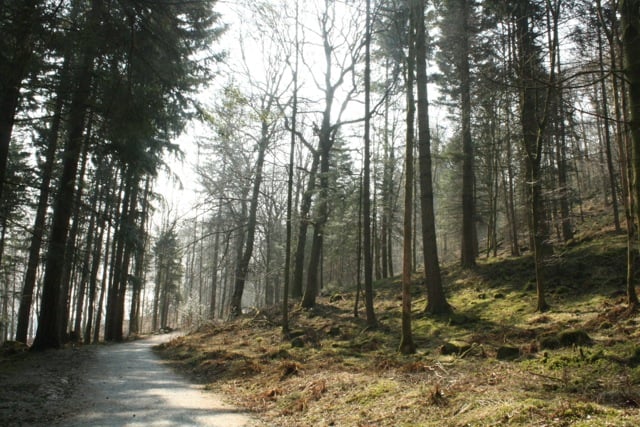
Photo by Lauren Elizabeth Mosley
Ordinary Time
9 August 2017
The Edge of Elfland
Hudson, New Hampshire
Dearest Readers,
Yesterday, in Ireland, Teachtaí Dála Danny Healy-Rae made the bold claim that the reason for the dip in Kerry Road was due to fairies. His argument actually extends back to 2007 when this first started happening. It seems, according to Healy-Rae, that what likely happened is some sort of Fairy Fort has been disturbed, causing the fair folk to take a certain level of retribution. At present, he has made no arguments for how to fix this problem, but is quoted as saying, “I have a machine standing in the yard right now. And if someone told me to go out and knock a fairy fort or touch it, I would starve first.”
This particular news story is quite similar to one from last year when an Icelandic road crew had to wash and re-stand an Elf Stone that had been knocked over during construction. This is, by no means, the first time, Icelanders have bent to the will of the Fair Folk, “In 1971 elves reportedly disrupted construction of a national highway from Reykjavik to the northeast. The project suffered repeated unusual technical difficulties because, it was claimed, elves did not want the large boulder that served as their home to be moved to make way for the new road.”
What I love about both of these stories is this: the end result of these beliefs in fairies and elves leads to better care for creation. Whether or not you personally believe in creatures like elves, goblins, fairies, and the like, you cannot deny that such belief often includes taking practical measures to protect nature. That is, in both instances, people, using folkloric, peasantish, knowledge react to disturbances in nature by righting wrongs. This has the benefit of leaving well enough alone whenever possible.
Tolkien as many now know, seems to have had some kind of a belief in fairies. There is a story that goes around about Tolkien carrying a leprechaun shoe in his pocket. More convincing, of course, is this from an early draft of his essay, “On Fairy-Stories:”
“Leaving aside the Question of the Real (objective) existence of Fairies, I will tell you what I think about that. If Fairies really exist––independent of Men––then very few of our “Fairy-stories” have any relation to them: as little, or less than our ghost-stories have to the real events that befall human personality (or form) after death. If Fairies exist they are bound by the Moral Law as is all the created Universe; but their duties and functions are not ours. They are not spirits of the dead, nor a branch of the human race, nor devils in fair shapes whose chief object is our deception and ruin. These are either human ideas out of which the Elf-idea has been separated, or, if Elves really exist mere human hypotheses (or confusions). They are a quite separate creation living in another mode. […] For lack of a better word they may be called spirits, daemons: inherent powers of the created world, deriving more directly and “earlier” (in terrestrial history) from the creating will of God, but nonetheless created, subject to Moral Law, capable of good and evil, and possibly (in this fallen world) sometimes evil” (254-255.Emphasis original).
Tolkien goes on to say:
“The tree-fairy (or a dryad) is, or was, a minor spirit in the process of creation who aided as ‘agent’ in the making effective of the divine Tree-idea or some part of it, or of even some one particular example: some tree. He is therefore now bound by use and love to Trees (or a tree), immortal while the world (and trees) last – never to escape, until the End” (254).
What I find so fascinating about this is not, so much, Tolkien treating fairies as real things, but the way he comes to associate them with nature and how that effects his understanding of nature. After all, if you believed that trees in general, if not trees in particular, were possessed of a dryadic spirit, you might not be so quick to chop them down, or at least to pay proper respect to the thing you’re chopping down. After all, Tolkien still wrote on paper, and yet believed trees to be of profound importance.
Lewis hits on a similar note in Perelandra when Ransom, his protagonist, encounters some kind of fairy or local god of the mountain in which he is traveling. Ransom is moved to this reverie:
“And it appeared to Ransom that there might, if a man could find it, be some way to renew the old Pagan practice of propitiating the local gods of unknown places in such fashion that it was no offense to God Himself but only a prudent and courteous apology for trespass” (158).
It is this idea that somehow, in someway, fairies–and Faërie in general–are connected to nature and that this ought to change the way we interact with nature. This is what I love about the Healy-Rae and Iceland articles. If, in someway as Lewis himself opines, we can find a way to respect nature so that it is no offense to God (in fact it would be to his glory) then maybe the result will not just be due deference given, but a better world for us to share with one another and whoever else may live here.
Sincerely,
David
The Radical Catholic Reimagination of Everything
Previous Post

July 25, 2017
St. Columba and the Loch Ness Monster: The Earliest Extant Story
Next Post
October 8, 2017 Autumn Is a Jovial Man: Reflections on the Autumnal Season
Browse Our Archives
Select a Category A Secular Age Advent Apologetics Atheism Beauty Being a Catholic Evangelical Being Catholic Being Deified: Poetry and Fantasy on the Path to God Blogging Book Reviews C. S. Lewis Catholic Imagination Catholic Social Teaching Catholicism Christmas Church Calendar Church Fathers Church Life Community Conferences Cosmology Creation Curdled Words Deification Distributism Easter Economics Education Epiphany Essay Extracts Eucharist Faerie Faeriean Metaphysics Fatherhood Films Folk Liturgy Food and Drink G. K. Chesterton Harry Potter J. R. R. Tolkien Jove King Arthur Language Lent Life Literature and Poetry Liturgy Medieval Theology Music My Publications Mythology On the Edges of Elfland Ordinary Time Ordination Parenthood Parish Patristic Theology Pentecost Politics Prayer Racism Radical Orthodoxy Restoration Movement Sacramental Ontology Saints Science Sex and Sexuality Sophiology Stories The Inklings The Radical Catholic Reimagination of Everything Theologians in the Church Theopoetics Thesis Research Uncategorized University of Nottingham What I'm Reading Writing
Select a Month December 2019 November 2019 October 2019 September 2019 August 2019 July 2019 June 2019 May 2019 April 2019 March 2019 February 2019 January 2019 December 2018 November 2018 October 2018 September 2018 August 2018 July 2018 June 2018 May 2018 April 2018 March 2018 February 2018 January 2018 December 2017 November 2017 October 2017 August 2017 July 2017 June 2017 May 2017 April 2017 March 2017 February 2017 January 2017 December 2016 November 2016 October 2016 September 2016 August 2016 July 2016 June 2016 May 2016 April 2016 March 2016 February 2016 January 2016 December 2015 November 2015 October 2015 September 2015 August 2015 July 2015 June 2015 May 2015 April 2015 March 2015 February 2015 January 2015 December 2014 November 2014 October 2014 September 2014 August 2014 July 2014 June 2014 May 2014 April 2014 March 2014 February 2014 January 2014 December 2013 November 2013 October 2013 September 2013 August 2013 July 2013 June 2013 May 2013 April 2013 March 2013 February 2013 January 2013 December 2012 November 2012 October 2012 September 2012 July 2012
Follow Us!
TAKE THE
Religious Wisdom Quiz
Who dreamed of a ladder reaching to heaven?
Select your answer to see how you score.
Abraham Joseph Isaac Jacob
Related posts from Letters from the Edge of Elfland
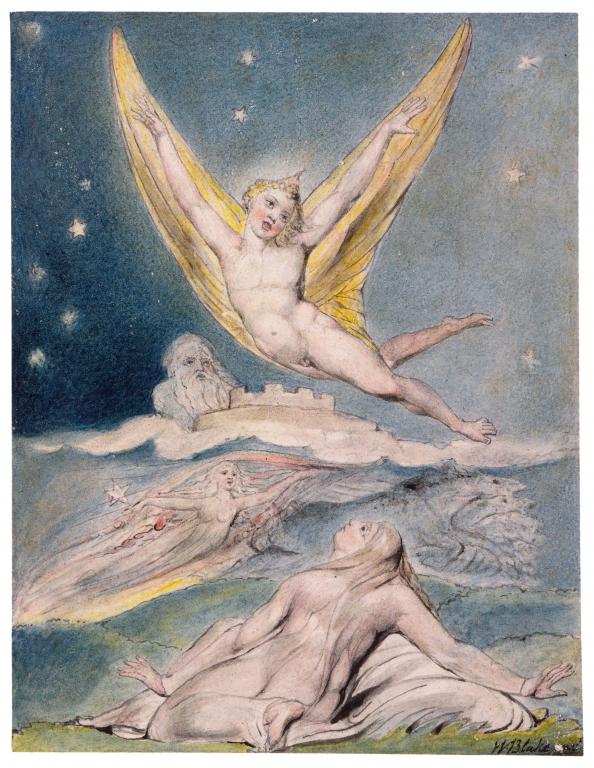
William Blake on the Creative Spirit, Beauty, and...
Letters from the Edge of Elfland
Friendship, Love, and the Arts: A Belated Review...
Letters from the Edge of Elfland
The Earth, Our Mother, and the Amazonian Synod
Letters from the Edge of Elfland
Can You Imagine? Beginning a Definition of the...
Letters from the Edge of Elfland
TRENDING AT PATHEOS Catholic

If Baptism Washes Away Sin, Why Do Catholics...
The seven sacraments stand as the foundation of Catholic ecclesial life. The...

Far from promoting indifference, inaction, or quietism, Paul consistently tells us to...

The Power of Setting a Good Example
Remember last August when the Chicago White Sox hosted a "Pope Hat...

Theology As A Way of Life, Not Mere...
I enjoy the study of dogmatic and systematic theology. I like studying...

A Catholic Critique of Biblical Unitarianism
If the statistics are to be believed, Unitarianism is rising worldwide. Although...

How Grandma Tourism Helps Grandparents Live Their Vocation
Grandma, The New Travel Influencer What started as a nostalgia-inspired social media...
view all Catholic blogs
Ad-Free & Subscriber Log-In Subscription Support
- About Us
- 2026 Calendar
- Videos
- Podcasts
- Library of World Religions
- Faith In Media Tracker
- Advertise With Us
- Write for Us
- Privacy Policy
- Terms of Service
- Do Not Sell My Data
- Contact Us
- Radiant Digital
- Manage Newsletter Subscriptions
- Unsubscribe From Notifications
- Sitemap
Copyright 2008-2026, Patheos. All rights reserved.
Subscription Support Ad-Free & Subscriber Log-In
Follow Patheos