
BuddhistCatholicContemplativeEvangelicalGeneral ChristianHinduJewishLatter-day SaintMuslimNew VisionsProgressive Christian
Beliefs
- Buddhist
- Catholic
- Contemplative
- Evangelical
- General Christian
- Hindu
- Jewish
- Latter-day Saint
- More Voices
- Muslim
- New Visions
- Pagan
- Progressive Christian
Topics
- Religion News
- Food and Religion
- Sports and Religion
- Religious Art
- Religious Music and Entertainment
- Religious Events
- History and Religion
- Style and Religion
- Politics and Religion
- Women in Religion
- Recreation Outdoors and Religion
- Business Finance and Religion
- Careers Workplace and Religion
- Education and Religion
- Family Parenting and Religion
- Health Fitness and Religion
- Home and Religion
- Relationships and Religion
- Technology and Religion
- Travel and Religion
Columnists
- Buddhist Columnists
- Business Finance and Religion Columnists
- Careers Workplace and Religion Columnists
- Catholic Columnists
- Contemplative Columnists
- Education and Religion Columnists
- Evangelists Columnists
- Family Parenting and Religion Columnists
- General Christian Columnists
- Health Fitness and Religion Columnists
- Hindu Columnists
- History and Religion Columnists
- Home and Religion Columnists
- Jewish Columnists
- More Voices Columnists
- Latter Day Columnists
- Muslim Columnists
- New Visions Columnists
- Nonreligious Columnists
- Pagan Columnists
- Politics and Religion Columnists
- Progressive Columnists
- Recreation Outdoors and Religion Columnists
- Relationships and Religion Columnists
- Religion News Columnists
- Religious Art Columnists
- Religious Events Columnists
- Religious Music and Entertainment Columnists
- Sports and Religion Columnists
- Style and Religion Columnists
- Technology and Religion Columnists
- Travel and Religion Columnists
- Women in Religion Columnists
Resource Library
- 2026 Calendar
- Library of World Religions
- The 100 Most Holy Places on Earth
- Patheos Answers
- Podcasts
- Videos
- Faith Leaders Database
- Anglican Episcopalian
- Bahai
- Baptist
- Buddhism
- Christianity
- Confucianism
- Eastern Orthodoxy
- Hinduism
- Holiness and Pentecostal
- ISKCON
- Islam
- Judaism
- Lutheran
- Methodist
- The Church of Jesus Christ of Latter-day Saints
- New Age
- Paganism
- Presbytarian and Reformed
- Protestantism
- Religion Behind the Scenes
- Roman Catholic
- Scientology
- Shia Islam
- Sikhism
- Sufism
- Sunni Islam
- Taoism
- Zen
- See all religions
Research Tools
 Ad-Free & Subscriber Log-In Subscription Support
Ad-Free & Subscriber Log-In Subscription Support
Follow Patheos 

- Trending:
- Forgiveness
- |
- Marriage
- |
- Consciousness
- |
- Death Penalty
- |
- Election
- |
- Halloween
 Letters from the Edge of Elfland
- Home
- About
- Distributist Resources
- Publications and Presentations
- Support
- Works in Progress
- The Epistolarian Around the Web
- Home
- Catholic
- The Sound of Silence: Reflections on My Struggles with Silence, and its Lack, both in Church and out
The Sound of Silence: Reflections on My Struggles with Silence, and its Lack, both in Church and out
Last updated on: April 24, 2017 at 9:14 am by David Russell Mosley
The Sound of Silence: Reflections on My Struggles with Silence, and its Lack, both in Church and out 2017-04-24T09:14:31-04:00 David Russell Mosley
Patheos Explore the world's faith through different perspectives on religion and spirituality! Patheos has the views of the prevalent religions and spiritualities of the world.
- David Russell Mosley
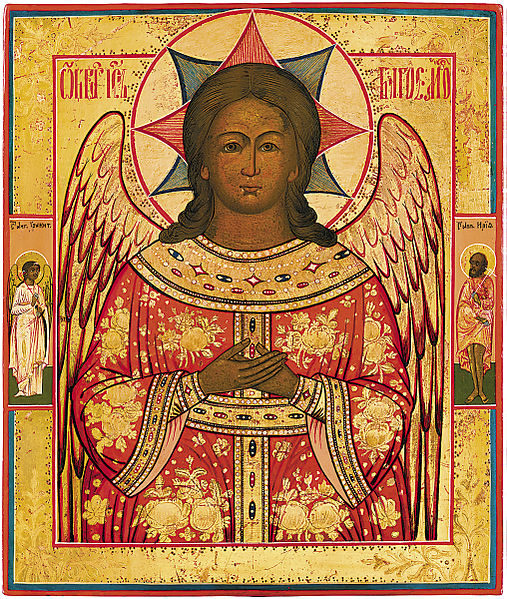
Holy Silence Description
English: MacDougall’s Fine Art Auctions
Date 19 c.
Source http://macdougallauction.com/IndexDec10c.asp?P_month=Dec10&sCategory=&sKeyword=&page=38&id=
Author
Evangelist Luka pishustchiy ikonu.jpg Anonymous Russian icon painter (before 1917)
Eastertide
24 April 2017
The Edge of Elfland
Hudson, New Hampshire
Dear Readers,
The first time I was properly confronted with silence was when I was in college. At the time I was double-majoring in Biblical Exposition and Preaching (I later dropped the Preaching major), and I was taking homiletics. One of the professor’s for that course organized a retreat for the class. He had written a short book few years prior , What the Monks Can Teach Us, and often assigned this retreat as a way enacting some of the practices he had outlined in the book. So, over a short weekend, we did lectio divina, spent time in nature, and spent a lot of time in silence. The silence part was easiest for me at the time, but only because I kept moving. The retreat took place at a large cabin in the woods and so we were free to go hiking, to take a canoe out on the pond, whatever we wanted, so long as we were silent. Of course, this was before the ubiquity of smart phones, so that made things a little easier too. But still, I spent half the day just wandering in the woods. Sure, I’d pause for a moment or two, think for a minute, maybe jot something down in my journal, but then I’d start moving again. I used activity to keep from really having to encounter the silence. I never just sat with it.
The next time I was properly confronted with silence wouldn’t be until 2013, when I went on retreat to an Anglican Benedictine monastery. I was going there to discern whether or not I was going to pursue ordination in the Church of England (I wrote about the experience here). Attempting to be silent, to only read the books I brought with me, to not get on my phone felt almost impossible. Worse, it was raining my first day, so getting out and wandering the estate wasn’t possible. I just sat, either in my room, or in the guest’s living room. Frankly, my inability to quiet my soul probably led me to make the wrong decision, which was to begin the process of ordination, one I’d eventually give up.
This leads me to more recent experiences of the lack of silence. At the various protestant services I’ve attended over the years is this most obvious. There’s almost never a moment of quiet. Are we passing communion trays? Let’s play some music and sing. Are we making announcements? Let’s have music play in the background. At some churches, the only time there’s no music playing is during the sermon, but even then there’s not actual silence. This was aggravating enough. But I’ve noticed a similar problem in Catholic churches.
In the Catholic services I have attended there are often times without music or much speaking, particularly when receiving the Eucharist. Although even then, those administering the Eucharist must speak as must those receiving. But still, there’s certainly more down time in a Catholic service. They’re not as afraid of a little silence, right? Except, and again this is only at the services I have attended so I cannot say this is descriptive of services everywhere, it seems to me they are. The most clear example is during the prayers. We fly through the various prayers for the Pope, our bishop, the world, etc. and arrive at a chance to quietly, privately, silently, pray for our own intentions. Yet, I’ve barely had time to articulate those intentions in my own head before we’ve moved on to the next thing. Now it’s true that there is often more time for quiet reflection during a Catholic service, but that’s most often when nothing is going on (e.g. before Mass) or when the time has a predetermined length (e.g. When everyone is in line to receive communion; we know that time will end when the last person has received the host). This opportunity to pray for our own intentions is the one set time of silence that has no official duration. And I’m afraid that we fly right by it, rather than allow the congregation to sit with it, even to be made uncomfortable by it.
I think this has to do with the nature of our culture. We are encouraged to make noise, to be surrounded by sound. Whether it’s devices in our pockets that make us accessible at all times, day or night, and can play music and watch videos; or the ambient nose of cars, trains, planes, and all other manner of motor engines, we surrounded by man-made sound. And we’re encouraged to do this: we move into cities to find work (something humans have been doing for a long time now); advertisers encourage us to buy products that can play music, turn on lights, answer questions, all at the sound of our voice; children’s toys seem to almost ubiquitously come with (or need) batteries in order to function properly. There is little occasion for and no encouragement to experience silence. And even when we try to be a little more silent, we often do things. We’re certainly not encouraged to sit, alone or together, in silence just contemplating.
I wish I had the answer. I wish I could say silence comes easily for me. But I don’t and it doesn’t. Silence is hard. True, non-capitalist, leisure is hard. Contemplation feels impossible. And yet in a world where we’re not even busy doing good things the way Martha was, we are still called as followers of Christ to be, at least on occasion, Mary. We still need to sit at the Lord’s feet, drinking him in. We must, for this is a huge part of what it means to be a Christian. And maybe, just maybe, introducing a little more silence into our church services might help us introduce more silence into our everyday lives. Maybe.
Sincerely,
David
Previous Post
April 23, 2017
Too Busy for Busy Lives and Restless Souls: An Unreview
Browse Our Archives
Select a Category A Secular Age Advent Apologetics Atheism Beauty Being a Catholic Evangelical Being Catholic Being Deified: Poetry and Fantasy on the Path to God Blogging Book Reviews C. S. Lewis Catholic Imagination Catholic Social Teaching Catholicism Christmas Church Calendar Church Fathers Church Life Community Conferences Cosmology Creation Curdled Words Deification Distributism Easter Economics Education Epiphany Essay Extracts Eucharist Faerie Faeriean Metaphysics Fatherhood Films Folk Liturgy Food and Drink G. K. Chesterton Harry Potter J. R. R. Tolkien Jove King Arthur Language Lent Life Literature and Poetry Liturgy Medieval Theology Music My Publications Mythology On the Edges of Elfland Ordinary Time Ordination Parenthood Parish Patristic Theology Pentecost Politics Prayer Racism Radical Orthodoxy Restoration Movement Sacramental Ontology Saints Science Sex and Sexuality Sophiology Stories The Inklings The Radical Catholic Reimagination of Everything Theologians in the Church Theopoetics Thesis Research Uncategorized University of Nottingham What I'm Reading Writing
Select a Month December 2019 November 2019 October 2019 September 2019 August 2019 July 2019 June 2019 May 2019 April 2019 March 2019 February 2019 January 2019 December 2018 November 2018 October 2018 September 2018 August 2018 July 2018 June 2018 May 2018 April 2018 March 2018 February 2018 January 2018 December 2017 November 2017 October 2017 August 2017 July 2017 June 2017 May 2017 April 2017 March 2017 February 2017 January 2017 December 2016 November 2016 October 2016 September 2016 August 2016 July 2016 June 2016 May 2016 April 2016 March 2016 February 2016 January 2016 December 2015 November 2015 October 2015 September 2015 August 2015 July 2015 June 2015 May 2015 April 2015 March 2015 February 2015 January 2015 December 2014 November 2014 October 2014 September 2014 August 2014 July 2014 June 2014 May 2014 April 2014 March 2014 February 2014 January 2014 December 2013 November 2013 October 2013 September 2013 August 2013 July 2013 June 2013 May 2013 April 2013 March 2013 February 2013 January 2013 December 2012 November 2012 October 2012 September 2012 July 2012
Follow Us!
TAKE THE
Religious Wisdom Quiz
"______ is the same yesterday and today and forever."
Select your answer to see how you score.
The Universe Jesus Christ Our Calling God's Plan
Related posts from Letters from the Edge of Elfland
On the First Day of Advent: Taking Twin...
Letters from the Edge of Elfland
The Catholic Church Has a Geography Problem: Reflections...
Letters from the Edge of Elfland

"How to Be a Poet": Reflections on a...
Letters from the Edge of Elfland

Chesterton, Dragons, and Cancer: A Reflection on this...
Letters from the Edge of Elfland
TRENDING AT PATHEOS Catholic

Rejecting Doom: Christian Hope And Human Action
Christianity is a religion of hope. We are to have hope and...

It’s What Comes From Within Which Matters
One of the most difficult things for us to understand is why...

Why I Choose the Eucharist Over the Sermon
Choose the Eucharist, Not the Sermon What are we supposed to get...

5 Design Elements Found in Spiritually Rooted Homes
Putting Spirituality Into Home Decor Our homes are more than our living...

Credo: A Story of God Told with the...
About 10 years ago, I began to imagine a personal "Credo" that...

The Anatomy of Divine Revelation in Catholic Thought
The claim that God has made Himself known to human beings is...
view all Catholic blogs
Ad-Free & Subscriber Log-In Subscription Support
- About Us
- 2026 Calendar
- Videos
- Podcasts
- Library of World Religions
- Faith In Media Tracker
- Advertise With Us
- Write for Us
- Privacy Policy
- Terms of Service
- Do Not Sell My Data
- Contact Us
- Radiant Digital
- Manage Newsletter Subscriptions
- Unsubscribe From Notifications
- Sitemap
Copyright 2008-2026, Patheos. All rights reserved.
Subscription Support Ad-Free & Subscriber Log-In
Follow Patheos