
BuddhistCatholicContemplativeEvangelicalGeneral ChristianHinduJewishLatter-day SaintMuslimNew VisionsProgressive Christian
Beliefs
- Buddhist
- Catholic
- Contemplative
- Evangelical
- General Christian
- Hindu
- Jewish
- Latter-day Saint
- More Voices
- Muslim
- New Visions
- Pagan
- Progressive Christian
Topics
- Religion News
- Food and Religion
- Sports and Religion
- Religious Art
- Religious Music and Entertainment
- Religious Events
- History and Religion
- Style and Religion
- Politics and Religion
- Women in Religion
- Recreation Outdoors and Religion
- Business Finance and Religion
- Careers Workplace and Religion
- Education and Religion
- Family Parenting and Religion
- Health Fitness and Religion
- Home and Religion
- Relationships and Religion
- Technology and Religion
- Travel and Religion
Columnists
- Buddhist Columnists
- Business Finance and Religion Columnists
- Careers Workplace and Religion Columnists
- Catholic Columnists
- Contemplative Columnists
- Education and Religion Columnists
- Evangelists Columnists
- Family Parenting and Religion Columnists
- General Christian Columnists
- Health Fitness and Religion Columnists
- Hindu Columnists
- History and Religion Columnists
- Home and Religion Columnists
- Jewish Columnists
- More Voices Columnists
- Latter Day Columnists
- Muslim Columnists
- New Visions Columnists
- Nonreligious Columnists
- Pagan Columnists
- Politics and Religion Columnists
- Progressive Columnists
- Recreation Outdoors and Religion Columnists
- Relationships and Religion Columnists
- Religion News Columnists
- Religious Art Columnists
- Religious Events Columnists
- Religious Music and Entertainment Columnists
- Sports and Religion Columnists
- Style and Religion Columnists
- Technology and Religion Columnists
- Travel and Religion Columnists
- Women in Religion Columnists
Resource Library
- 2026 Calendar
- Library of World Religions
- The 100 Most Holy Places on Earth
- Patheos Answers
- Podcasts
- Videos
- Faith Leaders Database
- Anglican Episcopalian
- Bahai
- Baptist
- Buddhism
- Christianity
- Confucianism
- Eastern Orthodoxy
- Hinduism
- Holiness and Pentecostal
- ISKCON
- Islam
- Judaism
- Lutheran
- Methodist
- The Church of Jesus Christ of Latter-day Saints
- New Age
- Paganism
- Presbytarian and Reformed
- Protestantism
- Religion Behind the Scenes
- Roman Catholic
- Scientology
- Shia Islam
- Sikhism
- Sufism
- Sunni Islam
- Taoism
- Zen
- See all religions
Research Tools
 Ad-Free & Subscriber Log-In Subscription Support
Ad-Free & Subscriber Log-In Subscription Support
Follow Patheos 

- Trending:
- Forgiveness
- |
- Marriage
- |
- Consciousness
- |
- Death Penalty
- |
- Election
- |
- Halloween
 Letters from the Edge of Elfland
- Home
- About
- Distributist Resources
- Publications and Presentations
- Support
- Works in Progress
- The Epistolarian Around the Web
- Home
- Catholic
- If Robots Learned to Pray: The Soul, Prayer, Science, and Christianity
If Robots Learned to Pray: The Soul, Prayer, Science, and Christianity
Last updated on: February 6, 2017 at 12:30 pm by David Russell Mosley
If Robots Learned to Pray: The Soul, Prayer, Science, and Christianity 2017-02-06T12:30:30-04:00 David Russell Mosley
Patheos Explore the world's faith through different perspectives on religion and spirituality! Patheos has the views of the prevalent religions and spiritualities of the world.
Science
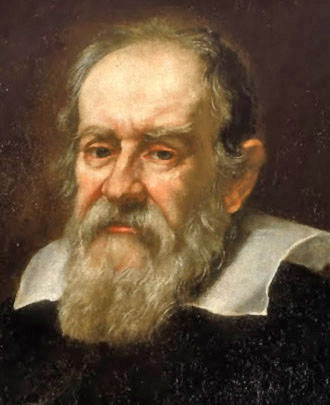
Author
Justus Sustermans (1597–1681) Link back to Creator infobox template wikidata:Q974195
Title Portrait of Galileo Galilei
Date 1636
(Public Domain)
The last area I want to tackle briefly is the relationship of science and Christianity as presented in this article. Before I get into his presentation of Galileo, I do want to comment on a rather asinine comment Merritt makes. He writes concerning whether or not machines can have souls:
If this seems like an absurd question, consider technologies such as in vitro fertilization and genetic cloning. Intelligent life is created by humans in each case, but presumably many Christians would agree that those beings have a soul. “If you have a soul and you create a physical copy of yourself, you assume your physical copy also has a soul,” says McHargue. “But if we learn to digitally encode a human brain, then AI would be a digital version of ourselves. If you create a digital copy, does your digital copy also have a soul?”
I really can’t even begin to understand this comparison. After all, both in vitro and genetic cloning, we’re talking about doing the conception process (the combination of sperm and egg) outside of the body and then placing it back inside the body. We’re not talking about synthetic sperm or eggs. We’re not even, yet, talking about synthetic wombs. The materials are all still organic even if they’re removed from their natural processes temporarily. This is in no way analogous to attempting to digitally encode the human brain or the singularity.
Now, Merritt also assumes an antagonistic relationship between Christianity and science. He cites as examples, Galileo, Darwin, climate change and genetics. That he has history wrong here is as indisputable as is the fact that many, particularly fundamentalists and some evangelicals, think these are problems for Christianity (not so much Galileo, but the others for sure). After all, Galileo wasn’t in trouble so much for contradicting the Bible but Aristotle and the best science at the time. The math wasn’t on his side initially. Darwin wasn’t a particular problem for Christians in his own day. And one need only read the writings of Benedict XVI or, for instance, Laudato Si’ by Pope Francis to see that Christianity has no problem with believing in climate change. I’m not sure what Merritt means by “modern genetics” but given that Br. Mendel is basically the grandfather of modern genetics, it seems unlikely that genetic theory is inherently antithetical to Christianity.
So, here’s my point: I have no real fear of the rise of consciousness in robots. I’m more inclined to think the ore from which the metals of robots are made has some level of consciousness than I am inclined to believe it possible robots will naturally acquire souls/consciousness. What’s more, this article, and even, I think many scientists asking these kinds of questions, need to realize that they are doing philosophy and theology and train and study accordingly. Finally, we need to remember that Christianity and science are not at odds with one another. There is no truth science can discover that will be antithetical to Christianity, not if Christianity is in fact true. It might be the case that things science takes to be true aren’t, or aren’t true in the ways they believe them to be, but if Christians are right, science can discover nothing that will force us to completely re-think our faith. So take comfort in that.
Sincerely,
David
P.S.
Consider making a donation to this blog through the donation button on the upper right side. Many thanks to all the souls who have already done so and those who plan to do so in the future.

Browse Our Archives
Select a Category A Secular Age Advent Apologetics Atheism Beauty Being a Catholic Evangelical Being Catholic Being Deified: Poetry and Fantasy on the Path to God Blogging Book Reviews C. S. Lewis Catholic Imagination Catholic Social Teaching Catholicism Christmas Church Calendar Church Fathers Church Life Community Conferences Cosmology Creation Curdled Words Deification Distributism Easter Economics Education Epiphany Essay Extracts Eucharist Faerie Faeriean Metaphysics Fatherhood Films Folk Liturgy Food and Drink G. K. Chesterton Harry Potter J. R. R. Tolkien Jove King Arthur Language Lent Life Literature and Poetry Liturgy Medieval Theology Music My Publications Mythology On the Edges of Elfland Ordinary Time Ordination Parenthood Parish Patristic Theology Pentecost Politics Prayer Racism Radical Orthodoxy Restoration Movement Sacramental Ontology Saints Science Sex and Sexuality Sophiology Stories The Inklings The Radical Catholic Reimagination of Everything Theologians in the Church Theopoetics Thesis Research Uncategorized University of Nottingham What I'm Reading Writing
Select a Month December 2019 November 2019 October 2019 September 2019 August 2019 July 2019 June 2019 May 2019 April 2019 March 2019 February 2019 January 2019 December 2018 November 2018 October 2018 September 2018 August 2018 July 2018 June 2018 May 2018 April 2018 March 2018 February 2018 January 2018 December 2017 November 2017 October 2017 August 2017 July 2017 June 2017 May 2017 April 2017 March 2017 February 2017 January 2017 December 2016 November 2016 October 2016 September 2016 August 2016 July 2016 June 2016 May 2016 April 2016 March 2016 February 2016 January 2016 December 2015 November 2015 October 2015 September 2015 August 2015 July 2015 June 2015 May 2015 April 2015 March 2015 February 2015 January 2015 December 2014 November 2014 October 2014 September 2014 August 2014 July 2014 June 2014 May 2014 April 2014 March 2014 February 2014 January 2014 December 2013 November 2013 October 2013 September 2013 August 2013 July 2013 June 2013 May 2013 April 2013 March 2013 February 2013 January 2013 December 2012 November 2012 October 2012 September 2012 July 2012
Follow Us!
TAKE THE
Religious Wisdom Quiz
What did David use to calm Saul when Saul was troubled by a harmful spirit?
Select your answer to see how you score.
Flute Trumpet Drum Harp
Related posts from Letters from the Edge of Elfland
Curdled Words: George Herbert, The Milky Way, and...
Letters from the Edge of Elfland
Too Busy for Busy Lives and Restless Souls:...
Letters from the Edge of Elfland
Joy in the Midst of Unruly Children: Reflections...
Letters from the Edge of Elfland
Did a Brazilian Woman Pray to a Toy...
Letters from the Edge of Elfland
TRENDING AT PATHEOS Catholic

Creation, Preservation, and Teleology in Catholic Theology
As I write this, it is very early Monday morning. Like millions...

The Parable Of The Sower And The Word...
One of Christ’s most famous parables is that of the sower who...

Rejecting Doom: Christian Hope And Human Action
Christianity is a religion of hope. We are to have hope and...

Why I Choose the Eucharist Over the Sermon
Choose the Eucharist, Not the Sermon What are we supposed to get...

5 Design Elements Found in Spiritually Rooted Homes
Putting Spirituality Into Home Decor Our homes are more than our living...

Credo: A Story of God Told with the...
About 10 years ago, I began to imagine a personal "Credo" that...
view all Catholic blogs
Ad-Free & Subscriber Log-In Subscription Support
- About Us
- 2026 Calendar
- Videos
- Podcasts
- Library of World Religions
- Faith In Media Tracker
- Advertise With Us
- Write for Us
- Privacy Policy
- Terms of Service
- Do Not Sell My Data
- Contact Us
- Radiant Digital
- Manage Newsletter Subscriptions
- Unsubscribe From Notifications
- Sitemap
Copyright 2008-2026, Patheos. All rights reserved.
Subscription Support Ad-Free & Subscriber Log-In
Follow Patheos