
BuddhistCatholicContemplativeEvangelicalGeneral ChristianHinduJewishLatter-day SaintMuslimNew VisionsProgressive Christian
Beliefs
- Buddhist
- Catholic
- Contemplative
- Evangelical
- General Christian
- Hindu
- Jewish
- Latter-day Saint
- More Voices
- Muslim
- New Visions
- Pagan
- Progressive Christian
Topics
- Religion News
- Food and Religion
- Sports and Religion
- Religious Art
- Religious Music and Entertainment
- Religious Events
- History and Religion
- Style and Religion
- Politics and Religion
- Women in Religion
- Recreation Outdoors and Religion
- Business Finance and Religion
- Careers Workplace and Religion
- Education and Religion
- Family Parenting and Religion
- Health Fitness and Religion
- Home and Religion
- Relationships and Religion
- Technology and Religion
- Travel and Religion
Columnists
- Buddhist Columnists
- Business Finance and Religion Columnists
- Careers Workplace and Religion Columnists
- Catholic Columnists
- Contemplative Columnists
- Education and Religion Columnists
- Evangelists Columnists
- Family Parenting and Religion Columnists
- General Christian Columnists
- Health Fitness and Religion Columnists
- Hindu Columnists
- History and Religion Columnists
- Home and Religion Columnists
- Jewish Columnists
- More Voices Columnists
- Latter Day Columnists
- Muslim Columnists
- New Visions Columnists
- Nonreligious Columnists
- Pagan Columnists
- Politics and Religion Columnists
- Progressive Columnists
- Recreation Outdoors and Religion Columnists
- Relationships and Religion Columnists
- Religion News Columnists
- Religious Art Columnists
- Religious Events Columnists
- Religious Music and Entertainment Columnists
- Sports and Religion Columnists
- Style and Religion Columnists
- Technology and Religion Columnists
- Travel and Religion Columnists
- Women in Religion Columnists
Resource Library
- 2026 Calendar
- Library of World Religions
- The 100 Most Holy Places on Earth
- Patheos Answers
- Podcasts
- Videos
- Faith Leaders Database
- Anglican Episcopalian
- Bahai
- Baptist
- Buddhism
- Christianity
- Confucianism
- Eastern Orthodoxy
- Hinduism
- Holiness and Pentecostal
- ISKCON
- Islam
- Judaism
- Lutheran
- Methodist
- The Church of Jesus Christ of Latter-day Saints
- New Age
- Paganism
- Presbytarian and Reformed
- Protestantism
- Religion Behind the Scenes
- Roman Catholic
- Scientology
- Shia Islam
- Sikhism
- Sufism
- Sunni Islam
- Taoism
- Zen
- See all religions
Research Tools
 Ad-Free & Subscriber Log-In Subscription Support
Ad-Free & Subscriber Log-In Subscription Support
Follow Patheos 

- Trending:
- Forgiveness
- |
- Marriage
- |
- Consciousness
- |
- Death Penalty
- |
- Election
- |
- Halloween
 Letters from the Edge of Elfland
- Home
- About
- Distributist Resources
- Publications and Presentations
- Support
- Works in Progress
- The Epistolarian Around the Web
- Home
- Catholic
- A (Not so Brief) Review of Harry Potter and the Cursed Child
A (Not so Brief) Review of Harry Potter and the Cursed Child
Last updated on: October 21, 2016 at 9:43 am by David Russell Mosley
A (Not so Brief) Review of Harry Potter and the Cursed Child 2016-10-21T09:43:22-04:00 David Russell Mosley
Patheos Explore the world's faith through different perspectives on religion and spirituality! Patheos has the views of the prevalent religions and spiritualities of the world.
David Russell Mosley
(Source: Wikipedia)
Ordinary Time
21 October 2016
The Edge of Elfland
Hudson, New Hampshire
Dear Readers,
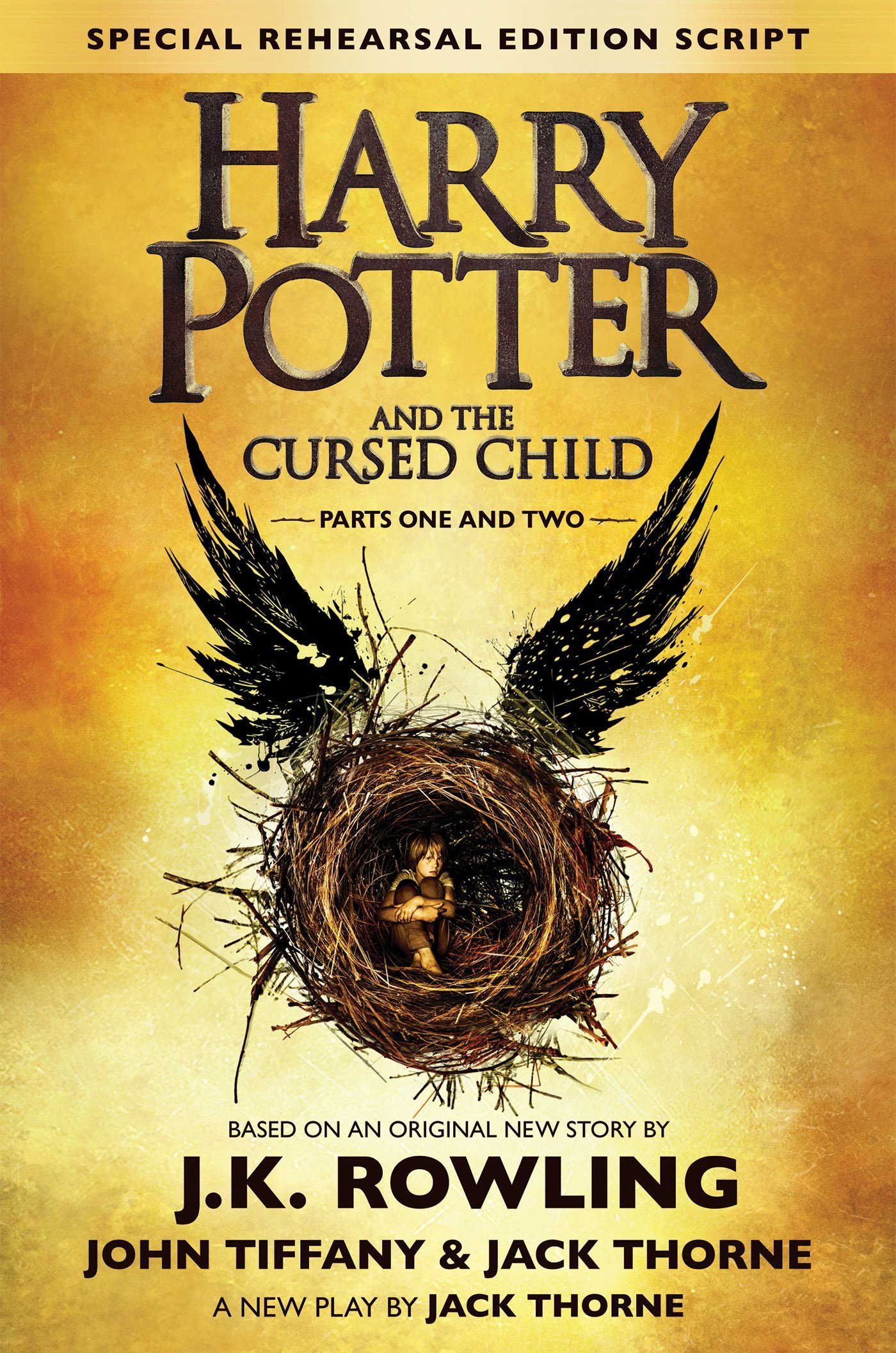
Two nights ago I got into bed and began to read. I wasn’t tired and so I just kept reading. I read until the book was done. The book, or better the play, was Harry Potter and the Cursed Child. I’ve done a fair amount of thinking about it and thought I would share some of those thoughts with you. Fair warning ahead, this review will contain “spoilers” so be forewarned.
The play picks up where Harry Potter and the Deathly Hallows left off, 19 years later. The scene is almost, but by no means precisely, the same as it is at the end of Deathly Hallows. Some parts of the conversation get expanded and others (like Teddy Lupin snogging Victoire Weasley) get left out entirely. The key, however, is the conversation between Albus Severus Potter and his famous father, Harry. What if Albus is in Slytherin? This play answers that question, to a certain extent, by placing Albus in Slytherin House. The whole book is ultimately about the relationship between Harry and Albus as Albus grows up to be different from his father as he is now, but, as Albus will discover, quite similar to how Harry was as a child. In that sense, the book is a beautiful meditation on how parenthood is often more difficult when raising a child just like you were than raising a child more like the way you are now (James Potter is put into that role in this play). So far as this theme goes, the book is quite excellent. Albus continues to feel like a disappointment to his father, because things aren’t coming easily to him the way he thought they did to his dad.
The plot, however, is driven only in part by this broken relationship between Albus and Harry. The other side of the plot deals with time travel. One night, after confiscating a Time Turner from Theodore Nott, Harry is visited by Amos Diggory, now living in a retirement home. Amos begs Harry to go back in time and save his son, Cedric. Harry refuses, knowing just how dangerous time travel is. Meanwhile, Albus, who is listening in, meets a woman called Delphi who introduces herself as Amos’ niece and caretaker. As it later turns out, Delphi is not Amos’ niece, but the offspring of Voldemort and Bellatrix LeStrange. She has heard a prophecy that suggests if Cedric is saved, Harry will die and Voldemort will reign. Albus, not knowing about the prophecy, along with his best friend Scorpius Malfoy, decides to steal the confiscated time turner and try to save Cedric by making sure he doesn’t get to the center of the maze with Harry.
The play then takes something of a Back to the Future turn where time travel results in different, alternate futures. These are fairly interesting as they show us various different things. For instance, in both alternate timelines, Ron and Hermione are not married. This seems to be Rowling’s attempt to justify their relationship (something she herself has struggled with since creating it) by showing that Ron and Hermione work best together, not apart. We also get a chance to see Snape again, this time acting the Hero much more overtly. The play ends on a touching note as Harry, along with Albus, Ginny, Ron, Hermione, Draco, Scorpius, and Delphi watch Voldemort murder Harry’s parents. We then return to the present where Albus finally learns not only that his father really does love him, but that they are not so different after all.
I liked the play. I think the various themes it introduces, as well as the various timelines are interesting, and depart in good ways, I think, from the original books. Still, I can’t help but feel like the medium of the story, namely that it is a play, causes some shortcomings. One of the things I love most about the Harry Potter books is the wizarding world itself, and yet we get to see very little of that here. And we must see little of it, for this is a play, not a book that can indulge (or over indulge) in discussions of shops, classes, magic, etc. I also feel as though we get a little shortchanged on how Albus comes to feel the way he does. Let me try to explain what I mean.
The whole plot centers on Albus not fitting in at school and only having one friend. He feels like an outcast precisely because he is a Potter in Slytherin house. What we never get to see, or not much of, however, is both how Albus’ own family feels about this (James is already at Hogwarts when Albus gets in and Lily starts after Albus) and how Slytherin House felt about it. This happens in part, I think, because there isn’t enough cast. We get only a handful of other students in the play and we never find out what house they are in. And yet, after Chamber of Secrets, and especially with the rumor that Scorpius (or at least someone) is actually the offspring of Voldemort (and this being made possible by time travel), that a Potter being in Slytherin House would cause some of the Slytherins to think perhaps Albus (or even Scorpius) is a new Dark Lord around whom they can rally. Yet that question never gets raised, not even for Scorpius. Similarly, we never find out how or if at all Albus is ostracized by his siblings or cousins. Sure, we get Rose Granger-Weasley not associating with him after their first or second year, but that’s it. Does James taunt and torture him at home? We get a slight indication of it, but not much of one. Certainly not enough of one to feel as though we have earned Albus’ angst. Again, I think this happened precisely because this is a play and not a book. There were also times throughout the story where familiar characters felt unfamiliar. Draco, in particular, feels different. Perhaps some of that is his being softened by losing his wife and raising his son as a single parent, but we don’t get many opportunities to explore that.
There were parts of this story I absolutely loved, however. Scorpius Malfoy was a delight to read. His enthusiasm, his presentation as a modern day “nerd” or geek, and his crush on Rose Granger-Weasley make him likeable and relatable. What’s more, in those moments where we are reminded that whatever problems Albus has with his dad, Scorpius has much more serious problems to deal with. His mother is dead. People think he’s the bastard son of Voldemort. And yet he is the light in this story. He’s the one who can pull Albus out of his funks (though we do learn that Scorpius needs Albus too when we visit a future without Harry Potter). Similarly, I loved the opportunities to see Ron and Hermione without one another. Many readers feel like their relationship doesn’t make sense. This play shows us that (not unlike the friendship between Albus and Scorpius) that Ron and Hermione need one another in order to be their best selves. We also get wonderful discussions of the nature of friendships and relationships in general. Draco admits to being jealous of what Ron, Hermione, and Harry had; as does Ginny.
In the end, I think this story imperfect. It introduces ideas and themes but does not have the space (nor the cast) to fully deal with them because it is a play. Nevertheless, the way the story looks at the nature of relationships (father-son, husband-wife, father-daughter, friend-friend) is wonderful (and really deserves a post of its own). The plot is, I think, good, and the conclusion wonderful. I certainly recommend it and hope to see it on the stage someday.
Sincerely,
David
Harry Potter and the Cursed Child

Next Post

October 24, 2016 Reading on the Edges of Elfland: October 24th Edition
Browse Our Archives
Select a Category A Secular Age Advent Apologetics Atheism Beauty Being a Catholic Evangelical Being Catholic Being Deified: Poetry and Fantasy on the Path to God Blogging Book Reviews C. S. Lewis Catholic Imagination Catholic Social Teaching Catholicism Christmas Church Calendar Church Fathers Church Life Community Conferences Cosmology Creation Curdled Words Deification Distributism Easter Economics Education Epiphany Essay Extracts Eucharist Faerie Faeriean Metaphysics Fatherhood Films Folk Liturgy Food and Drink G. K. Chesterton Harry Potter J. R. R. Tolkien Jove King Arthur Language Lent Life Literature and Poetry Liturgy Medieval Theology Music My Publications Mythology On the Edges of Elfland Ordinary Time Ordination Parenthood Parish Patristic Theology Pentecost Politics Prayer Racism Radical Orthodoxy Restoration Movement Sacramental Ontology Saints Science Sex and Sexuality Sophiology Stories The Inklings The Radical Catholic Reimagination of Everything Theologians in the Church Theopoetics Thesis Research Uncategorized University of Nottingham What I'm Reading Writing
Select a Month December 2019 November 2019 October 2019 September 2019 August 2019 July 2019 June 2019 May 2019 April 2019 March 2019 February 2019 January 2019 December 2018 November 2018 October 2018 September 2018 August 2018 July 2018 June 2018 May 2018 April 2018 March 2018 February 2018 January 2018 December 2017 November 2017 October 2017 August 2017 July 2017 June 2017 May 2017 April 2017 March 2017 February 2017 January 2017 December 2016 November 2016 October 2016 September 2016 August 2016 July 2016 June 2016 May 2016 April 2016 March 2016 February 2016 January 2016 December 2015 November 2015 October 2015 September 2015 August 2015 July 2015 June 2015 May 2015 April 2015 March 2015 February 2015 January 2015 December 2014 November 2014 October 2014 September 2014 August 2014 July 2014 June 2014 May 2014 April 2014 March 2014 February 2014 January 2014 December 2013 November 2013 October 2013 September 2013 August 2013 July 2013 June 2013 May 2013 April 2013 March 2013 February 2013 January 2013 December 2012 November 2012 October 2012 September 2012 July 2012
Follow Us!
TAKE THE
Religious Wisdom Quiz
What sea did Jesus walk on?
Select your answer to see how you score.
Mediterranean Sea Dead Sea Red Sea Sea of Galilee
Related posts from Letters from the Edge of Elfland

Poetry, Podcasts, and More: Some Updates on Other...
Letters from the Edge of Elfland

Working on a Book of Poetry: An Apology...
Letters from the Edge of Elfland

Poetry Shapes the World around Us: Reflecting on...
Letters from the Edge of Elfland
Harry Potter, Demons, and Exorcists: A Follow Up...
Letters from the Edge of Elfland
TRENDING AT PATHEOS Catholic

Creation, Preservation, and Teleology in Catholic Theology
As I write this, it is very early Monday morning. Like millions...

The Parable Of The Sower And The Word...
One of Christ’s most famous parables is that of the sower who...

Rejecting Doom: Christian Hope And Human Action
Christianity is a religion of hope. We are to have hope and...

Why I Choose the Eucharist Over the Sermon
Choose the Eucharist, Not the Sermon What are we supposed to get...

5 Design Elements Found in Spiritually Rooted Homes
Putting Spirituality Into Home Decor Our homes are more than our living...

Credo: A Story of God Told with the...
About 10 years ago, I began to imagine a personal "Credo" that...
view all Catholic blogs
Ad-Free & Subscriber Log-In Subscription Support
- About Us
- 2026 Calendar
- Videos
- Podcasts
- Library of World Religions
- Faith In Media Tracker
- Advertise With Us
- Write for Us
- Privacy Policy
- Terms of Service
- Do Not Sell My Data
- Contact Us
- Radiant Digital
- Manage Newsletter Subscriptions
- Unsubscribe From Notifications
- Sitemap
Copyright 2008-2026, Patheos. All rights reserved.
Subscription Support Ad-Free & Subscriber Log-In
Follow Patheos