
BuddhistCatholicContemplativeEvangelicalGeneral ChristianHinduJewishLatter-day SaintMuslimNew VisionsProgressive Christian
Beliefs
- Buddhist
- Catholic
- Contemplative
- Evangelical
- General Christian
- Hindu
- Jewish
- Latter-day Saint
- More Voices
- Muslim
- New Visions
- Pagan
- Progressive Christian
Topics
- Religion News
- Food and Religion
- Sports and Religion
- Religious Art
- Religious Music and Entertainment
- Religious Events
- History and Religion
- Style and Religion
- Politics and Religion
- Women in Religion
- Recreation Outdoors and Religion
- Business Finance and Religion
- Careers Workplace and Religion
- Education and Religion
- Family Parenting and Religion
- Health Fitness and Religion
- Home and Religion
- Relationships and Religion
- Technology and Religion
- Travel and Religion
Columnists
- Buddhist Columnists
- Business Finance and Religion Columnists
- Careers Workplace and Religion Columnists
- Catholic Columnists
- Contemplative Columnists
- Education and Religion Columnists
- Evangelists Columnists
- Family Parenting and Religion Columnists
- General Christian Columnists
- Health Fitness and Religion Columnists
- Hindu Columnists
- History and Religion Columnists
- Home and Religion Columnists
- Jewish Columnists
- More Voices Columnists
- Latter Day Columnists
- Muslim Columnists
- New Visions Columnists
- Nonreligious Columnists
- Pagan Columnists
- Politics and Religion Columnists
- Progressive Columnists
- Recreation Outdoors and Religion Columnists
- Relationships and Religion Columnists
- Religion News Columnists
- Religious Art Columnists
- Religious Events Columnists
- Religious Music and Entertainment Columnists
- Sports and Religion Columnists
- Style and Religion Columnists
- Technology and Religion Columnists
- Travel and Religion Columnists
- Women in Religion Columnists
Resource Library
- 2026 Calendar
- Library of World Religions
- The 100 Most Holy Places on Earth
- Patheos Answers
- Podcasts
- Videos
- Faith Leaders Database
- Anglican Episcopalian
- Bahai
- Baptist
- Buddhism
- Christianity
- Confucianism
- Eastern Orthodoxy
- Hinduism
- Holiness and Pentecostal
- ISKCON
- Islam
- Judaism
- Lutheran
- Methodist
- The Church of Jesus Christ of Latter-day Saints
- New Age
- Paganism
- Presbytarian and Reformed
- Protestantism
- Religion Behind the Scenes
- Roman Catholic
- Scientology
- Shia Islam
- Sikhism
- Sufism
- Sunni Islam
- Taoism
- Zen
- See all religions
Research Tools
 Ad-Free & Subscriber Log-In Subscription Support
Ad-Free & Subscriber Log-In Subscription Support
Follow Patheos 

- Trending:
- Forgiveness
- |
- Marriage
- |
- Consciousness
- |
- Death Penalty
- |
- Election
- |
- Halloween
 Letters from the Edge of Elfland
- Home
- About
- Distributist Resources
- Publications and Presentations
- Support
- Works in Progress
- The Epistolarian Around the Web
- Home
- Catholic
- Overcoming Evil with the Common and the Ordinary: Reflections on Harry Potter and G.K. Chesterton
Overcoming Evil with the Common and the Ordinary: Reflections on Harry Potter and G.K. Chesterton
Last updated on: August 2, 2016 at 9:20 am by David Russell Mosley
Overcoming Evil with the Common and the Ordinary: Reflections on Harry Potter and G.K. Chesterton 2016-08-02T09:20:18-04:00 David Russell Mosley
Patheos Explore the world's faith through different perspectives on religion and spirituality! Patheos has the views of the prevalent religions and spiritualities of the world.
David Russell Mosley
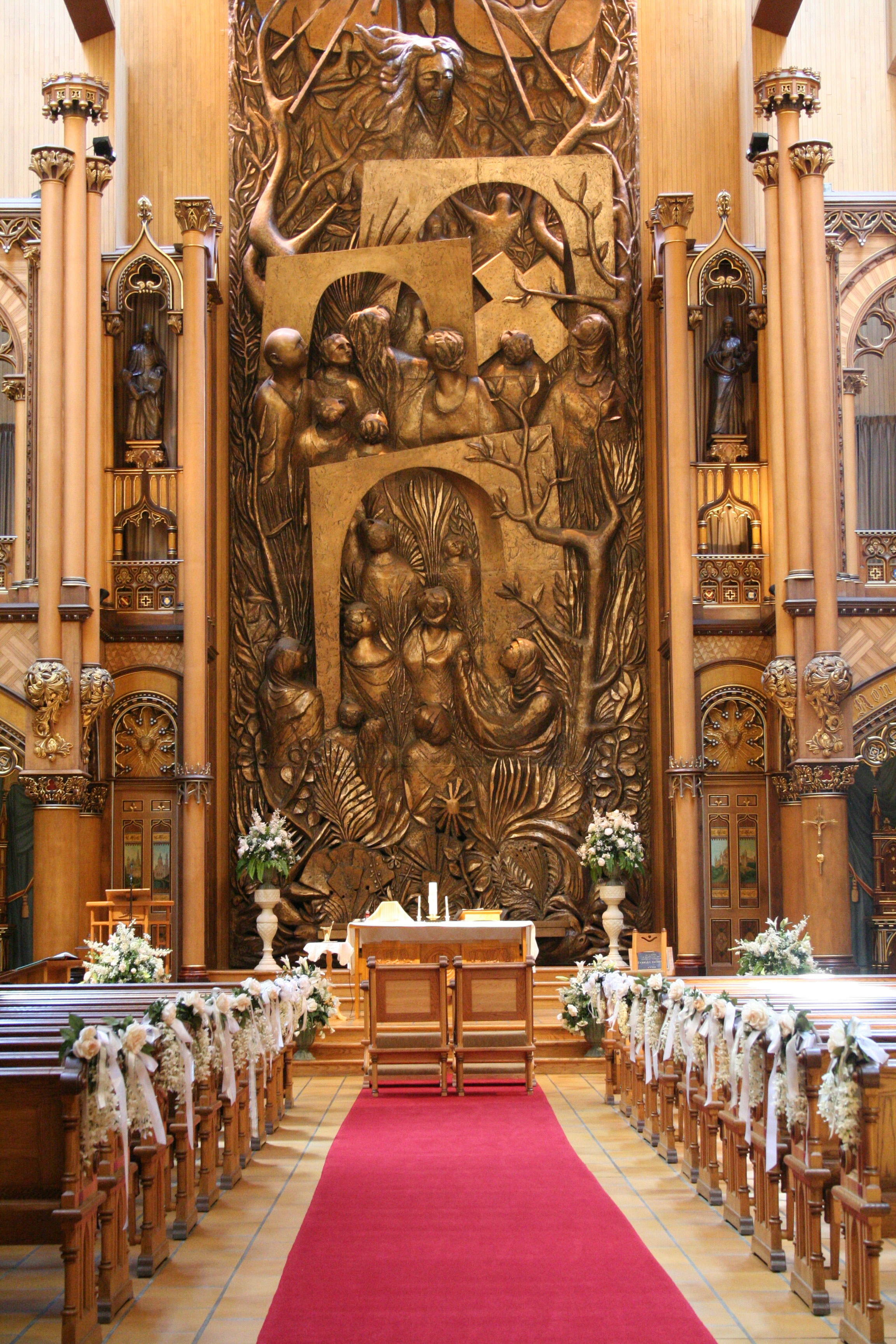
FreeImages.com, Gary Scott
Ordinary Time
2 August 2016
The Edge of Elfland
Hudson, New Hampshire
Dear Readers,
As you know, I have been reading my way through the Harry Potter series again this summer. I have just finished reading Harry Potter and the Order of the Phoenix. Initially, this book, with all its wizard angst and misunderstood Harry made it a lesser favorite with me. However, on this read, I couldn’t help sympathizing with Harry more. I have always loved the happy scenes with Sirius and Lupin, my two favorite characters (with Arthur Weasley a close third). As I was reading it, particularly as I got to the final chapter with Fred and George, I was reminded of something I love about these books. I was reminded of how Rowling so often uses the common to combat evil.
When the Weasley twins prepare to depart they give the address of their new joke shop, something Harry helped them finance saying the world needed more jokes, this after Voldemort returned to the body. Half-Blood Prince, of course, takes us to that very joke shop. Deathly Hallows takes us to the Burrow and the wedding preparation as well as the wedding itself. New businesses, practical jokes, weddings these things are incredibly common. They happen everyday the world over. Yet it is precisely their commonality that allows them to be so powerful in the face of evil. There is, of course, an even greater example, twice given in the series, of the common overcoming evil: sacrifice to death for loved ones. What is more common than a mother loving her son or a schoolboy loving his friends? Nothing. Nothing is more basic than our love for one another. Despite the acts of violence, physical and otherwise, we are, at the core, homo amoris. We were created in love and for love. We are relational because we were created by a God who is tri-personal.
So, it is that common, and yet a mother’s love and a friend’s love save the world. Even both the joke shop and Bill and Fleur’s wedding have rather practical effects. Fred and George’s shop not only sells practical jokes but practical defences against attack. Without Bill and Fleur’s new marriage, there would have been no home for Ron to seek refuge in and thus nowhere for Dobby to take those who had been held prisoner in Malfoy Manor. But I think these effects are secondary. Yes, in these instances they have helpful and practical effects, whether for the main plot of the story or generally. But I think there is more we draw from them. It is precisely in the common, in the ordinary that we can find strength to face the evils of this world, not because there may be practical effects, but because these things are good. Most mothers love their children and many have died for them, but that I am aware, none have done so in a way that protected their child from harm and allowed them to grow up and save the world. People get married everyday and yet most marriages don’t result in the newly founded homes being way stations for tortured wand makers, goblins, or Harry Potter. These utilities to which they can be put don’t matter. What matters is the things themselves. Marriages, laughter, these things matter of their own accord, or at least because they participate in something deeper, something even more real.
Chesterton writes in his book Orthodoxy:
“The first is this: that the things common to all men are more important than the things peculiar to any men. Ordinary things are more valuable than extraordinary things; nay, they are more extraordinary. Man is something more awful than men; something more strange. The sense of the miracle of humanity itself should be always more vivid to us than any marvels of power, intellect, art, or civilization. The mere man on two legs, as such, should be felt as something more heartbreaking than any music and more startling than any caricature. Death is more tragic even than death by starvation. Having a nose is more comic even than having a Norman nose.”
Alison Milbank has called Chesterton a theologian of the real. I love this. I do, however, think that we could call him a theologian of the common. Readers of his excellent Father Brown stories will be aware how often things seem extraordinary and yet the solution, provided by the simple priest, is always quite ordinary. Chesterton, Tolkien, Lewis, MacDonald, Rowling, all understand the power of the common, of the ordinary. In Middle-earth there is the Shire, the small community of Logres does little more than farm, both Lewis’ Director and MacDonald’s King find healing subsistence from bread and wine, in Rowling we get homework, Quidditch, practical jokes, and weddings. These common, ordinary events are the means by which evil is overcome. It is precisely Frodo and Sam’s hobbitness, their commonness that allows them to reach Mt. Doom before Frodo tries to claim the ring. It is the commonness of bread and wine that makes them effectual for the Director and King (and for the Eucharist too, as Aquinas reminds us). It is the commonness of weddings and love that bring about the downfall of Voldemort.
If there has been a trend to many of my more recent posts it has been this: things do not look promising right now. Evil is rearing its ugly head in unexpected ways. But, the things we must do before all others are precisely these common things. We must feast and laugh and dance and sing. We must love and marry and have children. Yes, there will be times where we must stop to mourn or to fight, but these must the exceptions, not the norm. The norm must be a commitment to the common, to the ordinary, to the life well lived. By so doing, we will, with the grace of God, overcome the darkness.
Sincerely,
David
The Radical Catholic Reimagination of Everything


Browse Our Archives
Select a Category A Secular Age Advent Apologetics Atheism Beauty Being a Catholic Evangelical Being Catholic Being Deified: Poetry and Fantasy on the Path to God Blogging Book Reviews C. S. Lewis Catholic Imagination Catholic Social Teaching Catholicism Christmas Church Calendar Church Fathers Church Life Community Conferences Cosmology Creation Curdled Words Deification Distributism Easter Economics Education Epiphany Essay Extracts Eucharist Faerie Faeriean Metaphysics Fatherhood Films Folk Liturgy Food and Drink G. K. Chesterton Harry Potter J. R. R. Tolkien Jove King Arthur Language Lent Life Literature and Poetry Liturgy Medieval Theology Music My Publications Mythology On the Edges of Elfland Ordinary Time Ordination Parenthood Parish Patristic Theology Pentecost Politics Prayer Racism Radical Orthodoxy Restoration Movement Sacramental Ontology Saints Science Sex and Sexuality Sophiology Stories The Inklings The Radical Catholic Reimagination of Everything Theologians in the Church Theopoetics Thesis Research Uncategorized University of Nottingham What I'm Reading Writing
Select a Month December 2019 November 2019 October 2019 September 2019 August 2019 July 2019 June 2019 May 2019 April 2019 March 2019 February 2019 January 2019 December 2018 November 2018 October 2018 September 2018 August 2018 July 2018 June 2018 May 2018 April 2018 March 2018 February 2018 January 2018 December 2017 November 2017 October 2017 August 2017 July 2017 June 2017 May 2017 April 2017 March 2017 February 2017 January 2017 December 2016 November 2016 October 2016 September 2016 August 2016 July 2016 June 2016 May 2016 April 2016 March 2016 February 2016 January 2016 December 2015 November 2015 October 2015 September 2015 August 2015 July 2015 June 2015 May 2015 April 2015 March 2015 February 2015 January 2015 December 2014 November 2014 October 2014 September 2014 August 2014 July 2014 June 2014 May 2014 April 2014 March 2014 February 2014 January 2014 December 2013 November 2013 October 2013 September 2013 August 2013 July 2013 June 2013 May 2013 April 2013 March 2013 February 2013 January 2013 December 2012 November 2012 October 2012 September 2012 July 2012
Follow Us!
TAKE THE
Religious Wisdom Quiz
What does the Parable of the Good Shepherd teach?
Select your answer to see how you score.
Goats are bad Shepherds are wealthy Wolves are evil Jesus cares for each of His sheep
Related posts from Letters from the Edge of Elfland

Poetry, Podcasts, and More: Some Updates on Other...
Letters from the Edge of Elfland

Working on a Book of Poetry: An Apology...
Letters from the Edge of Elfland

Poetry Shapes the World around Us: Reflecting on...
Letters from the Edge of Elfland

Harry Potter, Demons, and Exorcists: A Follow Up...
Letters from the Edge of Elfland
TRENDING AT PATHEOS Catholic

Creation, Preservation, and Teleology in Catholic Theology
As I write this, it is very early Monday morning. Like millions...

The Parable Of The Sower And The Word...
One of Christ’s most famous parables is that of the sower who...

Rejecting Doom: Christian Hope And Human Action
Christianity is a religion of hope. We are to have hope and...

Why I Choose the Eucharist Over the Sermon
Choose the Eucharist, Not the Sermon What are we supposed to get...

5 Design Elements Found in Spiritually Rooted Homes
Putting Spirituality Into Home Decor Our homes are more than our living...

Credo: A Story of God Told with the...
About 10 years ago, I began to imagine a personal "Credo" that...
view all Catholic blogs
Ad-Free & Subscriber Log-In Subscription Support
- About Us
- 2026 Calendar
- Videos
- Podcasts
- Library of World Religions
- Faith In Media Tracker
- Advertise With Us
- Write for Us
- Privacy Policy
- Terms of Service
- Do Not Sell My Data
- Contact Us
- Radiant Digital
- Manage Newsletter Subscriptions
- Unsubscribe From Notifications
- Sitemap
Copyright 2008-2026, Patheos. All rights reserved.
Subscription Support Ad-Free & Subscriber Log-In
Follow Patheos