
BuddhistCatholicContemplativeEvangelicalGeneral ChristianHinduJewishLatter-day SaintMuslimNew VisionsProgressive Christian
Beliefs
- Buddhist
- Catholic
- Contemplative
- Evangelical
- General Christian
- Hindu
- Jewish
- Latter-day Saint
- More Voices
- Muslim
- New Visions
- Pagan
- Progressive Christian
Topics
- Religion News
- Food and Religion
- Sports and Religion
- Religious Art
- Religious Music and Entertainment
- Religious Events
- History and Religion
- Style and Religion
- Politics and Religion
- Women in Religion
- Recreation Outdoors and Religion
- Business Finance and Religion
- Careers Workplace and Religion
- Education and Religion
- Family Parenting and Religion
- Health Fitness and Religion
- Home and Religion
- Relationships and Religion
- Technology and Religion
- Travel and Religion
Columnists
- Buddhist Columnists
- Business Finance and Religion Columnists
- Careers Workplace and Religion Columnists
- Catholic Columnists
- Contemplative Columnists
- Education and Religion Columnists
- Evangelists Columnists
- Family Parenting and Religion Columnists
- General Christian Columnists
- Health Fitness and Religion Columnists
- Hindu Columnists
- History and Religion Columnists
- Home and Religion Columnists
- Jewish Columnists
- More Voices Columnists
- Latter Day Columnists
- Muslim Columnists
- New Visions Columnists
- Nonreligious Columnists
- Pagan Columnists
- Politics and Religion Columnists
- Progressive Columnists
- Recreation Outdoors and Religion Columnists
- Relationships and Religion Columnists
- Religion News Columnists
- Religious Art Columnists
- Religious Events Columnists
- Religious Music and Entertainment Columnists
- Sports and Religion Columnists
- Style and Religion Columnists
- Technology and Religion Columnists
- Travel and Religion Columnists
- Women in Religion Columnists
Resource Library
- 2026 Calendar
- Library of World Religions
- The 100 Most Holy Places on Earth
- Patheos Answers
- Podcasts
- Videos
- Faith Leaders Database
- Anglican Episcopalian
- Bahai
- Baptist
- Buddhism
- Christianity
- Confucianism
- Eastern Orthodoxy
- Hinduism
- Holiness and Pentecostal
- ISKCON
- Islam
- Judaism
- Lutheran
- Methodist
- The Church of Jesus Christ of Latter-day Saints
- New Age
- Paganism
- Presbytarian and Reformed
- Protestantism
- Religion Behind the Scenes
- Roman Catholic
- Scientology
- Shia Islam
- Sikhism
- Sufism
- Sunni Islam
- Taoism
- Zen
- See all religions
Research Tools
 Ad-Free & Subscriber Log-In Subscription Support
Ad-Free & Subscriber Log-In Subscription Support
Follow Patheos 

- Trending:
- Forgiveness
- |
- Marriage
- |
- Consciousness
- |
- Death Penalty
- |
- Election
- |
- Halloween
 Letters from the Edge of Elfland
- Home
- About
- Distributist Resources
- Publications and Presentations
- Support
- Works in Progress
- The Epistolarian Around the Web
- Home
- Catholic
- On Being Adopted: The Joys and Pains of One Man’s Ongoing Experience
On Being Adopted: The Joys and Pains of One Man’s Ongoing Experience
Last updated on: July 26, 2016 at 2:02 pm by David Russell Mosley
On Being Adopted: The Joys and Pains of One Man’s Ongoing Experience 2016-07-26T14:02:56-04:00 David Russell Mosley
Patheos Explore the world's faith through different perspectives on religion and spirituality! Patheos has the views of the prevalent religions and spiritualities of the world.
David Russell Mosley
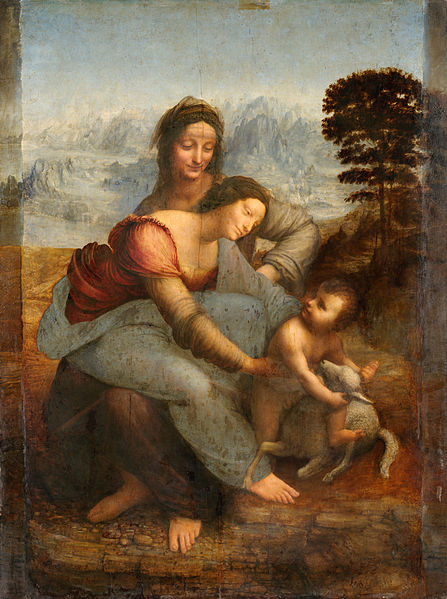
Leonardo da Vinci (1452–1519) Link back to Creator infobox template wikidata:Q762 s:en:Author:Leonardo da Vinci q:en:Leonardo da Vinci
Title French: La Vierge, l’Enfant Jésus et sainte Anne
The Virgin and Child with St. Anne wikidata:Q563727 (PD 100) from Wikimedia Commons
Ordinary Time
Sts. Anne and Joachim
The Edge of Elfland
Hudson, New Hampshire
Dear Readers,
I wanted to write to you about a touchy subject. I doubt it will be as inflammatory as my letter to you on race, but this letter may stir up some emotions. I want to write to you about being adopted. Specifically, I want to tell you what my experience has been like. I honestly don’t know how it feels for others. I imagine that at least some of what I have felt has been felt by others, but I cannot say that my experience, even just the manner of my adoption, is the same as everyone else’s. Still, I want to write to you about this for three reasons. First, it will be cathartic for me. Second, if there are any of you who feel the same you will know that you are not alone. Third, for those of you who have adopted children or are considering it, these are some of the possible issues and feelings that might arise in your children.
I was adopted when I was a little over one year old by my paternal grandparents. So, unlike many, I don’t remember my life prior to my adoption. I spent no time in an orphanage, as a ward of the state, or as a foster child. What’s more, I was part of a kinship adoption, that is, I was adopted by people to whom I am a blood relative; so I was not adopted into an entirely alien family. I want to make this clear since I do not pretend to speak for all the adopted, even if I think my own situation and how I have felt about it may be of use to others.
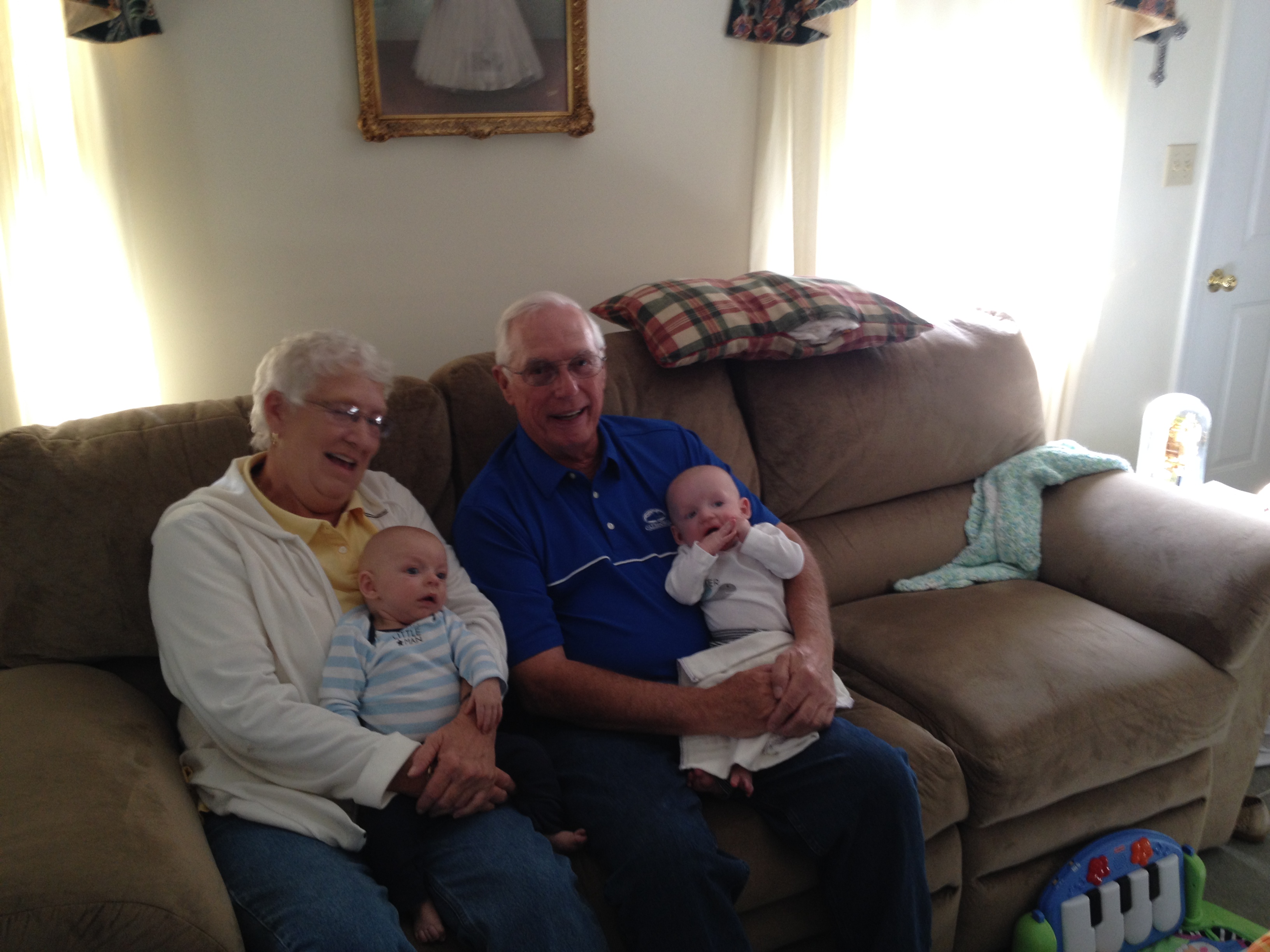
My parents meeting my boys for the first time.
So, I was adopted by my biological father’s parents when I was just over a year old. I don’t really know much about the first year of my life. I am told that my biological mother kicked my biological father out sometime between becoming pregnant and giving birth to me. I know that both of biological parents struggled with drugs and alcohol (which drugs and whether or not anything was consumed that shouldn’t have been when I was gestating I simply don’t know). I know that my adoptive parents spent as much time with me as they could after I was born. I know they were told by my caseworker when my mother was giving me up for adoption that if they wanted me they would need to act and that they did. I have been told some stories and have been given other suggestions that would indicate my life was far from ideal in those first 12 months. But honestly, I don’t really remember it and so cannot say what lasting effects any of it had on me. I do know that I was removed from a bad situation and placed in a good one.
As I grew up, and before I reached kindergarten, I was told by my adoptive parents that I was adopted. They wanted to make sure I knew before I went to school, a wise decision all around. Yet they were also recommended not to tell me too much and certainly not to bad-mouth my biological parents. So, I did what I believe many adopted children do; I made up stories. From what I can remember my mother was usually a ballerina, absolutely beautiful. My father was a cowboy or an astronaut, it depended on the day. Sometimes, in my stories, my father killed my mother. Never on purpose, though often rather gruesomely. You see, my biological father had become my legal brother, so despite living in Colorado as I grew up, I still knew him. My biological mother, on the other hand, despite residing in the same town was a complete mystery to me. As it turned out my parents kept her from me when I was little for fear she might try to abduct me.
My parents, the ones who adopted and raised me, had four other children before they took me in. All but one of them were grown and at of the house when I came in and the last, my youngest older brother, left not too long after. So, despite having three half-siblings from my biological mother and four adopted-siblings, I grew up as an only child, and with few to no children in my neighborhood. It also meant that I often felt a bit of a stranger in my own family. You see I wasn’t around for the bulk of the stories my family had. And while this had just as much to do with my age as with my being adopted, it still left me feeling like an outsider.
That feeling only increased as I got older. When I hit seventh grade and had to my social studies genealogy project it finally hit home that half of me was missing. One the major upsides to kinship adoption is that the adopted child doesn’t entirely lose out on their ancestral history. Depending on the nature of the adoption, however, the child can lose out on a lot. There was only so much my mom could tell me about my birth-mother’s family, and there was nothing she could tell me about the great or great-great grandparents on that side of my family. When I realized how little I knew it felt, and often still feels, as though I know very little about myself. Now, who knows, maybe if I hadn’t been adopted, I wouldn’t have cared about my ancestry so much. But I was adopted and so I did and do.
It’s hard to explain exactly how I felt and feel about all this. It’s true that often feel like an outsider in my own family, but my wife assure’s me that many people, adopted or not, feel that way. But it was more than that. I feel sometimes like I’m missing roots. I think part of that has to do with feeling unwanted. It’s hard for me to look at my situation and feel like my birth-parents didn’t want me. It could have been worse, of course. My birth-mother could have decided to abort me, and she didn’t. But still, after a year of raising me, and three other children, she decided, for one reason or another to give me up for adoption. I still don’t totally understand why. Her motives aren’t something anyone other than she can really determine and she hasn’t given me a straight answer on the matter. But I don’t just feel unwanted (and I don’t feel that way all the time), I also just feel out of place. Who were the Nicholses (my mother’s maiden name)? Where did they come from? What kind of people were they? I learned some from the cousins I have on that side of the family (we were the same year in high school) but hearing those stories isn’t the same as living them. I know so much about the Mosley/Perkins and Sipes side of my family, but so very little about the other. This has often caused me, I think, to latch on to certain identities. When I learned we had some Scottish blood I latched onto that with full and reckless abandon. I wore a kilt to my wedding, learned to play a few folk songs on guitar, tried to immerse myself, but it didn’t fulfill me. I knew we had English and Welsh blood as well, so I went and did a PhD in England to study ancient Irish Christianity (because we had Irish blood too). But this didn’t fulfill me either. I just felt, and sometimes still feel adrift.
Now this can actually be a good feeling for the Christian. My ignorance of my own history reminds me that me identity isn’t ultimately tied to my ancestry but to Christ and his church. Still, it would be nice not to always feel like a cultural and ancestral nomad.
I want to be very clear, as I bring this letter to a close. I am glad I was adopted. From what I understand I was taken out of a toxic situation. Whether or not my biological mother wanted me, my parents did, enough to adopt me even when almost all their own children were fully grown. I sometimes wish things had been different. Not because I’m unhappy with my life or with my parents, but because I wish I lived in a world where mothers and fathers don’t have to give up their children for adoption. But I do. So I am glad. I take joy in the things God has sent my way, even when they hurt, for there are always lessons to be learned. Still, being adopted has been hard. It has made me feel unwanted, as though I am simply the kind of person who can be abandoned. It has made me feel like parts of me are missing, that half my history is hidden from me. Yet I have been blessed and I will praise the Lord who has adopted me into the Sonship of Jesus Christ and will one day bring me into his Kingdom.
Sincerely,
David

Browse Our Archives
Select a Category A Secular Age Advent Apologetics Atheism Beauty Being a Catholic Evangelical Being Catholic Being Deified: Poetry and Fantasy on the Path to God Blogging Book Reviews C. S. Lewis Catholic Imagination Catholic Social Teaching Catholicism Christmas Church Calendar Church Fathers Church Life Community Conferences Cosmology Creation Curdled Words Deification Distributism Easter Economics Education Epiphany Essay Extracts Eucharist Faerie Faeriean Metaphysics Fatherhood Films Folk Liturgy Food and Drink G. K. Chesterton Harry Potter J. R. R. Tolkien Jove King Arthur Language Lent Life Literature and Poetry Liturgy Medieval Theology Music My Publications Mythology On the Edges of Elfland Ordinary Time Ordination Parenthood Parish Patristic Theology Pentecost Politics Prayer Racism Radical Orthodoxy Restoration Movement Sacramental Ontology Saints Science Sex and Sexuality Sophiology Stories The Inklings The Radical Catholic Reimagination of Everything Theologians in the Church Theopoetics Thesis Research Uncategorized University of Nottingham What I'm Reading Writing
Select a Month December 2019 November 2019 October 2019 September 2019 August 2019 July 2019 June 2019 May 2019 April 2019 March 2019 February 2019 January 2019 December 2018 November 2018 October 2018 September 2018 August 2018 July 2018 June 2018 May 2018 April 2018 March 2018 February 2018 January 2018 December 2017 November 2017 October 2017 August 2017 July 2017 June 2017 May 2017 April 2017 March 2017 February 2017 January 2017 December 2016 November 2016 October 2016 September 2016 August 2016 July 2016 June 2016 May 2016 April 2016 March 2016 February 2016 January 2016 December 2015 November 2015 October 2015 September 2015 August 2015 July 2015 June 2015 May 2015 April 2015 March 2015 February 2015 January 2015 December 2014 November 2014 October 2014 September 2014 August 2014 July 2014 June 2014 May 2014 April 2014 March 2014 February 2014 January 2014 December 2013 November 2013 October 2013 September 2013 August 2013 July 2013 June 2013 May 2013 April 2013 March 2013 February 2013 January 2013 December 2012 November 2012 October 2012 September 2012 July 2012
Follow Us!
TAKE THE
Religious Wisdom Quiz
Who said, "I am the way, the truth, and the life"?
Select your answer to see how you score.
Peter Jesus Paul John the Baptist
Related posts from Letters from the Edge of Elfland
Enduring the Valleys of Life: My Struggle with...
Letters from the Edge of Elfland
Letters from the Edge of Elfland
Why I Haven't Been Writing Letters for the...
Letters from the Edge of Elfland
The Dragon Is Dead, Still: A Postlude (of...
Letters from the Edge of Elfland
TRENDING AT PATHEOS Catholic

Creation, Preservation, and Teleology in Catholic Theology
As I write this, it is very early Monday morning. Like millions...

The Parable Of The Sower And The Word...
One of Christ’s most famous parables is that of the sower who...

Rejecting Doom: Christian Hope And Human Action
Christianity is a religion of hope. We are to have hope and...

Why I Choose the Eucharist Over the Sermon
Choose the Eucharist, Not the Sermon What are we supposed to get...

5 Design Elements Found in Spiritually Rooted Homes
Putting Spirituality Into Home Decor Our homes are more than our living...

Credo: A Story of God Told with the...
About 10 years ago, I began to imagine a personal "Credo" that...
view all Catholic blogs
Ad-Free & Subscriber Log-In Subscription Support
- About Us
- 2026 Calendar
- Videos
- Podcasts
- Library of World Religions
- Faith In Media Tracker
- Advertise With Us
- Write for Us
- Privacy Policy
- Terms of Service
- Do Not Sell My Data
- Contact Us
- Radiant Digital
- Manage Newsletter Subscriptions
- Unsubscribe From Notifications
- Sitemap
Copyright 2008-2026, Patheos. All rights reserved.
Subscription Support Ad-Free & Subscriber Log-In
Follow Patheos