
BuddhistCatholicContemplativeEvangelicalGeneral ChristianHinduJewishLatter-day SaintMuslimNew VisionsProgressive Christian
Beliefs
- Buddhist
- Catholic
- Contemplative
- Evangelical
- General Christian
- Hindu
- Jewish
- Latter-day Saint
- More Voices
- Muslim
- New Visions
- Pagan
- Progressive Christian
Topics
- Religion News
- Food and Religion
- Sports and Religion
- Religious Art
- Religious Music and Entertainment
- Religious Events
- History and Religion
- Style and Religion
- Politics and Religion
- Women in Religion
- Recreation Outdoors and Religion
- Business Finance and Religion
- Careers Workplace and Religion
- Education and Religion
- Family Parenting and Religion
- Health Fitness and Religion
- Home and Religion
- Relationships and Religion
- Technology and Religion
- Travel and Religion
Columnists
- Buddhist Columnists
- Business Finance and Religion Columnists
- Careers Workplace and Religion Columnists
- Catholic Columnists
- Contemplative Columnists
- Education and Religion Columnists
- Evangelists Columnists
- Family Parenting and Religion Columnists
- General Christian Columnists
- Health Fitness and Religion Columnists
- Hindu Columnists
- History and Religion Columnists
- Home and Religion Columnists
- Jewish Columnists
- More Voices Columnists
- Latter Day Columnists
- Muslim Columnists
- New Visions Columnists
- Nonreligious Columnists
- Pagan Columnists
- Politics and Religion Columnists
- Progressive Columnists
- Recreation Outdoors and Religion Columnists
- Relationships and Religion Columnists
- Religion News Columnists
- Religious Art Columnists
- Religious Events Columnists
- Religious Music and Entertainment Columnists
- Sports and Religion Columnists
- Style and Religion Columnists
- Technology and Religion Columnists
- Travel and Religion Columnists
- Women in Religion Columnists
Resource Library
- 2026 Calendar
- Library of World Religions
- The 100 Most Holy Places on Earth
- Patheos Answers
- Podcasts
- Videos
- Faith Leaders Database
- Anglican Episcopalian
- Bahai
- Baptist
- Buddhism
- Christianity
- Confucianism
- Eastern Orthodoxy
- Hinduism
- Holiness and Pentecostal
- ISKCON
- Islam
- Judaism
- Lutheran
- Methodist
- The Church of Jesus Christ of Latter-day Saints
- New Age
- Paganism
- Presbytarian and Reformed
- Protestantism
- Religion Behind the Scenes
- Roman Catholic
- Scientology
- Shia Islam
- Sikhism
- Sufism
- Sunni Islam
- Taoism
- Zen
- See all religions
Research Tools
 Ad-Free & Subscriber Log-In Subscription Support
Ad-Free & Subscriber Log-In Subscription Support
Follow Patheos 

- Trending:
- Forgiveness
- |
- Marriage
- |
- Consciousness
- |
- Death Penalty
- |
- Election
- |
- Halloween
 Letters from the Edge of Elfland
- Home
- About
- Distributist Resources
- Publications and Presentations
- Support
- Works in Progress
- The Epistolarian Around the Web
- Home
- Catholic
- Truth in Other Religions: Reflections on Stratford Caldecott, C. S. Lewis, and a Conversation with a British Repairman
Truth in Other Religions: Reflections on Stratford Caldecott, C. S. Lewis, and a Conversation with a British Repairman
Last updated on: October 7, 2015 at 10:48 am by David Russell Mosley
Truth in Other Religions: Reflections on Stratford Caldecott, C. S. Lewis, and a Conversation with a British Repairman 2015-10-07T10:48:03-04:00 David Russell Mosley
Patheos Explore the world's faith through different perspectives on religion and spirituality! Patheos has the views of the prevalent religions and spiritualities of the world.
David Russell Mosley
Ordinary Time
7 October 2015
The Edge of Elfland
Hudson, New Hampshire
Dear Friends and Family,
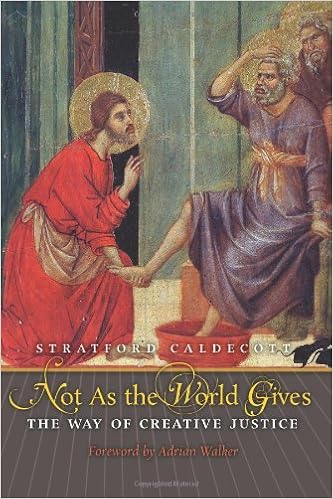
Today I was reading Not as the World Gives, the final book of the late Stratford Caldecott. Stratford has been a significant influence on my thought and theology in the last few years and I still mourn the fact that I never met him on this side of the veil. His last book is a treatment of justice or Catholic Social Teaching as broadly construed. In the chapter I was reading today, “Evangelization of Culture,” Caldecott is going through the changes necessary to present culture to bring more in line with a Christian understanding of culture and society. At the end of the chapter, Caldecott relates the importance of the family and of other religions, under the umbrella of family toward this end of the evangelization of the culture.
Caldecott writes, “The basis of the family is self-giving love; it is relationality. Members of a family are constitutively related to each other to such a degree that we commonly say “blood is thicker than water” and accept the necessity of living together despite the most enormous divergences of attitude, personality, and belief.” His point is that even as broken and degraded as the family is today, we still understand it as a place of acceptance and toleration, if not always a place where one’s beliefs or actions are condoned. He suggests that the family might suggest a way forward for ecumenism, not just inter-Christian ecumenism, but interfaith. After all, it is in the family that we learn to encounter the other with respect and dialogue. He concludes:
It we were to build our relations with other religious traditions and communities on the analogy of the family, and work for collaboration and friendship primarily through civil society, rather than through political negotiation (which reduces even theology to politics), we would also create the optimum conditions for truth to reveal itself to all, since the truth is ultimately a “person” rather than an idea, and comes to us through persons, in the radiance and fragrance of those who share our life, those we can love (155).
What Caldecott reminds us of both here and earlier in the chapter is that it is not as simple to say that Christianity is the only true religion and all others are totally false. He writes:
It is not easy, as I have argued elsewhere, simply to assert the truth of Christianity and the utter falsity of every other tradition, since each tradition is a tapestry rich in elements of goodness, beauty, and truth. I believe that wherever Christianity flatly contradicts another faith, it is Christianity that will turn out to be true––or truer––but I also believe that such moments of flat contradiction are fewer and harder to find than at first appearances, once the complexity of religious language and the difference of cultural context are taken fully into account (153).
What Caldecott says here reminds me of two separate but related things. The first is C. S. Lewis. In order to convert to Christianity, Lewis had to be brought to the understanding that the myths he loved but believed to be nothing better than lies breathed through silver were not lies but truth. They were not the whole truth, but there was truth in them, truth is what they sought to communicate. Christianity then is the True myth, the myth, and the truth, from which all other myths derive whatever truthfulness they have. This would lead Lewis to suggest that it is the Christians who get to truly retain the truth of these myths, as well as of other religions, since it is only through Christianity that their truth can be fully understood.
The second thing Caldecott, and now Lewis, remind me of is a conversation I had with a repairman who had come to fix our oven when we lived in England. As most conversations do, this one began somewhere and found its way to the “What do you do?” question. I had no need to ask him, since it was apparent by his presence in my house. But he duly asked the necessary question and I responded that I was a PhD student studying theology at the University. This led us to his marriage and the baptism of his child. He and his wife had had several conversations with the vicar of their parish church and he confided in her that he was uncertain about what he believed. He had, as the story often goes, been to church as a boy but had stopped going and now wasn’t sure of religion, though he had a pretty significant feeling that there was a God. The vicar suggested to him that all the world religions make up a mountain range which we can only see the back of. This led him to the understanding that all the world religions are essentially the same and so we must just pick the one that best suits us. Not even Caldecott would go this far. For the Christian Christ is at the center of all things. If no other point divides us from other religions then at least this one does (and I think others do as well).
I suggested to him, therefore, that a better way to understand Christianity in the light of other religions is this. Of course there is truth in other religions. There must be. All humans, according to the Bible, are made in the image and likeness of God. This means that to some extent we must participate in God, who is the source of all being. If we didn’t we wouldn’t exist. Even in our fallen state this is not totally lost to us. If it were, we would cease to exist. This means that as humans seek to understand their desire to worship, and as we create systems of worship, they will to greater and lesser adhere to truth, beauty, and goodness. I did not get into Aquinas’s controvertiblity of being, but I touched its edges as I tried to describe to him that other religions will always have aspects of the truth. However, I tried to emphasize that for there to be aspects of the truth in other religions, there must be a standard by which this is judged. This standard, as Caldecott says, is a person, Christ, the Son of God, second person of the Trinity, who is himself the Way, the Truth, and the Life.
I will likely never know what the outcome of that conversation will be. All I can do is pray I did something good and commit this man to God. But the greater point to be drawn here, as Caldecott does, is this nature of truth sharing between Christianity and other religions means that we have allies in the fight against secularism. Of course we want also to convert our Muslim brethren as we do our atheist, but we must not forget that the we can fight beside the Muslim and not just against him (as we must do on certain points of theological and salvific importance). We can pray for our cooperators conversion as we fight together to evangelize the culture. And we can do this because Christ, who is Truth, is at work in what is true in Islam, Buddhism, Hinduism etc.
Sincerely,
David
Previous Post

October 6, 2015
Vicars in Austen: Ridiculous or Virtuous Men?
Next Post
November 5, 2015 The Purpose of Christianity: Deification and Evangelism
Browse Our Archives
Select a Category A Secular Age Advent Apologetics Atheism Beauty Being a Catholic Evangelical Being Catholic Being Deified: Poetry and Fantasy on the Path to God Blogging Book Reviews C. S. Lewis Catholic Imagination Catholic Social Teaching Catholicism Christmas Church Calendar Church Fathers Church Life Community Conferences Cosmology Creation Curdled Words Deification Distributism Easter Economics Education Epiphany Essay Extracts Eucharist Faerie Faeriean Metaphysics Fatherhood Films Folk Liturgy Food and Drink G. K. Chesterton Harry Potter J. R. R. Tolkien Jove King Arthur Language Lent Life Literature and Poetry Liturgy Medieval Theology Music My Publications Mythology On the Edges of Elfland Ordinary Time Ordination Parenthood Parish Patristic Theology Pentecost Politics Prayer Racism Radical Orthodoxy Restoration Movement Sacramental Ontology Saints Science Sex and Sexuality Sophiology Stories The Inklings The Radical Catholic Reimagination of Everything Theologians in the Church Theopoetics Thesis Research Uncategorized University of Nottingham What I'm Reading Writing
Select a Month December 2019 November 2019 October 2019 September 2019 August 2019 July 2019 June 2019 May 2019 April 2019 March 2019 February 2019 January 2019 December 2018 November 2018 October 2018 September 2018 August 2018 July 2018 June 2018 May 2018 April 2018 March 2018 February 2018 January 2018 December 2017 November 2017 October 2017 August 2017 July 2017 June 2017 May 2017 April 2017 March 2017 February 2017 January 2017 December 2016 November 2016 October 2016 September 2016 August 2016 July 2016 June 2016 May 2016 April 2016 March 2016 February 2016 January 2016 December 2015 November 2015 October 2015 September 2015 August 2015 July 2015 June 2015 May 2015 April 2015 March 2015 February 2015 January 2015 December 2014 November 2014 October 2014 September 2014 August 2014 July 2014 June 2014 May 2014 April 2014 March 2014 February 2014 January 2014 December 2013 November 2013 October 2013 September 2013 August 2013 July 2013 June 2013 May 2013 April 2013 March 2013 February 2013 January 2013 December 2012 November 2012 October 2012 September 2012 July 2012
Follow Us!
TAKE THE
Religious Wisdom Quiz
Who was Melchizedek?
Select your answer to see how you score.
A priest and king An angel A prophet A Roman official
Related posts from Letters from the Edge of Elfland
Can You Imagine? Beginning a Definition of the...
Letters from the Edge of Elfland
C.S. Lewis's Cosmic Turn: Finding Virtue through the...
Letters from the Edge of Elfland
On Turning 32 During the March for Life...
Letters from the Edge of Elfland

Covington Catholic, Racism, and the March for Life
Letters from the Edge of Elfland
TRENDING AT PATHEOS Catholic

Creation, Preservation, and Teleology in Catholic Theology
As I write this, it is very early Monday morning. Like millions...

The Parable Of The Sower And The Word...
One of Christ’s most famous parables is that of the sower who...

Rejecting Doom: Christian Hope And Human Action
Christianity is a religion of hope. We are to have hope and...

Why I Choose the Eucharist Over the Sermon
Choose the Eucharist, Not the Sermon What are we supposed to get...

5 Design Elements Found in Spiritually Rooted Homes
Putting Spirituality Into Home Decor Our homes are more than our living...

Credo: A Story of God Told with the...
About 10 years ago, I began to imagine a personal "Credo" that...
view all Catholic blogs
Ad-Free & Subscriber Log-In Subscription Support
- About Us
- 2026 Calendar
- Videos
- Podcasts
- Library of World Religions
- Faith In Media Tracker
- Advertise With Us
- Write for Us
- Privacy Policy
- Terms of Service
- Do Not Sell My Data
- Contact Us
- Radiant Digital
- Manage Newsletter Subscriptions
- Unsubscribe From Notifications
- Sitemap
Copyright 2008-2026, Patheos. All rights reserved.
Subscription Support Ad-Free & Subscriber Log-In
Follow Patheos