
BuddhistCatholicContemplativeEvangelicalGeneral ChristianHinduJewishLatter-day SaintMuslimNew VisionsProgressive Christian
Beliefs
- Buddhist
- Catholic
- Contemplative
- Evangelical
- General Christian
- Hindu
- Jewish
- Latter-day Saint
- More Voices
- Muslim
- New Visions
- Pagan
- Progressive Christian
Topics
- Religion News
- Food and Religion
- Sports and Religion
- Religious Art
- Religious Music and Entertainment
- Religious Events
- History and Religion
- Style and Religion
- Politics and Religion
- Women in Religion
- Recreation Outdoors and Religion
- Business Finance and Religion
- Careers Workplace and Religion
- Education and Religion
- Family Parenting and Religion
- Health Fitness and Religion
- Home and Religion
- Relationships and Religion
- Technology and Religion
- Travel and Religion
Columnists
- Buddhist Columnists
- Business Finance and Religion Columnists
- Careers Workplace and Religion Columnists
- Catholic Columnists
- Contemplative Columnists
- Education and Religion Columnists
- Evangelists Columnists
- Family Parenting and Religion Columnists
- General Christian Columnists
- Health Fitness and Religion Columnists
- Hindu Columnists
- History and Religion Columnists
- Home and Religion Columnists
- Jewish Columnists
- More Voices Columnists
- Latter Day Columnists
- Muslim Columnists
- New Visions Columnists
- Nonreligious Columnists
- Pagan Columnists
- Politics and Religion Columnists
- Progressive Columnists
- Recreation Outdoors and Religion Columnists
- Relationships and Religion Columnists
- Religion News Columnists
- Religious Art Columnists
- Religious Events Columnists
- Religious Music and Entertainment Columnists
- Sports and Religion Columnists
- Style and Religion Columnists
- Technology and Religion Columnists
- Travel and Religion Columnists
- Women in Religion Columnists
Resource Library
- 2026 Calendar
- Library of World Religions
- The 100 Most Holy Places on Earth
- Patheos Answers
- Podcasts
- Videos
- Faith Leaders Database
- Anglican Episcopalian
- Bahai
- Baptist
- Buddhism
- Christianity
- Confucianism
- Eastern Orthodoxy
- Hinduism
- Holiness and Pentecostal
- ISKCON
- Islam
- Judaism
- Lutheran
- Methodist
- The Church of Jesus Christ of Latter-day Saints
- New Age
- Paganism
- Presbytarian and Reformed
- Protestantism
- Religion Behind the Scenes
- Roman Catholic
- Scientology
- Shia Islam
- Sikhism
- Sufism
- Sunni Islam
- Taoism
- Zen
- See all religions
Research Tools
 Ad-Free & Subscriber Log-In Subscription Support
Ad-Free & Subscriber Log-In Subscription Support
Follow Patheos 

- Trending:
- Forgiveness
- |
- Marriage
- |
- Consciousness
- |
- Death Penalty
- |
- Election
- |
- Halloween
 Letters from the Edge of Elfland
- Home
- About
- Distributist Resources
- Publications and Presentations
- Support
- Works in Progress
- The Epistolarian Around the Web
- Home
- Catholic
- The Pastor-Scholar: A Response to Andrew Wilson
The Pastor-Scholar: A Response to Andrew Wilson
Last updated on: September 26, 2015 at 11:59 am by David Russell Mosley
The Pastor-Scholar: A Response to Andrew Wilson 2015-09-26T11:59:27-04:00 David Russell Mosley
Patheos Explore the world's faith through different perspectives on religion and spirituality! Patheos has the views of the prevalent religions and spiritualities of the world.
David Russell Mosley
Ordinary Time
26 September 2015
The Edge of Elfland
Hudson, New Hampshire
Dear Friends and Family,
This morning when I woke up, I grabbed my phone (not the best thing to go for first in the morning, but I’m working on it) and as I scrolled through my twitter feed I came across this article by Mere Orthodoxy (and Mere Fidelity) contributor Andrew Wilson: “Why Being a Pastor-Scholar Is Nearly Impossible: Three tensions of combining pastoral and academic work.” I decided to give it a read. As some of you may know, I’ve made some suggestions of my own on how the theologian might be engaged in the work of his or her church.
Wilson suggest that being a pastor-scholar is nigh impossible (hence the title). I agree, as Wilson also notes, that doing anything and being a pastor is difficult. Even if one is only paid part-time for being a pastor, it is always full-time work. Yet, in my gut, I feel as though the pastor-scholar ought not to be quite the same. After all, the kind of scholarship Wilson has in mind is biblical/theological. If any other vocation ought to meld well with the pastorate, or priesthood, it ought to be that of the biblical scholar and/or theologian. Nevertheless, Wilson is right that often the aims of these two vocations can be different, or at least the arenas are different which often leads to different emphases making this combination slightly more difficult. That said, I think Wilson makes a few mistakes.
The first mistake is that nearly all of Wilson’s examples, as well as his entire article, presupposes one specific kind of scholarship, namely biblical studies, and one specific kind of pastorate, namely Protestant and, frankly, Reformed (with a few exceptions). Wilson then goes on to list three tensions that come from trying to combine this particular kind of scholarship with this particular kind of pastorate. I’ll get to the tensions in a moment, but I want to address first the narrowness of his purview.
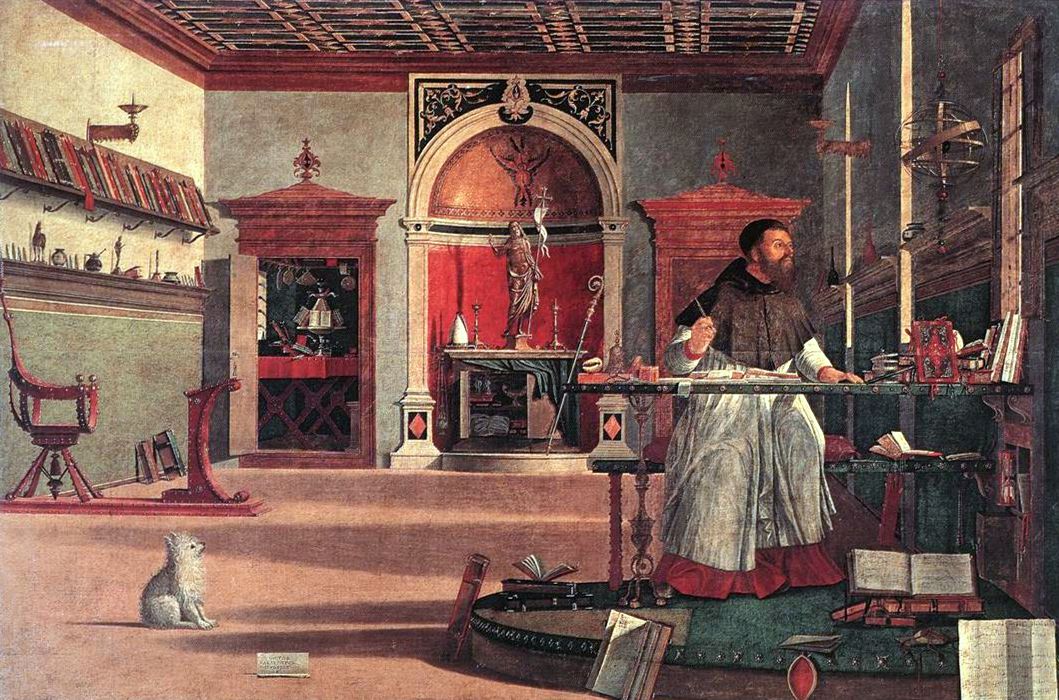
I shouldn’t blame Wilson too much, really. After all, he is himself getting a PhD in biblical studies and is a member of a Reformed church. It stands to reason that many of his examples would come from one or both of these areas. Nevertheless, by not looking outside of them, he both generalizes in a way that will be unhelpful to readers such as myself (who are scholars attempting to be active in the church, if not ordained, but aren’t in biblical studies and/or aren’t Reformed or Protestant), and he misses opportunities to perhaps find better ways of combining pastor and scholar. For instance, Wilson neglects the fact that most of the great theologians from the first 1600 years (even in the reformed traditions) were almost always ordained clergy, many of them were bishops. Augustine likely preached almost daily and yet also wrote numerous books and letters; Aquinas was also a regular preacher (since he belonged to the ordo praedicatorum or Order of the Preachers, the Dominicans) and yet also wrote the Summa Theologiae, the Summa Gentiles, as well as commentaries on various biblical books and works of Aristotle and others. They and others like them found time to be both pastors and scholars. Perhaps, however, you will say that these are ancient and medieval examples when scholarship at least, if not also the pastorate/priesthood, were different. Then I could also draw your attention to figures such as Pope St John Paul II, Pope Emeritus Benedict XVI, Henri de Lubac, Hans Urs von Balthasar, even people like Simon Oliver and Alison Milbank (professors of mine at the University of Nottingham, and not alone among our ordained staff). Now perhaps this points to a potential inherent difference between more Protestant ways of understanding the pastorate/priesthood and more Catholic ways of understanding it. Even so, if such a distinction exists, it might be worthwhile to investigate it to see how the other side treats similar problems.
Now, to the tensions, wherein I’ll also show some of the issues by focusing primarily on biblical scholars (versus other theologians). The first tension is “The Specialist-Generalist Tension.” The issue, argues Wilson, is that the scholar is called to be a specialist of a particular subject and not to stray from it, whereas the pastor must be a generalist since “that’s not my field” is not an adequate response to a parishioner who has questions. There is some truth to this, but it seems more prevalent in biblical studies. As Wilson notes, “Pauline scholars often give an apologetic cough before opining on Jesus, let alone on the Qumran Hodayot (psalms of thanksgiving), on the redaction (editing process) of the Pentateuch, or on philosophical views like Nominalism.” This level of specialization is, I think, less common in other theological circles. For instance, I wrote my dissertation on deification and human creativity, but I am not limited to talk, even authoritatively, on only those two subjects since I have read and done other work on other subjects. My point is that what might keep a Pauline scholar from entering into historical Jesus studies wouldn’t keep someone who works on the doctrine of Creation from talking about the Atonement. This largely, I think, has to do with the fact that Biblical Studies is more a subset of History/Sociology in the academic world than it is of Theology, properly speaking. But I digress.
The second tension is “The Practical-Theoretical Tension.” It is best, perhaps, to quote the example Wilson gives here:
Place Bible scholars like Michael Gorman, John Barclay, and N. T. Wright at a conference table and ask them to talk about the topic of peace in Paul’s epistles—as I remember happening at the British New Testament Conference two years ago—and you’ll have hours of stimulating discussion. But ask any of them about how to promote peace in the Middle East today, and the conversation turns eerily quiet. For scholars, praxis is the tail, research is the dog, and the former is not meant to wag the latter.
Here again, I feel as though I see a problem with focusing only on biblical scholars. Other theologians (certainly not all), often see their work as being meant to have some kind of practical benefit for the church (I believe this is true for many biblical scholars as well). For instance, in my dissertation I argue that humans creating things, like works of poetry or fantasy, can be aids in our deification, as can the consumption of those things. In other words, I argue that it’s good for people to read and write works of poetry and fantasy (as well as to create other beautiful things). This isn’t simply theoretical for me, I write works of fiction! Now again, I think some of the problems come from the fact that much of biblical studies is primarily history, trying to understand exactly what was happening when it happened and other related issues. These need not have any effect on one’s parishioners. What does it matter, for instance, to the average Christian, if Paul went to Spain or if he is the author of Hebrews? Now other theologians certainly have these issues as well. For instance, not everyone is called to write fiction (possibly not even me, despite my trying). Nor is it important for everyone to come to the same kinds of understanding that I have about certain theological issues. But my work is always meant to be in service of God’s glory and the Church, even if it not every aspect of it would be beneficial to the members of my church. The point I’m trying to make is this: if your scholarship is purely theoretical, then it might not be worth doing. If it cannot aid the Church in anyway then there might be a problem.
The final tension is “The University-Church Tension.” Here I mostly agree with Wilson. The Church and the University are two different, albeit related, entities. Even the Christian University is not the same as the local church (or even the universal Church). So of course how the pastor-scholar acts in one will likely be different from how she acts in the other.
Wilson does a good job to draw to our attention that there are difficulties or paradoxical tensions in being a scholar and a pastor. It will never be easy to try to be both at the same time, especially not as he has defined the terms. That said, I think Wilson’s focus on biblical scholars and Protestant/Reformed pastors is far too narrow. There are other kinds of scholars and pastors, as Wilson well knows. If there are tensions, it might be good to see how others in different fields or denominations handle them. And it is dangerous to forget to examine how the pastor-scholars before us, centuries before us, sought to combine these two vocations. There might be something worth adopting out there to ease some of these tensions, while likely creating others.
Sincerely,
David
Previous Post

September 25, 2015
On the Papal Address to Congress and the Kingdom of God
Next Post
September 29, 2015 Michaelmas: The Feast of St Michael and All Angels
Browse Our Archives
Select a Category A Secular Age Advent Apologetics Atheism Beauty Being a Catholic Evangelical Being Catholic Being Deified: Poetry and Fantasy on the Path to God Blogging Book Reviews C. S. Lewis Catholic Imagination Catholic Social Teaching Catholicism Christmas Church Calendar Church Fathers Church Life Community Conferences Cosmology Creation Curdled Words Deification Distributism Easter Economics Education Epiphany Essay Extracts Eucharist Faerie Faeriean Metaphysics Fatherhood Films Folk Liturgy Food and Drink G. K. Chesterton Harry Potter J. R. R. Tolkien Jove King Arthur Language Lent Life Literature and Poetry Liturgy Medieval Theology Music My Publications Mythology On the Edges of Elfland Ordinary Time Ordination Parenthood Parish Patristic Theology Pentecost Politics Prayer Racism Radical Orthodoxy Restoration Movement Sacramental Ontology Saints Science Sex and Sexuality Sophiology Stories The Inklings The Radical Catholic Reimagination of Everything Theologians in the Church Theopoetics Thesis Research Uncategorized University of Nottingham What I'm Reading Writing
Select a Month December 2019 November 2019 October 2019 September 2019 August 2019 July 2019 June 2019 May 2019 April 2019 March 2019 February 2019 January 2019 December 2018 November 2018 October 2018 September 2018 August 2018 July 2018 June 2018 May 2018 April 2018 March 2018 February 2018 January 2018 December 2017 November 2017 October 2017 August 2017 July 2017 June 2017 May 2017 April 2017 March 2017 February 2017 January 2017 December 2016 November 2016 October 2016 September 2016 August 2016 July 2016 June 2016 May 2016 April 2016 March 2016 February 2016 January 2016 December 2015 November 2015 October 2015 September 2015 August 2015 July 2015 June 2015 May 2015 April 2015 March 2015 February 2015 January 2015 December 2014 November 2014 October 2014 September 2014 August 2014 July 2014 June 2014 May 2014 April 2014 March 2014 February 2014 January 2014 December 2013 November 2013 October 2013 September 2013 August 2013 July 2013 June 2013 May 2013 April 2013 March 2013 February 2013 January 2013 December 2012 November 2012 October 2012 September 2012 July 2012
Follow Us!
TAKE THE
Religious Wisdom Quiz
What was the primary inheritance method in biblical times?
Select your answer to see how you score.
Equal division Youngest child Firstborn son Oldest daughter
Related posts from Letters from the Edge of Elfland

Return to the Sources: On Reading Old Books
Letters from the Edge of Elfland

Chesterton, Dragons, and Cancer: A Reflection on this...
Letters from the Edge of Elfland
Beauty, Death, Life, and Deification: Reviewing Tell Them...
Letters from the Edge of Elfland
Ethnicity, DNA, White Supremacy, and the Pro-Life Movement
Letters from the Edge of Elfland
TRENDING AT PATHEOS Catholic

Creation, Preservation, and Teleology in Catholic Theology
As I write this, it is very early Monday morning. Like millions...

The Parable Of The Sower And The Word...
One of Christ’s most famous parables is that of the sower who...

Rejecting Doom: Christian Hope And Human Action
Christianity is a religion of hope. We are to have hope and...

Why I Choose the Eucharist Over the Sermon
Choose the Eucharist, Not the Sermon What are we supposed to get...

5 Design Elements Found in Spiritually Rooted Homes
Putting Spirituality Into Home Decor Our homes are more than our living...

Credo: A Story of God Told with the...
About 10 years ago, I began to imagine a personal "Credo" that...
view all Catholic blogs
Ad-Free & Subscriber Log-In Subscription Support
- About Us
- 2026 Calendar
- Videos
- Podcasts
- Library of World Religions
- Faith In Media Tracker
- Advertise With Us
- Write for Us
- Privacy Policy
- Terms of Service
- Do Not Sell My Data
- Contact Us
- Radiant Digital
- Manage Newsletter Subscriptions
- Unsubscribe From Notifications
- Sitemap
Copyright 2008-2026, Patheos. All rights reserved.
Subscription Support Ad-Free & Subscriber Log-In
Follow Patheos