
BuddhistCatholicContemplativeEvangelicalGeneral ChristianHinduJewishLatter-day SaintMuslimNew VisionsProgressive Christian
Beliefs
- Buddhist
- Catholic
- Contemplative
- Evangelical
- General Christian
- Hindu
- Jewish
- Latter-day Saint
- More Voices
- Muslim
- New Visions
- Pagan
- Progressive Christian
Topics
- Religion News
- Food and Religion
- Sports and Religion
- Religious Art
- Religious Music and Entertainment
- Religious Events
- History and Religion
- Style and Religion
- Politics and Religion
- Women in Religion
- Recreation Outdoors and Religion
- Business Finance and Religion
- Careers Workplace and Religion
- Education and Religion
- Family Parenting and Religion
- Health Fitness and Religion
- Home and Religion
- Relationships and Religion
- Technology and Religion
- Travel and Religion
Columnists
- Buddhist Columnists
- Business Finance and Religion Columnists
- Careers Workplace and Religion Columnists
- Catholic Columnists
- Contemplative Columnists
- Education and Religion Columnists
- Evangelists Columnists
- Family Parenting and Religion Columnists
- General Christian Columnists
- Health Fitness and Religion Columnists
- Hindu Columnists
- History and Religion Columnists
- Home and Religion Columnists
- Jewish Columnists
- More Voices Columnists
- Latter Day Columnists
- Muslim Columnists
- New Visions Columnists
- Nonreligious Columnists
- Pagan Columnists
- Politics and Religion Columnists
- Progressive Columnists
- Recreation Outdoors and Religion Columnists
- Relationships and Religion Columnists
- Religion News Columnists
- Religious Art Columnists
- Religious Events Columnists
- Religious Music and Entertainment Columnists
- Sports and Religion Columnists
- Style and Religion Columnists
- Technology and Religion Columnists
- Travel and Religion Columnists
- Women in Religion Columnists
Resource Library
- 2026 Calendar
- Library of World Religions
- The 100 Most Holy Places on Earth
- Patheos Answers
- Podcasts
- Videos
- Faith Leaders Database
- Anglican Episcopalian
- Bahai
- Baptist
- Buddhism
- Christianity
- Confucianism
- Eastern Orthodoxy
- Hinduism
- Holiness and Pentecostal
- ISKCON
- Islam
- Judaism
- Lutheran
- Methodist
- The Church of Jesus Christ of Latter-day Saints
- New Age
- Paganism
- Presbytarian and Reformed
- Protestantism
- Religion Behind the Scenes
- Roman Catholic
- Scientology
- Shia Islam
- Sikhism
- Sufism
- Sunni Islam
- Taoism
- Zen
- See all religions
Research Tools
 Ad-Free & Subscriber Log-In Subscription Support
Ad-Free & Subscriber Log-In Subscription Support
Follow Patheos 

- Trending:
- Forgiveness
- |
- Marriage
- |
- Consciousness
- |
- Death Penalty
- |
- Election
- |
- Halloween
 Letters from the Edge of Elfland
- Home
- About
- Distributist Resources
- Publications and Presentations
- Support
- Works in Progress
- The Epistolarian Around the Web
- Home
- Catholic
- Truth, Beauty, and Goodness: Cinderella's Fairy Godmother Renders Her Strange
Truth, Beauty, and Goodness: Cinderella's Fairy Godmother Renders Her Strange
Last updated on: January 2, 2015 at 11:05 am by David Russell Mosley
Truth, Beauty, and Goodness: Cinderella's Fairy Godmother Renders Her Strange 2015-01-02T11:05:15-04:00 David Russell Mosley
Patheos Explore the world's faith through different perspectives on religion and spirituality! Patheos has the views of the prevalent religions and spiritualities of the world.
David Russell Mosley
Christmastide
St Basil and St Gregory of Nazianzus
2 January 2015
The Edge of Elfland
Hudson, New Hampshire
Dear Friends and Family,
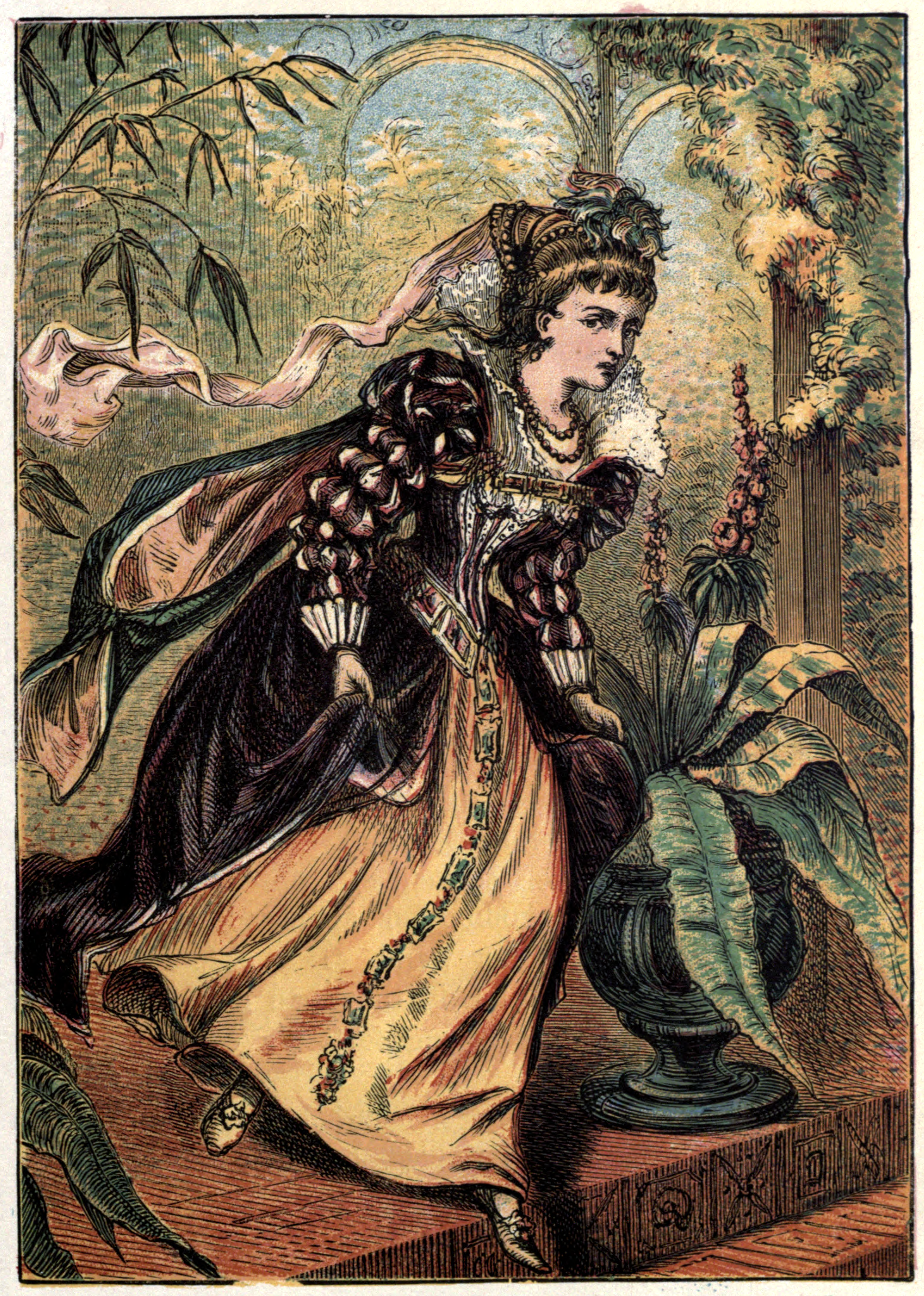
The first fairy godmother I want to look at is Cinderella’s. The first thing to note is that she does not appear in the Grimm’s version of the tale. I could speculate what that might say about early nineteenth century Germany and the nature of protestantism, or why it is in the more Catholic French version of the story where the godmother appears, but I won’t, not fully anyway. So, it is to the Charles Perrault version of the story I must turn. I must admit upfront, I am using an English translation (my French is so poor, poor is not an appropriate enough term for it), and it is from Andrew Lang’s Fairy Book editions. Now, to the fairy godmother.
She first appears after Cinderella watches her step-family go off to the king’s ball. At first all were told is that her godmother sees her crying and asks why. Cinderella tells her and then Perrault writes, ‘This godmother of hers, who was a fairy, said to her, “You wish that you could go to the ball; is it not so?”‘ Her being a fairy is presented in an incidental way. She’s her godmother, and she’s a fairy. But then another unexpected layer is added.
Not only is she a godmother and a fairy, but she apparently has a chamber either in the house or on the grounds, ‘Then she took her into her chamber, and said to her, “Run into the garden, and bring me a pumpkin.”‘ Now this need for Cinderella to go into her godmother’s chamber before going into the garden suggests to me that the godmother’s chamber serves as a kind of threshold into Faërie. It is from a garden accessible from her godmother’s chamber that she must go to to get the pumpkin which will become her chariot as well as the lizards who become her footmen.. It is from a mousetrap in her chamber that the mice who become horses are collected as well as the rat who becomes her coachman. Aside from the prohibition necessary to a fairy tale according to Tolkien (the midnight curfew), the only other role she plays in the story is to transform Cinderella’s clothes when the prince finds her showing to her step-family the true beauty she has always had.
Following on Pickstock’s discussion of godparenthood, we do see some fairly standard godparent duties being discharged. Pickstock writes of godparenthood, ‘It represented the creation of a formal ritual friendship, symbolized by gifts and festivals, to which natural kinship could only aspire.’ Cinderella’s godmother is most certainly a gift-giver and the gifts she gives are to allow Cinderella to attend a great festival. Now it is likely this is not the kind of festival Pickstock had in mind, but there is nevertheless an inherent relationship between giving gifts and festivals cementing Cinderella’s relationship to her godmother. Also, there is certainly a compaternitas here, as the godmother is a better kin/parent than those closest to her, her step-mother and step-sisters. And then there is the psuchic, or spiritual/soulish nature of the care that is meant to be provided by a godparent. It is easy to pass over, but when Cinderella tells her godmother that she does wish she could attend the ball, her godmother says, ‘”be but a good girl, and I will contrive that you shall go.”‘ Cinderella has already proved herself a good girl. We are told about Cinderella that she was ‘of unparalleled goodness and sweetness of temper, which she took from her mother, who was the best creature in the world.’ That her stepmother ‘could not bear the good qualities of this pretty girl, and the less because they made her own daughters appear the more odious.’ But what is more, Cinderella herself is more than beautiful, she is truly good and shows it in the way she handles her abuse, ‘The poor girl bore it all patiently, and dared not tell her father, who would have scolded her; for his wife governed him entirely.’ Also, the stepsisters, in their preparations for the ball, which Cinderella will not attend, ‘They also consulted Cinderella in all these matters, for she had excellent ideas, and her advice was always good. Indeed, she even offered her services to fix their hair, which they very willingly accepted.’ Even at the Ball where she might rub her newfound clothing and situation in her step-sisters faces, rather ‘She went and sat down by her sisters, showing them a thousand civilities, giving them part of the oranges and citrons which the prince had presented her with, which very much surprised them, for they did not know her.’ It seems clear that Perrault’s Cinderella is the unification of truth, goodness, and beauty and it is her godmother who helps bring this out and make it evident both to herself and to her step-family. And this leads to the spiritual uplifting of the step-sisters as much as it does to the change in station of Cinderella. Clearly, then we can say that the fairy godmother was not godmother only to Cinderella, but to her whole family, again as Pickstock suggests, ‘Its principle was that of compaternitas, which affirmed that a godparent was kin not only to the child, but to his natural family as well.’
This leads me finally to observe what role Faërie plays in all of this as well. Clearly, if all we see the godmother as doing is providing Cinderella with a ride and beautiful clothes, then a rich aunt or grandmother or human godmother [or a famous Renaissance painter as the demythologised version starring Drew Barrymore had it] might have served just as well. Yet it is a fairy godmother and the riches she provides are not initially lasting. As she returns from the second day of the ball she is dressed in rags having only one glass slipper left from her previous magnificence. So it is more than the finery, the ornamentation that she provides. It is, as I said above, the spiritual or psuchic parenting that she provides and in a way befitting Faërie, which isn’t simply to say the magic. Yes, the fairy godmother uses a wand and performs magic, but it is so much more than this. What she does is what, I have argued, Faërie/Fantasy in general do, she rendered Cinderella strange in order for others––the Prince, her step-family––to see her for who she truly is: beautiful, good, and true. This is why she must be a fairy godmother, for only in this way, in this marriage of the Kingdom of God and the realm of Faërie can we see the coincidence of truth, beauty, and goodness in a world that is often dressed in the rags of familiarity and even fallenness.
Sincerely yours,
David
Previous Post

December 30, 2014
Why Have a 'Fairy' Godparent: Faërie and Godparenthood
Next Post
January 3, 2015 The Eucharist Is the End of Marriage: J. R. R. Tolkien's Advice to His Son
Browse Our Archives
Select a Category A Secular Age Advent Apologetics Atheism Beauty Being a Catholic Evangelical Being Catholic Being Deified: Poetry and Fantasy on the Path to God Blogging Book Reviews C. S. Lewis Catholic Imagination Catholic Social Teaching Catholicism Christmas Church Calendar Church Fathers Church Life Community Conferences Cosmology Creation Curdled Words Deification Distributism Easter Economics Education Epiphany Essay Extracts Eucharist Faerie Faeriean Metaphysics Fatherhood Films Folk Liturgy Food and Drink G. K. Chesterton Harry Potter J. R. R. Tolkien Jove King Arthur Language Lent Life Literature and Poetry Liturgy Medieval Theology Music My Publications Mythology On the Edges of Elfland Ordinary Time Ordination Parenthood Parish Patristic Theology Pentecost Politics Prayer Racism Radical Orthodoxy Restoration Movement Sacramental Ontology Saints Science Sex and Sexuality Sophiology Stories The Inklings The Radical Catholic Reimagination of Everything Theologians in the Church Theopoetics Thesis Research Uncategorized University of Nottingham What I'm Reading Writing
Select a Month December 2019 November 2019 October 2019 September 2019 August 2019 July 2019 June 2019 May 2019 April 2019 March 2019 February 2019 January 2019 December 2018 November 2018 October 2018 September 2018 August 2018 July 2018 June 2018 May 2018 April 2018 March 2018 February 2018 January 2018 December 2017 November 2017 October 2017 August 2017 July 2017 June 2017 May 2017 April 2017 March 2017 February 2017 January 2017 December 2016 November 2016 October 2016 September 2016 August 2016 July 2016 June 2016 May 2016 April 2016 March 2016 February 2016 January 2016 December 2015 November 2015 October 2015 September 2015 August 2015 July 2015 June 2015 May 2015 April 2015 March 2015 February 2015 January 2015 December 2014 November 2014 October 2014 September 2014 August 2014 July 2014 June 2014 May 2014 April 2014 March 2014 February 2014 January 2014 December 2013 November 2013 October 2013 September 2013 August 2013 July 2013 June 2013 May 2013 April 2013 March 2013 February 2013 January 2013 December 2012 November 2012 October 2012 September 2012 July 2012
Follow Us!
TAKE THE
Religious Wisdom Quiz
Which Christian principle is highlighted in the parable of the Good Samaritan?
Select your answer to see how you score.
Ignore strangers Compassion for all Seek praise Only help friends
Related posts from Letters from the Edge of Elfland

William Blake on the Creative Spirit, Beauty, and...
Letters from the Edge of Elfland

“Wherefore stopp’st thou me?” Coleridge’s Creative Message to...
Letters from the Edge of Elfland

Good Morning, Mr. Magpie: On Folklore and Science
Letters from the Edge of Elfland
Letters from the Edge of Elfland
TRENDING AT PATHEOS Catholic

Creation, Preservation, and Teleology in Catholic Theology
As I write this, it is very early Monday morning. Like millions...

The Parable Of The Sower And The Word...
One of Christ’s most famous parables is that of the sower who...

Rejecting Doom: Christian Hope And Human Action
Christianity is a religion of hope. We are to have hope and...

Why I Choose the Eucharist Over the Sermon
Choose the Eucharist, Not the Sermon What are we supposed to get...

5 Design Elements Found in Spiritually Rooted Homes
Putting Spirituality Into Home Decor Our homes are more than our living...

Credo: A Story of God Told with the...
About 10 years ago, I began to imagine a personal "Credo" that...
view all Catholic blogs
Ad-Free & Subscriber Log-In Subscription Support
- About Us
- 2026 Calendar
- Videos
- Podcasts
- Library of World Religions
- Faith In Media Tracker
- Advertise With Us
- Write for Us
- Privacy Policy
- Terms of Service
- Do Not Sell My Data
- Contact Us
- Radiant Digital
- Manage Newsletter Subscriptions
- Unsubscribe From Notifications
- Sitemap
Copyright 2008-2026, Patheos. All rights reserved.
Subscription Support Ad-Free & Subscriber Log-In
Follow Patheos