
BuddhistCatholicContemplativeEvangelicalGeneral ChristianHinduJewishLatter-day SaintMuslimNew VisionsProgressive Christian
Beliefs
- Buddhist
- Catholic
- Contemplative
- Evangelical
- General Christian
- Hindu
- Jewish
- Latter-day Saint
- More Voices
- Muslim
- New Visions
- Pagan
- Progressive Christian
Topics
- Religion News
- Food and Religion
- Sports and Religion
- Religious Art
- Religious Music and Entertainment
- Religious Events
- History and Religion
- Style and Religion
- Politics and Religion
- Women in Religion
- Recreation Outdoors and Religion
- Business Finance and Religion
- Careers Workplace and Religion
- Education and Religion
- Family Parenting and Religion
- Health Fitness and Religion
- Home and Religion
- Relationships and Religion
- Technology and Religion
- Travel and Religion
Columnists
- Buddhist Columnists
- Business Finance and Religion Columnists
- Careers Workplace and Religion Columnists
- Catholic Columnists
- Contemplative Columnists
- Education and Religion Columnists
- Evangelists Columnists
- Family Parenting and Religion Columnists
- General Christian Columnists
- Health Fitness and Religion Columnists
- Hindu Columnists
- History and Religion Columnists
- Home and Religion Columnists
- Jewish Columnists
- More Voices Columnists
- Latter Day Columnists
- Muslim Columnists
- New Visions Columnists
- Nonreligious Columnists
- Pagan Columnists
- Politics and Religion Columnists
- Progressive Columnists
- Recreation Outdoors and Religion Columnists
- Relationships and Religion Columnists
- Religion News Columnists
- Religious Art Columnists
- Religious Events Columnists
- Religious Music and Entertainment Columnists
- Sports and Religion Columnists
- Style and Religion Columnists
- Technology and Religion Columnists
- Travel and Religion Columnists
- Women in Religion Columnists
Resource Library
- 2026 Calendar
- Library of World Religions
- The 100 Most Holy Places on Earth
- Patheos Answers
- Podcasts
- Videos
- Faith Leaders Database
- Anglican Episcopalian
- Bahai
- Baptist
- Buddhism
- Christianity
- Confucianism
- Eastern Orthodoxy
- Hinduism
- Holiness and Pentecostal
- ISKCON
- Islam
- Judaism
- Lutheran
- Methodist
- The Church of Jesus Christ of Latter-day Saints
- New Age
- Paganism
- Presbytarian and Reformed
- Protestantism
- Religion Behind the Scenes
- Roman Catholic
- Scientology
- Shia Islam
- Sikhism
- Sufism
- Sunni Islam
- Taoism
- Zen
- See all religions
Research Tools
 Ad-Free & Subscriber Log-In Subscription Support
Ad-Free & Subscriber Log-In Subscription Support
Follow Patheos 

- Trending:
- Forgiveness
- |
- Marriage
- |
- Consciousness
- |
- Death Penalty
- |
- Election
- |
- Halloween
 Letters from the Edge of Elfland
- Home
- About
- Distributist Resources
- Publications and Presentations
- Support
- Works in Progress
- The Epistolarian Around the Web
- Home
- Catholic
- Arthur Comes to Windermere: A Poem by David Russell Mosley
Arthur Comes to Windermere: A Poem by David Russell Mosley
Last updated on: June 2, 2014 at 11:29 am by David Russell Mosley
Arthur Comes to Windermere: A Poem by David Russell Mosley 2014-06-02T11:29:55-04:00 David Russell Mosley
Patheos Explore the world's faith through different perspectives on religion and spirituality! Patheos has the views of the prevalent religions and spiritualities of the world.
David Russell Mosley
2 June 2014
On the Edge of Elfland
Beeston, Nottinghamshire
Dear Friends and Family,
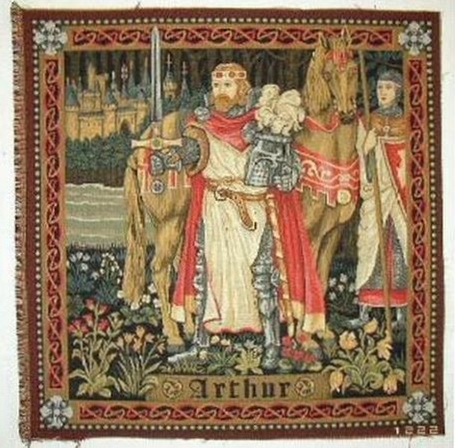
Last week I posted some notes on my writing processes as well as the first two chapters of my Faërie Romance. I also promised to post my alliterative Arthurian poem. I certainly have not mastered the Anglo-Saxon alliterative verse style. My poem lacks the proper caesura in each line and the lines themselves are too irregular. Still, I post it here for your thoughts and comments. It is my first real foray into narrative poetry.
Arthur Comes to Windermere
Comes King Arthur and his cousin Gawain,
Two men might in mirth and in battle,
To the lake locally called Windermere
One day long before the darkening of Camelot.
The fenced fiercely on the fells together
And sang sweetly in the valleys below,
Wending their way downward to the lake Windermere.
A beautiful woman, brightly adorned, came begging,
‘Good lords,’ said the lass, ‘Please come save us.’
‘Pray,’ said Arthur, ‘What problems have thee, pretty maiden?’
‘My father has fought the beast, but has foundered.
His steel was not quick enough to kill the creature.’
‘Come, Cousin,’ said Gawain, ‘let us kill the craven
Monster. Many needs such as these must we knights
Undertake.’ ‘Tis true!’ cried Arthur ‘Tell us where
The beast takes it board and bed and we shall banish it.’
Thus the knights went forth following the Lady.
Down the fells they followed her right to the Lake.
‘Here haunts the beast of hell,’ said she pointing to the Water.
At the edge they spied a sword and shield but no man to whom they belonged.
They saw no sign of knight nor serpent.
Arthur then did declaim, ‘I will dive into the deep,
And seek out this serpent and will draw it forth.
Then you and I, Gawain, with our God’s protection,
Will defeat the beast and free the region.’
Gawain tried to dissuade his dear Cousin and King,
But Arthur had disrobed and dove his sword at his side.
Gawain prayed God would protect his noble and good servant.
Long it seemed they waited by the Lake, Gawain and the Lady.
Suddenly splashing forth out of the water came the Serpent.
Arthur was at its side attacking with his sword Excalibur.
Gawain drew his axe and gave the beast gruesome wounds.
Together the two cousins triumphed over the Serpent.
Its corpse they carried to the craggy shore.
The whole village welcomed the virtuous knights,
And they were fairly feasted for their fierce might.
It is said the serpent had spawned ere it died
And that its sons and daughters can be seen this day.
With Arthur, Gawain, and their ilk gone, Who
Will discover and defeat them for us, none can say.
Sincerely yours,
David Russell Mosley
Previous Post

May 29, 2014
My Writing Processes: A Blog Hop
Next Post
June 4, 2014 Fairy Tale Pedagogy, Part 2
Browse Our Archives
Select a Category A Secular Age Advent Apologetics Atheism Beauty Being a Catholic Evangelical Being Catholic Being Deified: Poetry and Fantasy on the Path to God Blogging Book Reviews C. S. Lewis Catholic Imagination Catholic Social Teaching Catholicism Christmas Church Calendar Church Fathers Church Life Community Conferences Cosmology Creation Curdled Words Deification Distributism Easter Economics Education Epiphany Essay Extracts Eucharist Faerie Faeriean Metaphysics Fatherhood Films Folk Liturgy Food and Drink G. K. Chesterton Harry Potter J. R. R. Tolkien Jove King Arthur Language Lent Life Literature and Poetry Liturgy Medieval Theology Music My Publications Mythology On the Edges of Elfland Ordinary Time Ordination Parenthood Parish Patristic Theology Pentecost Politics Prayer Racism Radical Orthodoxy Restoration Movement Sacramental Ontology Saints Science Sex and Sexuality Sophiology Stories The Inklings The Radical Catholic Reimagination of Everything Theologians in the Church Theopoetics Thesis Research Uncategorized University of Nottingham What I'm Reading Writing
Select a Month December 2019 November 2019 October 2019 September 2019 August 2019 July 2019 June 2019 May 2019 April 2019 March 2019 February 2019 January 2019 December 2018 November 2018 October 2018 September 2018 August 2018 July 2018 June 2018 May 2018 April 2018 March 2018 February 2018 January 2018 December 2017 November 2017 October 2017 August 2017 July 2017 June 2017 May 2017 April 2017 March 2017 February 2017 January 2017 December 2016 November 2016 October 2016 September 2016 August 2016 July 2016 June 2016 May 2016 April 2016 March 2016 February 2016 January 2016 December 2015 November 2015 October 2015 September 2015 August 2015 July 2015 June 2015 May 2015 April 2015 March 2015 February 2015 January 2015 December 2014 November 2014 October 2014 September 2014 August 2014 July 2014 June 2014 May 2014 April 2014 March 2014 February 2014 January 2014 December 2013 November 2013 October 2013 September 2013 August 2013 July 2013 June 2013 May 2013 April 2013 March 2013 February 2013 January 2013 December 2012 November 2012 October 2012 September 2012 July 2012
Follow Us!
TAKE THE
Religious Wisdom Quiz
Who was the father of King Solomon?
Select your answer to see how you score.
Saul Jonathan Samuel David
Related posts from Letters from the Edge of Elfland

Poetry, Podcasts, and More: Some Updates on Other...
Letters from the Edge of Elfland

Working on a Book of Poetry: An Apology...
Letters from the Edge of Elfland

Poetry Shapes the World around Us: Reflecting on...
Letters from the Edge of Elfland
The Journey Is Almost Over: Reflecting on Six...
Letters from the Edge of Elfland
TRENDING AT PATHEOS Catholic

Creation, Preservation, and Teleology in Catholic Theology
As I write this, it is very early Monday morning. Like millions...

The Parable Of The Sower And The Word...
One of Christ’s most famous parables is that of the sower who...

Rejecting Doom: Christian Hope And Human Action
Christianity is a religion of hope. We are to have hope and...

Why I Choose the Eucharist Over the Sermon
Choose the Eucharist, Not the Sermon What are we supposed to get...

5 Design Elements Found in Spiritually Rooted Homes
Putting Spirituality Into Home Decor Our homes are more than our living...

Credo: A Story of God Told with the...
About 10 years ago, I began to imagine a personal "Credo" that...
view all Catholic blogs
Ad-Free & Subscriber Log-In Subscription Support
- About Us
- 2026 Calendar
- Videos
- Podcasts
- Library of World Religions
- Faith In Media Tracker
- Advertise With Us
- Write for Us
- Privacy Policy
- Terms of Service
- Do Not Sell My Data
- Contact Us
- Radiant Digital
- Manage Newsletter Subscriptions
- Unsubscribe From Notifications
- Sitemap
Copyright 2008-2026, Patheos. All rights reserved.
Subscription Support Ad-Free & Subscriber Log-In
Follow Patheos