
BuddhistCatholicContemplativeEvangelicalGeneral ChristianHinduJewishLatter-day SaintMuslimNew VisionsProgressive Christian
Beliefs
- Buddhist
- Catholic
- Contemplative
- Evangelical
- General Christian
- Hindu
- Jewish
- Latter-day Saint
- More Voices
- Muslim
- New Visions
- Pagan
- Progressive Christian
Topics
- Religion News
- Food and Religion
- Sports and Religion
- Religious Art
- Religious Music and Entertainment
- Religious Events
- History and Religion
- Style and Religion
- Politics and Religion
- Women in Religion
- Recreation Outdoors and Religion
- Business Finance and Religion
- Careers Workplace and Religion
- Education and Religion
- Family Parenting and Religion
- Health Fitness and Religion
- Home and Religion
- Relationships and Religion
- Technology and Religion
- Travel and Religion
Columnists
- Buddhist Columnists
- Business Finance and Religion Columnists
- Careers Workplace and Religion Columnists
- Catholic Columnists
- Contemplative Columnists
- Education and Religion Columnists
- Evangelists Columnists
- Family Parenting and Religion Columnists
- General Christian Columnists
- Health Fitness and Religion Columnists
- Hindu Columnists
- History and Religion Columnists
- Home and Religion Columnists
- Jewish Columnists
- More Voices Columnists
- Latter Day Columnists
- Muslim Columnists
- New Visions Columnists
- Nonreligious Columnists
- Pagan Columnists
- Politics and Religion Columnists
- Progressive Columnists
- Recreation Outdoors and Religion Columnists
- Relationships and Religion Columnists
- Religion News Columnists
- Religious Art Columnists
- Religious Events Columnists
- Religious Music and Entertainment Columnists
- Sports and Religion Columnists
- Style and Religion Columnists
- Technology and Religion Columnists
- Travel and Religion Columnists
- Women in Religion Columnists
Resource Library
- 2026 Calendar
- Library of World Religions
- The 100 Most Holy Places on Earth
- Patheos Answers
- Podcasts
- Videos
- Faith Leaders Database
- Anglican Episcopalian
- Bahai
- Baptist
- Buddhism
- Christianity
- Confucianism
- Eastern Orthodoxy
- Hinduism
- Holiness and Pentecostal
- ISKCON
- Islam
- Judaism
- Lutheran
- Methodist
- The Church of Jesus Christ of Latter-day Saints
- New Age
- Paganism
- Presbytarian and Reformed
- Protestantism
- Religion Behind the Scenes
- Roman Catholic
- Scientology
- Shia Islam
- Sikhism
- Sufism
- Sunni Islam
- Taoism
- Zen
- See all religions
Research Tools
 Ad-Free & Subscriber Log-In Subscription Support
Ad-Free & Subscriber Log-In Subscription Support
Follow Patheos 

- Trending:
- Forgiveness
- |
- Marriage
- |
- Consciousness
- |
- Death Penalty
- |
- Election
- |
- Halloween
 Letters from the Edge of Elfland
- Home
- About
- Distributist Resources
- Publications and Presentations
- Support
- Works in Progress
- The Epistolarian Around the Web
- Home
- Catholic
- Can I Have This, but without the Jesus Part? Orthodoxy and Catholic Social Teaching
Can I Have This, but without the Jesus Part? Orthodoxy and Catholic Social Teaching
Last updated on: April 25, 2014 at 3:10 pm by David Russell Mosley
Can I Have This, but without the Jesus Part? Orthodoxy and Catholic Social Teaching 2014-04-25T15:10:45-04:00 David Russell Mosley
Patheos Explore the world's faith through different perspectives on religion and spirituality! Patheos has the views of the prevalent religions and spiritualities of the world.
David Russell Mosley
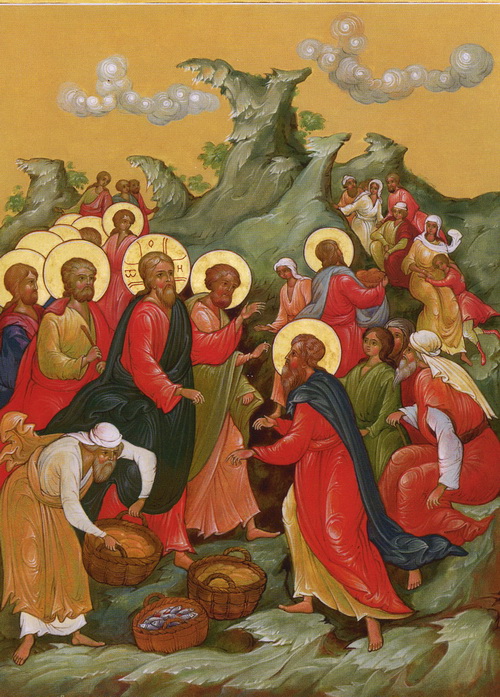
Feast of St Mark 2014
On the Edge of Elfland
Beeston, Nottinghamshire
Dear Friends and Family,
Last night I had the opportunity and pleasure to lead the small group gathering of my Missional Community at Church. I’m part of 20’s-30’s missional community whose goals are to encourage, edify, and disciple one another as we reach out to our non-Christian friends. In our monthly small group meetings we have been going through what are called the Life Shapes (developed by Mike Breen and others). I won’t go into exactly what I talked about or what I think about Life Shapes in general. However, there are some thoughts I want to share inspired, in part, by last night’s gathering.
In the course of our discussions, I brought up something I’ve heard several members of our Missional Community say. Whenever they’re non-Christians friends see the kind of community we’ve developed here, many ask, ‘Can I have this, but without the Jesus part?’ In short, my answer is no. Now, one our members pointed out that he has seen one of his non-Christian friends grow as a person, particularly as related to spending time with people with learning or developmental disabilities, and this without becoming a Christian. However, as we both acknowledged, that still is not having that community without Jesus. Our Lord is still the reason this young man is growing into a better person as he moves a few steps closer to God.
This, however, has led me to think about a similar question related to Catholic Social Teaching. Put simply, Catholic Social Teaching is concerned with human dignity, human life and work, and finding a Third Way between unfettered capitalism and communism (primarily Marxist). But one could easily ask, can’t we have all this without Jesus?
Pope Leo XIII (papacy: 1878-1903) writes in his encyclical Rerum Novarum (1891) which in many ways kicks off modern Catholic Social Teaching, ‘We have insisted, it is true, that, since the end of society is to make men better, the chief good that society can possess is virtue. Nevertheless, it is the business of a well-constituted body politic to see to the provision of those material and external helps “the use of which is necessary to virtuous action.”(Thomas Aquinas, On the Governance of Rulers, 1, 15 (Opera omnia, ed. Vives, Vol. 27, p. 356). Despite the quotation from Aquinas, this is something many political thinkers today could agree with whether Christian or not. However, for the Pope, the reason this is so is because of his theological commitment to God as creator of the cosmos and bestower of our dignity:
No man may with impunity outrage that human dignity which God Himself treats with great reverence, nor stand in the way of that higher life which is the preparation of the eternal life of heaven. Nay, more; no man has in this matter power over himself. To consent to any treatment which is calculated to defeat the end and purpose of his being is beyond his right; he cannot give up his soul to servitude, for it is not man’s own rights which are here in question, but the rights of God, the most sacred and inviolable of rights.
The Pope even goes so far as to suggest that the end for which work and the acquisition of virtue tends toward is the Kingdom of God. He writes:
To sum up, then, We may lay it down as a general and lasting law that working men’s associations should be so organized and governed as to furnish the best and most suitable means for attaining what is aimed at, that is to say, for helping each individual member to better his condition to the utmost in body, soul, and property. It is clear that they must pay special and chief attention to the duties of religion and morality, and that social betterment should have this chiefly in view; otherwise they would lose wholly their special character, and end by becoming little better than those societies which take no account whatever of religion. What advantage can it be to a working man to obtain by means of a society material well-being, if he endangers his soul for lack of spiritual food? “What doth it profit a man, if he gain the whole world and suffer the loss of his soul?”(Matt. 16:26).This, as our Lord teaches, is the mark or character that distinguishes the Christian from the heathen. “After all these things do the heathen seek . . . Seek ye first the Kingdom of God and His justice: and all these things shall be added unto you.”(Matt. 6:32-33) Let our associations, then, look first and before all things to God; let religious instruction have therein the foremost place, each one being carefully taught what is his duty to God, what he has to believe, what to hope for, and how he is to work out his salvation; and let all be warned and strengthened with special care against wrong principles and false teaching. Let the working man be urged and led to the worship of God, to the earnest practice of religion, and, among other things, to the keeping holy of Sundays and holy days. Let him learn to reverence and love holy Church, the common Mother of us all; and hence to obey the precepts of the Church, and to frequent the sacraments, since they are the means ordained by God for obtaining forgiveness of sin and for leading a holy life.
Of course, I don’t want to deny that non-Christians can desire many of the same ends of Catholic Social Teaching without excepting the underlying theological and metaphysical principles. However, I would argue that even their desire to do so is because the underlying theological and metaphysical principles of Catholic Social Teaching (and Christianity in general) are true.
The lesson I led last night ended with a look at a passage from C. S. Lewis’s Mere Christianity. In the chapter I quoted from, Lewis was talking about the necessity of Christian writers and Christian economists. He ends the chapter by writing:
A Christian society is not going to arrive until most of us really want it: and we are not going to want it until we become fully Christian. I may repeat ‘Do as you would be done by’ till I am black in the face, but I cannot really carry it out till I love my neighbour as myself: and I cannot learn to love my neighbour as myself till I learn to love God: and I cannot learn to love God except by learning to obey Him. And so, as I warned you, we are driven on to something more inward––driven on from social matters to religious matters. For the longest way round is the shortest way home (87).
Lewis’s answer to the question, can I have this (be it community or a better social order) without Christ is no, not fully. Perhaps this will always remain the case until we see as we are seen and have been deified. But if so, then it is all the more reason to strive toward that end in this life for by so doing we will lead more people and more of the world to Christ.
Sincerely yours,
David Russell Mosley
Previous Post

April 20, 2014
The Poetry of Easter: Creation's Hope
Next Post
May 20, 2014 Shakespeare Reading Schedule
Browse Our Archives
Select a Category A Secular Age Advent Apologetics Atheism Beauty Being a Catholic Evangelical Being Catholic Being Deified: Poetry and Fantasy on the Path to God Blogging Book Reviews C. S. Lewis Catholic Imagination Catholic Social Teaching Catholicism Christmas Church Calendar Church Fathers Church Life Community Conferences Cosmology Creation Curdled Words Deification Distributism Easter Economics Education Epiphany Essay Extracts Eucharist Faerie Faeriean Metaphysics Fatherhood Films Folk Liturgy Food and Drink G. K. Chesterton Harry Potter J. R. R. Tolkien Jove King Arthur Language Lent Life Literature and Poetry Liturgy Medieval Theology Music My Publications Mythology On the Edges of Elfland Ordinary Time Ordination Parenthood Parish Patristic Theology Pentecost Politics Prayer Racism Radical Orthodoxy Restoration Movement Sacramental Ontology Saints Science Sex and Sexuality Sophiology Stories The Inklings The Radical Catholic Reimagination of Everything Theologians in the Church Theopoetics Thesis Research Uncategorized University of Nottingham What I'm Reading Writing
Select a Month December 2019 November 2019 October 2019 September 2019 August 2019 July 2019 June 2019 May 2019 April 2019 March 2019 February 2019 January 2019 December 2018 November 2018 October 2018 September 2018 August 2018 July 2018 June 2018 May 2018 April 2018 March 2018 February 2018 January 2018 December 2017 November 2017 October 2017 August 2017 July 2017 June 2017 May 2017 April 2017 March 2017 February 2017 January 2017 December 2016 November 2016 October 2016 September 2016 August 2016 July 2016 June 2016 May 2016 April 2016 March 2016 February 2016 January 2016 December 2015 November 2015 October 2015 September 2015 August 2015 July 2015 June 2015 May 2015 April 2015 March 2015 February 2015 January 2015 December 2014 November 2014 October 2014 September 2014 August 2014 July 2014 June 2014 May 2014 April 2014 March 2014 February 2014 January 2014 December 2013 November 2013 October 2013 September 2013 August 2013 July 2013 June 2013 May 2013 April 2013 March 2013 February 2013 January 2013 December 2012 November 2012 October 2012 September 2012 July 2012
Follow Us!
TAKE THE
Religious Wisdom Quiz
Who was lowered through a roof to be healed by Jesus?
Select your answer to see how you score.
A paralyzed man Jairus' daughter A blind man A leper
Related posts from Letters from the Edge of Elfland
Can You Imagine? Beginning a Definition of the...
Letters from the Edge of Elfland

C.S. Lewis's Cosmic Turn: Finding Virtue through the...
Letters from the Edge of Elfland
On Turning 32 During the March for Life...
Letters from the Edge of Elfland

Covington Catholic, Racism, and the March for Life
Letters from the Edge of Elfland
TRENDING AT PATHEOS Catholic

Creation, Preservation, and Teleology in Catholic Theology
As I write this, it is very early Monday morning. Like millions...

The Parable Of The Sower And The Word...
One of Christ’s most famous parables is that of the sower who...

Rejecting Doom: Christian Hope And Human Action
Christianity is a religion of hope. We are to have hope and...

Why I Choose the Eucharist Over the Sermon
Choose the Eucharist, Not the Sermon What are we supposed to get...

5 Design Elements Found in Spiritually Rooted Homes
Putting Spirituality Into Home Decor Our homes are more than our living...

Credo: A Story of God Told with the...
About 10 years ago, I began to imagine a personal "Credo" that...
view all Catholic blogs
Ad-Free & Subscriber Log-In Subscription Support
- About Us
- 2026 Calendar
- Videos
- Podcasts
- Library of World Religions
- Faith In Media Tracker
- Advertise With Us
- Write for Us
- Privacy Policy
- Terms of Service
- Do Not Sell My Data
- Contact Us
- Radiant Digital
- Manage Newsletter Subscriptions
- Unsubscribe From Notifications
- Sitemap
Copyright 2008-2026, Patheos. All rights reserved.
Subscription Support Ad-Free & Subscriber Log-In
Follow Patheos