
BuddhistCatholicContemplativeEvangelicalGeneral ChristianHinduJewishLatter-day SaintMuslimNew VisionsProgressive Christian
Beliefs
- Buddhist
- Catholic
- Contemplative
- Evangelical
- General Christian
- Hindu
- Jewish
- Latter-day Saint
- More Voices
- Muslim
- New Visions
- Pagan
- Progressive Christian
Topics
- Religion News
- Food and Religion
- Sports and Religion
- Religious Art
- Religious Music and Entertainment
- Religious Events
- History and Religion
- Style and Religion
- Politics and Religion
- Women in Religion
- Recreation Outdoors and Religion
- Business Finance and Religion
- Careers Workplace and Religion
- Education and Religion
- Family Parenting and Religion
- Health Fitness and Religion
- Home and Religion
- Relationships and Religion
- Technology and Religion
- Travel and Religion
Columnists
- Buddhist Columnists
- Business Finance and Religion Columnists
- Careers Workplace and Religion Columnists
- Catholic Columnists
- Contemplative Columnists
- Education and Religion Columnists
- Evangelists Columnists
- Family Parenting and Religion Columnists
- General Christian Columnists
- Health Fitness and Religion Columnists
- Hindu Columnists
- History and Religion Columnists
- Home and Religion Columnists
- Jewish Columnists
- More Voices Columnists
- Latter Day Columnists
- Muslim Columnists
- New Visions Columnists
- Nonreligious Columnists
- Pagan Columnists
- Politics and Religion Columnists
- Progressive Columnists
- Recreation Outdoors and Religion Columnists
- Relationships and Religion Columnists
- Religion News Columnists
- Religious Art Columnists
- Religious Events Columnists
- Religious Music and Entertainment Columnists
- Sports and Religion Columnists
- Style and Religion Columnists
- Technology and Religion Columnists
- Travel and Religion Columnists
- Women in Religion Columnists
Resource Library
- 2026 Calendar
- Library of World Religions
- The 100 Most Holy Places on Earth
- Patheos Answers
- Podcasts
- Videos
- Faith Leaders Database
- Anglican Episcopalian
- Bahai
- Baptist
- Buddhism
- Christianity
- Confucianism
- Eastern Orthodoxy
- Hinduism
- Holiness and Pentecostal
- ISKCON
- Islam
- Judaism
- Lutheran
- Methodist
- The Church of Jesus Christ of Latter-day Saints
- New Age
- Paganism
- Presbytarian and Reformed
- Protestantism
- Religion Behind the Scenes
- Roman Catholic
- Scientology
- Shia Islam
- Sikhism
- Sufism
- Sunni Islam
- Taoism
- Zen
- See all religions
Research Tools
 Ad-Free & Subscriber Log-In Subscription Support
Ad-Free & Subscriber Log-In Subscription Support
Follow Patheos 

- Trending:
- Forgiveness
- |
- Marriage
- |
- Consciousness
- |
- Death Penalty
- |
- Election
- |
- Halloween
 Letters from the Edge of Elfland
- Home
- About
- Distributist Resources
- Publications and Presentations
- Support
- Works in Progress
- The Epistolarian Around the Web
- Home
- Catholic
- My Three Books: Philip Whitehead Edition
My Three Books: Philip Whitehead Edition
Last updated on: January 20, 2014 at 1:00 pm by David Russell Mosley
My Three Books: Philip Whitehead Edition 2014-01-20T13:00:23-04:00 David Russell Mosley
Patheos Explore the world's faith through different perspectives on religion and spirituality! Patheos has the views of the prevalent religions and spiritualities of the world.
Philip Whitehead
20 January 2014
On the Edge of Elfland
Beeston, Nottinghamshire
Dear Friends and Family,
*This is a guest post by Philip Whitehead on the three books that have influenced his theology.
1. John Calvin, Institutes of the Christian Religion
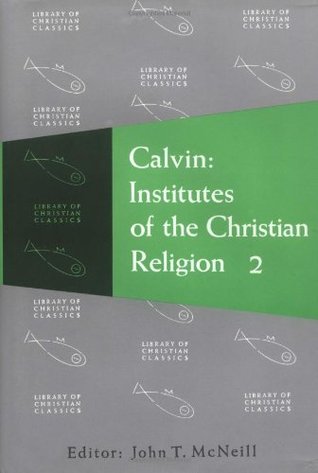
Growing up in a Reformed (Baptist) church, Calvin was often mentioned extremely positively but never someone I read. Coming to University as an undergraduate, Calvin was often mentioned extremely negatively, but again, never someone I read. During my MA I set aside some time to read the first two books of the Institutes and I got hooked. Calvin combines a true gift of exegesis with a fearless theological and logical boldness and expresses the insights of the Reformation as a rejuvenation of the Church’s ancient and biblical faith. Max Weber was almost completely wrong about Calvin and Calvinism, as is Lord Acton’s portrait of him as a grim dictator – what motivates Calvin is a conviction of the sovereignty of God and the finiteness and provisionality of human wisdom and capacity; leading to a theological method which is surprisingly (for many of us!) humble and reliant upon the revelation of God in Jesus Christ, and the Scriptures which testify of him.
2. Richard B. Hays, The Moral Vision of the New Testament
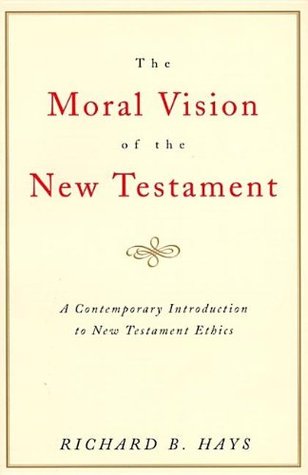
I think I found this book influential not only for its clear and wide-ranging presentation of the New Testament’s teaching on moral and ethical issues, but also as an excellent example of how to do New Testament Theology well. Hays approaches the New Testament informed by the best exegetical scholarship, but doesn’t fall into atomistic treatment of texts. Rather, he looks, author-by-author, at texts as part of an NT author’s bigger picture and message, before attempting a theological synthesis. The result is faithful to the texts and to the canon, and demonstrates the coherence and unity in the NT’s diversity. I find Hays’ specific conclusions on some of the more controversial “moral” issues prophetic in their challenge to some of our present cultural assumptions, and encounter both encouragement and rebuke in this book.
3. D. H. Williams, Evangelicals and Tradition
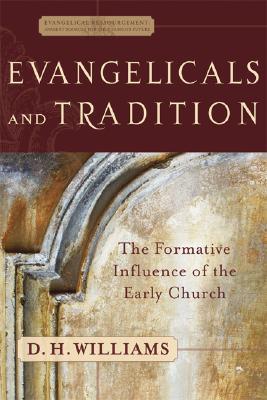
This is quite a slim volume, which I read in my third year as a theology undergraduate. Karen Kilby recommended it to her Protestant students on the reading list for the module on The Trinity. It really helped finish the process, which began in my Christmas holidays of first year with reading C.S. Lewis’ introduction to Athanasius’ “On the Incarnation”, of convincing me that Church history was my history as an evangelical, and that there was a great deal to learn from those who were in Christ before me. Karl Barth writes somewhere of his discovery that “Church history no longer begins for me in 1517” and reading Williams’ book helped cement that realisation for me. Williams clarifies (and I paraphrase) that ‘sola scriptura’ need not mean ‘nuda scriptura’; not should an enthusiastic and open retrieval of tradition be taken as endangering one’s commitment to evangelicalism. It also means, as Williams points out, that evangelicals can deepen their appreciation of their place in the story of the church and find that Athanasius, Augustine, Anselm, and yes, even Aquinas, are brothers in the faith.
Sincerely yours,
Philip
Philip is in his second year of full-time PhD study at the University of Nottingham. He was born in Manchester and grew up in Oxfordshire before moving to Nottingham. He studied BA German and History before switching courses to BA Theology at the University of Nottingham, followed by an MA in Biblical Interpretation and Theology, writing a thesis on the imagery used of Israel and the Church in the letter to the Ephesians. He then worked at CapitalOne before returning to full-time study, undertaking doctoral research on a Pauline approach to the Theology of Religions.
Next Post

January 22, 2014 My Three Books: Gabrielle Thomas Edition
Browse Our Archives
Select a Category A Secular Age Advent Apologetics Atheism Beauty Being a Catholic Evangelical Being Catholic Being Deified: Poetry and Fantasy on the Path to God Blogging Book Reviews C. S. Lewis Catholic Imagination Catholic Social Teaching Catholicism Christmas Church Calendar Church Fathers Church Life Community Conferences Cosmology Creation Curdled Words Deification Distributism Easter Economics Education Epiphany Essay Extracts Eucharist Faerie Faeriean Metaphysics Fatherhood Films Folk Liturgy Food and Drink G. K. Chesterton Harry Potter J. R. R. Tolkien Jove King Arthur Language Lent Life Literature and Poetry Liturgy Medieval Theology Music My Publications Mythology On the Edges of Elfland Ordinary Time Ordination Parenthood Parish Patristic Theology Pentecost Politics Prayer Racism Radical Orthodoxy Restoration Movement Sacramental Ontology Saints Science Sex and Sexuality Sophiology Stories The Inklings The Radical Catholic Reimagination of Everything Theologians in the Church Theopoetics Thesis Research Uncategorized University of Nottingham What I'm Reading Writing
Select a Month December 2019 November 2019 October 2019 September 2019 August 2019 July 2019 June 2019 May 2019 April 2019 March 2019 February 2019 January 2019 December 2018 November 2018 October 2018 September 2018 August 2018 July 2018 June 2018 May 2018 April 2018 March 2018 February 2018 January 2018 December 2017 November 2017 October 2017 August 2017 July 2017 June 2017 May 2017 April 2017 March 2017 February 2017 January 2017 December 2016 November 2016 October 2016 September 2016 August 2016 July 2016 June 2016 May 2016 April 2016 March 2016 February 2016 January 2016 December 2015 November 2015 October 2015 September 2015 August 2015 July 2015 June 2015 May 2015 April 2015 March 2015 February 2015 January 2015 December 2014 November 2014 October 2014 September 2014 August 2014 July 2014 June 2014 May 2014 April 2014 March 2014 February 2014 January 2014 December 2013 November 2013 October 2013 September 2013 August 2013 July 2013 June 2013 May 2013 April 2013 March 2013 February 2013 January 2013 December 2012 November 2012 October 2012 September 2012 July 2012
Follow Us!
TAKE THE
Religious Wisdom Quiz
What is the main Christian church in Greece?
Select your answer to see how you score.
Pentecostal Lutheran Greek Orthodox Catholic
Related posts from Letters from the Edge of Elfland
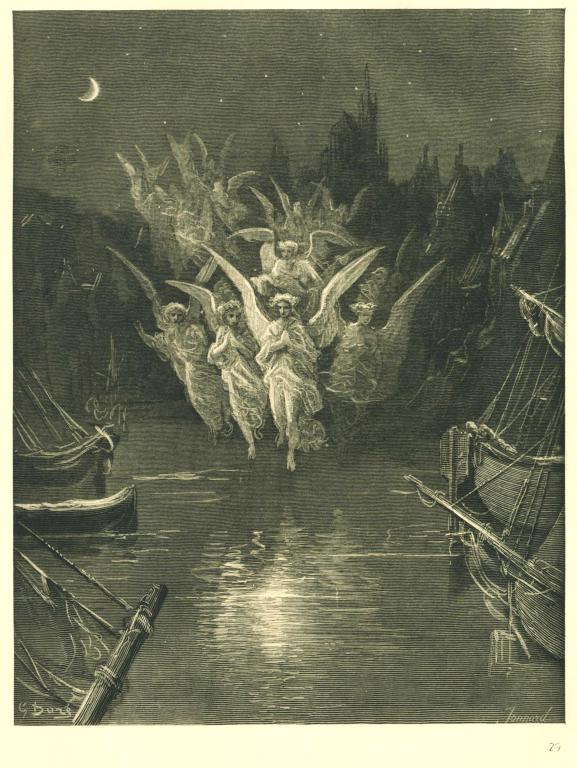
Stop, Christian Passer-by: A Spiritual Review of Mariner...
Letters from the Edge of Elfland
A Manifesto for the Radical Catholic Reimagination of...
Letters from the Edge of Elfland
Beauty, Death, Life, and Deification: Reviewing Tell Them...
Letters from the Edge of Elfland
Too Busy for Busy Lives and Restless Souls:...
Letters from the Edge of Elfland
TRENDING AT PATHEOS Catholic

The Parable Of The Sower And The Word...
One of Christ’s most famous parables is that of the sower who...

Rejecting Doom: Christian Hope And Human Action
Christianity is a religion of hope. We are to have hope and...

Why I Choose the Eucharist Over the Sermon
Choose the Eucharist, Not the Sermon What are we supposed to get...

5 Design Elements Found in Spiritually Rooted Homes
Putting Spirituality Into Home Decor Our homes are more than our living...

Credo: A Story of God Told with the...
About 10 years ago, I began to imagine a personal "Credo" that...

The Anatomy of Divine Revelation in Catholic Thought
The claim that God has made Himself known to human beings is...
view all Catholic blogs
Ad-Free & Subscriber Log-In Subscription Support
- About Us
- 2026 Calendar
- Videos
- Podcasts
- Library of World Religions
- Faith In Media Tracker
- Advertise With Us
- Write for Us
- Privacy Policy
- Terms of Service
- Do Not Sell My Data
- Contact Us
- Radiant Digital
- Manage Newsletter Subscriptions
- Unsubscribe From Notifications
- Sitemap
Copyright 2008-2026, Patheos. All rights reserved.
Subscription Support Ad-Free & Subscriber Log-In
Follow Patheos