
BuddhistCatholicContemplativeEvangelicalGeneral ChristianHinduJewishLatter-day SaintMuslimNew VisionsProgressive Christian
Beliefs
- Buddhist
- Catholic
- Contemplative
- Evangelical
- General Christian
- Hindu
- Jewish
- Latter-day Saint
- More Voices
- Muslim
- New Visions
- Pagan
- Progressive Christian
Topics
- Religion News
- Food and Religion
- Sports and Religion
- Religious Art
- Religious Music and Entertainment
- Religious Events
- History and Religion
- Style and Religion
- Politics and Religion
- Women in Religion
- Recreation Outdoors and Religion
- Business Finance and Religion
- Careers Workplace and Religion
- Education and Religion
- Family Parenting and Religion
- Health Fitness and Religion
- Home and Religion
- Relationships and Religion
- Technology and Religion
- Travel and Religion
Columnists
- Buddhist Columnists
- Business Finance and Religion Columnists
- Careers Workplace and Religion Columnists
- Catholic Columnists
- Contemplative Columnists
- Education and Religion Columnists
- Evangelists Columnists
- Family Parenting and Religion Columnists
- General Christian Columnists
- Health Fitness and Religion Columnists
- Hindu Columnists
- History and Religion Columnists
- Home and Religion Columnists
- Jewish Columnists
- More Voices Columnists
- Latter Day Columnists
- Muslim Columnists
- New Visions Columnists
- Nonreligious Columnists
- Pagan Columnists
- Politics and Religion Columnists
- Progressive Columnists
- Recreation Outdoors and Religion Columnists
- Relationships and Religion Columnists
- Religion News Columnists
- Religious Art Columnists
- Religious Events Columnists
- Religious Music and Entertainment Columnists
- Sports and Religion Columnists
- Style and Religion Columnists
- Technology and Religion Columnists
- Travel and Religion Columnists
- Women in Religion Columnists
Resource Library
- 2026 Calendar
- Library of World Religions
- The 100 Most Holy Places on Earth
- Patheos Answers
- Podcasts
- Videos
- Faith Leaders Database
- Anglican Episcopalian
- Bahai
- Baptist
- Buddhism
- Christianity
- Confucianism
- Eastern Orthodoxy
- Hinduism
- Holiness and Pentecostal
- ISKCON
- Islam
- Judaism
- Lutheran
- Methodist
- The Church of Jesus Christ of Latter-day Saints
- New Age
- Paganism
- Presbytarian and Reformed
- Protestantism
- Religion Behind the Scenes
- Roman Catholic
- Scientology
- Shia Islam
- Sikhism
- Sufism
- Sunni Islam
- Taoism
- Zen
- See all religions
Research Tools
 Ad-Free & Subscriber Log-In Subscription Support
Ad-Free & Subscriber Log-In Subscription Support
Follow Patheos 

- Trending:
- Forgiveness
- |
- Marriage
- |
- Consciousness
- |
- Death Penalty
- |
- Election
- |
- Halloween
 Letters from the Edge of Elfland
- Home
- About
- Distributist Resources
- Publications and Presentations
- Support
- Works in Progress
- The Epistolarian Around the Web
- Home
- Catholic
- Being a (Non-Roman) Catholic Evangelical: Getting High (Church, that is)
Being a (Non-Roman) Catholic Evangelical: Getting High (Church, that is)
Last updated on: January 18, 2014 at 3:54 pm by David Russell Mosley
Being a (Non-Roman) Catholic Evangelical: Getting High (Church, that is) 2014-01-18T15:54:06-04:00 David Russell Mosley
Patheos Explore the world's faith through different perspectives on religion and spirituality! Patheos has the views of the prevalent religions and spiritualities of the world.
David Russell Mosley
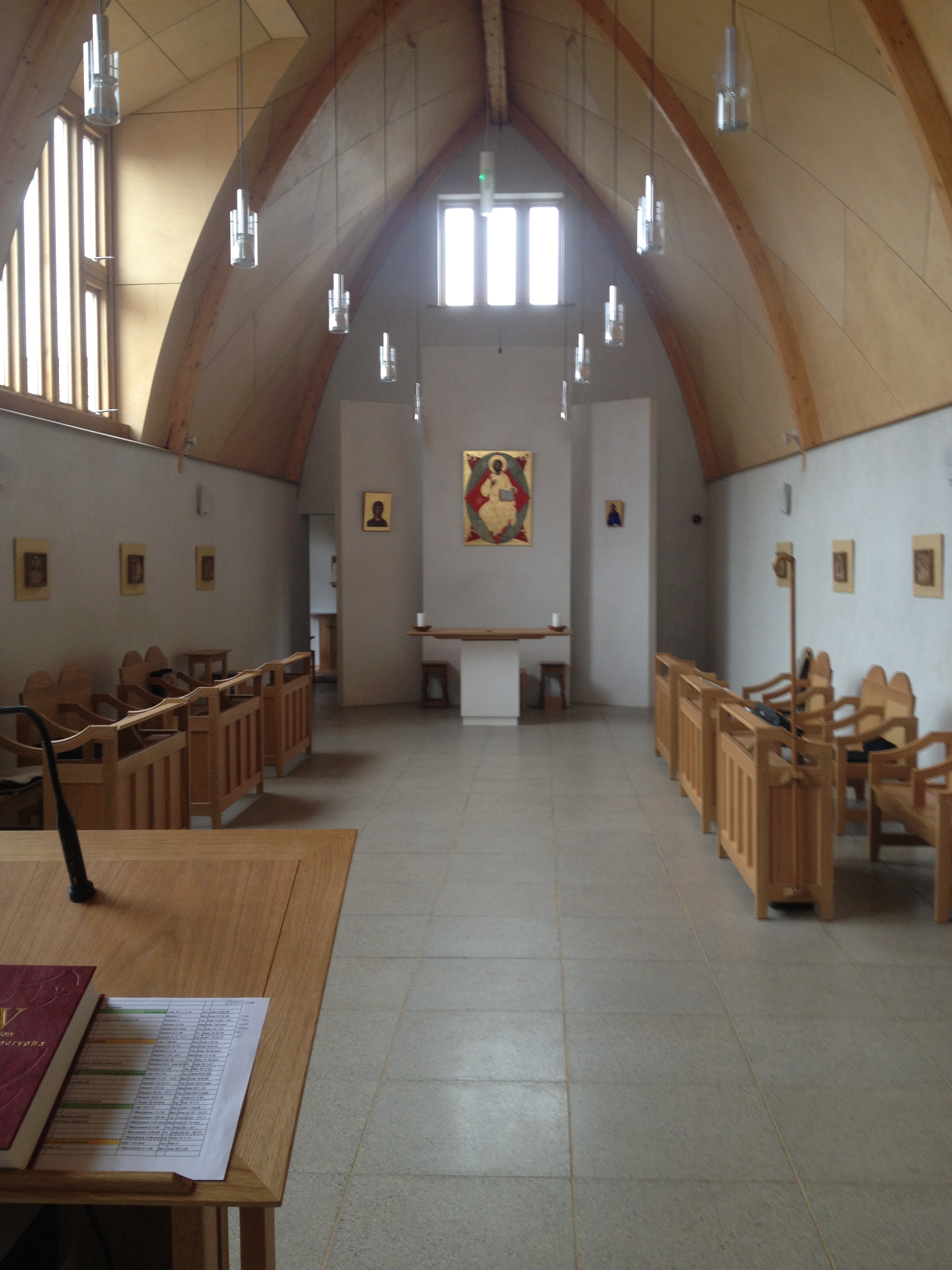
18 January 2014
On the Edge of Elfland
Beeston, Nottinghamshire
Dear Friends and Family,
A few days ago over at The American Conservative, Gracy Olmstead wrote an article entitled, ‘Why Millennials Long for Liturgy: Is the High Church the Christianity of the future?’ In the article, Olmstead cites several Protestant converts to various kinds of more Tradition (read Liturgical) branches of Christianity. This is a major trend I have seen myself in many of those with whom I attended university and even within myself. Olmstead posits that Millennials, the generation that spans from roughly 1977~1982-c.2000, are in search of deeper and more mystical faiths, often than those in which they were brought up (the article notes a former Reformed Baptist, and two Presbyterians who switched from a typically Low-Church Evangelicalism to various High-Churches). I myself know of several Presbyterians, some Nazarenes, and many within my own tradition (the Restoration Movement) who have gone high Methodist, Anglican Church of North America or Episcopalian, Eastern Orthodox, or Roman Catholic.
Perhaps it is the hidden hipster within me, but I hate doing things that are trendy, or be seen to be trendy. In fact, in a recent Facebook thread a joke was made (by me, of course) that trendy is the last word most people would use to describe me. That being said, I wonder what it is that drives people like myself to seek more High-Church expressions of faith. I don’t think its possible for me, at least, to say what the general motivations are toward High-Church expressions of the Faith, but I can at least try to describe why I feel this way.
For me, it was the study of Christian history that began to move me down this path. My own tradition has often stressed that the Church should look as much like it did in the book of Acts, particularly chapter 2, as it can. There are, I believe, many problems with this, but I don’t want to get into that. What learning about the history of Christianity, taught me, however, is that this picture we had of the apostolic church was for one, not as cut and dry as we tended to teach. Also, even if it was, things changed rapidly within a hundred years. You see, Protestantism can tend to focus on either the individual tradition of a given group (Baptist history, Presbyterian, Restoration Movement, etc.) or can focus too much on the brief pictures we’re given in the book of Acts which is meant to teach some bigger things than how to organise our churches. Doing a Master’s degree in Church History taught me that there is an awful lot between Acts chapter 2 and today and not all of it is bad.
In fact, as I learned about the history of Christianity, I realised that we technically share a vast majority of the same history with our Roman Catholic and Eastern Orthodox brothers and sisters. Working with rough dates and generalisations, it could be said that all of Christianity (or the majority anyway) shares all of its history from the Life of Christ until 1053 (the typical date given for the schism between East and West). Western Christianity then continues until, roughly, the sixteenth century and the Reformation. What this means, I realised, is that there are 1600 years where we share ancestry and history with Roman Catholics and about 960 years that we also share with the Eastern Orthodox. This taught me that we need to take the practices and theology of those periods much more seriously than we tend to. We cannot simply write off ancient and medieval theologians because they are Roman Catholic or Eastern Orthodox and not Protestants. There were no Protestants!
This plus my own work, mostly private, in recent years in the theology behind much that is contained within Liturgy (the Church Calendar, the Divine Hours,) and high sacramentality (Eucharist and Baptism as sacraments and the world as sacramental) has left me desirous of more than I have often received in Low-Church Evangelicalism. Even now, I attend an Anglican church here in Nottingham, but, particularly the service we attend, it still tends toward a more Low-Church expression, desiring to be more Spirit led, which I believe means allowing for spontaneity (not a bad thing, in my opinion, though rather limiting since that attitude can tend toward saying the Spirit doesn’t move, or move as freely, within structure).
The issue for Low-Churches, however, is not one of simply having a stylistically more liturgical service. That could perhaps help with retention of young people, but it doesn’t get to the root of the desire, at least not for me. This isn’t, for me, merely a preference for a traditional style of worship. It isn’t as though I unequivocally prefer hymns or chants to praise choruses and contemporary Christian worship music (I actually like some of the latter); nor is merely a desire for more communal prayers; lectionary based preaching; or more attention to the Eucharist. It is the theology behind so many of these things. I read the Scriptures and the great theologians of the Ancient and Medieval worlds and I see a worldview that sees the World as constantly upheld by and participating in the God, a world where Angels can appear to young women, where bread and wine can be body and blood, where miracles can happen. In essence, I see a different world than the one the Enlightenment and science divorced from theology and philosophy has taught us to see. I see a world where time can be used to tell the story of the Incarnation, the Crucifixion, the Resurrection, everyday, every week, every year. I’m not sure, however, that most standard Protestant theologies can give us this, tied as they often are to Modernism. Nevertheless, I don’t give up hope. I hope, pray, write, and teach about these things in the hopes that change can be affected, not simply in what we do, but in what we believe. If something doesn’t happen, however, I firmly believe we will see more young Christians and young converts, attaching themselves to traditions which already have these elements of liturgy and sacramentology, because let’s face it, that is much easier than changing our traditions themselves.
Sincerely yours,
David Russell Mosley
Previous Post

January 3, 2014
On The Economics of Elfland: In Honour of J. R. R. Tolkien's Birthday
Next Post
January 20, 2014 My Three Books: Philip Whitehead Edition
Browse Our Archives
Select a Category A Secular Age Advent Apologetics Atheism Beauty Being a Catholic Evangelical Being Catholic Being Deified: Poetry and Fantasy on the Path to God Blogging Book Reviews C. S. Lewis Catholic Imagination Catholic Social Teaching Catholicism Christmas Church Calendar Church Fathers Church Life Community Conferences Cosmology Creation Curdled Words Deification Distributism Easter Economics Education Epiphany Essay Extracts Eucharist Faerie Faeriean Metaphysics Fatherhood Films Folk Liturgy Food and Drink G. K. Chesterton Harry Potter J. R. R. Tolkien Jove King Arthur Language Lent Life Literature and Poetry Liturgy Medieval Theology Music My Publications Mythology On the Edges of Elfland Ordinary Time Ordination Parenthood Parish Patristic Theology Pentecost Politics Prayer Racism Radical Orthodoxy Restoration Movement Sacramental Ontology Saints Science Sex and Sexuality Sophiology Stories The Inklings The Radical Catholic Reimagination of Everything Theologians in the Church Theopoetics Thesis Research Uncategorized University of Nottingham What I'm Reading Writing
Select a Month December 2019 November 2019 October 2019 September 2019 August 2019 July 2019 June 2019 May 2019 April 2019 March 2019 February 2019 January 2019 December 2018 November 2018 October 2018 September 2018 August 2018 July 2018 June 2018 May 2018 April 2018 March 2018 February 2018 January 2018 December 2017 November 2017 October 2017 August 2017 July 2017 June 2017 May 2017 April 2017 March 2017 February 2017 January 2017 December 2016 November 2016 October 2016 September 2016 August 2016 July 2016 June 2016 May 2016 April 2016 March 2016 February 2016 January 2016 December 2015 November 2015 October 2015 September 2015 August 2015 July 2015 June 2015 May 2015 April 2015 March 2015 February 2015 January 2015 December 2014 November 2014 October 2014 September 2014 August 2014 July 2014 June 2014 May 2014 April 2014 March 2014 February 2014 January 2014 December 2013 November 2013 October 2013 September 2013 August 2013 July 2013 June 2013 May 2013 April 2013 March 2013 February 2013 January 2013 December 2012 November 2012 October 2012 September 2012 July 2012
Follow Us!
TAKE THE
Religious Wisdom Quiz
"Thou preparest a table for me in the presence of mine _____."
Select your answer to see how you score.
Kinsmen Friends Children Enemies
Related posts from Letters from the Edge of Elfland
On the First Day of Advent: Taking Twin...
Letters from the Edge of Elfland
The Catholic Church Has a Geography Problem: Reflections...
Letters from the Edge of Elfland

Chesterton, Dragons, and Cancer: A Reflection on this...
Letters from the Edge of Elfland
Caring for Creation: Reflections on an Old Address...
Letters from the Edge of Elfland
TRENDING AT PATHEOS Catholic

Creation, Preservation, and Teleology in Catholic Theology
As I write this, it is very early Monday morning. Like millions...

The Parable Of The Sower And The Word...
One of Christ’s most famous parables is that of the sower who...

Rejecting Doom: Christian Hope And Human Action
Christianity is a religion of hope. We are to have hope and...

Why I Choose the Eucharist Over the Sermon
Choose the Eucharist, Not the Sermon What are we supposed to get...

5 Design Elements Found in Spiritually Rooted Homes
Putting Spirituality Into Home Decor Our homes are more than our living...

Credo: A Story of God Told with the...
About 10 years ago, I began to imagine a personal "Credo" that...
view all Catholic blogs
Ad-Free & Subscriber Log-In Subscription Support
- About Us
- 2026 Calendar
- Videos
- Podcasts
- Library of World Religions
- Faith In Media Tracker
- Advertise With Us
- Write for Us
- Privacy Policy
- Terms of Service
- Do Not Sell My Data
- Contact Us
- Radiant Digital
- Manage Newsletter Subscriptions
- Unsubscribe From Notifications
- Sitemap
Copyright 2008-2026, Patheos. All rights reserved.
Subscription Support Ad-Free & Subscriber Log-In
Follow Patheos