
BuddhistCatholicContemplativeEvangelicalGeneral ChristianHinduJewishLatter-day SaintMuslimNew VisionsProgressive Christian
Beliefs
- Buddhist
- Catholic
- Contemplative
- Evangelical
- General Christian
- Hindu
- Jewish
- Latter-day Saint
- More Voices
- Muslim
- New Visions
- Pagan
- Progressive Christian
Topics
- Religion News
- Food and Religion
- Sports and Religion
- Religious Art
- Religious Music and Entertainment
- Religious Events
- History and Religion
- Style and Religion
- Politics and Religion
- Women in Religion
- Recreation Outdoors and Religion
- Business Finance and Religion
- Careers Workplace and Religion
- Education and Religion
- Family Parenting and Religion
- Health Fitness and Religion
- Home and Religion
- Relationships and Religion
- Technology and Religion
- Travel and Religion
Columnists
- Buddhist Columnists
- Business Finance and Religion Columnists
- Careers Workplace and Religion Columnists
- Catholic Columnists
- Contemplative Columnists
- Education and Religion Columnists
- Evangelists Columnists
- Family Parenting and Religion Columnists
- General Christian Columnists
- Health Fitness and Religion Columnists
- Hindu Columnists
- History and Religion Columnists
- Home and Religion Columnists
- Jewish Columnists
- More Voices Columnists
- Latter Day Columnists
- Muslim Columnists
- New Visions Columnists
- Nonreligious Columnists
- Pagan Columnists
- Politics and Religion Columnists
- Progressive Columnists
- Recreation Outdoors and Religion Columnists
- Relationships and Religion Columnists
- Religion News Columnists
- Religious Art Columnists
- Religious Events Columnists
- Religious Music and Entertainment Columnists
- Sports and Religion Columnists
- Style and Religion Columnists
- Technology and Religion Columnists
- Travel and Religion Columnists
- Women in Religion Columnists
Resource Library
- 2026 Calendar
- Library of World Religions
- The 100 Most Holy Places on Earth
- Patheos Answers
- Podcasts
- Videos
- Faith Leaders Database
- Anglican Episcopalian
- Bahai
- Baptist
- Buddhism
- Christianity
- Confucianism
- Eastern Orthodoxy
- Hinduism
- Holiness and Pentecostal
- ISKCON
- Islam
- Judaism
- Lutheran
- Methodist
- The Church of Jesus Christ of Latter-day Saints
- New Age
- Paganism
- Presbytarian and Reformed
- Protestantism
- Religion Behind the Scenes
- Roman Catholic
- Scientology
- Shia Islam
- Sikhism
- Sufism
- Sunni Islam
- Taoism
- Zen
- See all religions
Research Tools
 Ad-Free & Subscriber Log-In Subscription Support
Ad-Free & Subscriber Log-In Subscription Support
Follow Patheos 

- Trending:
- Forgiveness
- |
- Marriage
- |
- Consciousness
- |
- Death Penalty
- |
- Election
- |
- Halloween
 Letters from the Edge of Elfland
- Home
- About
- Distributist Resources
- Publications and Presentations
- Support
- Works in Progress
- The Epistolarian Around the Web
- Home
- Catholic
- My Three Books: Matt Vest Edition
My Three Books: Matt Vest Edition
Last updated on: January 1, 2014 at 12:53 pm by David Russell Mosley
My Three Books: Matt Vest Edition 2014-01-01T12:53:24-04:00 David Russell Mosley
Patheos Explore the world's faith through different perspectives on religion and spirituality! Patheos has the views of the prevalent religions and spiritualities of the world.
Matthew Vest
The Naming and Circumcision of Christ
1 January 2014
On the Edge of Elfland
Columbus, Ohio
Dear Friends and Family,
Thanks much to David for this question. I’ve answered the “favorite books” question before, but the “most influential to my theology” question is one I’ve not paused over as much. Five years ago my answers to this would be noticeably different, primarily due to my conversion since then into the Eastern Orthodox Church. In light of that spiritual journey and my work as a young (i.e., lowly) academic and PhD student, moreover, I expect the answers will be different again five years from now.
1) Pseudo-Dionysius’ The Mystical Theology
Dionysius’ short work is known as a classic of “apophatic theology” for detailing the limits of language and words to the point where we become “actually speechless and unknowing” before the “Cause of all beings.” This process of assertions and denials about the Divine Cause presents a particular challenge in rightly reading the mystical Scriptures. Dionysius’ hermeneutical challenge is to realize the Scriptures as the highest language we can experience, embracing the “divine names” not as intellectual idols of God’s essence but as ways of experiencing His energies. In my small world of reading/study, this liturgical/embodied/apophatic epistemology is a theological landmark.
2) St Athanasius’ On The Incarnation
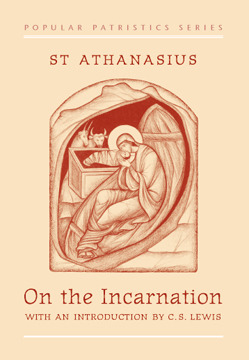
We all know the Patristic formulation that Athanasius made so popular: “for the Son of God became man so that we might become gods.” For years I read this from the assumption that man’s “fall”caused the Word of God to take on flesh, but such an assumption seems bound to a framework of immanent reason (and even a “physical theory of redemption”). Athanasius surely has more in mind–namely, presenting the Incarnation as Christ’s “divine manifestation.” Athanasius doesn’t dwell solely on the physical details of Christ’s birth but rather focuses on how the Passion reveals the true nature of his coming through the Theotokos, his life, death, and resurrection. In other words, Athanasius’ understanding of the Incarnation extends beyond the manger to include the whole scope and entirety of Christ’s life and work. What does this mean? Our ways of theologizing must begin with the whole life of Christ–including grasping the Nativity from the vantage point of the Passion–vs inferential theories that gloss the depth of terms such as Incarnation.
3) Hugh of St. Victor’s Didascalicon
OK, moment of honesty: I can’t list the Hugh’s Didascalicon without also listing Illich’s In the Vineyard of the Text. Illich’s work convinced me the Didascalicon was much more than yet another Medieval treatise on the ars liberalis. Illich revealed in Hugh’s work, rather, an entire theological anthropology bound in embodied, corporeal reading. After reading Hugh/Illich, reading was not reading anymore for me. I’m convinced now that the technological move from “book to text” evinced in the transition from monastic education to scholastic university has rendered a different picture of mankind altogether. Reading Hugh/Illich has blurred the lines between reading/study/prayer–and has convicted me how poorly I practice all three of them.
Sincerely yours,
Matt Vest
Matthew Vest is as the Assistant Director of Graduate Studies for The Ohio State University Center for Bioethics and Medical Humanities. Vest holds a B.A. in Moral Philosophy, an M.A. in Liberal Arts, and is currently a Ph.D. student in Theology (University of Nottingham). When out of the library or office, Matthew Vest and his wife, Leah, both enjoy ultra running, craft beer/homebrewing, and chasing after their two wild warrior-toddlers.
Related articles
- My 3 Books (or The Post Where I Steal Ideas from The Theology Studio) (elflandletters.wordpress.com)
- My Three Books: Eric Austin Lee Edition (elflandletters.wordpress.com)
Previous Post

December 23, 2013
The Importance of the 12 Days of Christmas
Next Post
January 3, 2014 On The Economics of Elfland: In Honour of J. R. R. Tolkien's Birthday
Browse Our Archives
Select a Category A Secular Age Advent Apologetics Atheism Beauty Being a Catholic Evangelical Being Catholic Being Deified: Poetry and Fantasy on the Path to God Blogging Book Reviews C. S. Lewis Catholic Imagination Catholic Social Teaching Catholicism Christmas Church Calendar Church Fathers Church Life Community Conferences Cosmology Creation Curdled Words Deification Distributism Easter Economics Education Epiphany Essay Extracts Eucharist Faerie Faeriean Metaphysics Fatherhood Films Folk Liturgy Food and Drink G. K. Chesterton Harry Potter J. R. R. Tolkien Jove King Arthur Language Lent Life Literature and Poetry Liturgy Medieval Theology Music My Publications Mythology On the Edges of Elfland Ordinary Time Ordination Parenthood Parish Patristic Theology Pentecost Politics Prayer Racism Radical Orthodoxy Restoration Movement Sacramental Ontology Saints Science Sex and Sexuality Sophiology Stories The Inklings The Radical Catholic Reimagination of Everything Theologians in the Church Theopoetics Thesis Research Uncategorized University of Nottingham What I'm Reading Writing
Select a Month December 2019 November 2019 October 2019 September 2019 August 2019 July 2019 June 2019 May 2019 April 2019 March 2019 February 2019 January 2019 December 2018 November 2018 October 2018 September 2018 August 2018 July 2018 June 2018 May 2018 April 2018 March 2018 February 2018 January 2018 December 2017 November 2017 October 2017 August 2017 July 2017 June 2017 May 2017 April 2017 March 2017 February 2017 January 2017 December 2016 November 2016 October 2016 September 2016 August 2016 July 2016 June 2016 May 2016 April 2016 March 2016 February 2016 January 2016 December 2015 November 2015 October 2015 September 2015 August 2015 July 2015 June 2015 May 2015 April 2015 March 2015 February 2015 January 2015 December 2014 November 2014 October 2014 September 2014 August 2014 July 2014 June 2014 May 2014 April 2014 March 2014 February 2014 January 2014 December 2013 November 2013 October 2013 September 2013 August 2013 July 2013 June 2013 May 2013 April 2013 March 2013 February 2013 January 2013 December 2012 November 2012 October 2012 September 2012 July 2012
Follow Us!
TAKE THE
Religious Wisdom Quiz
Which prophet predicted the Babylonian captivity would last 70 years?
Select your answer to see how you score.
Haggai Isaiah Ezekiel Jeremiah
Related posts from Letters from the Edge of Elfland
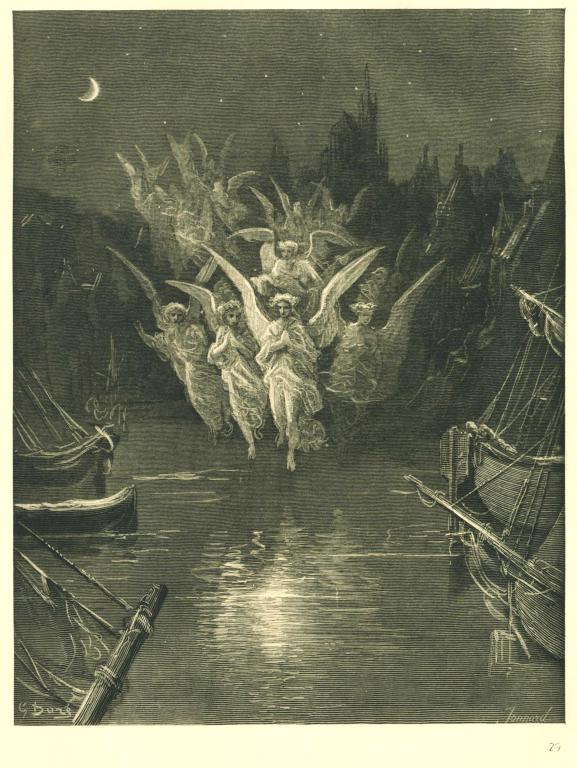
Stop, Christian Passer-by: A Spiritual Review of Mariner...
Letters from the Edge of Elfland
A Manifesto for the Radical Catholic Reimagination of...
Letters from the Edge of Elfland
Beauty, Death, Life, and Deification: Reviewing Tell Them...
Letters from the Edge of Elfland
Too Busy for Busy Lives and Restless Souls:...
Letters from the Edge of Elfland
TRENDING AT PATHEOS Catholic

The Parable Of The Sower And The Word...
One of Christ’s most famous parables is that of the sower who...

Rejecting Doom: Christian Hope And Human Action
Christianity is a religion of hope. We are to have hope and...

Why I Choose the Eucharist Over the Sermon
Choose the Eucharist, Not the Sermon What are we supposed to get...

5 Design Elements Found in Spiritually Rooted Homes
Putting Spirituality Into Home Decor Our homes are more than our living...

Credo: A Story of God Told with the...
About 10 years ago, I began to imagine a personal "Credo" that...

The Anatomy of Divine Revelation in Catholic Thought
The claim that God has made Himself known to human beings is...
view all Catholic blogs
Ad-Free & Subscriber Log-In Subscription Support
- About Us
- 2026 Calendar
- Videos
- Podcasts
- Library of World Religions
- Faith In Media Tracker
- Advertise With Us
- Write for Us
- Privacy Policy
- Terms of Service
- Do Not Sell My Data
- Contact Us
- Radiant Digital
- Manage Newsletter Subscriptions
- Unsubscribe From Notifications
- Sitemap
Copyright 2008-2026, Patheos. All rights reserved.
Subscription Support Ad-Free & Subscriber Log-In
Follow Patheos