
BuddhistCatholicContemplativeEvangelicalGeneral ChristianHinduJewishLatter-day SaintMuslimNew VisionsProgressive Christian
Beliefs
- Buddhist
- Catholic
- Contemplative
- Evangelical
- General Christian
- Hindu
- Jewish
- Latter-day Saint
- More Voices
- Muslim
- New Visions
- Pagan
- Progressive Christian
Topics
- Religion News
- Food and Religion
- Sports and Religion
- Religious Art
- Religious Music and Entertainment
- Religious Events
- History and Religion
- Style and Religion
- Politics and Religion
- Women in Religion
- Recreation Outdoors and Religion
- Business Finance and Religion
- Careers Workplace and Religion
- Education and Religion
- Family Parenting and Religion
- Health Fitness and Religion
- Home and Religion
- Relationships and Religion
- Technology and Religion
- Travel and Religion
Columnists
- Buddhist Columnists
- Business Finance and Religion Columnists
- Careers Workplace and Religion Columnists
- Catholic Columnists
- Contemplative Columnists
- Education and Religion Columnists
- Evangelists Columnists
- Family Parenting and Religion Columnists
- General Christian Columnists
- Health Fitness and Religion Columnists
- Hindu Columnists
- History and Religion Columnists
- Home and Religion Columnists
- Jewish Columnists
- More Voices Columnists
- Latter Day Columnists
- Muslim Columnists
- New Visions Columnists
- Nonreligious Columnists
- Pagan Columnists
- Politics and Religion Columnists
- Progressive Columnists
- Recreation Outdoors and Religion Columnists
- Relationships and Religion Columnists
- Religion News Columnists
- Religious Art Columnists
- Religious Events Columnists
- Religious Music and Entertainment Columnists
- Sports and Religion Columnists
- Style and Religion Columnists
- Technology and Religion Columnists
- Travel and Religion Columnists
- Women in Religion Columnists
Resource Library
- 2026 Calendar
- Library of World Religions
- The 100 Most Holy Places on Earth
- Patheos Answers
- Podcasts
- Videos
- Faith Leaders Database
- Anglican Episcopalian
- Bahai
- Baptist
- Buddhism
- Christianity
- Confucianism
- Eastern Orthodoxy
- Hinduism
- Holiness and Pentecostal
- ISKCON
- Islam
- Judaism
- Lutheran
- Methodist
- The Church of Jesus Christ of Latter-day Saints
- New Age
- Paganism
- Presbytarian and Reformed
- Protestantism
- Religion Behind the Scenes
- Roman Catholic
- Scientology
- Shia Islam
- Sikhism
- Sufism
- Sunni Islam
- Taoism
- Zen
- See all religions
Research Tools
 Ad-Free & Subscriber Log-In Subscription Support
Ad-Free & Subscriber Log-In Subscription Support
Follow Patheos 

- Trending:
- Forgiveness
- |
- Marriage
- |
- Consciousness
- |
- Death Penalty
- |
- Election
- |
- Halloween
 Letters from the Edge of Elfland
- Home
- About
- Distributist Resources
- Publications and Presentations
- Support
- Works in Progress
- The Epistolarian Around the Web
- Home
- Catholic
- Baking Bread and the Body of Christ
Baking Bread and the Body of Christ
Last updated on: October 30, 2013 at 2:32 pm by David Russell Mosley
Baking Bread and the Body of Christ 2013-10-30T14:32:30-04:00 David Russell Mosley
Patheos Explore the world's faith through different perspectives on religion and spirituality! Patheos has the views of the prevalent religions and spiritualities of the world.
David Russell Mosley
30 October 2013
On the Edge of Elfland
Beeston, Nottinghamshire
Dear Friends and Family,
Today I want to talk to you about something very theological; something so very theological that it often goes right over our heads. Today, I want to talk to you about baking bread.
A few weeks ago, I wrote a letter about Hugh Fearnley-Whittingstall and the River Cottage Fruit-share project. In that post I focused on the necessity of having a better connection with where our food comes from because this is a better connection with Creation, of which we are a part. Baking bread, in some ways, takes this a step further. While currently I do not bake bread from wheat I’ve grown and ground myself (nor always from organic or locally sourced wheat, though I hope to someday), baking bread is perhaps an essential part of the Christian life.
Bread makes up half of one of the most important events in Christianity. It represents the oneness (as well as diversity) of the Church, which is also to say it represents and becomes for us the body of Christ in the Eucharist. Now, whatever theology of the Eucharist to which you ascribe––I’m personally somewhere between consubstantiation and transubstantiation (that is, I believe Christ is really present, but don’t want to get enmeshed in talking about how)––the Bread still stands for the body of Christ. This means, to some extent, every loaf of bread participates in the Eucharistic bread. Every loaf of bread we eat should remind us of the Loaf in the Lord’s Supper (just as every glass of wine we drink participates in the Cup of the Blood of Christ). To this end, then, baking bread can remind us of the Eucharist which is our thanksgiving for the body and blood of Christ.
Baking bread is a relatively cheap and easy enterprise. The recipe I’m going to give you is from James Morton’s book Brilliant Bread. 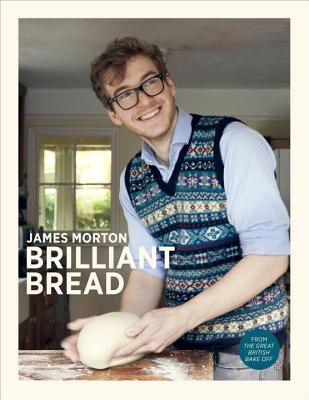 This is a great recipe for beginners, such as myself, and results is delicious and healthy bread. This is just a plain white loaf, so it could be a bit healthier, but believe me, it is infinitely better for you than most store-bought sliced loaves.
Bake Time: 3-3 ½ hours; Time in Kitchen 10-15 minutes.
Ingredients:
500g Strong White Flour (Bread flour)
10g of Salt
7g or 1 sachet of yeast
350g (a little over 11 ounces) of tepid water
In a large bowl add your dry ingredients. Morton recommends rubbing in your salt on one side and your yeast on the other as yeast deactivates salt.
Then add your water and mix until a cohesive dough is formed. I recommend holding on to the bowl with one hand and mixing with the other. It goes quickly and leaves you a clean hand.
Cover with a damp tea towel and rest for 30-40 minutes.
After its rested, wet the fingers of one hand and slide them between the bowl and the dough. Take a portion of the dough and fold it back in on itself. Turn slightly and continue this until you’ve knocked all the air out.
Cover with a damp tea towel and rest for a full hour or until doubled in size.
On a lightly floured surface turn out your dough to begin shaping. Begin by pressing your hand firmly on half the dough while stretching the other half out with the other hand and then folding it back in on it self. Turn slightly and continue until the dough feels tighter. Then turn the dough over and begin shaping into a ball. Do this by cupping each hand and bringing them together under your loaf turning slightly. This helps remove the seam on the bottom. Do this until the seam is gone and the dough is in a nice ball.
Put the dough on a well floured surface to rest for an hour. Also, using a serrated knife or razor blade make a few deep slashes in the bread to allow to expand while baking. During this time prep your oven. Put a baking sheet or rock in the oven and make sure your bread will have plenty of room to rise.
At about forty minutes into your dough’s final rest, pre-heat your oven and baking sheet to 210˚C.
After the oven has had about 20 minutes to pre-heat, put in your dough to bake for about forty minutes or until a nice golden brown.
Once its done, take your loaf out of the oven and let cool before digging in.
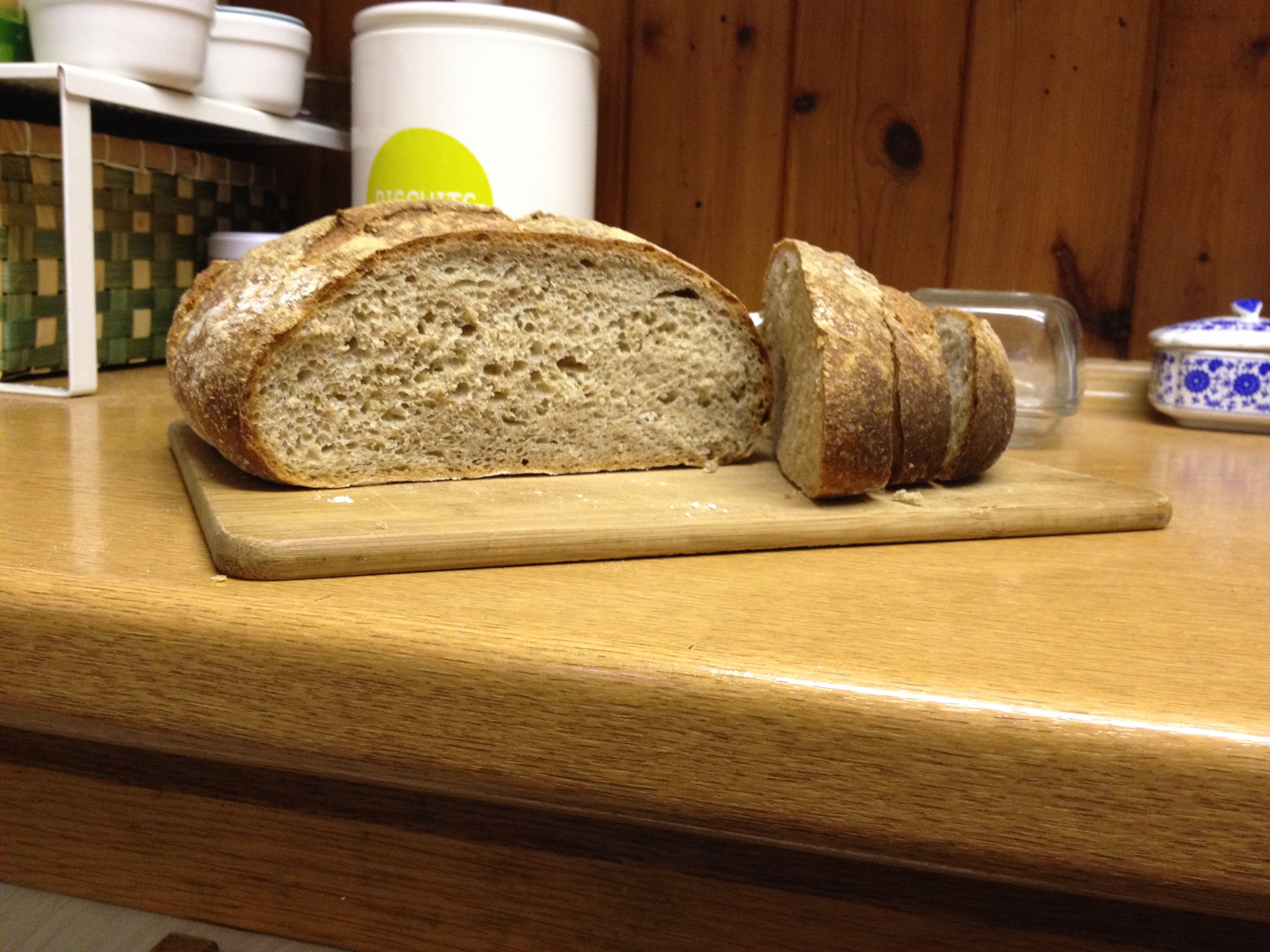
A whole-meal bread I made last week.
And now you have a perfectly good loaf of bread. I find a loaf lasts my wife and I around 4-7 days. The flour costs around 80 pence and, if you just make plain white bread with it, should get you three loaves (considerably cheaper than store-bought). All you need is a few cheap ingredients, and about 3 hours at home (not all of which must be spent in the kitchen) in order to make your own loaf. Give it a try, and reflect on the one Loaf that is, for us, the body of Christ.
Sincerely yours,
David Russell Mosley
Previous Post

October 22, 2013
A Life Update: Ordination News, Thesis Update, and Babies
Next Post
November 4, 2013 Faerie and Logres: Interviews and Sermons
Browse Our Archives
Select a Category A Secular Age Advent Apologetics Atheism Beauty Being a Catholic Evangelical Being Catholic Being Deified: Poetry and Fantasy on the Path to God Blogging Book Reviews C. S. Lewis Catholic Imagination Catholic Social Teaching Catholicism Christmas Church Calendar Church Fathers Church Life Community Conferences Cosmology Creation Curdled Words Deification Distributism Easter Economics Education Epiphany Essay Extracts Eucharist Faerie Faeriean Metaphysics Fatherhood Films Folk Liturgy Food and Drink G. K. Chesterton Harry Potter J. R. R. Tolkien Jove King Arthur Language Lent Life Literature and Poetry Liturgy Medieval Theology Music My Publications Mythology On the Edges of Elfland Ordinary Time Ordination Parenthood Parish Patristic Theology Pentecost Politics Prayer Racism Radical Orthodoxy Restoration Movement Sacramental Ontology Saints Science Sex and Sexuality Sophiology Stories The Inklings The Radical Catholic Reimagination of Everything Theologians in the Church Theopoetics Thesis Research Uncategorized University of Nottingham What I'm Reading Writing
Select a Month December 2019 November 2019 October 2019 September 2019 August 2019 July 2019 June 2019 May 2019 April 2019 March 2019 February 2019 January 2019 December 2018 November 2018 October 2018 September 2018 August 2018 July 2018 June 2018 May 2018 April 2018 March 2018 February 2018 January 2018 December 2017 November 2017 October 2017 August 2017 July 2017 June 2017 May 2017 April 2017 March 2017 February 2017 January 2017 December 2016 November 2016 October 2016 September 2016 August 2016 July 2016 June 2016 May 2016 April 2016 March 2016 February 2016 January 2016 December 2015 November 2015 October 2015 September 2015 August 2015 July 2015 June 2015 May 2015 April 2015 March 2015 February 2015 January 2015 December 2014 November 2014 October 2014 September 2014 August 2014 July 2014 June 2014 May 2014 April 2014 March 2014 February 2014 January 2014 December 2013 November 2013 October 2013 September 2013 August 2013 July 2013 June 2013 May 2013 April 2013 March 2013 February 2013 January 2013 December 2012 November 2012 October 2012 September 2012 July 2012
Follow Us!
TAKE THE
Religious Wisdom Quiz
How many people did Jesus feed with five loaves and two fish?
Select your answer to see how you score.
About 100 About 7000 About 12 About 5000 men
Related posts from Letters from the Edge of Elfland
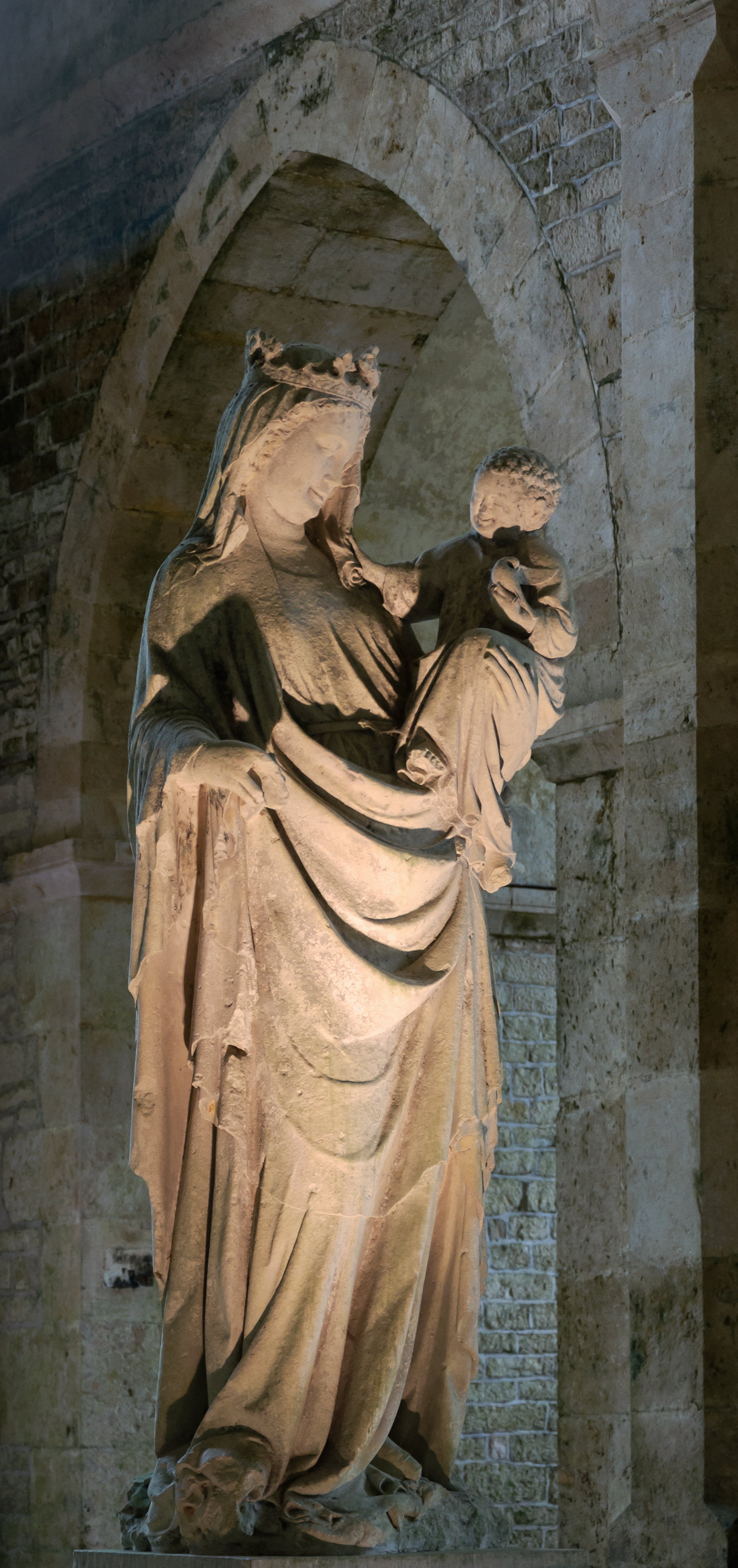
The Earth, Our Mother, and the Amazonian Synod
Letters from the Edge of Elfland

“Wherefore stopp’st thou me?” Coleridge’s Creative Message to...
Letters from the Edge of Elfland

Good Morning, Mr. Magpie: On Folklore and Science
Letters from the Edge of Elfland
Letters from the Edge of Elfland
TRENDING AT PATHEOS Catholic

Creation, Preservation, and Teleology in Catholic Theology
As I write this, it is very early Monday morning. Like millions...

The Parable Of The Sower And The Word...
One of Christ’s most famous parables is that of the sower who...

Rejecting Doom: Christian Hope And Human Action
Christianity is a religion of hope. We are to have hope and...

Why I Choose the Eucharist Over the Sermon
Choose the Eucharist, Not the Sermon What are we supposed to get...

5 Design Elements Found in Spiritually Rooted Homes
Putting Spirituality Into Home Decor Our homes are more than our living...

Credo: A Story of God Told with the...
About 10 years ago, I began to imagine a personal "Credo" that...
view all Catholic blogs
Ad-Free & Subscriber Log-In Subscription Support
- About Us
- 2026 Calendar
- Videos
- Podcasts
- Library of World Religions
- Faith In Media Tracker
- Advertise With Us
- Write for Us
- Privacy Policy
- Terms of Service
- Do Not Sell My Data
- Contact Us
- Radiant Digital
- Manage Newsletter Subscriptions
- Unsubscribe From Notifications
- Sitemap
Copyright 2008-2026, Patheos. All rights reserved.
Subscription Support Ad-Free & Subscriber Log-In
Follow Patheos